Anduril Is Now Selling the Mission Brain for Aircraft It Doesn't Build. Hermeus Is the First Buyer.
Hermeus picked Anduril's Lattice to fly its Mach 3 Quarterhorse, the first time Anduril has put its mission autonomy on a large third-party airframe under a commercial deal.
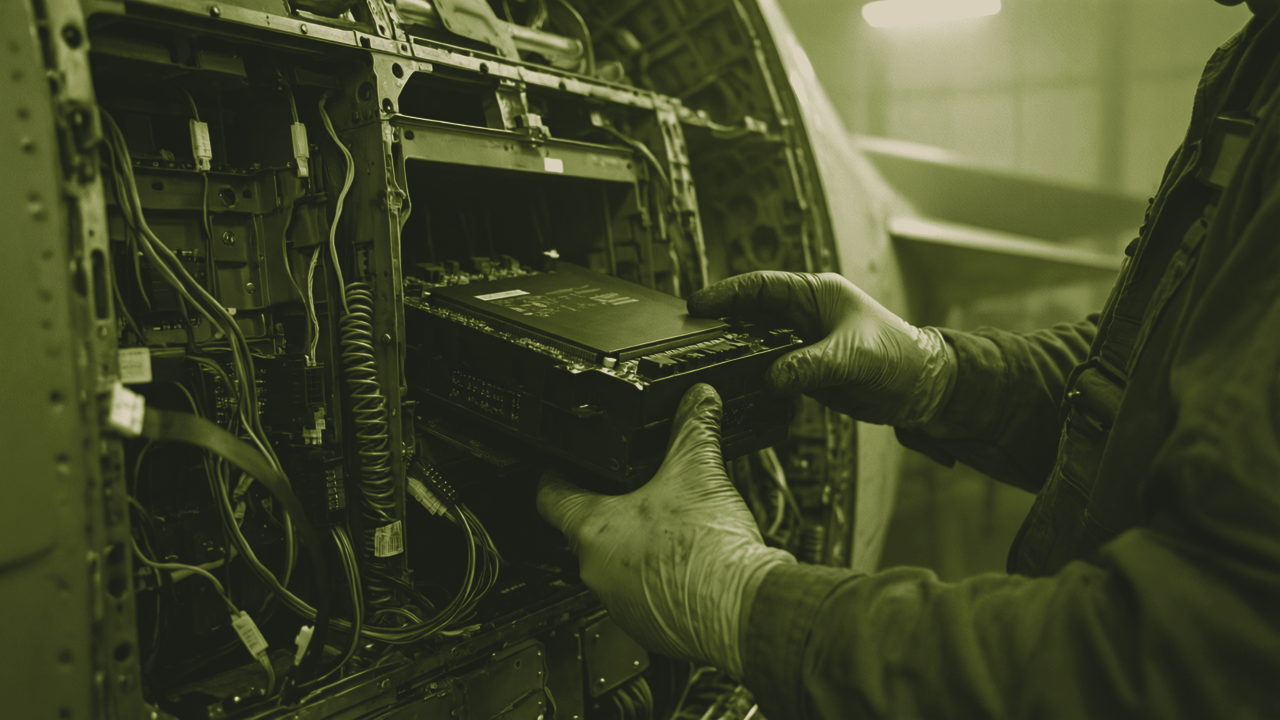
Hermeus picked Anduril's Lattice to fly its Mach 3 Quarterhorse, the first time Anduril has put its mission autonomy on a large third-party airframe under a commercial deal.
Hermeus selected Anduril's Lattice for Mission Autonomy as the software engine for its Quarterhorse Mk 2 uncrewed aircraft, the Atlanta company announced Sept. 3. Integration is underway. First flight of the combined system is set for 2027.
Frequently Asked Questions
What did Hermeus and Anduril agree to?
Anduril's Lattice for Mission Autonomy will serve as the core software engine for mission planning and execution on the Quarterhorse Mk 2, the two companies announced Sept. 3. Integration work is underway and first flight of the combined system is planned for 2027.
Why is this a first for Anduril?
Hermeus said the Mk 2 is the first large-scale third-party aircraft integration of Anduril's autonomy software outside its own Fury program, and Anduril's first commercial deal to put mission autonomy on a third-party Group 5 aircraft.
What problem is Hermeus trying to solve?
Quarterhorse flight tests have been remotely controlled so far. CEO Zach Shore told Breaking Defense the company needs to automate flight controls so that one operator can manage multiple aircraft, including automated startup and takeoff.
What does Anduril get out of it?
A chance to prove Lattice on an independent airframe in a high-Mach environment. Brett Darcey, Anduril's general manager for mission autonomy in air dominance and strike, said the partnership is expanding the addressable market for the company's mission autonomy product.
How much is the deal worth?
Neither company disclosed a figure. Shore described it to Breaking Defense as a partnership with a contract and funds exchanged; Darcey called it an arrangement of mutual economic benefit.
How fast is the Quarterhorse and who funds it?
The aircraft is being developed with funding from the Pentagon's Defense Innovation Unit and targets speeds up to Mach 3, per Breaking Defense. The Quarterhorse Mk 2.1 reached Mach 1.21 on its second flight in May, Defense Daily reported.
AI-generated summary, reviewed by an editor. More on our AI guidelines.
Below this point
6 more sections.
The Quarterhorse has flown under remote control to this point. "We now need to automate a lot of those flight controls," Hermeus CEO Zach Shore told Breaking Defense. "I want to be able to push a button, have the aircraft spin up, have the aircraft auto takeoff, all those basic features that allow one person to manage multiple platforms."
Anduril supplies the full stack, from flight software to the ground station. Operators work through its Menace-T C4 terminal.
Hermeus called the deal the first large-scale third-party integration of Anduril's autonomy outside Fury, the fighter drone Anduril builds itself. Brett Darcey, Anduril's general manager for mission autonomy in air dominance and strike, framed the payoff plainly: the deal is "expanding the addressable market for our mission autonomy solution." Neither company disclosed terms. Shore said funds changed hands.
Hermeus framed the arrangement as what the Air Force has urged industry to adopt: modular systems where hardware and software develop independently. The service picked Lattice on June 17 for the next phase of its Collaborative Combat Aircraft program, where Anduril competes on hardware while selling software to rivals.
Quarterhorse runs on Defense Innovation Unit funding and targets Mach 3. The Mk 2.1 reached Mach 1.21 in May on its second flight, per Defense Daily.
Watch the 2027 flight. It is the first test of whether a mission-autonomy stack built for a subsonic fighter drone holds up at high Mach, and Anduril has now sold that answer to a customer before it has one.

Marcus Schuler
Marcus Schuler edits BattlePolicy, a daily defense-technology brief connecting the companies and capabilities behind modern war to the contest among Europe, the US, Russia, and China.