GRID-REF 37°47′N 122°25′W
DISPATCH 02/26 · 17 Jun 2026
BATTLEPOLICY
Startup to front line. Strategy to consequence.
Lexicon · USA

B-2 Spirit

The U.S. Air Force's flying-wing stealth bomber — the world's only operational stealth bomber, sole carrier of the 30,000-lb GBU-57/B bunker buster, and the tip of the conventional and nuclear penetrating-strike spear.
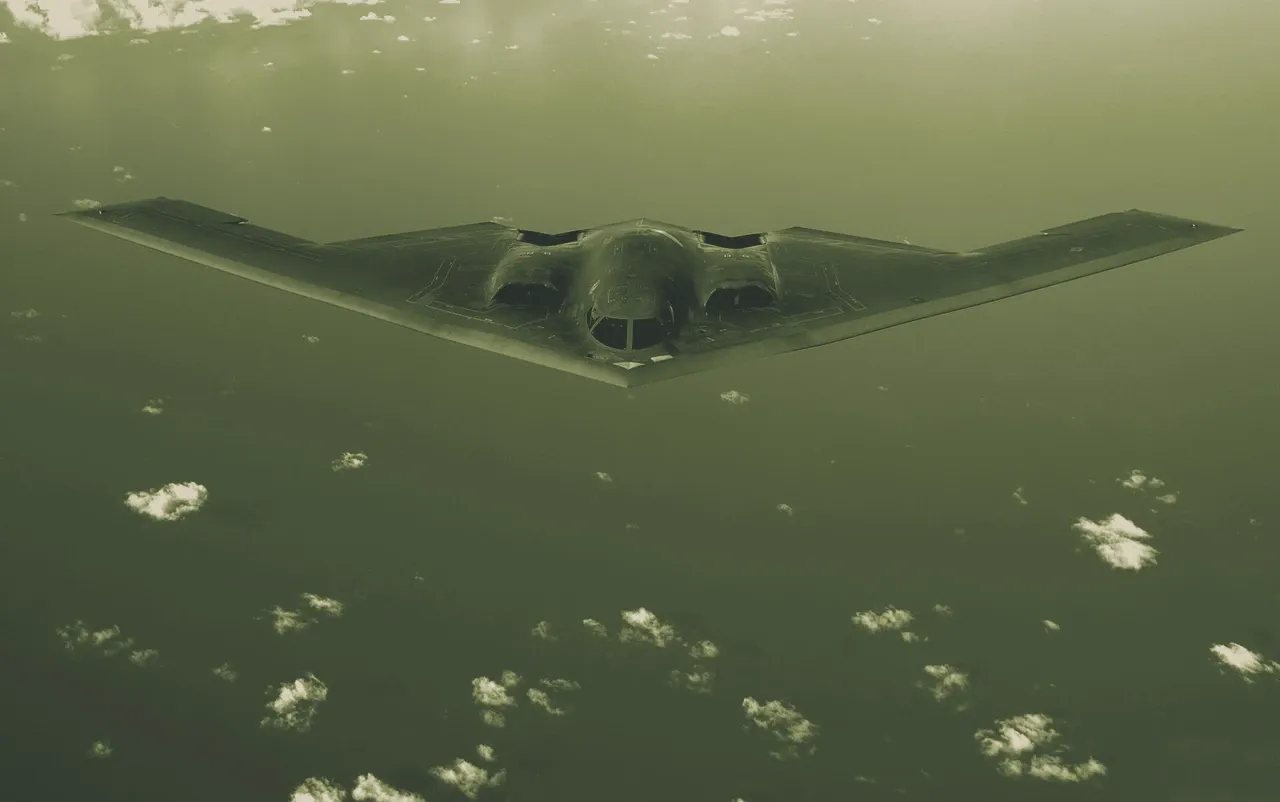
B-2 Spirit
FIG.01 · USA Image - U.S. Air Force B-2 Spirit stealth bomber. Photo by U.S. Air Force photo/Staff Sgt. Bennie J. Davis III, Public domain, via Wikimedia Commons.
The U.S. Air Force's nuclear-capable, flying-wing stealth heavy bomber — the world's only operational stealth bomber, sole carrier of the 30,000-lb GBU-57/B Massive Ordnance Penetrator, and the penetrating-strike backbone of Air Force Global Strike Command.

Overview

The Northrop B-2 Spirit is a subsonic, low-observable strategic bomber fielded by the United States Air Force. Designed to slip past the most advanced integrated air-defense systems, it delivers both conventional and nuclear ordnance against hardened, high-value targets directly from the continental United States. After Cold War ambitions for 132 aircraft were slashed, 21 airframes were built; 19 remain in service, all operated by the 509th Bomb Wing at Whiteman AFB, Missouri. The B-2 is the only aircraft cleared to employ the 30,000-lb GBU-57/B Massive Ordnance Penetrator (MOP), and its demonstrated ability to fly 37-hour non-stop combat missions—most notably during Operation Midnight Hammer against Iran’s nuclear complexes—cements its irreplaceable position ahead of the incoming B-21 Raider fleet.

Development

The B-2 began as the Advanced Technology Bomber (ATB) program, launched in the late 1970s to create a penetrating stealth bomber that could survive Soviet air defenses. In 1981 the Northrop-led team (with Boeing as principal partner) won the competition, and the flying-wing design was unveiled at Palmdale on 22 November 1988 Wikipedia. First flight occurred on 17 July 1989, and the first operational aircraft, Spirit of Missouri, was delivered to Whiteman on 17 December 1993. The dissolution of the Soviet Union, however, cut the planned buy from 132 airframes to just 21; production ran 1989–2000 and the fleet achieved full operational capability in December 2003 U.S. Air Force fact sheet. Because the enormous R&D cost—around $44.7 billion in 1997 dollars—was amortized over such a small fleet, each B-2 carries a program-average cost of roughly $2.13 billion, making it the most expensive aircraft ever built Wikipedia.

Design & capabilities

The B-2 is a pure flying wing built from radar-absorbent materials, shaped to reduce radar, infrared, acoustic, and visual signatures to the absolute minimum. All ordnance is carried inside two internal weapons bays to preserve the stealth profile; there are no external hardpoints. The aircraft can loft a maximum conventional payload of about 27,200 kg (60,000 lb), typically a mix of 80 independently targeted 500-lb JDAMs or combinations of Mk-84, GBU-31, JSOW, and JASSM cruise missiles U.S. Air Force fact sheet. Its signature weapon is the GBU-57/B MOP — at 30,000 lb the largest non-nuclear penetrator in the inventory — which was developed specifically for deeply buried targets such as Iran’s Fordow enrichment plant The Aviationist. Each B-2 carries two MOPs, one in each bay, a payload that the planned B-21 will not match. For the nuclear mission it can carry up to 16 B61 or B83 gravity bombs. The cockpit seats a pilot and a mission commander (provision exists for a third crewmember). Its AN/APQ-181 low-probability-of-intercept synthetic-aperture radar, coupled with a GPS-Aided Targeting System, provides precision all-weather navigation and weapon delivery without radiating detectable signals. Four General Electric F118-GE-100 non-afterburning turbofans, each producing ~77 kN of thrust, push the aircraft to a top speed of about Mach 0.95 and a service ceiling over 15,000 m. Unrefueled range is roughly 11,000 km; with multiple aerial refuelings the jet has flown 37-hour round trips from Missouri to the Middle East and back, demonstrating true global reach.

Variants

A single combat variant was produced, but the fleet has been continuously upgraded through Blocks 10, 20, and 30. Subsequent modernizations have included the introduction of active electronically scanned array radar (AESA), new communications suites, and the Spirit Realm collaborative operating software. In the FY2027–31 budget window the U.S. Air Force intends to spend roughly $1.35 billion on the 19 remaining B-2s, porting B-21-derived systems onto the older airframes to keep them viable into the late 2030s Sandboxx News.

Combat record / operational use

The B-2 first saw combat during Operation Allied Force over Kosovo in 1999, flying nonstop from Missouri and allegedly destroying 33% of designated Serbian targets in the opening weeks. After the 11 September 2001 attacks it struck Afghanistan—Spirit of America flew a record 44-hour mission—and later attacked Iraq in 2003, Libya in 2011 and 2017, and Houthi underground sites in Yemen in 2024 U.S. Air Force fact sheet.

The aircraft’s signature employment came on 21–22 June 2025: Operation Midnight Hammer. Seven B-2s from Whiteman, carrying 14 crew members, flew east across the Atlantic while a decoy cell flew west over the Pacific to confuse Iran. Escorted by F-22, F-35, and EA-18G aircraft that fired about 30 suppression weapons, the bombers penetrated Iranian airspace undetected. Between 02:10 and 02:35 local time they dropped all 14 GBU-57/B MOPs—12 on two ventilation-shaft aim points at the Fordow Fuel Enrichment Plant (six per shaft) and two on the Natanz nuclear site—while a submarine added roughly two dozen Tomahawk Land-Attack Missiles against Isfahan. General Daniel Caine later stated that “Iran’s fighters did not fly, and it appears that Iran’s surface-to-air missile systems did not see us” CBS News. The 14 MOPs all hit their intended aim points, and Secretary of Defense Pete Hegseth initially claimed Fordow’s enrichment capability was destroyed; a subsequent low-confidence DIA assessment suggested only months of delay, while the Pentagon publicly settled on “degraded … by one to two years” Air & Space Forces Magazine The War Zone.

When full-scale war erupted with Iran in late February 2026, the B-2 returned. On 1 March 2026 CENTCOM announced that B-2s had struck Iran’s hardened underground ballistic-missile launch complexes using multiple 2,000-lb bunker-buster bombs. At least four aircraft flew CONUS-to-CONUS sorties, and U.S. officials credited the strikes with reducing Iranian missile launch rates by roughly 90 percent within days Army Recognition. April 2026 budget documents later confirmed the bombers continued 37-hour-plus missions throughout the campaign Forbes.

Advantages

  • Only fully operational stealth bomber in the world; the sole aircraft cleared for the GBU-57/B MOP, carrying two per sortie versus one planned for the B-21.
  • Global reach from the continental U.S., demonstrated by 37-hour missions from Missouri to Iran and back with multiple aerial refuelings.
  • Penetrated Iranian airspace undetected in June 2025 despite modern integrated air defenses; no shots were fired at the strike package.
  • Massive precision throughput for a stealth platform: up to 80 independently targeted 500-lb JDAMs per sortie.
  • Dual-capable nuclear strike leg (B61-12/B83) alongside proven conventional performance across campaigns from Kosovo to Iran.

Drawbacks / limitations

  • Tiny, shrinking fleet: 21 built, 19 remain, and only about 14 are typically mission-available. The seven-ship Midnight Hammer package committed more than a third of the entire fleet.
  • Extreme ownership cost: program average of about $2.13 billion per aircraft; flight-hour cost estimated at up to ~$135,000 (2010 figure), plus climate-controlled hangars essential for stealth coatings.
  • Maintenance-intensive low-observable skin; historically sensitive to weather and moisture, contributing to high maintenance-hours-per-flight-hour.
  • 1980s-era signature and avionics design; the USAF openly treats the B-2 as a bridge to the B-21, not a long-term penetrator against future air defenses.
  • Two non-combat hull losses: Spirit of Kansas destroyed in a 2008 crash at Andersen AFB (sensor icing) and Spirit of Hawaii retired after a December 2022 emergency landing at Whiteman, causing a months-long fleet grounding Air & Space Forces Magazine.

Counterparts

Outlook

Plans to retire the B-2 “no later than 2032” have been abandoned. The successful use of the Spirit in Midnight Hammer and the 2026 Iran campaign, together with its unique MOP-carrying role, prompted the Air Force to invest roughly $1.35 billion in the 19 remaining jets through the early 2030s. The B-21 Raider—also built by Northrop Grumman and set to operate from Whiteman as its second main operating base—will eventually replace the Spirit, but the transition pace is tied to B-21 production numbers. The Air Force now declines to name a retirement date, stating the B-2 will serve “as long as it’s needed” Forbes. Until the B-21 fleet matures in sufficient quantity, the B-2 remains the nation’s only long-range penetrating bomber capable of devastating the most heavily fortified targets.

Key specifications

Spec Value
Crew 2 (pilot + mission commander; provision for a third)
Length / wingspan 21.0 m / 52.4 m (height 5.18 m)
Max speed ~1,010 km/h (Mach 0.95)
Service ceiling ~15,240 m (50,000 ft)
Combat radius / range Unrefueled range ~11,000 km (6,000 nmi); intercontinental with aerial refueling
Payload ~18,000–27,216 kg (est. 40,000–60,000 lb) conventional; nuclear up to 16 B61/B83
Hardpoints None external; two internal weapons bays with rotary launchers/bomb racks
Radar / sensors AN/APQ-181 LPI synthetic-aperture radar; GPS-Aided Targeting System; all-aspect signature reduction
Powerplant 4 × General Electric F118-GE-100 non-afterburning turbofans, ~77 kN (17,300 lbf) each
Armament Conventional: up to 80 × 500-lb JDAM, Mk 84, GBU-31 JSOW, JASSM, and 2 × GBU-57/B MOP. Nuclear: up to 16 × B61 (incl. B61-12) or B83 bombs.

Sources

  1. Wikipedia — Northrop B-2 Spirit — https://en.wikipedia.org/wiki/Northrop_B-2_Spirit
  2. U.S. Air Force — B-2 Spirit fact sheet — https://www.af.mil/About-Us/Fact-Sheets/Display/Article/104482/b-2-spirit/
  3. The War Zone (TWZ) — B-2 Strikes On Iran: What We Know About Operation Midnight Hammer — https://www.twz.com/air/b-2-strikes-on-iran-what-we-know-about-operation-midnight-hammer
  4. Air & Space Forces Magazine — WORLD: Operation Midnight Hammer — https://www.airandspaceforces.com/article/world-operation-midnight-hammer/
  5. The Aviationist — Operation Midnight Hammer: U.S. Air Force Releases Images of Long-Range B-2 Raid — https://theaviationist.com/2025/06/24/operation-midnight-hammer-photos/
  6. CBS News — Pentagon reveals how B-2 bombers struck Iran nuclear sites in mission dubbed “Operation Midnight Hammer” — https://www.cbsnews.com/news/pentagon-briefing-us-strikes-iran-nuclear-sites/
  7. Air & Space Forces Magazine — Whiteman Picked over Dyess as Second Operational Base for B-21 — https://www.airandspaceforces.com/whiteman-second-operational-base-b-21/
  8. Sandboxx News — Air Force wants to invest nearly $2 billion to extend the service life of its B-1B and B-2 bombers — https://www.sandboxx.us/news/air-force-wants-to-invest-nearly-2-billion-to-extend-the-service-life-of-its-b-1b-and-b-2-bombers/
  9. Forbes (Peter Suciu) — U.S. Air Force To Fly B-1B Lancer And B-2 Spirit Well Into Late 2030s — https://www.forbes.com/sites/petersuciu/2026/04/27/us-air-force-to-fly-b-1b-lancer-and-b-2-spirit-well-into-late-2030s/
  10. Army Recognition — U.S. B-2 Bombers Strike Iran’s Underground Missile Launchers with 2,000-lb Bunker-Buster Bombs — https://www.armyrecognition.com/news/aerospace-news/2026/u-s-b-2-bombers-strike-irans-underground-missile-launchers-with-2-000-lb-bunker-buster-bombs
FIELD DISPATCH · WEEKLY

BattlePolicy Weekly — free.

Defense tech, startups, and security — weekly. No paywall.

Related
USA · Autonomy · Palladyne AI · SwarmOS · Gremlin-X · NGC2

Palladyne runs an AI drone swarm inside the Army's command network at Ivy Mass

A single operator flew a mixed swarm of surveillance drones and a strike drone through the Army's prototype command system, in jammed comms with no cloud link, the company said.

USA · Autonomy · Palladyne AI · SwarmOS · Gremlin-X · NGC2
USA · Policy · autonomous weapons · DoD Directive 3000.09 · Ruben Gallego

A senator wants answers before the Pentagon rewrites its autonomous-weapons rule

Trump's new AI memo gives the Pentagon 90 days to rewrite its autonomous-weapons rule. Sen. Gallego says that is too fast and wants to know which safeguards survive.

USA · Policy · autonomous weapons · DoD Directive 3000.09 · Ruben Gallego
USA · Funding · Anduril · Shield AI · Saronic

Defense-tech funding already beat all of 2025, in five months

Venture funding for defense-tech startups hit $14.6 billion in five months of 2026, beating all of last year, with Anduril, Shield AI and Saronic taking most of it.

USA · Funding · Anduril · Shield AI · Saronic