GRID-REF 37°47′N 122°25′W
DISPATCH 02/26 · 17 Jun 2026
BATTLEPOLICY
Startup to front line. Strategy to consequence.
Lexicon · Ukraine

Baba Yaga (R-18 class)

Ukraine's heavy multicopter bomber class — the reusable night-strike drone that Russia nicknamed "Baba Yaga" and now increasingly captures and uses against its own makers.
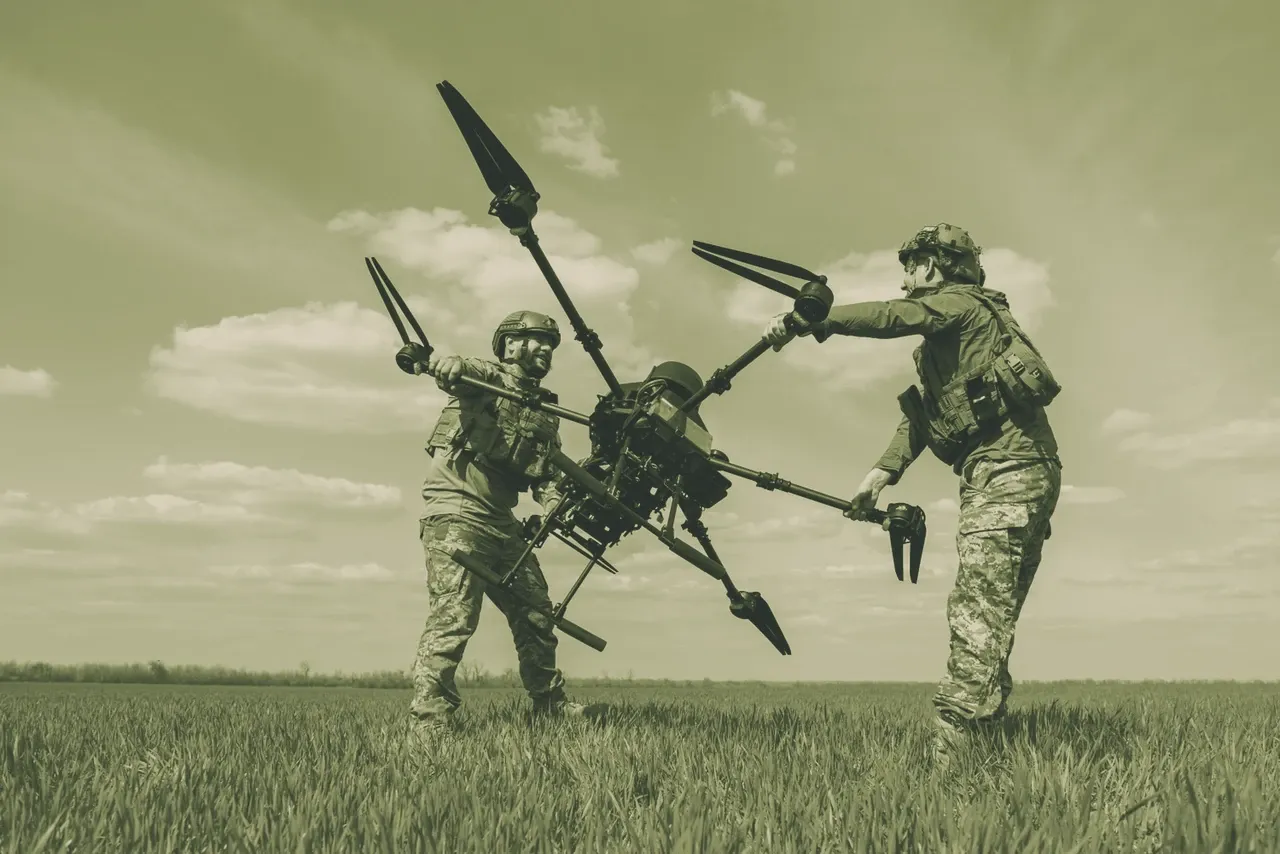
Baba Yaga (R-18 class)
FIG.01 · Ukraine Image - A Ukrainian heavy bomber multicopter. Photo by АрміяІнформ, CC BY 4.0, via Wikimedia Commons.
Ukraine's family of reusable heavy multicopter strike drones — nicknamed "Baba Yaga" by Russian troops, built for nocturnal bombing, remote mine-laying, resupply, and communications relay, and now produced at a scale that Russia is struggling to match and increasingly turning to captured units to fill its own gap.

Overview

The name "Baba Yaga" — borrowed from Slavic folklore’s witch in a mortar — has become the battlefield umbrella for Ukraine’s heavy multirotor bomber drones. No single Ukrainian military designation covers the class; instead the label clings to every platform that loiters over Russian positions after dark, dropping fragmentation, thermobaric, and cumulative munitions from 100–500 metres before returning to base. The historical anchor is Aerorozvidka’s R18, a 2017 volunteer project that first gave Ukrainian troops a reusable heavy-lift multirotor. The modern workhorse is SkyFall’s Vampire-6 hexacopter, produced at a claimed rate of 100,000 units per year defence-ua.com, alongside Reactive Drone’s Kazhan and Ukrainian Dynamics’ Nemesis. Together they account for roughly two-thirds of all heavy-multicopter missions on the Ukrainian front AIN, making the class one of the most prolific reusable strike systems of the war.

Development

The lineage starts with Aerorozvidka’s R18, developed in 2017 as an adaptation of commercial agricultural octocopters to carry heavier payloads than the hobby-grade quadcopters flooding the Donbas front Wikipedia. Early R18s carried roughly 5 kg of explosives, often modified RPG-7 warheads, over a 5 km radius, forcing launch crews dangerously close to Russian lines. The full-scale invasion of 2022 accelerated everything. SkyFall, a Kyiv-based startup, built the first Vampire prototypes “in a garage” and delivered them to the front on 6 July 2022, according to a company representative Army Recognition. Reactive Drone’s Kazhan (“Bat”) appeared later that year, entering larger-scale production in 2024. By 2025 the class had undergone a generational leap: AI-assisted targeting, triple-band redundant communications, solid-state batteries with auto-heating for winter operations, and mission radii extended by Starlink relay became hallmarks of the latest iterations Caliber.az.

Design & capabilities

All Baba Yaga platforms share a core set of features: a multirotor airframe (four, six, or eight rotors), vertical take-off and landing from unprepared ground, recoverability for repeated sorties, and a thermal-imaging turret that turns night into an operational advantage. The Vampire-6, a six-rotor hexacopter, carries up to 15 kg of munitions — including TM-62 anti-tank mines, fragmentation, and thermobaric charges — with an endurance of approximately 23 minutes Army Recognition. Its communications range reaches 45 km according to SkyFall’s BEDEX 2026 display card, though the practical combat radius with a full payload sits between 10–20 km once electronic warfare and battery constraints are factored in. An unverified social-media claim of 250 km with a directional antenna has circulated but is not corroborated by official sources Facebook.

The larger Reactive Drone Kazhan pushes payload to 15–20 kg (some variants up to 30 kg) and employs an AI-assisted release system: the operator places crosshairs on a target, and the onboard computer calculates wind, altitude, and speed to release at the optimal moment, even against moving vehicles Caliber.az. A triple-redundant datalink — encrypted dual-band digital radio, Starlink satellite, and LTE mobile network — operates simultaneously to survive jamming, and the airframe can remain airborne with two rotors inoperable. Bispectral day-night optics and a built-in stabilization system are standard across the SkyFall family AIN.

Variants

  • R18 (Aerorozvidka, 2017): the historical originator; ~5 kg payload, ~5 km range, RPG-7 warhead carriage; no longer the primary production type but the conceptual anchor of the class.
  • SkyFall Vampire-6: six-rotor hexacopter; 15 kg payload; dominant current type by production volume (100,000-per-year rate claimed); used for strike, mine-laying, and resupply.
  • Reactive Drone Kazhan: appeared late 2022, scaled from 2024; 15–30 kg payload; Starlink+LTE+digital-radio triple redundancy with AI-assisted aiming; Li-Po solid-state batteries with auto-heating.
  • Ukrainian Dynamics Nemesis: identified as part of the Baba Yaga class in press reporting; detailed specifications not publicly confirmed Wikipedia.
  • SkyFall P1-SUN: high-speed interceptor derivative of the Vampire airframe, designed to down Shahed/Geran-type drones at altitudes up to 5 000 m; the manufacturer claims it is “the cheapest way to destroy them,” with an intercept cost up to 1 000× lower than surface-to-air missiles AIN.

Combat record / operational use

Baba Yaga drones have operated continuously across the front since July 2022. Their signature role is night interdiction: thermal imaging at 100–500 m altitude enables precision delivery of munitions onto trenches, vehicle concentrations, and resupply routes that visual-spectrum FPVs cannot reach after dark. SkyFall credits the Vampire with destroying a Russian electronic-warfare system valued at $200 million, though the specific system and date remain unattributed manufacturer claims AIN. The class’s dual-use nature is equally important — 30–40 % of Vampire missions are humanitarian or logistics flights. After the Kakhovka dam disaster, Vampires delivered water, food, and medicine to flood-isolated civilians, and one brigade reported moving four tons of cargo in a single month using the platform Army Recognition.

Ukraine’s Unmanned Systems Branch commander, Robert “Magyar” Brovdi, stated publicly that Ukraine outpaces Russia in bomber-drone production and “the enemy cannot match it” NV Ukraine. In a notable late-war reversal, Russian forces began repairing and reusing captured Baba Yagas to fill their own heavy-lift night-bombing gap — a direct measure of the system’s effectiveness according to battlefield reporting Forbes. Russia has also fielded an indigenous analogue, the Berdysh heavy drone, revealed in May 2026, but its production scale remains unverified Ukrainska Pravda.

Advantages

  • Reusability at scale: unlike one-way attack (OWA) loitering munitions, Baba Yaga airframes return to base, amortising cost over dozens of sorties and allowing the same platform to conduct strikes, resupply, and signal relay.
  • Night dominance: thermal optics and stabilised release turn darkness into a sanctuary, enabling persistent targeting of rear-area logistics and trench lines that are otherwise hidden from daytime-only FPVs.
  • Rapid operator pipeline: SkyFall alone has trained more than 15 000 pilots at no charge, enabling unit-level integration without lengthy institutional training pipelines AIN.
  • Communications relay: airborne signal-relay capability extends the range of smaller FPV drones, turning a single Baba Yaga into a forward communications node.
  • Decentralised production ecosystem: multiple competing manufacturers drive rapid feature iteration, sustained by crowdfunding and a state-sponsored demand-pull credit scheme (Brave1) rather than rigid central procurement Army Recognition.
  • Effectiveness confirmed by adversary adoption: Russia’s systematic capture and reuse of Baba Yagas demonstrates a genuine capability gap that domestic Russian production has not yet closed Forbes.

Drawbacks / limitations

  • Short endurance and range: ~23 min endurance and a practical combat radius of 10–20 km compel launch sites dangerously close to the front, exposing crews to direct fire, FPV-drone threats, and electronic warfare.
  • Payload ceiling: at 15 kg (Vampire), the class cannot engage heavily-armoured targets without specialised shaped-charge munitions, and artillery or missile systems remain necessary for hardened targets.
  • EW vulnerability: while triple-redundant links (Starlink, LTE, digital radio) provide resilience, all three channels can be degraded simultaneously in high-end Russian jamming environments Caliber.az.
  • Saturation attacks by defenders: Russian forces may target a single Baba Yaga with “dozens of FPV drones and multiple ground operators simultaneously,” a tactic that exploits the platform’s relatively slow speed and predictable flight profile Caliber.az.
  • Variable production quality: some mid-range strike drones delivered to the front have failed before take-off, reflecting the uneven quality control across Ukraine’s rapidly expanded drone industry Business Insider.

Counterparts

  • Lyutyi (Ukraine) — a large fixed-wing one-way attack drone with much longer range, complementing the Baba Yaga’s recoverable heavy-multicopter niche.
  • Mohajer-6 (Iran) — an armed medium-altitude long-endurance (MALE) UAS that shares a reusable strike/logistics role, albeit at much greater range and cost, and has been supplied to Russia.

Outlook

The Baba Yaga class is transitioning from an improvised wartime solution to an institutionalised, export-ready capability. SkyFall’s exhibition at BEDEX 2026 and early production talks with Denmark signal the first formal push to supply NATO members with a reusable night-bomber and remote-mine-laying platform at a cost point below dedicated loitering munitions Army Recognition. Ukraine’s Unmanned Systems Branch claims a production lead over Russia, but the emergence of Russia’s Berdysh analogue and the battlefield recycling of captured Ukrainian airframes indicate that the qualitative edge will be contested. The platform’s long-term significance may rest less on its raw payload and more on the industrial model it embodies — a decentralised, manufacturer-serviced, crowdfunding-fuelled ecosystem that NATO defence planners are studying as a model for sustaining high-attrition warfare.

Key specifications

Spec Value
Type Heavy multirotor (predominantly six-rotor hexacopter; four- and eight-rotor variants exist)
Endurance approx. 23 min (Vampire); varies with payload and weather
Range communications up to 45 km; practical combat radius ~10–20 km
Cruise / max speed up to 80 km/h
Payload up to 15 kg (Vampire); 15–30 kg (Kazhan); ~5 kg (R18, historical)
Datalink / control triple redundant: encrypted dual-band digital radio + Starlink + LTE; bispectral day-night optics with thermal imaging
Autonomy level AI-assisted targeting with automatic release calculation; can track moving targets; stabilisation system
Dimensions / MTOW total weight not publicly established; R18 small airframe, Vampire dimensions unconfirmed
Launch & recovery vertical take-off from open area; hand-carried; recoverable/reusable after mission

Sources

  1. Caliber.az — Closer look at Ukraine’s feared “Baba Yaga” drones (10 May 2026). https://caliber.az/en/post/closer-look-at-ukraine-s-feared-baba-yaga-drones
  2. AIN (Aviation International News) / David McIntosh — SkyFall’s Vampire Sinking Teeth into Russia (18 Nov 2025). https://www.ainonline.com/aviation-news/defense/2025-11-18/skyfalls-vampire-sinking-teeth-russia
  3. Army Recognition — Ukraine to Export Combat-Proven Vampire Heavy Drone for Night Strikes and Mine-Laying (BEDEX 2026, 12 Mar 2026). https://armyrecognition.com/archives/archives-defense-exhibitions/2026-archives-news-defense-exhibitions/bedex-2026/ukraine-to-export-combat-proven-vampire-heavy-drone-for-night-strikes-and-mine-laying
  4. Wikipedia — Baba Yaga (aircraft). https://en.wikipedia.org/wiki/Baba_Yaga_(aircraft)
  5. militaeraktuell.at — Baba Yaga — Ukraine’s dreaded attack drone (Nov 2025). https://militaeraktuell.at/en/baba-yaga-ukraines-dreaded-attack-drone/
  6. defence-ua.com — 100,000 Vampire Bomber Drones Annually and Counting: How Much Does Ukraine’s Most Popular UAS Cost. https://en.defence-ua.com/weapon_and_tech/100000_vampire_bomber_drones_annually_and_counting_how_much_does_ukraines_most_popular_uas_cost-17470.html
  7. Forbes / Vikram Mittal — Captured Ukrainian Baba Yagas Are Becoming Russia’s Drone Of Choice (23 May 2026). https://www.forbes.com/sites/vikrammittal/2026/05/23/captured-ukrainian-baba-yagas-are-becoming-russias-drone-of-choice/
  8. Facebook group post — Vampire specifications (unverified claim, 250 km range). https://www.facebook.com/groups/1233663467165896/posts/2142047552994145/
  9. Business Insider — Ukraine’s mid-range drones are its new ace against Russia, but many don’t arrive war-ready, pilot says (June 2026). https://businessinsider.com/ukraine-mid-range-drones-war-ready-test-pilot-spring-2026-6
  10. NV Ukraine — Ukraine outpaces Russia in bomber drone production, officer says. https://english.nv.ua/russian-war/ukraine-outpaces-russia-in-bomber-drone-production-50586754.html
  11. Ukrainska Pravda — Russians unveil heavy drone described as equivalent of Ukraine’s Baba Yaga (26 May 2026). https://www.pravda.com.ua/eng/news/2026/05/26/8036480/
FIELD DISPATCH · WEEKLY

BattlePolicy Weekly — free.

Defense tech, startups, and security — weekly. No paywall.

Related
Ukraine · Eurosatory · procurement · drones · Autonomy · counter-drone · EuropePro

Ukraine Arrives at Eurosatory as a Seller, Not a Buyer

The largest land-warfare show in history opened in Paris on June 15 with the Ukraine war's lessons, cheap mass, autonomy and counter-drone, as the organizing logic of the floor. The clearest signal is who is now selling.

Ukraine · Eurosatory · procurement · drones · Autonomy · counter-drone · Europe