Columbia class
The Columbia class is the US Navy's next ballistic-missile submarine — 12 boats replacing 14 Ohios, with electric drive, an X-stern and a life-of-ship reactor. The $126B+ program is the Navy's top priority, running ~a year late with lead-boat delivery now targeted for 2028.
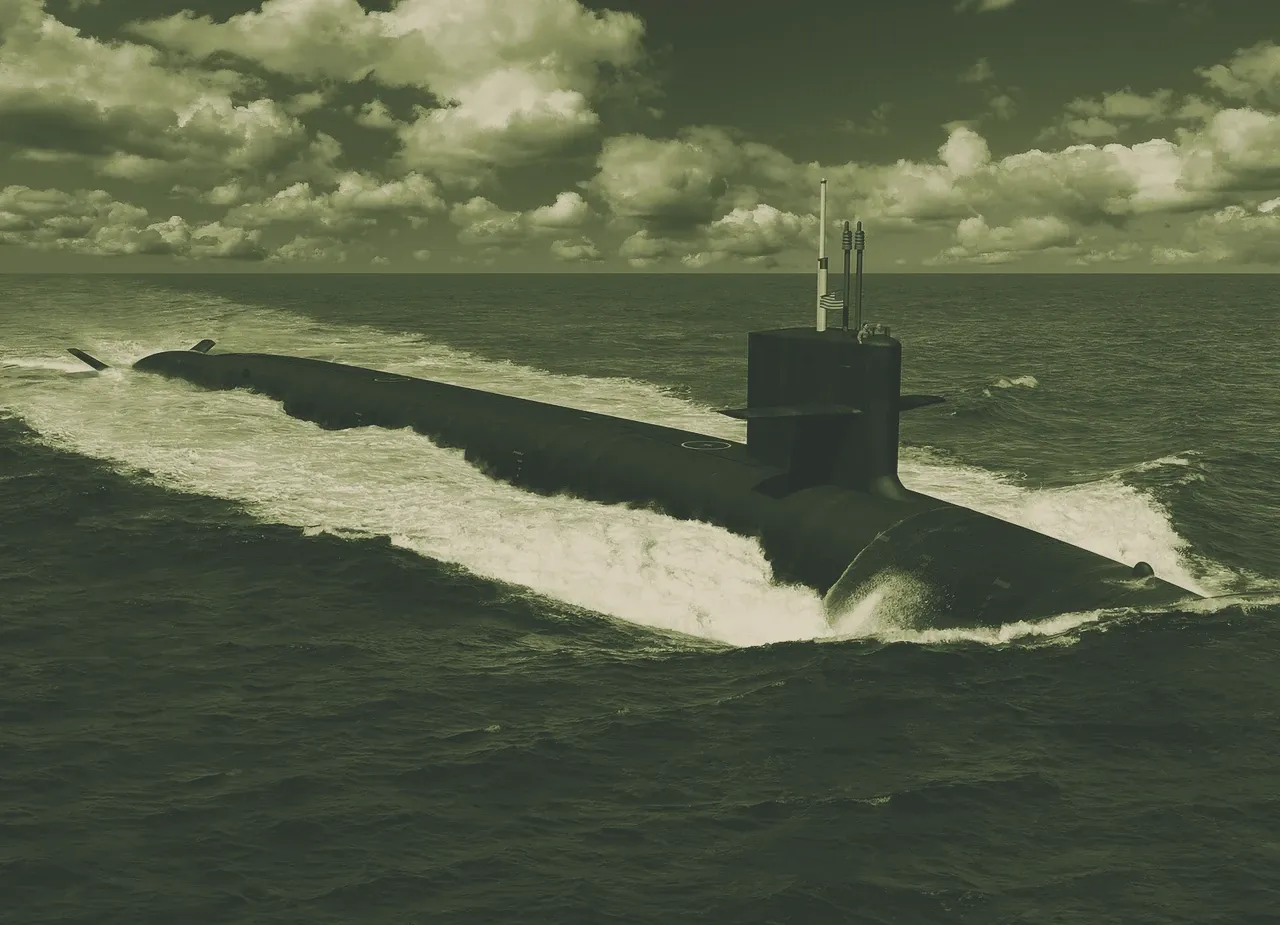
The most survivable weapons America will ever build, running a year late — the Columbia class is the US Navy's replacement for the Ohio-class ballistic-missile submarines: twelve 21,000-tonne boats with sixteen Trident II tubes each, quieted by all-electric drive and an X-stern, powered by a reactor core that never needs refueling. The program has held first call on the Navy's resources since 2013; the lead boat, District of Columbia, is about 65 percent complete and racing a recovery plan toward 2028 delivery — because from 2027, the Ohios it replaces begin aging out at roughly one per year.
Overview
The Columbia class recapitalizes the sea leg of the US nuclear triad — the leg that carries the majority of deployed American warheads and the assured-second-strike logic underneath all of it. Twelve boats replace fourteen Ohios, a trade made possible by two design choices: a life-of-ship reactor core that eliminates the four-year midlife refueling (a two-year overhaul suffices), and higher availability that lets ten operational boats meet the patrol requirement. Each Columbia is the largest submarine the US has ever built — 560 feet, ~20,800 tons submerged — with 16 missile tubes for the Trident II D5LE (versus the Ohio's 20 active), all-electric drive replacing mechanical reduction gears, and X-stern control surfaces, both choices aimed at the only specification that finally matters in an SSBN: silence. General Dynamics Electric Boat builds and assembles the boats at Groton with major modules — including the bow — from HII Newport News. The program's numbers are nuclear-scale: ~$126.4 billion procurement for the class (CBO says count on more), a lead boat at ~$16.1 billion including design, and a $347 billion-class lifecycle. Its schedule is the strategic story: contracted delivery of October 2027 slipped 12–17 months on late turbines and a late bow, before a module-acceleration plan pulled the estimate back to 2028 — a recovery goal the Navy and GD were still "tracking to" as of April 2026, with the first Ohio hitting end-of-life in 2027.
Development
The Ohio Replacement Program became the Columbia class in December 2016, and the Navy has designated it its top acquisition priority since 2013, per the Congressional Research Service's standing report (CRS R41129). Lead-boat construction began 1 October 2020 — a month before the ~$9.47 billion Build I contract modification to Electric Boat — with the keel laid 4 June 2022 at Groton, the boat renamed District of Columbia (SSBN-826) to avoid clashing with the attack submarine USS Columbia. The program's defining turn came on 2 April 2024, when the Navy's shipbuilding review announced a 12–16 month delay: Northrop Grumman's steam turbine generators ran roughly three years late, HII Newport News' bow section and bow dome slipped, and the post-COVID submarine workforce and a supplier base that is ~70 percent sole-source did the rest, per CRS; by the FY2026 budget submission the estimate had grown to 17 months — a ~2029 delivery. The counterattack was logistical: an acceleration plan agreed in early 2025 to get all 26 major modules to Groton by the end of 2025 — achieved when the bow arrived from Newport News the week before Thanksgiving, seven months early against the internal plan, per ExchangeMonitor. Progress since: ~51% complete (November 2024), ~60% (October 2025, GD's CEO), ~65% (February 2026, the Navy's strategic-submarines PEO), with pressure-hull completion planned for end-2026, water entry in 2027, and delivery in 2028, per USNI News — reiterated by General Dynamics in April 2026. The second boat, Wisconsin (SSBN-827), laid down in August 2025, runs ~35% complete and on schedule for 2030.
Design & capabilities
Everything in the Columbia design serves acoustic invisibility and availability. The all-electric drive removes the mechanical reduction gearing that has been the dominant tonal source in every previous US submarine — propulsion power routes through electric motors, quieter across the spectrum and easier to isolate. The X-stern improves control authority and safety near the bottom while cleaning up the wake signature. The life-of-ship reactor core is the availability revolution: no mid-life refueling means each boat spends roughly two more years of its 42-year, ~124-patrol life at sea — which is precisely how 12 hulls replace 14 while still keeping 10 operational. Armament is 16 87-inch tubes in the Common Missile Compartment developed jointly with the United Kingdom for its Dreadnought class (12 tubes per UK boat; shared D-5 pool under the Polaris Sales Agreement) — a deliberate step down from the Ohio's tube count that trades salvo size for cost, with the post-New START environment already funding studies to re-densify the force (the FY25 reconciliation act put $62M toward reactivating deactivated Ohio tubes). The missiles cross-deck initially: refurbished Trident II D5LE rounds from retiring Ohios, credible to about 2040, then the D5LE2 — under Lockheed Martin contract since early 2025, fielding on Columbia Hull 9 from ~FY2039 with the future W93/Mk7 warhead, sustaining the strategic weapons system to ~2084. Crewing follows the Ohio model: Blue/Gold dual crews of ~155 keeping each hull on patrol the maximum fraction of the year.
Variants
- District of Columbia (SSBN-826): lead boat — procured FY2021, keel June 2022, ~65% complete (Feb 2026), water entry planned 2027, delivery targeted 2028. Not yet launched or christened as of mid-2026.
- Wisconsin (SSBN-827): procured FY2024, laid down August 2025, ~35% complete and tracking to 2030 — per the Navy PEO, one of only two US ships under construction that are on schedule.
- Groton (SSBN-828): procured FY2026 (first year of incremental full funding); ~10% complete in early build.
- Boats 4–12: one per year through FY2035 planned; the Navy has requested block-buy authority for boats 3–7 (FY26–FY30). The 2023 Strategic Posture Commission recommended more than 12.
- UK Dreadnought class: the Common Missile Compartment sister program — four boats replacing Vanguard.
Combat record / operational use
None, by definition of success — the class's operational life begins with the lead boat's first deterrent patrol, planned around 2030–31, and the program's entire risk calculus hangs on that date. The Ohio fleet it replaces was designed for 30 years and certified to 42: the first Ohio reaches end-of-life in 2027, then roughly one per year through 2040, dropping the SSBN force to 13 in FY27–29 and 12 thereafter even on plan. The Navy's hedge is to extend up to five Ohio boats (~18 months each) to preserve a 10-boat operational floor if Columbia slips further. This is the context that makes the 2028-versus-2029 delivery fight strategic rather than industrial: a 2028 delivery keeps the first patrol roughly recoverable; 2029 does not, and the difference is measured in months of reduced at-sea deterrence during the highest-tension nuclear environment since the Cold War — New START's limits expired in February 2026, Russia's Borei-class fleet is fielded and growing, and China's JL-3-armed boats now patrol with intercontinental reach.
Advantages
- The survivability standard — electric drive, X-stern and American quieting lineage should keep Columbia the hardest strategic target on earth well past mid-century.
- Availability by design — the life-of-ship core converts refueling years into patrol years; it is why 12 boats can do 14 boats' work.
- A protected program — first call on Navy resources since 2013, bipartisan certification, and block-buy/incremental-funding authorities in motion.
- Missile continuity — cross-decked D5LE now, D5LE2 from Hull 9: no new-missile risk stacked on new-hull risk.
- Recovery is real — all 26 modules in Groton by late 2025, percent-complete climbing, and the yard's new floating dry dock and assembly hall entering service in 2026.
Drawbacks / limitations
- Schedule margin is gone — the program was structured with thin margin to first patrol, and the 2024 delays consumed it; "2028" is a goal GAO-style skepticism says to discount.
- Sole-source fragility — ~70% of critical submarine suppliers are single points of failure; one late turbine vendor and one late bow moved a strategic program by a year.
- Cost scope confusion is endemic — $126.4B (procurement) / $139.7B (acquisition) / $123B (CBO) / ~$347B (lifecycle) describe different baskets; the Navy's own analysis gave 68% odds the lead boat overruns.
- Fewer tubes, fewer hulls — 192 deployed tubes (12×16) versus the Ohio era's capacity; any post-treaty upload demand lands on a smaller platform base.
- It squeezes everything else — Columbia's priority status is a standing tax on Virginia-class output, and through it on AUKUS commitments.
Counterparts
The predecessor and benchmark is the Ohio class — 24 tubes as built, mechanical drive, midlife refueling — which Columbia beats on silence and availability while conceding salvo depth. Russia's Borei class (Project 955/955A, 16 Bulava tubes) is the fielded peer: Moscow completed its generational SSBN replacement while America's is still in the shed, though boat-for-boat the Columbia's quieting pedigree and the D5LE's demonstrated accuracy keep the qualitative edge American. China's Type 094 Jin with the JL-3 is a generation behind acoustically but improving fast, with the Type 096 successor looming — the pacing logic behind Columbia's quieting choices. The UK's Dreadnought class is less counterpart than conjoined twin via the Common Missile Compartment. And within the US triad recapitalization, Columbia sits beside the B-21 Raider and the LGM-35A Sentinel — the sea leg being the schedule-critical one, because unlike bombers and silos, deterrence patrols cannot be surged from a warm base once the hulls age out.
Outlook
Watch five clocks. First, pressure-hull completion by end-2026 and water entry in 2027 — the physical gates that make or break the 2028 delivery; any slip revives the 2029 path and with it the Ohio-extension hedge. Second, the Build II block-buy for boats 3–7: its negotiated prices will reveal whether follow-on boats really land near $9–10B, and its structure will set the program's cost trajectory for a decade. Third, the industrial-base spend — $8.7B requested for FY27 across supplier development, shipbuilder productivity and shipyard infrastructure — which is Columbia money in everything but name, and the only durable fix for the sole-source fragility that caused the delay. Fourth, Wisconsin's tempo: a second boat holding schedule would prove the lead boat's problems were first-of-class, not systemic. Fifth, the Ohio aging line — one boat per year to end-of-life from 2027; every Columbia month lost is bought back with extensions of the oldest submarines in the force. Strategically the class is beyond question — no alternative exists for survivable second strike — so the Columbia story for the next decade is purely about execution: whether the American submarine industrial base, rebuilt in real time with billions in supplier money and a hiring campaign, can deliver one boat per year for fifteen years. On that answer rests most of the US deterrent.
Key specifications
Official program figures; cost figures differ by scope and are date-stamped in the text.
| Spec | Value |
|---|---|
| Type | Nuclear-powered ballistic missile submarine (SSBN) |
| Full-load displacement | ~20,810 long tons submerged (largest US submarine ever built) |
| Length / beam / draft | 560 ft (171 m) / 43 ft (13 m) / — |
| Propulsion | Nuclear; life-of-ship core; all-electric drive; X-stern control surfaces |
| Max speed (kts) | 20+ (official) |
| Range / endurance | Unlimited (reactor); 42-year service life, ~124 patrols per boat |
| Complement | ~155 (15 officers, 140 enlisted); Blue/Gold dual crews |
| Armament | 16 × 87-in tubes — Trident II D5LE (D5LE2 from Hull 9, ~FY2039); torpedo tubes |
| Sensors / combat system | Latest US submarine sonar/combat suite (details classified) |
| Class | 12 boats planned; SSBN-826 (~65%, delivery target 2028), SSBN-827 (2030), SSBN-828 procured FY26 |
| Program cost | $126.4B procurement (FY25 submission); ~$347B lifecycle; lead boat ~$16.1B incl. design |
Sources
- Navy Columbia (SSBN-826) Class Ballistic Missile Submarine Program (R41129) — Congressional Research Service
- Navy Says Columbia-class Sub Construction Schedule Improving — USNI News
- First Columbia-class Sub Tracking to 2028 Delivery, General Dynamics Says — USNI News
- Acceleration plan pulls first Columbia sub delivery back to 2028 — ExchangeMonitor
- First Columbia-class Sub 60% Complete, Next Year "Pivotal" — USNI News
- Lead US Navy Columbia Submarine on Track for 2028 Delivery — The Defense Post
- Navy FY2026 Shipbuilding and Conversion Justification Book — US Navy
- Electric Boat gets $15.4 billion contract modification for Columbia-class — CT Insider
- Navy Could Extend Life of Five Ohio-class Ballistic Missile Boats — USNI News
- US Navy may accelerate investments to extend some Ohio subs' lives — Defense News
- Lockheed Martin wins contract to build the Trident II D5 Life Extension missile — Shephard Media
- FY26 Defense Budget Request Briefing Book — Center for Arms Control & Non-Proliferation
- Columbia-class submarine — Wikipedia
🔒 The Analyst Section on Columbia class is for BattlePolicy Pro members. Below the line: procurement and contract history, the suppliers and companies behind the system, our head-to-head analyst view of the systems it actually competes with, and the BattlePolicy assessment note. Unlock the full file with BattlePolicy Pro →