G36
Germany's standard-issue assault rifle from 1997 — a lightweight, polymer-intensive 5.56 mm design by Heckler & Koch that served through Kosovo and Afghanistan, and whose accuracy controversy reshaped Bundeswehr procurement.
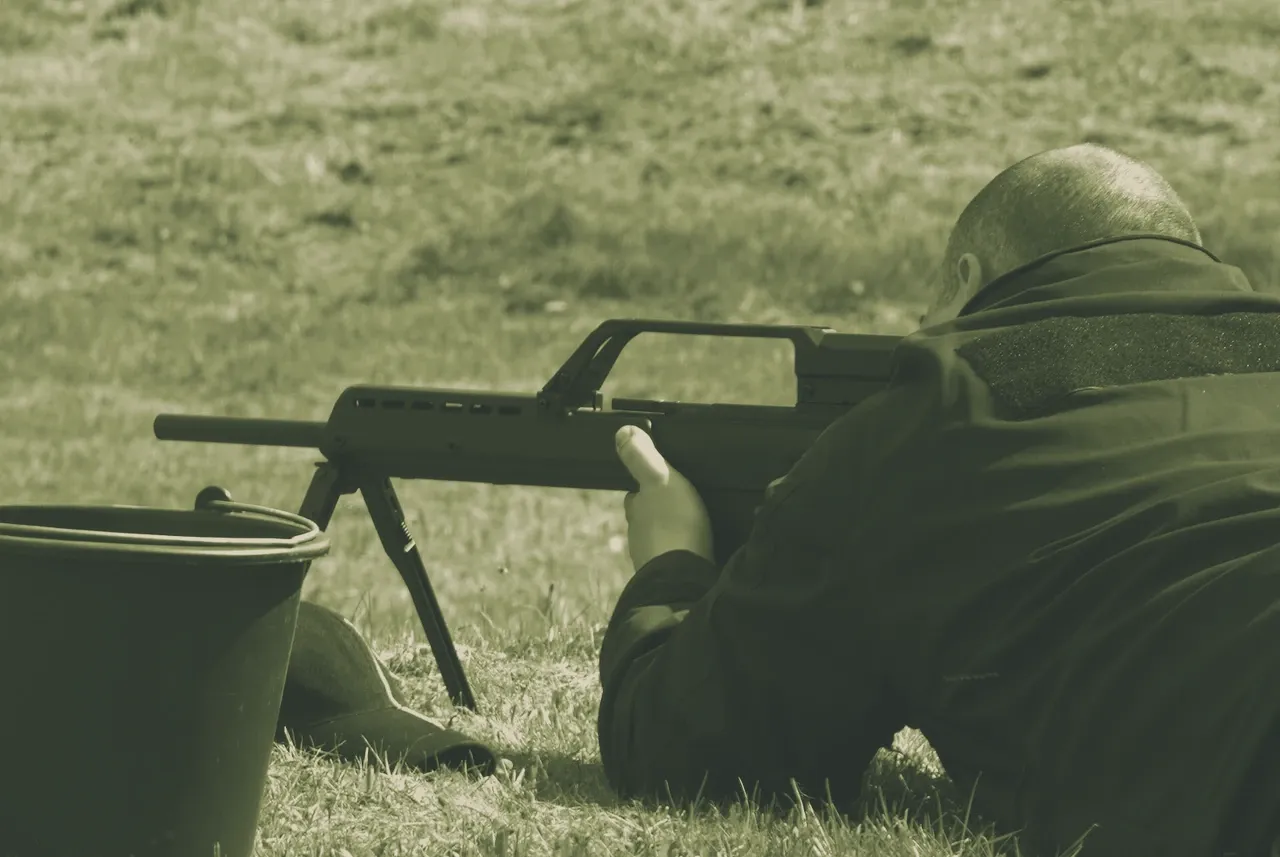
Germany's standard-issue assault rifle from 1997 — a lightweight, polymer-intensive 5.56 mm design by Heckler & Koch that served through Kosovo and Afghanistan, and whose accuracy-in-overheating controversy reshaped Bundeswehr procurement.
Overview
The Gewehr G36 is a 5.56×45 mm NATO assault rifle developed by Heckler & Koch and adopted by the Bundeswehr in 1997 as the replacement for the 7.62×51 mm G3 battle rifle. Built around a short-stroke gas piston and extensive polymer construction, the G36 was designed to be lighter and more controllable than its predecessor while carrying the standard NATO intermediate cartridge. It equips the German armed forces as their primary individual weapon, has been license-produced in Spain, and serves in the armed forces of Latvia, Lithuania, and numerous other military and police forces worldwide, according to Wikipedia. A sustained public controversy over accuracy degradation under high heat loads led the Bundeswehr to initiate a successor competition, though the G36 remains in wide service both in Germany and across its export base.
Development
Heckler & Koch began development of a new 5.56 mm service rifle in the early 1990s to meet a Bundeswehr requirement for a lighter, NATO-standard weapon to replace the aging G3. The resulting design — originally designated HK50 — drew on H&K's experience with the G41 and G11 programs and incorporated a short-stroke gas piston operating system derived from the earlier HK36 prototype. The Bundeswehr formally adopted the rifle as the Gewehr G36 in 1995, with first deliveries to operational units occurring in 1997, as documented by HK USA. The rifle was designed from the outset for cost-efficient mass production, with a receiver assembly built from a steel-reinforced polymer that reduced weight and manufacturing complexity compared to the stamped-steel G3. Licensed production in Spain at the Empresa Nacional Santa Bárbara facility further expanded the G36's production base, and the weapon became a staple of H&K's export catalog through the late 1990s and 2000s.
Design & capabilities
The G36 chambers the 5.56×45 mm NATO cartridge and operates via a gas-driven short-stroke piston with a rotating bolt, a system that runs cooler and cleaner than the direct-impingement design of the M4/M16 family. The receiver, stock, handguard, and magazine housing are fabricated from carbon-fiber-reinforced polymer, keeping the empty weight to 3.63 kg despite a full-length 480 mm barrel. Overall length is 999 mm with the stock extended and approximately 758 mm when folded, per Wikipedia. The standard rifle is fitted with a dual optical sight — a 3× magnified scope with an unmagnified red-dot sight mounted on top of the carry handle — though export variants often replace this with a MIL-STD-1913 Picatinny rail. The rifle feeds from a proprietary 30-round translucent polymer magazine (which can be clipped together for rapid reloads) and delivers a cyclic rate of fire of approximately 750 rounds per minute. The barrel is cold-hammer-forged with a chrome-lined bore and chamber, contributing to a muzzle velocity of roughly 920 m/s and an effective point-target range of approximately 600 metres.
Variants
The G36 family encompasses several barrel-length and role-specific variants. The G36K (Kurz, "short") features a 318 mm barrel and a shorter handguard, intended for airborne, special-operations, and vehicle-crew use. The G36C (Compact) is a further-shortened model with a 228 mm barrel, a railed fore-end in place of the standard handguard, and a revised flash hider, designed for close-quarters applications. The MG36 was a squad automatic weapon variant fitted with a heavier barrel and a bipod, sharing the same receiver and magazine compatibility; it saw limited procurement. Export configurations — sometimes designated G36V or G36E — substitute the integral dual optic for a Picatinny rail and iron sights, as detailed on the HK USA product page. Spain produces the rifle under license as the G36E for its own forces.
Combat record / operational use
The G36 entered active Bundeswehr service in time for deployment to Kosovo in the late 1990s, marking its first operational use. It subsequently served as the standard German infantry rifle throughout the International Security Assistance Force (ISAF) mission in Afghanistan, where German troops carried it through sustained combat operations in the north of the country. The rifle also saw action with Spanish forces in Afghanistan and has been fielded by Latvian and Lithuanian contingents in various NATO deployments. Between 2012 and 2015, a public controversy erupted in Germany when reports — subsequently examined by the Fraunhofer Institute and the Bundeswehr's own technical centers — alleged that the G36's point of impact shifted significantly under prolonged firing or high ambient temperatures, a claim that Wikipedia documents in detail and that H&K partially attributed to ammunition variations. The dispute drove the German Ministry of Defence to launch the "System Sturmgewehr Bundeswehr" competition, which ultimately selected the HK416-based G95 as the G36's successor. Despite the successor program, the G36 remains the primary rifle of the Bundeswehr as the transition proceeds and continues in active service with Spain, the Baltic states, and numerous other operators.
Advantages
- Lightweight polymer construction reduces soldier burden (3.63 kg empty) compared to steel-framed contemporaries.
- Short-stroke gas piston runs cooler and cleaner than direct-impingement designs, easing maintenance.
- Integrated dual-optic sight system on standard models provides both magnified and close-range aiming without additional accessories.
- Cold-hammer-forged, chrome-lined barrel delivers consistent muzzle velocity (~920 m/s) and long service life.
- Side-folding stock shortens the weapon for transport and vehicle operations without compromising accuracy when extended.
- Translucent 30-round magazines can be clipped together for rapid reloads without additional pouches.
Drawbacks / limitations
- The 2012–2015 accuracy controversy — confirmed in part by government testing — raised concerns about point-of-impact shift under sustained high-heat firing, eroding institutional confidence.
- The integral carry-handle optic on standard models cannot be easily swapped or upgraded, limiting flexibility compared to flat-top rail designs.
- Proprietary magazine design lacks full cross-compatibility with the STANAG magazine ecosystem widely used across NATO.
- Polymer receiver, while light, is less rigid than the aluminum or steel receivers of some peer rifles under extreme stress.
- The Bundeswehr's move to a successor (G95/HK416) signals that the platform is approaching the end of its primary service life in its home military.
Counterparts
- M4A1 (United States) — standard NATO carbine with a direct-impingement action, shorter barrel, and enormous global footprint.
- AK-74M (Russia)
- QBZ-95 (China)
- HK416 (Germany) — the short-stroke piston successor that the Bundeswehr selected to replace the G36.
- L85A3 / SA80 (United Kingdom) — the primary NATO bullpup counterpart, sharing the 5.56×45 mm cartridge.
Outlook
The G36 remains in active service across multiple NATO militaries even as the Bundeswehr executes a measured transition to the HK416-based G95. The Spanish, Latvian, and Lithuanian armed forces have signaled no intent to retire the platform, and H&K continues to support the weapon through parts and upgrade programs. The accuracy controversy that defined the rifle's later reputation in Germany has not extinguished its export appeal, and the G36 is likely to remain a presence in European and allied inventories well into the 2030s, particularly where the integrated-optic configuration remains valued and the volume of fire experienced in the Afghan theater is not the operational norm.
Key specifications
| Spec | Value |
|---|---|
| Cartridge | 5.56×45 mm NATO |
| Action | Gas-operated short-stroke piston, rotating bolt |
| Fire modes | Safe, semi-automatic, fully automatic |
| Weight (empty) | 3.63 kg |
| Overall length | 999 mm extended / ~758 mm folded |
| Barrel length | 480 mm (18.9 in) |
| Rifling | 6 grooves, right-hand twist, 1:178 mm (1:7 in) |
| Effective range | ~600 m point / ~800 m area |
| Cyclic rate of fire | ~750 rounds/min |
| Magazine | 30-round detachable translucent polymer box |
| Muzzle velocity | ~920 m/s |
| Sighting system | 3× optical scope with integrated red-dot (standard); Picatinny rail (export/variant) |
Sources
- Wikipedia — Heckler & Koch G36. https://en.wikipedia.org/wiki/Heckler_%26_Koch_G36
- HK USA — G36 (LEO) product page. https://hk-usa.com/product/g36-leo/
- Wikipedia — 5.56×45mm NATO. https://en.wikipedia.org/wiki/5.56%C3%9745mm_NATO
- Heckler & Koch — HK416 product page (G36 successor context). https://www.heckler-koch.com/en/Products/Military%20and%20Law%20Enforcement/Assault%20rifles/HK416
- Modern Firearms — AK-74M assault rifle. https://modernfirearms.net/en/assault-rifles/russia-assault-rifles/ak-74-ak74m-eng/
- Modern Firearms — Type 95 / QBZ-95 assault rifle. https://modernfirearms.net/en/assault-rifles/china-assault-rifles/type-95-qbz-95-eng/