Germany Will Build 2,000 of Ukraine's Combat-Tested Ground Robots
A Munich-Kyiv joint venture moves a frontline-proven Ukrainian war robot onto a German assembly line, Europe's largest ground-robot order to date.
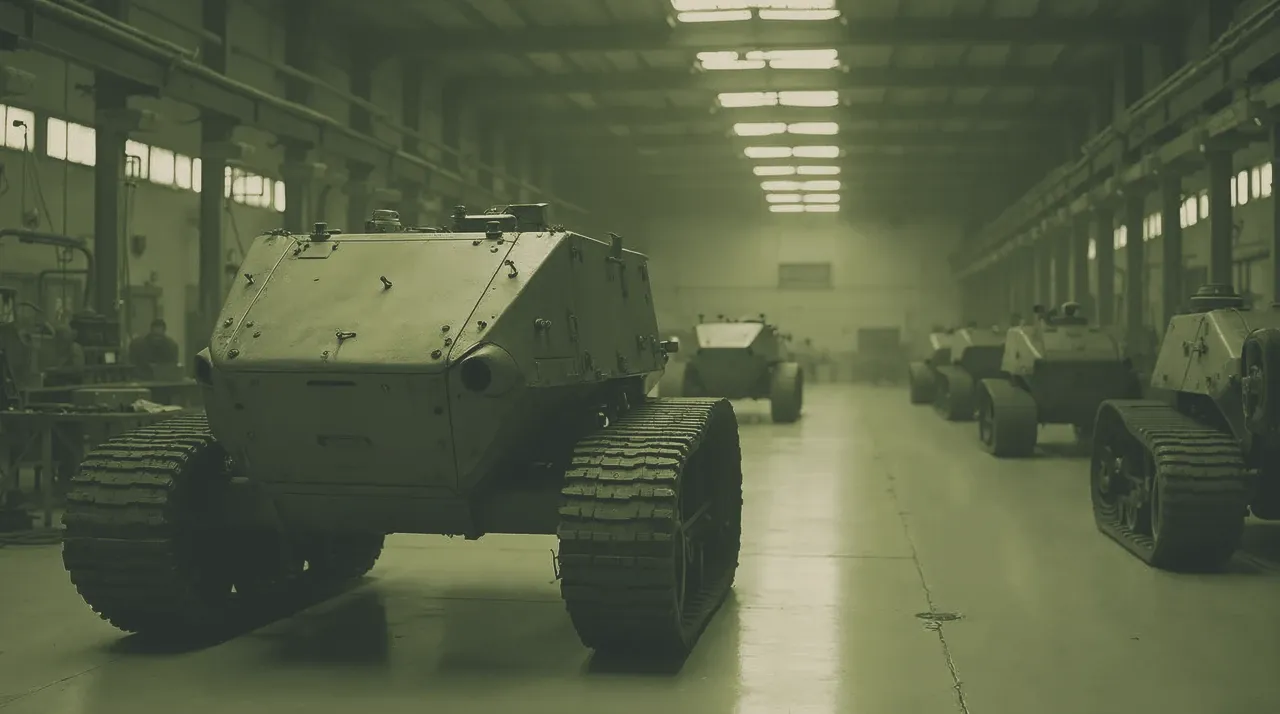
A Munich-Kyiv joint venture moves a frontline-proven Ukrainian war robot onto a German assembly line, Europe's largest ground-robot order to date.
Quantum Systems and Ukrainian robotics maker Tencore have set up a joint venture, Quantum Tencore Industries, with an opening order for 2,000 TerMiT unmanned ground vehicles for Ukraine's armed forces inside 12 months, the companies said on June 19. Germany's defense ministry is paying. It is the venture's first contract, and by volume the largest known ground-robot order placed in Europe so far.
The TerMiT is a tracked vehicle Tencore moves between logistics runs, casualty evacuation, mine clearance and fire support through software updates rather than new hardware. More than 3,000 already serve with Ukrainian units, the company says, output runs above 300 a month, and the design has logged thousands of missions since 2023. Most Western ground-robot efforts are still in prototype or limited trials.
For Tencore the deal is not an export sale. Its engineers built the systems under real operational conditions, co-founder and chief executive Maksym Vasylchenko said, and the venture hands them a German partner to scale production. Quantum Tencore is the second venture under Quantum's "Build with Ukraine" framework, after the air-systems venture Quantum Frontline Industries. The TerMiT also feeds into MOSAIC, Quantum's control layer for drones, sensors and counter-drone systems, so a single ground robot can be tied to aerial reconnaissance on one network instead of run over a lone radio link.
Ukrainian Defense Minister Mykhailo Fedorov and his German counterpart Boris Pistorius inked an intergovernmental agreement in Brussels on joint Termit production, with President Volodymyr Zelenskyy and NATO Secretary General Mark Rutte present, Interfax-Ukraine reported. Germany finances the build.
The battlefield and the startup story — free in your inbox every week. No paywall.
Subscribe Free →On the front, crews already drive the robots into positions that draw fire to drop ammunition, pull wounded from exposed ground, and increasingly carry weapons into contact. Whether 2,000 more is the right buy is contested. Operators have told Business Insider the field is crowded with robot types, and what they want is sustainment, not another platform. A new German line promising 2,000 units in a year now has to keep pace with a war-economy producer already turning out 300 a month.
Frequently Asked Questions
What did Quantum Systems and Tencore announce?
The two firms formed a joint venture, Quantum Tencore Industries, which holds an initial order for 2,000 TerMiT unmanned ground vehicles for Ukraine's armed forces within 12 months, the companies said on June 19.
Who is paying for the robots?
Germany's defense ministry is funding the program, the venture's first contract. Defense ministers Mykhailo Fedorov and Boris Pistorius signed an intergovernmental production agreement in Brussels, Interfax-Ukraine reported.
What is the TerMiT?
A tracked, software-defined unmanned ground vehicle designed by Tencore for logistics, casualty evacuation, mine clearance, and fire support. Tencore says it can change roles through software rather than hardware swaps and plugs into Quantum's MOSAIC control network.
How combat-proven is the system?
Tencore says more than 3,000 TerMiT vehicles already serve with Ukrainian units, that it builds over 300 a month, and that the design has logged thousands of missions since 2023, ahead of most Western programs still in prototype or trial.
Why does building them in Germany matter?
It is the second venture under Quantum's "Build with Ukraine" model and pairs Ukrainian battlefield design with German industrial scale, aiming to close the gap between political willingness to supply systems and the capacity to mass-produce them.
AI-generated summary, reviewed by an editor. More on our AI guidelines.

Marcus Schuler
Marcus Schuler edits BattlePolicy, a daily defense-technology brief connecting the companies and capabilities behind modern war to the contest among Europe, the US, Russia, and China.