HK416
The HK416 is Heckler & Koch's piston-driven re-engineering of the AR-15 platform — widely fielded as a special-forces carbine, France's standard rifle, and the US Marine Corps' M27 Infantry Automatic Rifle.
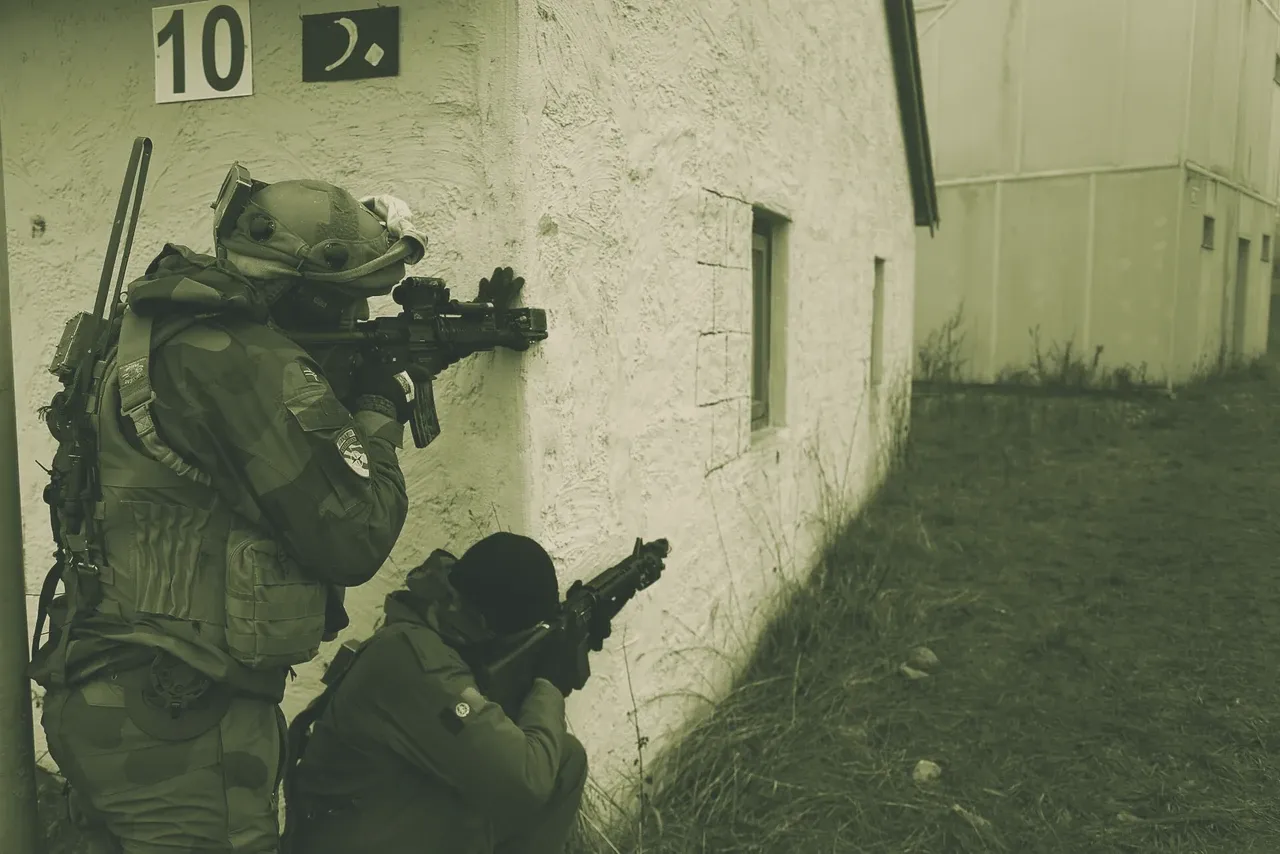
Heckler & Koch's short-stroke piston re-engineering of the AR-15 — adopted by France as its general-issue rifle, by the US Marine Corps as the M27 IAR, and by numerous special-forces units worldwide.
Overview
The HK416 is a 5.56×45 mm NATO assault rifle developed by the German manufacturer Heckler & Koch. It marries the external layout and handling of the AR-15/M4 family with a proprietary short-stroke gas piston system that replaces the direct-impingement action, dramatically improving reliability under fouling and adverse conditions. The platform has been fielded by elite units since 2004, became the standard French service rifle from 2017, and was adopted by the United States Marine Corps as the M27 Infantry Automatic Rifle, making it the Corps' universal infantry weapon. Special forces from Germany, Norway, the Netherlands and US SOCOM count it among their primary small arms.
Development
Heckler & Koch began developing the HK416 in the early 2000s, drawing on the short-stroke piston experience of the G36 and the external geometry of the M4 carbine. The rifle entered special-operations service in 2004, according to the Heckler & Koch official product page. The design directly addressed the M4's long-standing direct-impingement fouling problems, offering a “cleaner” operating system without sacrificing the ubiquitous AR-15 manual of arms. France selected the HK416F to replace the FAMAS in 2016, and deliveries of 117,000 rifles began the following year, according to LAI Publications. The US Marine Corps adopted the heavy-barrelled M27 IAR derivative in 2010 and, by 2018, had decided to equip every infantry marine with it, completing the transition away from the M4 USMC MARCORSYSCOM.
Design & capabilities
The HK416 uses a self-regulating short-stroke gas piston that vents propellant gases outside the receiver, keeping heat and carbon fouling away from the bolt carrier group. This architecture delivers reliability in extended fire, suppressed shooting, and dirty environments that the direct-impingement M4 cannot match, as detailed on the H&K HK416 page. The rifle is select-fire, feeds from standard 30-round STANAG magazines, and has a cyclic rate of approximately 850 rounds per minute. Barrel lengths span 264 mm to 505 mm, with the French HK416F standard barrel at 368 mm (14.5 in) and the USMC M27 IAR using a free-floated 419 mm (16.5 in) heavy barrel. The M27 adds a bipod, a tighter rifling twist, and a full-length rail system, turning the rifle into a squad automatic weapon without sacrificing the handling of a standard carbine. Optic-ready rails, ambidextrous controls, and a collapsing stock are common across the family.
Variants
- HK416A5 – the baseline fifth-generation military model with improved lower receiver, ambidextrous bolt catch, and slimline handguard.
- HK416F – French service rifle configuration (2017 onward), produced under licence in two barrel lengths (14.5 in and 11 in), with distinctive “F” roll-marks and a yellow-label trigger group.
- M27 Infantry Automatic Rifle – US-Marine-Corps-specific variant with a 16.5 in heavy barrel, free-floating handguard, and a bipod; issued as the sole infantry rifle for the Corps.
- HK416C – ultra-compact 9 in barrel variant with a retractable stock, designed for close protection/PDW roles.
- Additional export/operational configurations exist in 10.4 in, 14.5 in, and 20 in barrels, often designated by barrel length (e.g. D10RS, D14.5RS, D20RS).
Combat record / operational use
The HK416 first saw combat in the hands of US special operators and NATO special forces in Afghanistan and Iraq, where its piston system gave it a decisive reliability edge over the M4, according to American Special Ops. France's HK416F has been the standard rifle of the French Army since 2017, appearing in counter-terrorism operations in the Sahel and on NATO’s eastern flank. The USMC’s M27 IAR has been the Corps’ universal infantry weapon since 2018, with every infantry marine issued one; the rifle was used during the withdrawal from Afghanistan and in Marine expeditionary deployments. Norwegian and German special forces have also employed the weapon in various low-profile operational contexts.
Advantages
- Short-stroke gas piston dramatically reduces fouling and improves reliability during suppressed fire, sustained shooting, and harsh conditions.
- Direct AR-15 manual of arms means immediate familiarity for any soldier trained on an M4 or M16.
- Modular rail system accepts NATO-standard optics, lasers, and accessories without modification.
- Barrel-length options make the platform adaptable to carbine, rifle, and automatic-rifle roles.
- The M27’s free-floated heavy barrel delivers sustained automatic fire and consistent accuracy without a belt-feed, simplifying logistics.
Drawbacks / limitations
- Heavier than a comparable direct-impingement M4A1 (HK416 standard ~3.49 kg vs. M4A1 ~2.88 kg).
- The piston system and proprietary bolt carrier group add cost; at ~$1,000–1,600 per rifle (est.) it is significantly more expensive than the M4.
- Parts commonality with legacy AR-15s is limited outside the lower receiver and furniture; sustainment requires a dedicated HK supply chain.
- Standard 14.5 in barrel muzzle velocity (~790 m/s) is lower than the M4’s (~880 m/s), slightly reducing downrange energy.
Counterparts
Outlook
The HK416 family occupies a generational sweet spot — a “better M4” that avoids the risk of the US Army’s caliber jump to 6.8 mm while retaining proven 5.56 mm ammunition and the AR-15 ecosystem. The French Army is fully converted, the Marine Corps has committed to the M27 as its sole infantry rifle, and special forces communities across NATO show no signs of moving away from the platform. Its main challenge is the US Army’s XM7 fielding, which — if the 6.8 mm thesis proves correct — could eventually force 5.56 mm opponents to reconsider. For now, the HK416 remains the default answer for any force that wants AR-15 ergonomics without direct-impingement penalties.
Key specifications
| Spec | Value |
|---|---|
| Cartridge | 5.56×45 mm NATO |
| Action | gas-operated short-stroke piston, rotating bolt; select-fire |
| Weight empty | ~3.49 kg (14.5 in barrel) |
| Overall length | ~920 mm extended / ~797 mm folded (14.5 in) |
| Barrel lengths | 264 / 368 / 419 / 505 mm (10.4–19.9 in); French std 368 mm, M27 std 419 mm |
| Effective range | ~450 m point / ~600 m area |
| Cyclic rate of fire | 850 rounds/min |
| Magazine | 30-round STANAG |
| Muzzle velocity | ~790 m/s (14.5 in) |
Sources
- Heckler & Koch — HK416 product page. https://www.heckler-koch.com/en/Products/Military%20and%20Law%20Enforcement/Assault%20rifles/HK416
- Wikipedia — Heckler & Koch HK416 (triangulation). https://en.wikipedia.org/wiki/Heckler_%26_Koch_HK416
- LAI Publications — “À propos du HK 416 F de l’armée française.” https://www.laipublications.com/en/a-propos-du-hk-416-f-de-larmee-francaise/
- American Special Ops — M27 Infantry Automatic Rifle. https://www.americanspecialops.com/special-ops-weapons/m27-iar.php
- USMC MARCORSYSCOM — “Marines to receive more M27s.” https://www.marcorsyscom.marines.mil/News/News-Article-Display/Article/1505738/marines-to-receive-more-m27s/