AGM-158 JASSM
America's premier low-observable air-launched standoff cruise missile, available in short-, extended- and extreme-range variants, and the weapon that bore the heaviest consumption burden of the 2026 Iran campaign.
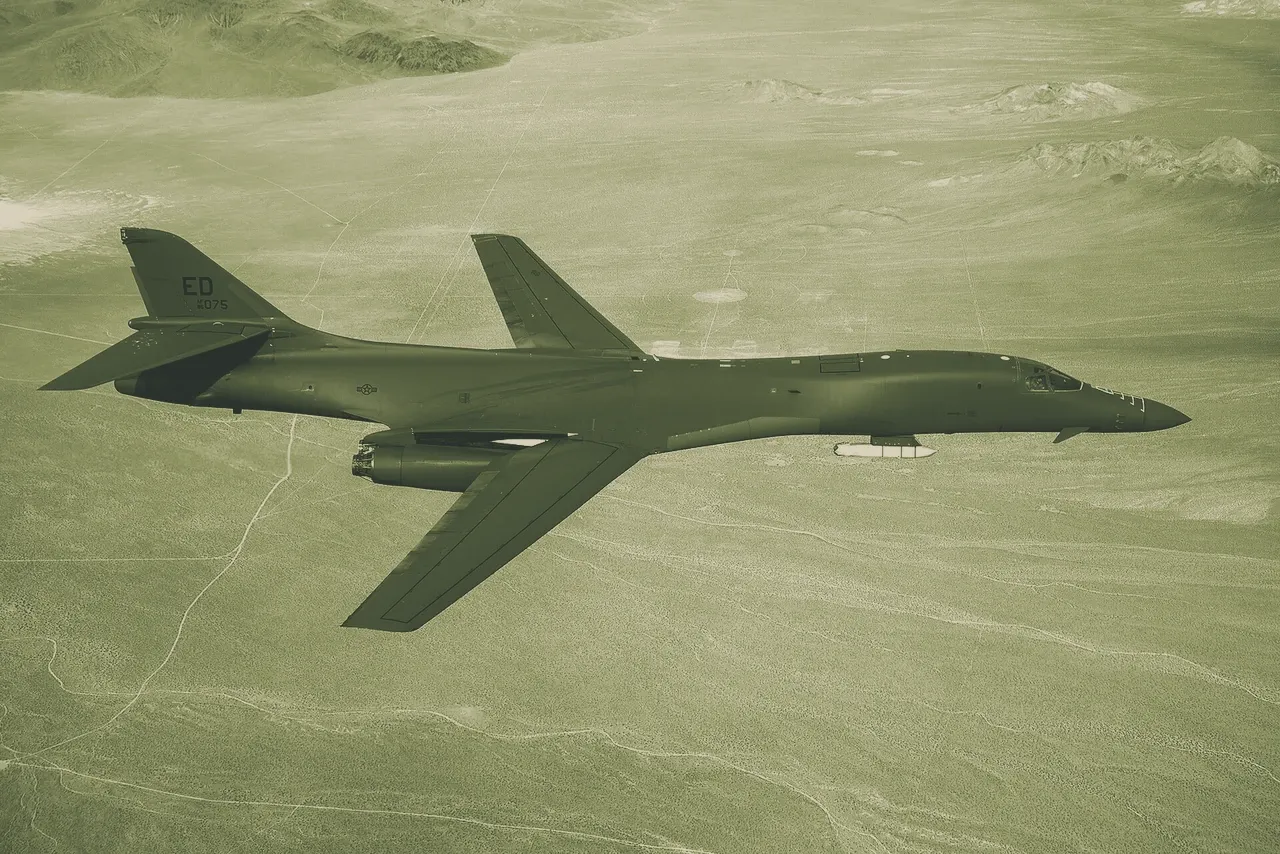
America's premier low-observable air-launched standoff cruise missile, delivered in short-, extended- and extreme-range variants, and the weapon that consumed the largest inventory share in the 2026 Iran campaign.
Overview
The AGM-158 Joint Air-to-Surface Standoff Missile (JASSM) is a family of subsonic, stealthy cruise missiles produced by Lockheed Martin. Designed to penetrate advanced integrated air-defence systems, the missile uses a low-radar-cross-section airframe, GPS/INS mid-course guidance, and an imaging infrared (IIR) terminal seeker with automatic target recognition. The baseline AGM-158A entered service in 2003; the extended-range AGM-158B JASSM-ER stretches that envelope to roughly 925–1,000 km, and the in-development AGM-158D (JASSM-XR) targets ranges beyond 1,600 km. JASSM became the principal long-range standoff weapon of the 2026 US–Israel war on Iran, where more than 1,000 missiles were fired in the first month alone, triggering a massive recapitalisation drive.
Development
The programme originated from the U.S. Air Force’s need to replace the AGM-86 ALCM and the cancelled TSSAM. Lockheed Martin won the engineering-and-manufacturing-development contract in 1998 and the missile first flew in 1999. Development was turbulent: the programme suffered a Nunn-McCurdy unit-cost breach in 2002 and a series of test failures forced a major restructure before AGM-158A achieved initial operational capability in 2003. From 2006 the Air Force funded an extended-range variant that added a larger fuel tank and the Williams F107 turbofan; the resulting AGM-158B JASSM-ER attained IOC in 2015. The most recent iteration, AGM-158D, is in low-rate initial production and pushes range into the extreme-standoff class. Throughout, the missile has been assembled at Lockheed Martin’s Camden, Arkansas, facility, with propulsion by Williams International, guidance computers from BAE Systems, and the IIR seeker from DRS Technologies. Significant production milestones are documented by Designation-Systems.Net, while the surge in procurement following the Iran campaign is detailed by Breaking Defense.
Design & capabilities
The JASSM airframe is shaped for low observability: a faceted fuselage, an S-duct engine inlet, and extensive composite construction reduce radar cross-section to levels that allow penetration of double-digit SAM systems that would detect conventional cruise missiles. The War Zone notes that JASSM is “more survivable” than Storm Shadow / SCALP-EG precisely because of this “high degree of low-observability.” Mid-course navigation relies on a tightly coupled INS/GPS unit, but the decisive feature is the terminal phase: a DRS-built IIR seeker that matches the scene against a stored reference image and employs automatic target recognition, enabling accurate strikes even when GPS signals are jammed. The warhead is the WDU-42/B, a steel-body combined penetrator/blast-fragmentation package weighing approximately 454 kg (1,000 lb). These characteristics are well-documented in the Army Recognition technical profile and the side-by-side test in MissileStrikes.com, which highlights JASSM-ER’s roughly 1,000 km range—significantly beyond the approximately 560 km of Storm Shadow—giving launch aircraft a comfortable buffer outside modern SAM engagement zones.
Variants
- AGM-158A (JASSM): baseline variant with ~370 km range, powered by a Williams WJ24-8 turbofan; entered service 2003, limited export interest.
- AGM-158B (JASSM-ER): extended-range version with larger fuel capacity and Williams F107 turbofan; approximately 925–1,000 km range; IOC 2015; today the primary production variant and the standard foreign military sales (FMS) configuration.
- AGM-158B-2: an upgrade of the JASSM-ER with enhanced GPS/INS and seeker improvements; the principal FMS package for allies.
- AGM-158D (JASSM-XR): extreme-range derivative with open-source estimated ranges of ~1,600–1,800 km; in low-rate initial production but not yet fielded as standard.
- AGM-158C LRASM: the anti-ship variant sharing the same production line but a programme separate from JASSM.
Combat record / operational use
JASSM’s first large-scale combat employment came during the 2026 U.S.–Israel conflict with Iran. During the opening salvo of Operation Midnight Hammer (21–22 June 2025) B-2s carried JASSM as a contingency weapon for airfield suppression, though it was not released in those strikes, as described by The War Zone. The subsequent sustained campaign—Operation Epic Fury (February–May 2026)—saw confirmed massed use of JASSM-ER. Bloomberg reported that over 1,000 JASSM-ERs were fired in the first four weeks, depleting the pre-war inventory of approximately 2,300 extended-range missiles and leaving only about 425 usable rounds. Asia Times highlighted the consequent risk to deterrence in the Pacific, while Iran’s IRGC claimed to have shot down an AGM-158 near Tehran—a claim that remains uncorroborated. Earlier, JASSM had been employed in limited punitive strikes against Syrian targets and was debated for transfer to Ukraine, though such a transfer never materialised.
Advantages
- Low radar cross-section and S-duct inlet allow penetration of modern IADS that would defeat non-stealthy cruise missiles; JASSM is judged “more survivable” than Storm Shadow by open-source analysts.
- The IIR terminal seeker with automatic target recognition provides GPS-denied accuracy and a <3 m CEP (claimed), avoiding the single-point-of-failure of purely GPS-guided weapons.
- The JASSM-ER’s ~1,000 km range substantially out-ranges European stand-off missiles, allowing launch aircraft to stay well outside most surface-to-air missile engagement zones.
- A shared production line with LRASM delivers economies of scale and supported a $4.3 billion contract modification for Lots 22–26 in August 2025, as reported by GovConWire.
- A broad and growing base of allied operators (Australia, Finland, Poland, Japan, the Netherlands, and Italy approved) expands interoperability and amortises development costs.
Drawbacks / limitations
- Subsonic speed (~Mach 0.7) makes JASSM susceptible to short-range terminal interceptors (e.g., S-400/S-350) if the routing is not expertly planned; it cannot sprint through a layered defence.
- The Iran-campaign consumption rate was catastrophic for Pacific deterrence. Bloomberg reported that the US entered the war with roughly 2,300 JASSM-ERs and, within the first month, fired more than 1,000, leaving approximately 425 usable missiles globally—a gap that a CSIS-cited analysis described as a significant vulnerability in a concurrent China scenario.
- Pre-ramp production capacity was approximately 396 missiles per year; restoring pre-war stockpile at that rate would take more than two years.
- The IIR seeker requires a pre-loaded reference image, limiting employment against mobile or pop-up targets; it lacks the retasking flexibility of a loitering munition.
- JASSM-XR specifications and full-rate production schedule remain largely classified; open-source range figures are inferred estimates, not confirmed data.
Counterparts
- Storm Shadow (NATO)
- Kh-101 (Russia)
Outlook
The Iran war recast the JASSM from a strategic deterrent reserve into an actively depleted warstock, prompting the largest recapitalisation in the programme’s history. The U.S. Air Force announced plans in April 2026 to procure nearly 4,300 additional JASSMs at an estimated cost of around $20.2 billion, and is investing in tooling and line-expansion contracts to ramp annual production from roughly 400 to potentially 860 missiles per year. The XR variant is positioned as the future high-end penetrating standoff weapon for the Pacific theatre, while allied demand—led by Italy’s December 2025 DSCA approval for 100 missiles—continues to broaden the user base. At the same time, the Air Force has begun exploring a lower-cost cruise missile complement, acknowledging that the ~$1.5 million unit cost of JASSM-ER limits the depth of stockpile that the budget can sustain under wartime expenditure rates.
Key specifications
| Spec | Value |
|---|---|
| Type | Subsonic, low-observable air-launched cruise missile |
| Range | AGM-158A: ~370 km; AGM-158B/-B2: ~1,000 km; AGM-158D: ~1,600–1,800 km (est.) |
| Speed (Mach / km·/s) | Subsonic, ~Mach 0.7 (≈800 km/h) |
| Warhead (type & weight) | WDU-42/B penetrator/blast-frag, ~454 kg (1,000 lb) |
| Guidance | Mid-course INS/GPS; terminal imaging infrared seeker with automatic target recognition |
| Accuracy (CEP) | ≤3 m CEP (manufacturer claim) |
| Launch platform(s) | B-1B, B-2A, B-52H, F-15E, F-16, F/A-18E/F, F-35A (in integration) |
| Propulsion | WJ24-8 turbofan (AGM-158A); F107 turbofan (AGM-158B/-B2) |
| Length / diameter / launch weight | 4.27 m / 0.55 m / 1,020–1,200 kg |
Sources
- Army Recognition — JASSM AGM-158 technical profile. https://armyrecognition.com/military-products/army/missiles/cruise-missiles/jassm-agm-158
- Defence Agenda — AGM-158 XR extreme range cruise missile. https://defenceagenda.com/agm-158-xr-extreme-range-cruise-missile/
- Designation-Systems.Net — Lockheed Martin AGM-158 JASSM/LRASM. https://www.designation-systems.net/dusrm/m-158.html
- Bloomberg — US Deploys Bulk of Stealthy Long-Range Missile for Iran War. https://www.bloomberg.com/news/articles/2026-04-04/us-deploys-bulk-of-stealthy-long-range-missile-for-iran-war
- Asia Times — US diverts JASSM-ER missiles to Iran, risking deterrence vs China. https://asiatimes.com/2026/04/us-diverts-jassm-er-missiles-to-iran-risking-deterrence-vs-china/
- The War Zone — Above All Else JASSM Would Give Ukraine A Steady Supply Of Cruise Missiles. https://www.twz.com/air/above-all-else-jassm-would-give-ukraine-a-steady-supply-of-cruise-missiles
- MissileStrikes.com — Storm Shadow / SCALP-EG vs JASSM-ER: Side-by-Side Comparison. https://missilestrikes.com/compare/storm-shadow-vs-jassm-er/
- GovConWire — Lockheed Books USAF Contract Modification for JASSM, LRASM. https://www.govconwire.com/articles/lockheed-air-force-contract-modification-jassm-lrasm-long-range-missile
- The War Zone — B-2 Strikes On Iran: What We Know About Operation Midnight Hammer. https://www.twz.com/air/b-2-strikes-on-iran-what-we-know-about-operation-midnight-hammer
- Defence Security Asia — Iran Says It Shot Down AGM-158 JASSM Near Tehran. https://defencesecurityasia.com/en/iran-shot-down-agm158-jassm-tehran-irgc-integrated-air-defense-us-cruise-missile-2026/
- Defence Industry EU — U.S. Air Force plans to buy nearly 4,300 additional JASSM cruise missiles. https://defence-industry.eu/u-s-air-force-plans-to-buy-nearly-4300-additional-jassm-cruise-missiles-to-rebuild-inventories-after-iran-strikes/
- Breaking Defense — Air Force surges munitions buys with $4.3B for JASSM and LRASM. https://breakingdefense.com/2025/08/air-force-surges-munitions-buys-with-4-3-billion-for-jassm-and-lrasm-3-5-billion-for-amraam/
- The Aviationist — U.S. Approves JASSM-ER Foreign Military Sale to Italy. https://theaviationist.com/2025/12/06/jassm-er-foreign-military-sale-italy/
- Israel Hayom — US repositions bulk of elite JASSM-ER arsenal for Iran War. https://www.israelhayom.com/2026/04/04/us-repositions-bulk-of-elite-jassm-er-arsenal-for-iran-war/
- Wikipedia — AGM-158 JASSM. https://en.wikipedia.org/wiki/AGM-158_JASSM
- Military Machine — JASSM Cruise Missile: The Stealthy Standoff Weapon. https://militarymachine.com/jassm-cruise-missile-stealthy-standoff
- Air & Space Forces Magazine — Midnight Hammer Lessons: USAF Needs More Tankers, Munitions. https://www.airandspaceforces.com/midnight-hammer-lessons-highlight-need-for-more-tankers-and-flexible-munitions/