GRID-REF 37°47′N 122°25′W
DISPATCH 02/26 · 9 Jun 2026
BATTLEPOLICY
Startup to front line. Strategy to consequence.
Lexicon · Europe

Storm Shadow

The British-French Storm Shadow / SCALP-EG is a stealthy, air-launched cruise missile designed to destroy hardened targets from stand-off range, and the weapon that gave Ukraine its first long-range deep-strike capability.
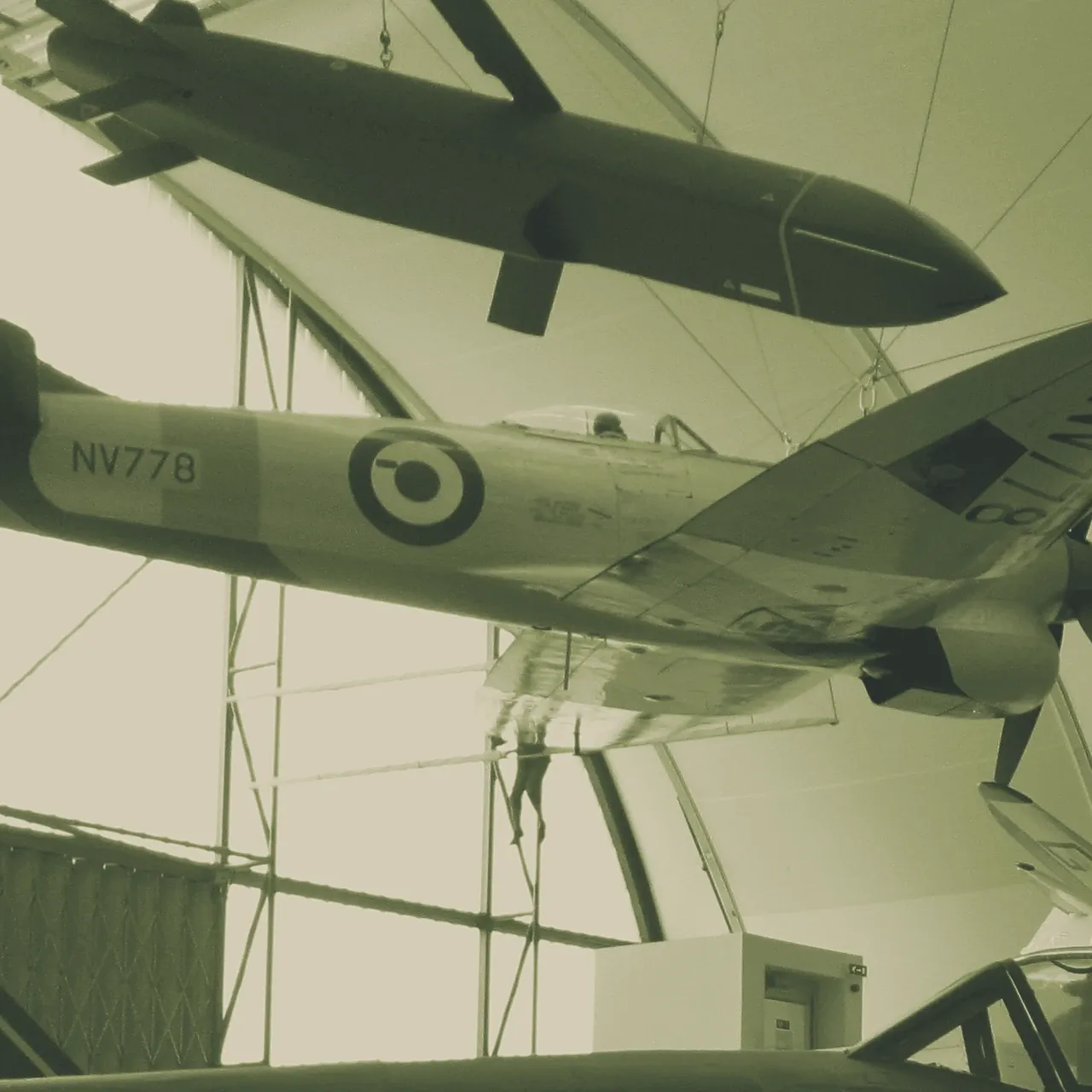
Storm Shadow
FIG.01 · Europe Image - storm-shadow. Photo by Ank Kumar, CC BY-SA 4.0, via Wikimedia Commons.
The British-French Storm Shadow / SCALP-EG is a stealthy, air-launched cruise missile designed to destroy hardened targets from stand-off range, and the weapon that gave Ukraine its first long-range deep-strike capability.

Overview

Storm Shadow (designated SCALP-EG in French service) is a long-range, air-launched cruise missile developed by MBDA. It combines a low-observable airframe, a sophisticated multi-sensor guidance suite, and a tandem BROACH warhead to penetrate and destroy high-value fixed targets such as command bunkers, bridges, and hardened aircraft shelters. Originally fielded by the UK and France, it has been exported to a number of air forces and, since 2023, has become the principal Western-supplied deep-strike weapon in Ukraine.

Development

The programme began in the 1990s as a UK-French collaboration to replace the earlier Apache and other stand-off weapons. MBDA (then Matra BAe Dynamics) integrated a low-observable airframe with the BROACH warhead, a tandem charge developed by BAE Systems. The missile entered service with the Royal Air Force in 2002 and with the French Air and Space Force as SCALP-EG shortly afterwards, according to Wikipedia. A naval variant, MdCN, was developed for French frigates and the submarine force, while the export Black Shaheen was tailored for the UAE’s Mirage 2000-9 fleet.

Design & capabilities

Storm Shadow’s pre-planned mission profile relies on a suite of navigation sensors — inertial, GPS, terrain-reference (TERPROM), and imaging infrared — to fly a low-level terrain-following path and then match the terminal scene against a stored reference image for precision impact. According to MBDA, the missile’s modular mission-planning system allows operators to programme the route, timing, and impact point before take-off, with no post-launch updates required.

The BROACH warhead, confirmed by MBDA, consists of a precursor shaped charge that clears soil and concrete, followed by a follow-through blast-fragmentation penetrator. This tandem arrangement enables the missile to defeat buried or heavily reinforced targets. The airframe’s shaping and radar-absorbent materials reduce the radar cross-section, enhancing survivability against integrated air defences. Propulsion is provided by a Microturbo TRI 60 turbojet, giving a cruise speed of approximately Mach 0.8.

Variants

  • SCALP-EG — the French designation, functionally identical to baseline Storm Shadow.
  • Black Shaheen — an export derivative for the UAE, integrated on the Mirage 2000-9.
  • MdCN (Missile de Croisière Naval) — a naval, ship- and submarine-launched cruise missile derived from the same technology baseline, with a range exceeding 1,000 km and a different external configuration.

Combat record / operational use

The Royal Air Force used Storm Shadow operationally for the first time during the 2003 invasion of Iraq, launching the missile against command-and-control targets. It was subsequently employed in the 2011 intervention over Libya (RAF and French Air Force) and later over Syria. The missile’s most consequential combat exposure, however, has been in Ukraine. Kyiv received Storm Shadow/SCALP-EG from the UK and France in 2023, and the Ukrainian Air Force integrated the weapon onto modified Su-24M strike aircraft, as shown in a image released in May 2023. According to a detailed Kyiv Post guide, the missiles were used to strike high-value Russian logistics nodes, command posts, and the headquarters of the Black Sea Fleet in Sevastopol, marking the first deep-strike capability supplied by a NATO member directly to Ukraine.

Advantages

  • Low observability — shaping and materials reduce radar signature, complicating detection and interception.
  • BROACH warhead — tandem precursor/follow-through penetrator defeats hardened and buried targets that unitary blast warheads cannot reliably destroy.
  • Precision terminal guidance — imaging-infrared scene-matching brings metric lethality without emitting radar.
  • Long stand-off range — launches from well outside short- and medium-range air defences, keeping the launch aircraft safe.
  • Proven integration — certified on Typhoon, Rafale, Mirage, Tornado, and adapted to the Su-24, demonstrating flexible platform-integration capability.

Drawbacks / limitations

  • High unit cost — estimated at £0.8–2 million per round constrains the tempo of deep-strike operations.
  • Export range cap — MTCR commitments limit the range of missiles sold to some partners to roughly 250 km.
  • Platform dependency — requires dedicated mission-planning systems and aircraft-specific integration; transferring the capability to a new operator takes months.
  • Limited magazine depth — European stockpiles were not designed for a protracted high-intensity conflict, forcing careful allocation in Ukraine.

Counterparts

  • Kh-101 (Russia)
  • CJ-10 (China)
  • Tomahawk (United States) — the ship/sub-launched Western counterpart, with longer range and a larger warhead but no low-observable airframe.
  • JASSM-ER (United States) — an air-launched, stealthy penetrating cruise missile that mirrors Storm Shadow’s role in the US arsenal.

Outlook

Storm Shadow will remain the backbone of European air-launched deep strike until the Future Cruise/Anti-Ship Weapon (FC/ASW) programme delivers a replacement, currently projected for the 2030s. In the nearer term, continued operational use over Ukraine is deepening the real-world evidence base on its penetration of modern integrated air-defence networks. Meanwhile, MBDA is pursuing incremental updates through its mid-life refresh programme, improving mission-planning speed, obsolescence management, and potential networking capabilities.

Key specifications

Spec Value
Type Air-launched turbojet stand-off cruise missile
Range >250 km (export-constrained); operational span up to ~560 km (variant-dependent)
Speed (Mach / km·s⁻) ~Mach 0.8
Warhead (type & weight) ~450 kg BROACH tandem (precursor charge + penetrator/blast-frag)
Guidance INS + GPS + TERPROM + imaging-IR terminal image-matching
Accuracy (CEP) not publicly established (metric-precision terminal IR)
Launch platform(s) Typhoon, Rafale, Mirage 2000, Tornado; Su-24M (Ukraine adaptation)
Propulsion Microturbo TRI 30 turbojet
Length / diameter / launch weight 5.10 m / ~0.48 m / 1,300 kg

Sources

  1. MBDA — Storm Shadow / SCALP. https://www.mbda-systems.com/products/deep-strike/storm-shadow-scalp
  2. Wikipedia — Storm Shadow. https://en.wikipedia.org/wiki/Storm_Shadow
  3. Kyiv Post — A Quick Guide to the Storm Shadow Missiles in Ukraine. https://www.kyivpost.com/post/25764
  4. Army Recognition — First Image of Storm Shadow/SCALP Launch from a Ukrainian Su-24 Fighter Jet. https://www.armyrecognition.com/focus-analysis-conflicts/army/conflicts-in-the-world/ukraine-russia-conflict/first-image-of-storm-shadow-scalp-missile-launch-from-a-ukrainian-su-24-fighter-jet
FIELD DISPATCH · WEEKLY

BattlePolicy Weekly — free.

Defense tech, startups, and security — weekly. No paywall.

Related
Ukraine · Europe · Air Defense · Alta Ares · counter-drone · shahed

Alta Ares raises €50M to mass-produce drone interceptors proven over Ukraine

Alta Ares, a Franco-Ukrainian maker of AI drone interceptors used in Ukraine, raised €50 million to scale production as demand for cheap air defense climbs.

Ukraine · Europe · Air Defense · Alta Ares · counter-drone · shahed
Europe · Autonomy · Airbus · U145 · H145

Airbus unveils the U145, an uncrewed H145 built for contested resupply

Airbus is turning its best-selling H145 light twin into a pilotless cargo helicopter for frontline resupply, with a maiden flight due late 2026 and service entry not before the early 2030s.

Europe · Autonomy · Airbus · U145 · H145