K9 Thunder
The K9 Thunder is South Korea's 155 mm/L52 tracked self-propelled howitzer — the most widely exported SP gun in the world and the backbone of NATO's eastern-flank tube artillery.
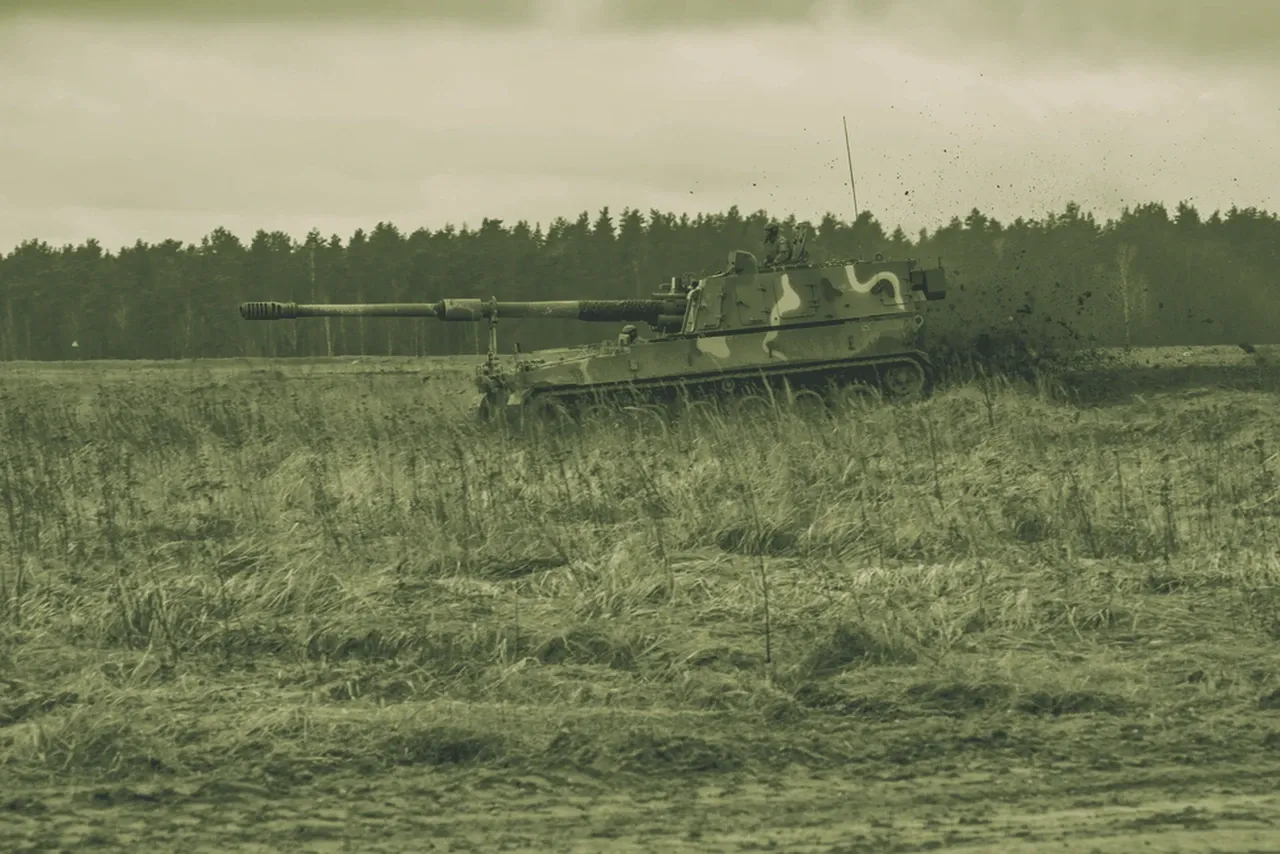
The K9 Thunder is a South Korean 155 mm/L52 tracked self-propelled howitzer — the world's most exported SP gun, now forming the core of tracked artillery across NATO's eastern flank.
Overview
The K9 Thunder, built by Hanwha Aerospace, is a tracked self-propelled howitzer that entered service with the Republic of Korea Army in 1999. With over 1,500 units produced and exported to ten operators on four continents, it has become the most widely exported self-propelled gun system, a status described by Military Machine. Combining a NATO-standard 155 mm/L52 ordnance, automated ammunition handling, and a digital fire-control suite, the K9 delivers rapid, long-range fires unmatched by many contemporaries and has evolved into a family of localized variants that now anchor the tracked artillery inventories of several European nations.
Development
The K9 was developed from the early 1990s by South Korea’s Agency for Defense Development (ADD) together with Hanwha Aerospace. After an initial prototype in 1994 and qualification tests, series production began, and the system entered service in 1999, gradually replacing the K55 (a license-built M109A2) in Republic of Korea Army units, as documented by Army Technology. Continuous upgrades, particularly the K9A1 improvement program, have kept the platform competitive with newer designs, while its export-oriented variants have driven a global production base.
Design & capabilities
The K9 mounts a 155 mm/L52 howitzer that fires all NATO-standard 155 mm projectiles. Range can exceed 40 km with extended-range base-bleed ammunition, compared to about 18 km with conventional M107 high-explosive and roughly 30 km with rocket-assisted projectiles, according to Deagel. A hydraulically assisted ammunition handling system, coupled to an automatic loader, enables a burst rate of three rounds in 15 seconds and a sustained fire rate of 6–8 rounds per minute; the platform can also execute multiple-round simultaneous impact (MRSI) missions.
Motive power comes from an MTU MT 881 Ka-500 diesel engine developing 1,000 hp, which yields a power-to-weight ratio of approximately 21.3 hp/t and a top road speed of 67 km/h, as detailed by Army Technology. The hull and turret are of all-welded steel with appliqué armour for enhanced ballistic protection, and the crew of five operates under collective NBC overpressure. A digital fire-control system, inertial navigation, and global positioning allow accurate first-round-on-target fires from a halted position within 30 seconds of receiving a call-for-fire.
Variants
- K9A1 – Enhanced ROK variant with improved navigation and fire-control hardware.
- K9PL / AHS Krab – Polish variant; the Krab marries a British AS-90/ Braveheart turret to the K9 chassis with indigenous fire-control.
- T-155 Fırtına – License-built Turkish variant with locally sourced subsystems.
- K9 Vajra-T – Indian variant produced by L&T under license, meeting the army’s 155 mm/L52 requirement.
- AS9 Huntsman – Australian variant adapted for the Land 17 Phase 1C programme.
- K9 FIN, K9 NOR, K9 EST – Tailored configurations for Finland, Norway, and Estonia, respectively, with minor national customisations.
Combat record / operational use
The baseline K9 Thunder has not seen direct combat under the Republic of Korea flag, but its license-built Turkish derivative, the T-155 Fırtına, has been used extensively in cross-border operations in Syria and Iraq, demonstrating the platform’s combat durability, as noted by Military Machine. Moreover, the K9 chassis forms the basis of Poland’s AHS Krab, which has been supplied to Ukraine in substantial numbers and has seen intensive high-intensity counter-battery duels there, according to Oboronka/Mezha. The operational experience accumulated by the Fırtına and Krab provides the K9 family with a real-world combat pedigree unmatched by many artillery systems that remain restricted to exercise grounds.
Advantages
- Most widely exported tracked self-propelled howitzer, ensuring large user-base interoperability.
- NATO-standard 155 mm/L52 ordnance and full suite of standard ammunition.
- Rapid burst fire and MRSI capability, giving high terminal lethality.
- Reliable powerpack and automotive components sustain high operational tempo.
- Continuous modernisation (K9A1) and bespoke variants keep it competitive.
- Lower unit cost compared to the PzH 2000 while delivering similar performance.
Drawbacks / limitations
- Combat weight of ~47 t reduces strategic deployability compared to wheeled self-propelled guns.
- Crew of five is larger than fully automated systems such as Archer or RCH 155.
- Operational range of ~360–480 km is modest for large-scale maneuver operations.
- Relatively dated base design (1999) means some subsystems are less digitised than the newest SP howitzers.
Counterparts
- Msta-S (Russia)
- PLZ-05 (China)
- PzH 2000 (Germany) — heavier but faster firing, fully autoloaded 155 mm/L52.
- 2S19 Msta-S (Russia) — Russian tracked 152 mm counterpart.
- Type 99 / PLZ-05 (China) — principal Chinese tracked 155 mm SP.
Outlook
The K9 remains in high-volume serial production, with Hanwha delivering units for South Korea, Poland, Finland, Romania (selected in 2024), and India simultaneously. Its combination of proven combat performance, cost, and industrial adaptability positions it as the default tracked howitzer for NATO’s eastern flank for at least the next decade, even as next-generation wheeled systems pressure the self-propelled market.
Key specifications
| Spec | Value |
|---|---|
| Crew | 5 (per Army Technology) |
| Combat weight | ~47 t (per Army Technology) |
| Length / width / height | 11.9 m × 3.4 m × 2.73 m (per Army Technology) |
| Main armament | 155 mm L/52 howitzer (per Army Technology) |
| Secondary armament | 1 × 12.7 mm machine gun (per Army Technology) |
| Armor & protection | Welded steel with appliqué armour (per Army Technology) |
| Engine & power | MTU MT 881 Ka-500 diesel, 1,000 hp (per Army Technology) |
| Power-to-weight | ~21.3 hp/t (1,000 hp / 47 t; Army Technology) |
| Road / cross-country speed | 67 km/h road; ~30 km/h cross-country (est.) (per Army Technology) |
| Operational range | ~360–480 km (per Deagel) |
Sources
- Army Technology — “K9 Thunder Self-Propelled Howitzer” — https://www.army-technology.com/projects/thunderselfpropelled/
- Deagel — “K9 Thunder” — https://www.deagel.com/Armies/K9%20Thunder/a000576
- Military Machine — “The K9 Thunder Is the World’s Most Exported Howitzer” — https://militarymachine.com/k9-thunder-howitzer-most-exported
- United24 Media — “CAESAR, K9, PzH 2000: What Do the World’s Top Artillery Systems Cost?” — https://united24media.com/war-in-ukraine/caesar-k9-panzerhaubitze-2000-what-do-the-worlds-top-artillery-systems-cost-3994
- Oboronka/Mezha — “The 155-mm AHS Krab SpGH, a Polish version of the AS-90” — https://oboronka.mezha.ua/en/2022/05/31/the-55-mm-ahs-krab/
- Maavoimat (Finnish Army) — “Self-propelled Howitzer K9 Thunder” — https://maavoimat.fi/en/self-propelled-howitzer-k9-thunder