GRID-REF 37°47′N 122°25′W
DISPATCH 02/26 · 11 Jun 2026
BATTLEPOLICY
Startup to front line. Strategy to consequence.
Lexicon · Europe

KARGU-2

Turkey’s man-portable quadcopter loitering munition — embedded machine-learning autonomy, swarm-capable, and the world’s most cited alleged lethal autonomous weapon system.
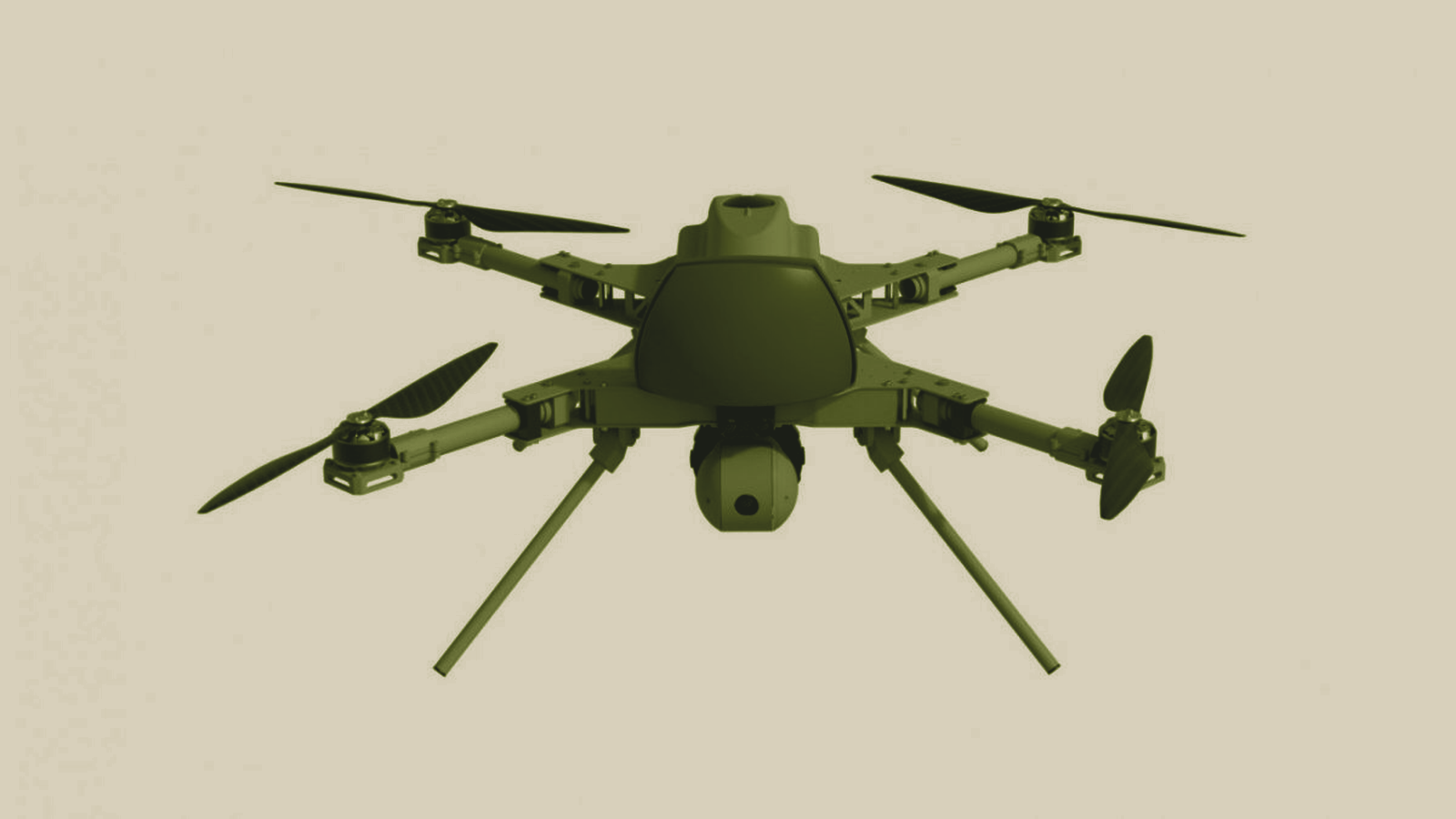
KARGU-2
FIG.01 · Europe Image - An STM KARGU rotary-wing loitering munition. Photo by Armyinform.com.ua, CC BY 4.0, via Wikimedia Commons.
Turkey’s man-portable quadcopter loitering munition with embedded machine-learning autonomy — the world’s most-cited alleged lethal autonomous weapon, now in service with multiple NATO and partner armies.

Overview

The KARGU-2 is a battery-powered quadcopter loitering munition developed by Turkish defence engineering firm STM. Designed as a man-portable, squad-level precision strike asset, it carries an anti-personnel or armour-piercing warhead and uses on-board machine-learning image processing to detect, classify and track targets, even when the datalink is severed. The system can be operated with a human in the loop or in a fully autonomous “fire, forget and find” mode that drew the attention of the United Nations and international humanitarian law bodies after the 2020 Libya conflict. KARGU-2 first entered Turkish service in 2018 and has since been exported to Azerbaijan, Peru and at least one European NATO/EU member, with the manufacturer claiming deliveries to 15 countries on four continents by early 2026, according to STM and Army Recognition.

Development

STM began work on the KARGU concept in the mid-2010s, leveraging Turkey’s expanding indigenous unmanned systems base. The first flight occurred around 2017 and the type entered Turkish Armed Forces service in 2018 for counter-terrorism and cross-border operations, as noted by Wikipedia. In June 2020 STM announced it was preparing delivery of more than 500 units to the Turkish military, a milestone widely reported by Forbes. Formal export marketing began in 2021, and initial orders from Azerbaijan and Peru followed. An armour-piercing warhead variant was integrated in 2024; its first export contract was confirmed by STM in May 2025, with a second deal announced the following month by Army Recognition. In January 2026 STM disclosed that a European NATO/EU member had taken delivery of KARGU and ALPAGU systems, integrating them onto armoured vehicles and national battle-management networks.

Design & capabilities

The KARGU-2 is a four-rotor electric quadcopter with a flight endurance of up to 30 minutes and a datalink range of 10 km, per the manufacturer’s official product page. Maximum cruise speed is 72 km/h, though terminal-dive speeds are higher. The standard anti-personnel warhead weighs less than 1.3 kg; an armour-piercing shaped-charge warhead of under 1.0 kg was introduced in 2024, as documented by Army Recognition. On-board machine-learning algorithms enable real-time target classification and tracking without GNSS or a command link, giving the system the “fire, forget and find” capability referenced in UN reporting. KARGU-2 is launched by a single operator in under a minute and can be recovered and re-used if the warhead is not expended. Multiple air vehicles can be networked to one ground control station to conduct coordinated saturation strikes. A passive RF seeker, intended to home on hostile FPV controllers and air-defence radars, is in an advanced development stage, according to TURDEF. The lighter, tube-launched KARGU FPV announced in 2025 is a separate system with a claimed 160 km/h dash speed, as detailed by Defense Talks.

Variants

  • KARGU-2 (baseline anti-personnel): blast-fragmentation warhead; the initial service version from 2018.
  • KARGU-2 (armour-piercing): shaped-charge warhead integrated in 2024; confirmed export contracts from May 2025.
  • KARGU with RF seeker: passive homing capability for emitter-targeting; in development as of mid-2025.

Combat record / operational use

The most prominent operational employment occurred in Libya in March 2020 during Operation PEACE STORM, when Government of National Accord-affiliated forces, supported by Turkey, used KARGU-2 against the Haftar-affiliated forces. The UN Panel of Experts on Libya later reported that “logistics convoys and retreating HAF were … engaged by … lethal autonomous weapons systems such as the STM Kargu-2 … programmed to attack targets without requiring data connectivity between the operator and the munition: in effect, a true ‘fire, forget and find’ capability,” as reproduced by the ICRC IHL Casebook. Turkish officials rejected the assertion of full autonomy, with SSB chairman Ismail Demir stating through TURDEF that human-override protocols would have prevented such an attack. The system has also been used by Turkish forces in Syria and domestic security operations, and was reportedly fielded by Azerbaijan in the 2020 Nagorno-Karabakh war, according to Wikipedia.

Advantages

  • Man-portable and deployable by a single soldier in under one minute, giving infantry organic precision strike at squad level. STM
  • Machine-learning-based target classification allows engagement in GPS-denied, comms-degraded environments, and the system can be recovered and reused if the engagement is aborted, differentiating it from purely expendable munitions. STM
  • Swarm-capable architecture allows multiple air vehicles to be coordinated from a single ground control station for saturation attacks. Army Recognition
  • Modular dual warhead (anti-personnel / armour-piercing) provides mission flexibility from a single logistics chain. Army Recognition

Drawbacks / limitations

  • 30-minute endurance and 10 km range limit persistent loitering and force the operator to close with enemy air defences. STM
  • The armour-piercing warhead (<1.0 kg shaped charge) is effective only against light vehicles and is insufficient against main battle tank roof armour. Army Recognition
  • International reputation is complicated by the 2021 UN Libya report and “killer robot” media cycle, potentially affecting legal reviews in prospective NATO markets. Ploughshares
  • STM’s autonomy claims and field behaviour have never been formally reconciled with the UN findings, leaving a gap that arms-control advocates continue to exploit.

Counterparts

Outlook

KARGU-2 has transitioned from a controversial showcase of lethal autonomy to a normalised NATO-inventory item. The January 2026 delivery to a European ally, combined with the system’s integration onto armoured vehicles, provides a blueprint for squad-level precision strike that European armies — constrained by slow domestic production — can adopt rapidly. The RF-seeker variant in development would add a counter-electronic-warfare role of high tactical value. However, the unresolved legal ambiguity of the 2020 Libya incident remains a latent risk: a future investigative finding that autonomous engagements violated international humanitarian law could trigger export restrictions, even as commercial momentum currently favours wider adoption.

Key specifications

Spec Value
Type Rotary-wing loitering munition (quadcopter)
Range 10 km
Speed (km·/h) up to 72 km/h cruise; terminal dive higher
Warhead (type & weight) anti-personnel: blast-fragmentation, <1.3 kg; armour-piercing: shaped charge, <1.0 kg
Guidance Machine-learning image processing, GNSS-independent dive attack; RF seeker in development
Accuracy (CEP) not publicly established
Launch platform(s) Man-portable; vehicle-mounted integration
Propulsion Four electric rotors
Length / diameter / launch weight ~60 × 60 × 40 cm (span/width/height); launch weight ~7.06–7.7 kg

Sources

  1. STM — “KARGU® Rotary Wing Attack Drone Loitering Munition System.” https://www.stm.com.tr/en/kargu-autonomous-tactical-multi-rotor-attack-uav
  2. Army Recognition — “Türkiye’s STM Delivers KARGU And ALPAGU Loitering Munitions To European NATO Country.” https://www.armyrecognition.com/news/aerospace-news/2026/tuerkiyes-stm-delivers-kargu-and-alpagu-loitering-munitions-to-european-nato-country
  3. Army Recognition — “Türkiye’s STM KARGU Kamikaze Drone with Armour-Piercing Warhead Secures Second Export Contract.” https://www.armyrecognition.com/news/aerospace-news/2025/tuerkiyes-stm-kargu-kamikaze-drone-with-armour-piercing-warhead-secures-second-export-contract
  4. Forbes (David Hambling) — “Turkish Military To Receive 500 Swarming Kamikaze Drones.” https://www.forbes.com/sites/davidhambling/2020/06/17/turkish-military-to-receive-500-swarming-kamikaze-drones/
  5. STM press release — “KARGU UAV Armor-Piercing Warhead Secures First Export Deal.” https://www.stm.com.tr/en/press-releases/kargu-uav-armor-piercing-warhead-secures-first-export-deal
  6. ICRC IHL Casebook — “Libya, The Use of Lethal Autonomous Weapon Systems” (containing UN S/2021/229 para 63 and expert analysis). https://casebook.icrc.org/print/21244
  7. TURDEF — “Demir Denies UN Report: KARGU-2 Does not Attack Autonomously.” https://www.turdef.com/article/demir-denies-un-report-kargu-2-does-not-attack-autonomously
  8. TURDEF — “RF Seeker Gives KARGU UAV FPV Crew Hunting Capability.” https://turdef.com/article/rf-seeker-gives-kargu-uav-fpv-crew-hunting-capability
  9. Wikipedia — “STM Kargu.” https://en.wikipedia.org/wiki/STM_Kargu
  10. Defense Talks — “STM Unveils Upgraded Kargu FPV Drone with Armor-Piercing Warhead and Fiber Optic Control.” https://defensetalks.com/stm-unveils-upgraded-kargu-fpv-drone-with-armor-piercing-warhead-and-fiber-optic-control/
  11. Ploughshares — “Kargu-2 debate raises awareness of autonomous weapons.” https://ploughshares.ca/kargu-2-debate-raises-awareness-of-autonomous-weapons/
FIELD DISPATCH · WEEKLY

BattlePolicy Weekly — free.

Defense tech, startups, and security — weekly. No paywall.

Related
Europe · Ukraine · missiles · loitering-munition · one-way-attack · ai-guidance · vtol · STARK Defence · GermanyPro

Stark Virtus

Germany's combat-proven eVTOL loitering munition — a VTOL, AI-guided one-way attacker that pairs with reconnaissance drones for EW-resilient precision strikes.

Europe · Ukraine · missiles · loitering-munition · one-way-attack · ai-guidance · vtol · STARK Defence · Germany
Europe · Land · mlrs · rocket-artillery · hanwha · precision-strike · koreaPro

K239 Chunmoo

South Korea's wheeled multi-caliber multiple launch rocket system — firing guided rockets, tactical ballistic missiles, and unguided munitions from a single 8×8 chassis, now spreading across NATO's eastern flank.

Europe · Land · mlrs · rocket-artillery · hanwha · precision-strike · korea
Europe · Air Defense · shorad · counter-UAS · Rheinmetall · ahead · modular-turret · NATOPro

Skyranger 30

Rheinmetall’s modular, unmanned 30 mm gun-missile turret — NATO’s emerging standard for mobile short-range air defense against drones, loitering munitions and low-flying aircraft, rapidly adopted across five European armies.

Europe · Air Defense · shorad · counter-UAS · Rheinmetall · ahead · modular-turret · NATO