GRID-REF 37°47′N 122°25′W
DISPATCH 03/26 · 2 Jul 2026
BATTLEPOLICY
Startup to front line. Strategy to consequence.
Lexicon · USA

MIM-23 Hawk

The MIM-23 Hawk is the 1950s US medium-range SAM the Pentagon retired in the 1990s — and pulled back from the grave for Ukraine. Spanish launchers, US-refurbished missiles and Taiwanese stocks now down Shaheds and cruise missiles by the score, proof that cheap depth beats exquisite scarcity.
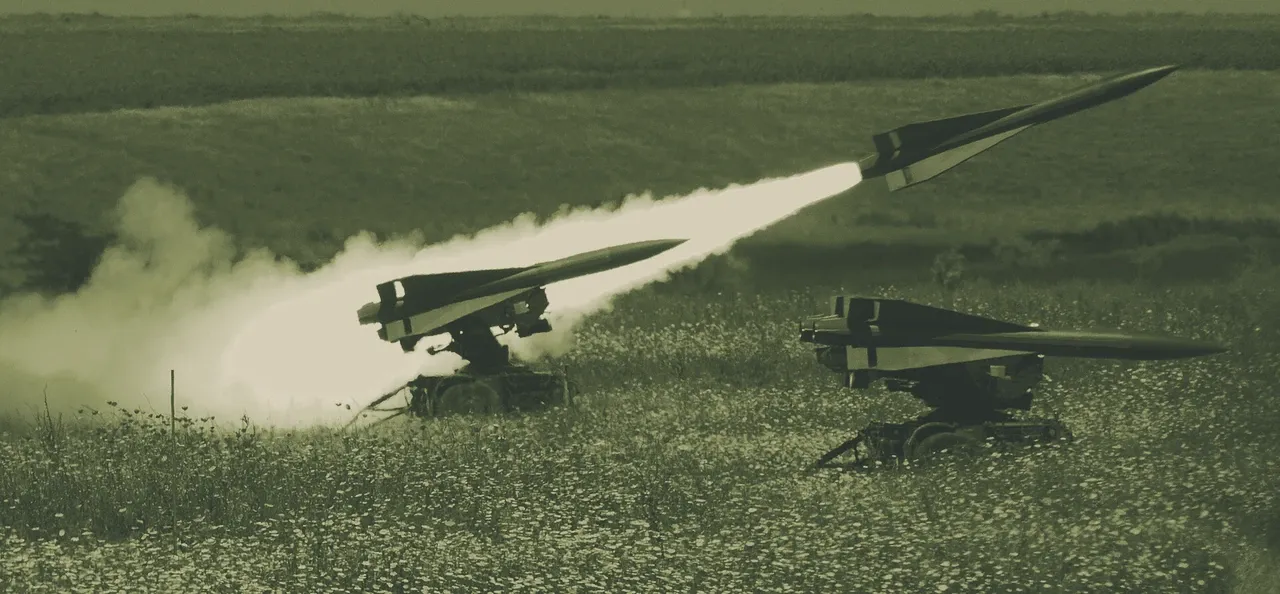
MIM-23 Hawk
FIG.01 · USA Image - a Romanian MIM-23 Hawk missile fired at the Capu Midia range. Photo by Pfc. Nicholas Vidro, U.S. Army, Public domain, via Wikimedia Commons.
A 1950s missile fighting a 2020s war — the MIM-23 Hawk is the medium-range surface-to-air system the US Army designed in the Eisenhower era, retired in 1994, and never expected to see again. Then Russia's Shahed and cruise-missile barrages emptied Ukraine's Soviet-era air defenses, and the Hawk came back from the grave: Spanish launchers, US-refurbished missiles and quietly transferred Taiwanese stocks, downing drones and Kh-59s by the dozen. Its lesson is the interceptor economy in a single elderly weapon — a huge cheap stockpile of a proven missile beats a handful of exquisite new ones, if you can keep the old ones flying.

Overview

The MIM-23 Hawk ("Homing All the Way Killer") is Raytheon's semi-active radar-homing medium-range SAM — a system born in 1952, fielded by the US Army from 1959–60, and retired by it in 1994 (the Marines held on to 2002) as Patriot and Stinger took over its tiers. But more than 40,000 Hawk missiles were built, and the system stayed in service across some twenty air forces, upgraded through the I-HAWK and Phase III standards and the deep Hawk XXI modernization. Its improbable third act is Ukraine. After October 2022's mass barrages, Spain donated launchers, the US funded missile refurbishment, Sweden contributed hardware, and Taiwan's freshly retired stocks were reportedly routed to Kyiv — a "FrankenSAM"-era patchwork that put a Cold War SAM back into a peer war. The reason it works against 2020s threats is Phase III's LASHE capability — a low-altitude, simultaneous, saturation-raid engagement mode — plus the sheer depth of cheap legacy missiles: a Ukrainian battery has claimed 40-plus intercepts including 14 cruise missiles (Kh-59s and a Kalibr), and Western analysts credit Phase III with up to an 85% hit probability. The Hawk fills the gap between short-range guns and the scarce, expensive Patriot — the middle tier that keeps the war's air defense affordable, and the clearest historical proof of the whole interceptor-economy thesis: the best air defense is often the one you already have in quantity.

Development

The Hawk began as project SAM-A-18 in 1952; Raytheon won full-scale development in 1954, first guided-fired the missile in 1956, and the US Army reached initial capability in 1959–60, per designation-systems.net. The Improved Hawk (I-HAWK) program from 1971 gave it a bigger motor, a new warhead and digital processing, and successive Product Improvement Plan phases modernized it toward the Phase III standard (digital fire control plus LASHE, the Low-Altitude Simultaneous Hawk Engagement mode enabling wide-angle low-altitude illumination and multiple simultaneous engagements against saturation raids) and the radar-rebuilt Hawk XXI. The US Army retired the type in 1994, the Marines by 2002. Its return to a major war came fast after Russia's autumn-2022 barrages: NATO announced Spanish Hawk launchers in October 2022, the US funded missile refurbishment inside a $400M assistance package in November, and the first systems reached Ukraine on 3 December 2022, per Wikipedia. Sweden added hardware in February 2023, Ukrainian crews trained in Spain, and the first combat video appeared in October 2023 — the refurbishment running under the Pentagon's "FrankenSAM" umbrella, per the Long War Journal. Three US Foreign Military Sale packages followed as the commitment deepened: $138M (April 2024, sustainment and missile-recertification components), $172M (July 2025, the first Ukrainian purchase of the system itself, executed partly through Greece's Sielman with RTX), and $108.1M (May 2026, "FrankenSAM HAWK" sustainment under Sierra Nevada). Behind them the US modernized its depot base — a Theater Readiness Monitoring Facility at McAlester opened February 2025, adding to Letterkenny's long-running Hawk recertification line — to keep the legacy missile stock alive.

🔒 The rest of the MIM-23 Hawk file is for BattlePolicy Pro members. Stop here and you miss the part that actually matters: why a 1950s SAM kills 2020s drones, the Ukraine combat record and kill claims, the 60-year global war history, how it fits the FrankenSAM air-defense ladder, the complete specifications table, and our analysts' sustainment and assessment notes. Unlock the full file with BattlePolicy Pro →
FIELD DISPATCH · WEEKLY

BattlePolicy Weekly — free.

Defense tech, startups, and security — weekly.

Related
USA · Air · light-attack · close-air-support · isr · trainer-derived · turbopropPro

AT-6 Wolverine

The AT-6 Wolverine is the A-29 Super Tucano's perennial bridesmaid — Textron's armed version of the T-6 Texan II trainer, faster and with ejection seats, sharing thousands of trainers' logistics. Yet it lost every big competition to the A-29 and to the OA-1K, and only Thailand ever bought it.

USA · Air · light-attack · close-air-support · isr · trainer-derived · turboprop
USA · Air · light-attack · close-air-support · isr · special-operations · turbopropPro

OA-1K Skyraider II

The OA-1K Skyraider II is the armed crop-duster that beat the A-29 Super Tucano for the US Armed Overwatch contract — an Air Tractor AT-802 turned into an L3Harris gunship with 10 hardpoints, Hellfires and a WESCAM sensor ball. It won the US buy the A-29 dominates the world without.

USA · Air · light-attack · close-air-support · isr · special-operations · turboprop
USA · drones · interceptor · counter-UAS · ai-drone · defense-startup · russia-ukraine-warPro

Merops

Merops is the Ukraine-proven interceptor drone the US Army bought ~13,000 of — an Eric Schmidt-funded, AI-guided fixed-wing drone that homes on Shaheds when jammed, rams them for ~$15,000 a shot, and recovers by parachute if it misses. The interceptor economy crossing the Atlantic.

USA · drones · interceptor · counter-UAS · ai-drone · defense-startup · russia-ukraine-war