Molniya
The Molniya is Russia's plywood-and-tape strike drone — a $300–1,600 fixed-wing weapon launched by the thousands each month against Ukrainian cities and supply roads, now spawning fiber-optic, FPV-carrier, recon and 13 kg heavy variants. Cheap mass as doctrine.
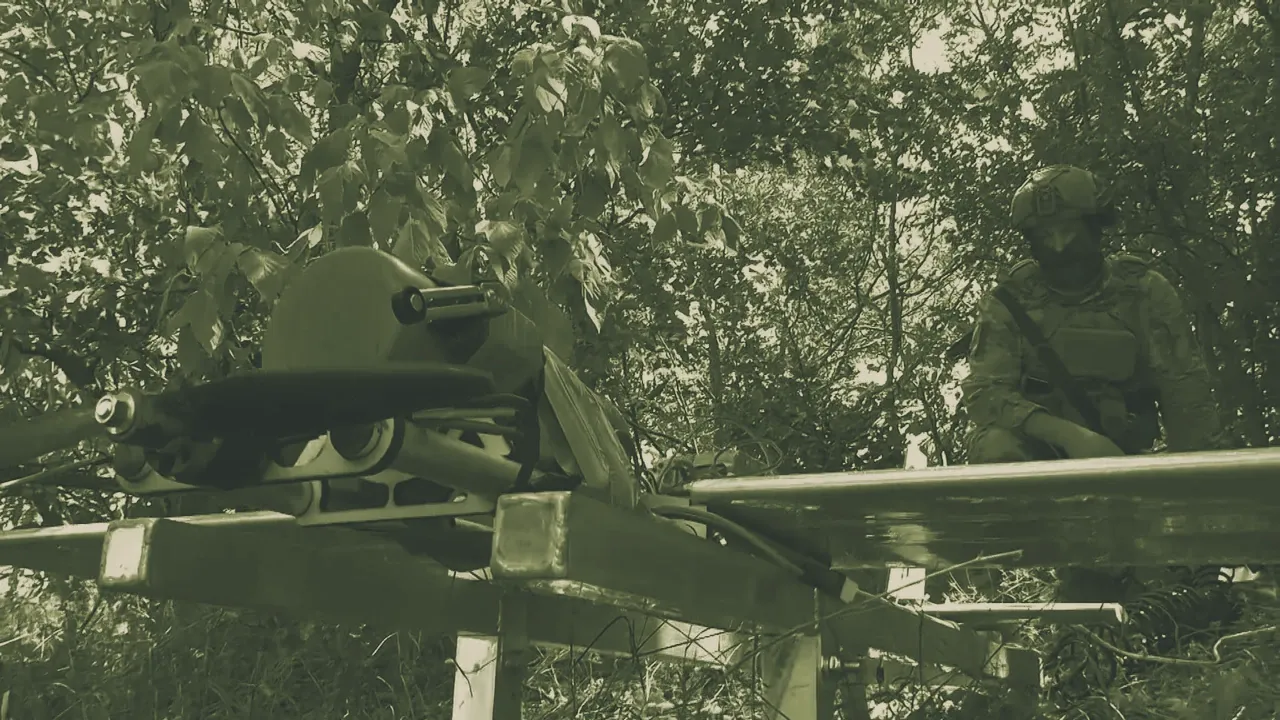

Plywood, tape and a Chinese flight controller — the Molniya ("Lightning") is Russia's answer to the question of what the cheapest useful strike aircraft looks like: a fixed-wing drone of wood, foam and off-the-shelf electronics costing as little as a few hundred dollars, launched from a backpack-portable catapult by three-man teams, thousands of times a month. Since its combat debut against a Kharkiv apartment block in November 2024 it has stretched the deadly zone behind Ukraine's lines past 50 kilometers — and become the case study in Russia's garage-to-state-production drone pipeline.
Overview
The Molniya family — Molniya-1, the enlarged and now-standard Molniya-2, recon conversions, and the heavy Molniya-13 unveiled in 2026 — is the tactical member of Russia's cheap-mass air fleet, doing at 0–50 km what the Shahed/Geran line does at strategic depth. The airframe is deliberately primitive: a conventional monoplane built around two aluminium tubes, plywood wings, roughly fifteen structural parts, two to four man-hours of assembly, and mostly Chinese civilian-market electronics — Ukrainian engineers describe it as "a construction kit sourced from the mass civilian market" whose Russian contribution is minimal. Cost estimates run $300–400 (Ukrainian soldiers' figures) to up to $1,600 (attributed to EW authority Serhii "Flash" Beskrestnov), for a drone carrying 3–5 kg of shaped-charge, anti-tank-mine or thermite payload out to 30–50+ km at 90–120 km/h. Volume is the weapon: documented counts run to thousands per month on individual front sections (one tally: ~2,200 in a month), with Ukrainian soldiers claiming peaks far higher. Analysts at CSIS use the Molniya as their case study of Russia's adaptive procurement — civilian-engineered, battlefield-validated, then state-financed and standardized, with basic machine-vision aids now fitted "by default." Rostec now markets the family for export as "Lightning." Its economics invert air defense: the interceptor drones Ukraine kills it with can cost two to ten times as much as the target.
🔒 The full Molniya file is for BattlePolicy Pro members. Below the line: development history, design and capabilities, variants, the combat record, advantages and limitations, comparable systems, outlook, the full specifications table, our sourcing, and the analyst assessment — procurement, suppliers and the BattlePolicy verdict. Unlock the full file with BattlePolicy Pro →
Below this point
- Development
- Design & capabilities
- Variants
- Combat record / operational use
- Advantages
- Drawbacks / limitations
- Counterparts
- Outlook
- Key specifications
- Sources
- Analyst Section
- Procurement & contracts
- Suppliers & related companies
- Comparable systems — analyst view
- Analyst note