Naval Strike Missile (NSM)
Norway's stealth ship-killer — a low-flying, fully passive cruise missile with an imaging-infrared seeker that emits nothing for defenders to detect, weaves around islands and terrain, and is now the West's anti-ship weapon of choice from US Navy ships to Marine truck launchers.
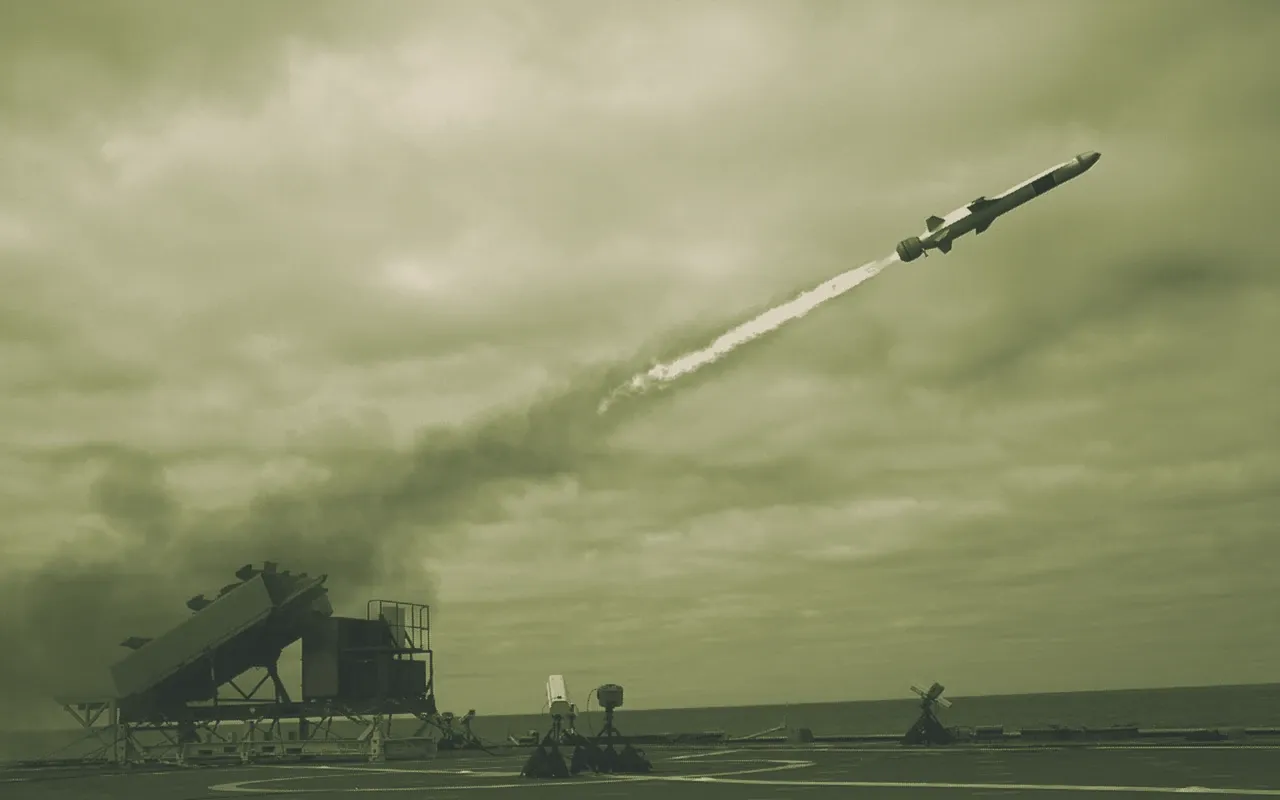
_in_September_2014.JPG)
Norway's stealth ship-killer — the Naval Strike Missile is a low-flying, fully passive cruise missile that emits nothing for enemy defences to detect, finds its target with an imaging-infrared seeker, weaves around islands and coastlines at sea-skimming height, and throws unpredictable terminal maneuvers to defeat point defences. Built by Kongsberg for the demanding Norwegian fjords, it has become the West's anti-ship weapon of choice — fired from US Navy warships, Marine Corps truck launchers and the navies of a dozen nations.
Overview
The Naval Strike Missile (NSM; originally Nytt sjømålsmissil, "new sea-target missile") is a stealthy, subsonic anti-ship and land-attack cruise missile developed by Norway's Kongsberg Defence & Aerospace as the successor to its Penguin missile. Its defining quality is survivability through passivity and stealth: a low radar-cross-section airframe, a sea-skimming and terrain-following flight profile that uses GPS/INS and a terrain database to hug the surface and fly around landmasses, and a fully passive imaging-infrared (IIR) seeker that homes on the target's heat signature without radiating anything a defender could detect or jam. It carries a ~120–125 kg programmable warhead in a titanium body. The result is a missile that is extremely hard to see coming and hard to stop — which is why it has been adopted far beyond Norway, including by the US Navy (as the RGM-184A) and the US Marine Corps, and produced in the US in partnership with Raytheon (RTX).
🔒 The full Naval Strike Missile (NSM) file is for BattlePolicy Pro members. Below the line: development history, design and capabilities, variants, the combat record, advantages and limitations, comparable systems, outlook, the full specifications table, our sourcing, and the analyst assessment — procurement, suppliers and the BattlePolicy verdict. Unlock the full file with BattlePolicy Pro →
Below this point
- Development
- Design & capabilities
- Variants
- Combat record / operational use
- Advantages
- Drawbacks / limitations
- Counterparts
- Outlook
- Key specifications
- Sources
- Analyst Section
- Procurement & contracts
- Suppliers & related companies
- Comparable systems — analyst view
- Analyst note