NH90
Europe's standard medium multirole helicopter — a twin-engine, fly-by-wire platform in land (TTH) and naval (NFH) configurations, fielded by eleven nations for air assault, ASW, and search-and-rescue.
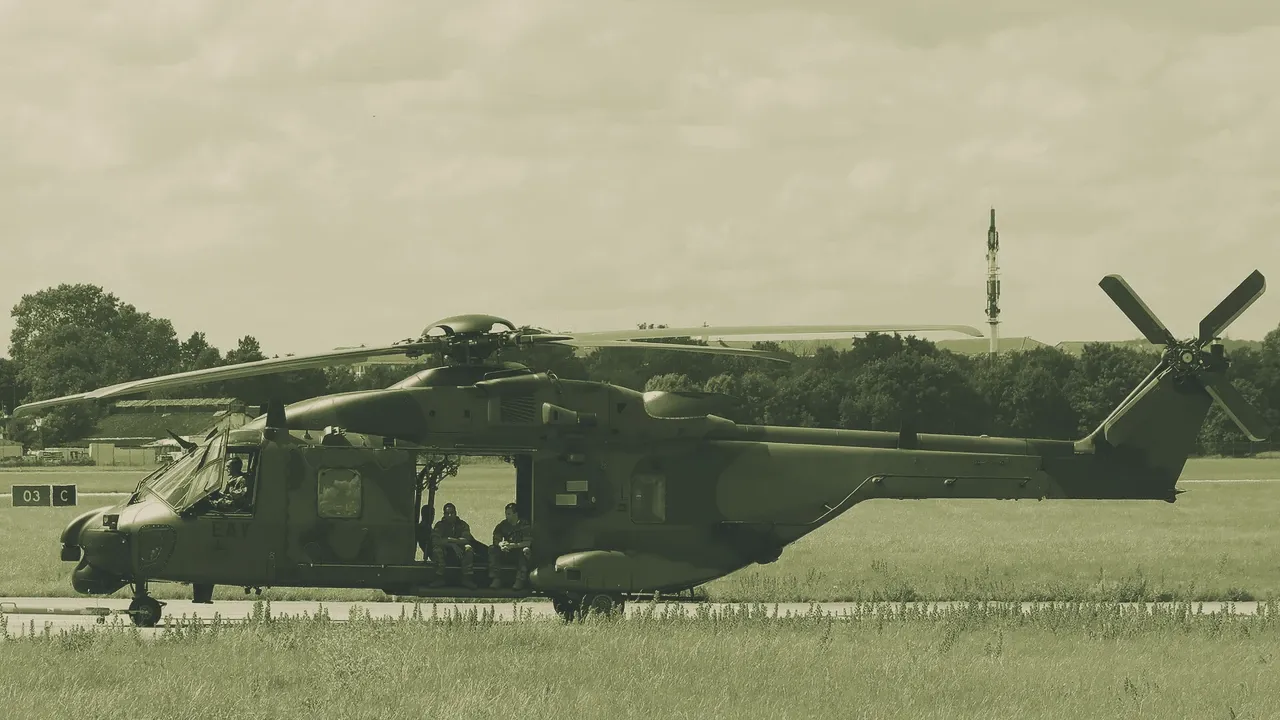
Europe's standard medium multirole helicopter — a twin-engine, fly-by-wire platform fielded in land (TTH) and naval (NFH) configurations for air assault, anti-submarine warfare, and search-and-rescue by eleven nations.
Overview
The NH90 is a twin-engine, medium-lift multirole helicopter designed and built by NHIndustries, a consortium of Airbus Helicopters, Leonardo, and the now-inactive GKN/Fokker. Produced in two baseline variants—the Tactical Transport Helicopter (TTH) for land-based utility and troop transport, and the NATO Frigate Helicopter (NFH) for shipborne anti-submarine and anti-surface warfare—it is the most ambitious cooperative rotorcraft program in European history. More than 530 aircraft have been delivered, serving in the armed forces of eleven nations. It was designed to replace a patchwork of aging types with a single, fly-by-wire common platform and today operates from the Arctic to the Mediterranean and the Gulf.
Development
The NH90 program was launched in 1992 by France, Germany, Italy, and the Netherlands under the NATO Helicopter Management Agency (NAHEMA), with the first prototype flying in 1995. It was conceived as a digital fly-by-wire helicopter from the outset, a design choice that allowed for a highly integrated avionics suite but contributed to a protracted development cycle. The TTH entered service around 2007 and the NFH followed in 2010, according to a comprehensive program guide by The Defense Post. Throughout the 2010s, NHIndustries worked to resolve early teething issues, including corrosion and spare parts availability, through block upgrades. Recent milestones include the delivery of the first "Sea Tiger" NFH to the German Navy in December 2025 for shipborne anti-submarine warfare, a major capability step detailed by Naval Technology.
Design & capabilities
The NH90 airframe is built around a 16.3-meter four-blade main rotor, a composite airframe, and a tricycle landing gear. It is one of the few production helicopters with a full-authority fly-by-wire flight control system, which provides carefree handling, auto-hover, and ship-deck landing modes. The cabin is designed to NATO standardization agreements (STANAGs), allowing the TTH to accommodate up to 20 fully equipped troops or a payload of approximately 2,500 kg internally, with an overall maximum payload of around 4,200 kg, as specified by Airbus. The NFH variant replaces the rear cabin space with a sensor operator console, a dipping sonar, and a weapons bay for two lightweight torpedoes. Instead of a common engine, the program offers operators a choice between two mature power packages: the Rolls-Royce Turbomeca RTM322 or the General Electric/Avio T700/CT7, a unique aspect of the multinational consortium structure highlighted by GlobalMilitary.net.
Variants
- NH90 TTH (Tactical Transport Helicopter): The baseline land-based utility variant for troop transport, cargo, MEDEVAC, and search-and-rescue. Known as the "Caiman" in French Army service.
- NH90 NFH (NATO Frigate Helicopter): A naval variant equipped with a search radar, dipping sonar, electro-optical suite, and weapons capability for anti-submarine (with MU90 torpedoes) and anti-surface warfare (with Marte or Sea Venom missiles). Known as the "Caiman Marine" in French Navy service and the "Sea Tiger" in the German Navy's latest ASW configuration.
- MRH90 Taipan: The Australian designation for a locally assembled TTH variant, operated from 2007 until its early retirement in 2023.
Combat record / operational use
As the standard medium helicopter of multiple European forces, the NH90 has seen extensive operational service. France has deployed its Army Caiman and Navy Caiman Marine variants on combat operations across the Sahel, including Mali and Operation Barkhane, for air assault, logistics, MEDEVAC, and special forces support. Various navies, including those of France, the Netherlands, and Italy, have used the NFH extensively for maritime security, anti-surface warfare, and helicopter landing/docking qualifications. According to a report by AeroCorner, the NFH is capable of operating from small-deck frigates in high sea states. The platform has also seen notable operational setbacks: Norway terminated its contract and returned its fleet in 2022 over performance and availability issues, and Australia retired its MRH90 Taipan fleet ahead of schedule in 2023, replacing it with UH-60M Black Hawks, a decision well-documented by The Defense Post. An NH90 operating with the Belgian Air Force was damaged in a deck handling incident in 2025.
Advantages
- A common, multirole airframe reduces lifecycle costs for multinational operators.
- Full-authority fly-by-wire reduces pilot workload, especially in ship-deck landings.
- The NFH is a compact but capable shipborne anti-submarine hunter with a full sonar, radar, and torpedo suite.
- The TTH cabin is among the most spacious in its class, configurable for troops, cargo, or MEDEVAC.
- An engine choice (RTM322 or T700/CT7) gives member nations supply-chain flexibility.
Drawbacks / limitations
- Programm was plagued by a long, costly development cycle and early in-service reliability issues.
- High unit cost (~$42M average) and maintenance requirements have strained the budgets of smaller operators.
- Shipborne operations have been marred by corrosion, resulting in availability problems for some navies.
- The withdrawal decisions by Norway and Australia remain high-profile reputational liabilities.
- Multi-engine logistics support, while flexible, reduces the commonality across the fleet that the program initially promised.
Counterparts
- Mi-8 Hip (Russia)
- UH-60 Black Hawk (USA)
Outlook
The NH90 program continues to mature, with its user base stabilized after the departures of Norway and Australia. The focus is now on fleet sustainment, block upgrades, and capability expansion, such as the final development of the German Sea Tiger for advanced shipborne ASW. The platform will remain the backbone of European medium-lift and naval helicopter power for decades, even as Airbus and its partners increasingly integrate it with uncrewed teaming systems and next-generation battlefield networks.
Key specifications
| Spec | Value |
|---|---|
| Crew | 1–3 flight crew (TTH); NFH adds sensor/systems operators |
| Length / wingspan | ~19.56 m / main-rotor 16.3 m |
| Max speed | ~300 km/h max; cruise ~260–295 km/h |
| Service ceiling | ~6,000 m |
| Combat radius / range | TTH range ~880 km; NFH ~1,000 km |
| Payload | TTH up to ~20 troops or ~2,500 kg internal cargo (max payload ~4,200 kg) |
| Hardpoints | NFH — internal weapons bay for 2 torpedoes + external anti-ship missile provision; TTH — door mounts for 7.62 mm machine guns |
| Radar / sensors | NFH — search radar, dipping sonar, sonobuoys, EO suite, ESM; TTH — FLIR/EO + weather radar by fit |
| Powerplant | 2 × Rolls-Royce Turbomeca RTM322 or GE/Avio T700/CT7 (by operator selection) |
| Armament | NFH — MU90 torpedoes, depth charges, Marte/Sea Venom anti-ship missiles; TTH — door-mounted machine guns |
Sources
- Airbus — NH90 official product page. https://www.airbus.com/en/products-services/helicopters/military-helicopters/nh90
- GlobalMilitary.net — NH90 / Caiman specifications. https://www.globalmilitary.net/aircraft/nh-90/
- AeroCorner — NHI NH90 NFH (naval variant details). https://aerocorner.com/aircraft/nhi-nh90-nfh/
- NHIndustries — First NH90 Sea Tiger delivered to the German Navy. https://www.nhindustries.com/first-nh90-sea-tiger-delivered-to-the-german-navy/
- Naval Technology — German Navy receives first NH90 Sea Tiger. https://www.naval-technology.com/news/germany-airbus-nh90-sea-tiger/
- The Defense Post — "NH90: Europe's Modern Multirole Utility Helicopter." https://thedefensepost.com/2026/03/19/nh90-helicopter-guide/