Powerus Puts Ukraine's Combat-Proven Drone Swarming Into the Pentagon's Drone Race
The Pentagon wants FPV mass it has no pilots to fly. A Ukrainian software firm proven over 100,000 combat missions is now inside the $1.1 billion race, through a US partner.
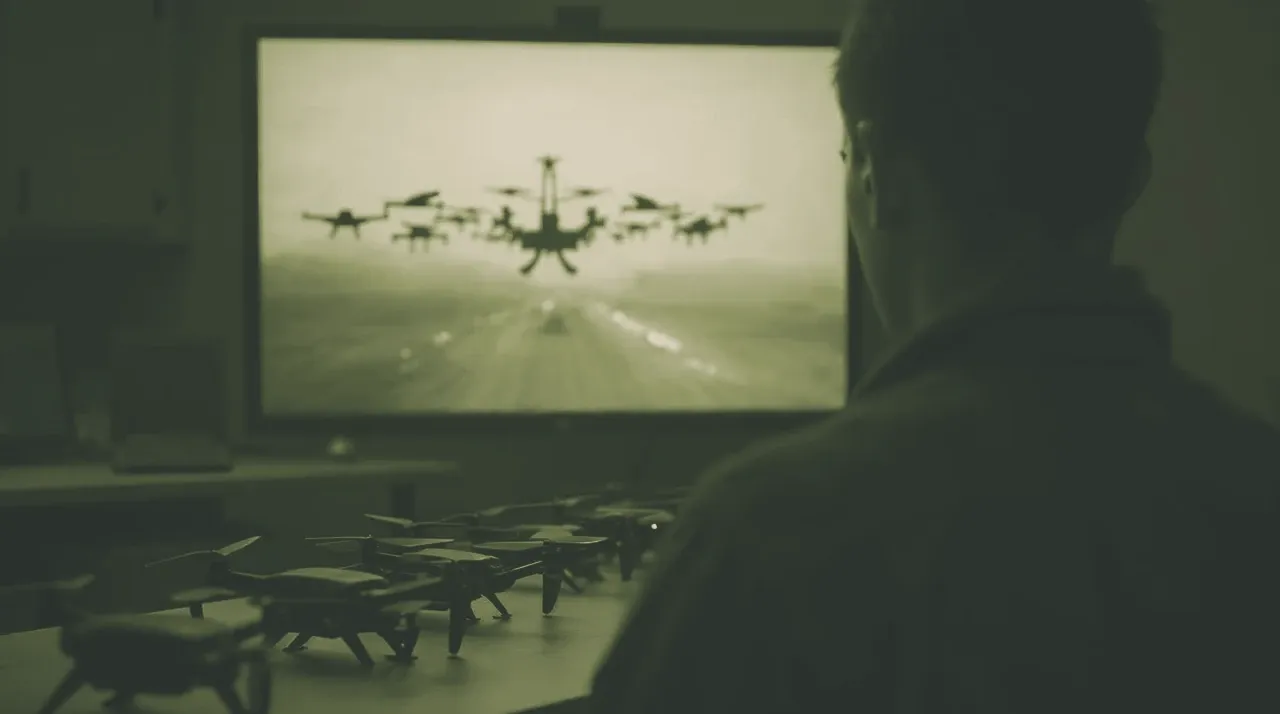
The Pentagon wants FPV mass it has no pilots to fly. A Ukrainian software firm proven over 100,000 combat missions is now inside the $1.1 billion race, through a US partner.
Powerus, a US drone builder, has folded Ukraine's Swarmer swarming software into its run at the Pentagon's $1.1 billion Drone Dominance Program, Forbes reported. The pairing hands one of 48 competing firms the capability most rivals lack: software that lets a single operator fly a pack of reconnaissance and strike drones at once.
Swarmer's collaborative-autonomy stack has flown more than 100,000 combat missions in Ukraine since April 2024, according to the company's IPO filing. The drones task among themselves and hold formation when links degrade, and the module that runs it is about the size of a smartphone. The US-Ukrainian firm listed on the Nasdaq in March; shares closed up roughly 600% on the first day of trading, GlobeNewswire noted.
The Drone Dominance Program is a two-year, $1.1 billion effort under Executive Order 14307 to close a mass gap. The US makes perhaps 50,000 drones a year against the millions Russia and Ukraine each build, per Forbes, and the competition's $5,000-per-FPV target is meant to seed a domestic supply base. Of the contenders, only Auterion offers a comparable swarm capability, the outlet noted.
The bet is that autonomy answers a manpower problem, not just a production one. "Every single drone will have to have some sort of swarm technology," Powerus president Brett Velicovich, a former Delta Force drone operator, told Forbes. "Otherwise we just will not have enough pilots." Powerus, backed by Eric and Donald Trump Jr. and a $30 million investment from Unusual Machines, already sells its Guardian interceptors to US Air Force special operations.
The battlefield and the startup story — free in your inbox every week. No paywall.
Subscribe Free →This week the company showed Guardian drones launching from a container aboard a robot boat in Ukraine. The airframes and the launchers are the cheap part. The swarming layer Ukraine has already run in combat is the piece the US drone base still has to buy in to match adversary mass.
Frequently Asked Questions
What did Powerus and Swarmer agree to?
Powerus, a US drone maker, is integrating Ukraine's Swarmer swarming software into its air and maritime platforms for the Pentagon's Drone Dominance Program, per Forbes; the two firms signed a memorandum of understanding in early June.
What is the Drone Dominance Program?
A two-year, $1.1 billion Pentagon effort under Executive Order 14307 to field low-cost, US-made FPV drones at scale, with 48 firms competing, per the Department of War and Forbes.
What does Swarmer's software do?
It lets one operator command a group of reconnaissance and strike drones that coordinate autonomously, even when communications degrade. The company says its stack has flown more than 100,000 combat missions in Ukraine since April 2024.
Why does swarming matter for the US?
Powerus president Brett Velicovich told Forbes the US lacks the pilots to fly the drone mass it wants, so swarming is needed to let a few operators run many drones at once.
How big is the US drone-production gap?
The US builds about 50,000 drones a year versus the millions made by Russia and Ukraine, per Forbes; the program's $5,000-per-FPV target aims to seed a domestic supply base.
Who backs Powerus?
Eric and Donald Trump Jr. and a $30 million investment from Unusual Machines, per Forbes; Powerus already supplies its Guardian interceptor drones to US Air Force special operations.
AI-generated summary, reviewed by an editor. More on our AI guidelines.

Marcus Schuler
Marcus Schuler edits BattlePolicy, a daily defense-technology brief connecting the companies and capabilities behind modern war to the contest among Europe, the US, Russia, and China.