The Wire · live GRID-REF 37°47′N 122°25′W
DISPATCH 03/26 · 23 Aug 2026
BattlePolicy
Startup to front line. Strategy to consequence.
Lexicon · USA

E-3 Sentry

The E-3 Sentry is the original AWACS — the Boeing 707 with the rotating dome that has been NATO's eyes in the sky since 1977. It quarterbacked the Gulf War, and is now an aging, shrinking fleet in a retirement crisis, its E-7 replacement in turmoil — a gap laid bare when Iran destroyed one in 2026.
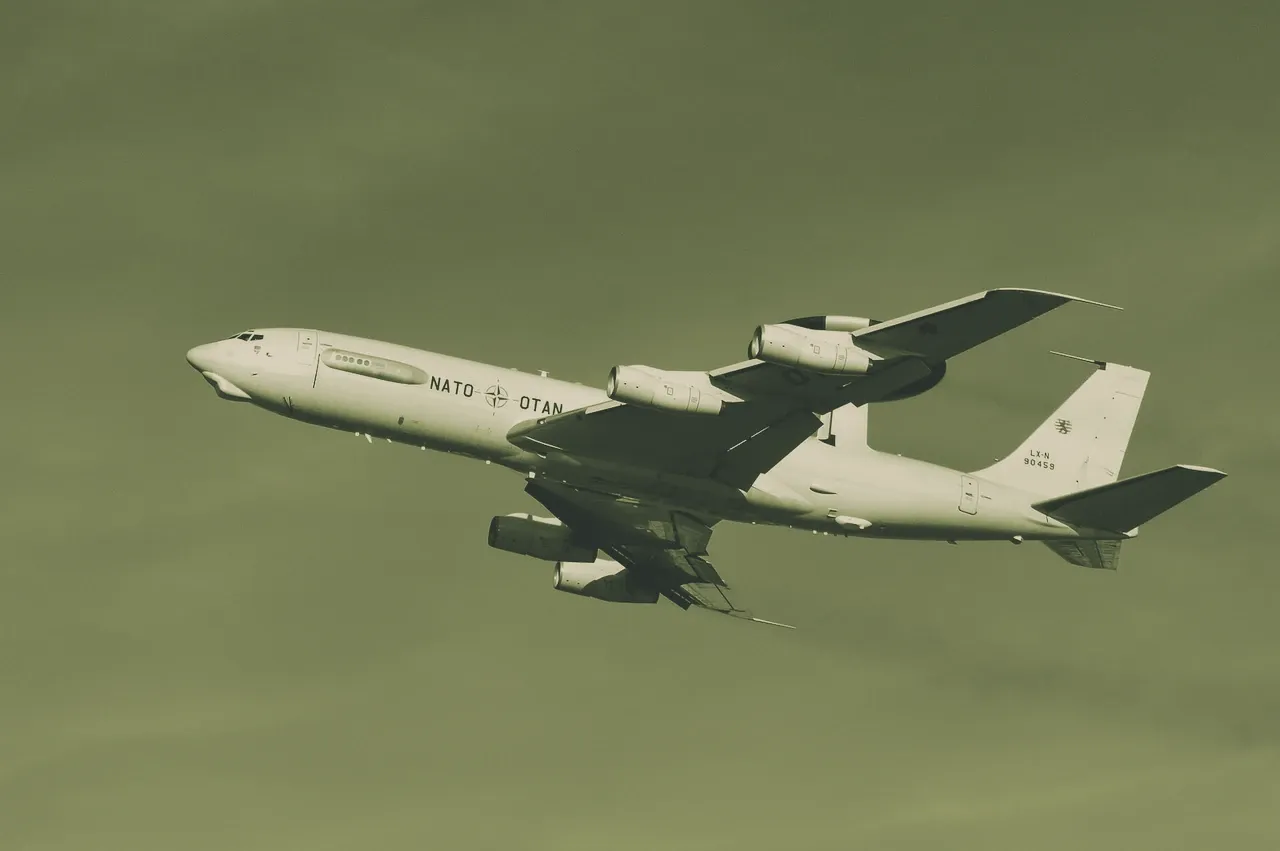
E-3 Sentry
FIG.01 · USA Image - a NATO E-3A Sentry AWACS taking off. Photo by Timothy A. Gonsalves, CC BY-SA 4.0, via Wikimedia Commons.
The plane that invented modern air battle management — the E-3 Sentry is the original AWACS, the Boeing 707 with the unmistakable thirty-foot rotating radar dome that has been the West's eyes in the sky since 1977. It quarterbacked Desert Storm, the Balkans, and every campaign since, seeing hundreds of miles and directing hundreds of aircraft from a single orbit. But the Sentry is now old, shrinking and in crisis: its E-7 Wedgetail replacement is caught in budget turmoil, NATO has torn up its own succession plan, and in March 2026 an Iranian strike destroyed a US E-3 on the ground in Saudi Arabia — the type's first-ever combat loss, and a stark illustration of the AWACS gap opening as the fleet ages out.

Overview

The E-3 Sentry is the Boeing-built airborne early-warning and control aircraft — the foundational Western AWACS from which the entire modern airborne-battle-management field descends. A modified Boeing 707-320B carries a rotating 30-foot rotodome housing the AN/APY-1/-2 pulse-Doppler radar, giving it 360° coverage: detection of low-flying aircraft past 400 km, medium- and high-altitude targets beyond 650 km, and simultaneous tracking of over 600 contacts, all feeding a mission crew that directs the air battle. Entering US Air Force service in 1977, the E-3 defined the AWACS role — the airborne command post that turns scattered fighters into a coordinated force — and proved it across Desert Storm (controllers assisted in 38 of 41 air-to-air kills), the Balkans, Afghanistan, Iraq and beyond. Sixty-eight were built (production ended 1992) for the USAF, NATO's shared Geilenkirchen fleet, the UK (retired), France and Saudi Arabia, plus Japan's related 767-based E-767. But the Sentry's story now is decline: the USAF fleet has shrunk to ~16 and is set to retire by FY29, its intended E-7 Wedgetail replacement has suffered cost growth and a near-cancellation, and NATO scrapped its own E-7 buy — leaving a looming AWACS capability gap. That gap became concrete on 27 March 2026, when an Iranian strike destroyed a US E-3 at Prince Sultan Air Base — the first-ever combat loss of a Sentry, and a symbol of an irreplaceable old aircraft caught between a threat that can now reach it and a successor that is not yet ready.

Development

The E-3 answered a late-1960s USAF requirement for a survivable airborne radar that could patrol for 8–10 hours and detect fighter-sized targets beyond 370 km. Boeing's 707-based design was selected in 1972, first flew with full mission equipment on 31 October 1975, and reached USAF initial operational capability in 1977, with the first 24 E-3As in service by 1979, per the USAF fact sheet. The fleet evolved through the E-3B/C (1980s AN/APY-2 radar, more consoles, better jam resistance and data links) to the current E-3G Block 40/45 open-architecture mission-computing standard (IOC 2014), with an ongoing DRAGON cockpit modernization. Production ended in 1992 after 68 aircraft, per Wikipedia. The last decade has been about decline and succession. The USAF drew its fleet down to 16 aircraft in FY2023 for a "targeted phaseout in FY29," and planned to replace it with the E-7 Wedgetail — but the E-7 program's cost rose toward ~$724M per jet, its first delivery slipped to 2028, and the Pentagon tried to cancel it in the FY26 budget over survivability concerns before Congress restored funding, per Air & Space Forces Magazine. NATO's succession collapsed in parallel: after selecting the E-7 in 2023, the alliance's partner nations dropped the E-7 buy in November 2025, and in April 2026 NATO reportedly moved to the Saab/Bombardier GlobalEye for its E-3A replacement (a reported selection, not yet a signed contract), per AeroTime. The result is an AWACS transition in disarray just as the threat to large radar aircraft is rising.

Design & capabilities

The E-3's defining feature is the rotodome — a 30-foot, 6-foot-thick rotating radar dome held above the fuselage on two struts, turning about six times a minute for 360° coverage. Inside is the AN/APY-1 (later AN/APY-2) pulse-Doppler radar, which sees low-flying targets past 400 km at altitude, medium- and high-altitude aircraft beyond 650 km over the horizon, and tracks 600-plus contacts at once, with the APY-2 adding improved electronic-counter-countermeasures and a maritime mode. But the radar is only the sensor; the E-3's purpose is battle management — a mission crew of 13–19 specialists using the picture to direct strike packages, control interceptors, coordinate refueling and run the air battle from an orbit at ~29,000 feet, with an unrefueled endurance over eight hours (air-refuelable for far longer). Four TF33 turbofans (the NATO and Saudi jets use more efficient CFM56s) power the ~152-foot, 707-based airframe. The E-3 is what "AWACS" means: the aircraft that first made airborne command and control work at scale, letting a commander see and orchestrate an entire theater's air picture. Its limitations are the limitations of its era: a large, non-stealthy, slow aircraft on a 1960s airframe, increasingly vulnerable to long-range air-to-air missiles and, as 2026 showed, to strikes on its bases — and expensive to sustain, which is what drove the retirement decision. The capability it provides remains essential; the airframe delivering it is simply out of time.

Variants

  • E-3A: the baseline (AN/APY-1, analog consoles); NATO operates 14–18 CFM56-engined E-3As.
  • E-3B / E-3C: 1980s USAF upgrades — AN/APY-2 radar, more consoles, JTIDS data links, radar improvements.
  • E-3G (Block 40/45): the current USAF standard — open-architecture mission computing, DRAGON cockpit.
  • E-3D "Sentry AEW.1" (RAF): the British CFM56 variant, retired in 2021.
  • E-3F (France): the French CFM56 variant, in service.
  • E-767 (Japan): a related but distinct type — the same AN/APY-2 radar and rotodome on a Boeing 767 airframe (4 built, in service).

Combat record / operational use

The E-3 has been the West's air-battle quarterback for nearly five decades. In Desert Storm (1991) it flew 379 missions and controllers assisted in 38 of 41 air-to-air kills — the first air war recorded end-to-end from the air. Over the Balkans (1999) NATO, US, British and French Sentries directed more than a thousand aircraft over Yugoslavia, and the type served across Northern/Southern Watch, Afghanistan, Iraq, Libya and, from 2015, the anti-ISIS campaign (the Block 40/45 E-3G's combat debut). Its most consequential recent moment, however, is a loss. In the 2026 Iran war, roughly six of the ~16 remaining USAF E-3s deployed to the Middle East, and on 27 March 2026 an Iranian strike destroyed one (tail #81-0005) at Prince Sultan Air Base in Saudi Arabia — satellite and ground imagery showed the aircraft severed and burned out, its rotodome on the ground, in what is assessed as the first-ever combat loss of an E-3 (Iran's Fars agency claimed a Shahed drone struck it; US reporting cited a mixed drone-and-missile attack; the full account rests on OSINT and semi-official verification). The strike crystallized the strategic problem: an aging, irreplaceable, high-value radar aircraft, few in number, is now reachable — and every one lost is a hole in the air picture that the delayed replacement cannot fill. That an E-3 detected an incoming Shahed roughly 85 minutes before ground radar could, only to have a sister aircraft destroyed on the ramp, is the E-3's dilemma in a single episode: still essential, increasingly exposed, running out of time.

Advantages

  • Proven battle management — nearly 50 years as the West's air-battle quarterback, from Desert Storm to the anti-ISIS campaign.
  • Deep radar picture — 400+ km on low targets, 650+ km on high ones, 600+ simultaneous tracks, 360° coverage.
  • Long endurance and crew capacity — 8-plus hours unrefueled (air-refuelable) with 13–19 mission specialists running the air battle.
  • Allied interoperability — a shared NATO fleet and multiple national operators built decades of common AWACS doctrine.
  • Modernized mission systems — the E-3G Block 40/45 and DRAGON cockpit keep the battle-management software current on an old airframe.

Drawbacks / limitations

  • Obsolete airframe — a 1960s 707 platform, expensive to sustain, which drove the retirement decision.
  • Vulnerable — large, slow, non-stealthy and few, exposed to long-range air-to-air missiles and, as 2026 proved, to strikes on its bases.
  • Shrinking fleet with no ready replacement — down to ~16 USAF aircraft retiring by FY29 while the E-7 slips and NATO's plan collapsed.
  • Irreplaceable losses — each aircraft lost (like the Prince Sultan E-3) removes scarce capacity that cannot be quickly regenerated.
  • Small crewed orbit — one aircraft covers one area; sustaining theater coverage needs several, straining a diminished fleet.

Counterparts

The E-3's intended successor is the E-7 Wedgetail — a 737 with the MESA AESA radar, jet-modern where the E-3 is legacy — and the turmoil around the E-7 (US near-cancellation, NATO's dropped buy) is the heart of the E-3's crisis, with NATO now reportedly turning to the Saab/Bombardier GlobalEye instead, and the carrier E-2 Hawkeye floated as a US interim bridge. Its peers are the other land-based AWACS this lexicon covers: Russia's A-50 Mainstay (the direct Soviet-heritage equivalent) and China's KJ-3000 and KJ-500. The comparison that gives the E-3 its meaning is generational and cautionary: it is the aircraft that created the AWACS category and proved its decisive value, and it is now the aircraft demonstrating that category's vulnerability and the West's failure to replace it in time. Where China is fielding new AWACS across every tier (KJ-500, KJ-3000, carrier KJ-600, uncrewed WZ-9), the US and NATO are retiring the E-3 faster than they are fielding its replacement — a divergence the Prince Sultan loss threw into relief, and the reason the E-3's decline is a strategic story, not just an airframe reaching the end of its service life.

Outlook

The E-3's future is managed decline into an uncertain gap. The USAF plan retires the fleet by FY29 and bets on the E-7 Wedgetail — but the E-7's cost growth, slipped 2028 first delivery, and the FY26 near-cancellation (reversed by Congress) mean the bridge is shaky, with the Navy's E-2D and space-based sensing floated as interim fills. The NATO plan is in even greater flux: the alliance dropped its E-7 buy in November 2025 and reportedly turned to the GlobalEye in April 2026 (not yet contracted), while its own Geilenkirchen E-3A fleet soldiers on under a life-extension program toward ~2035. The vulnerability lesson from Prince Sultan will shape how the remaining E-3s (and their successors) are based, dispersed and protected as long-range strike and AWACS-hunting proliferate. For BattlePolicy readers the E-3 Sentry is the AWACS the West built the modern air battle around — and its decline is the clearest sign of a capability transition mishandled: a proven, essential aircraft retiring into a replacement crisis, at the exact moment a rival (China) is expanding its own airborne-radar fleet across every tier. The E-3's last years are a study in how hard it is to replace an aircraft that quietly makes everything else in the sky work — and the Prince Sultan strike is the warning that the West may discover the E-3's value most sharply as it loses the ability to field it.

Key specifications

E-3G/USAF figures; fleet counts and retirement dates vary by fleet and fiscal year (flagged). The 2026 combat loss rests on OSINT/semi-official reporting.

Spec Value
Type Airborne early warning & control aircraft (AWACS)
Airframe Modified Boeing 707-320B
Radar AN/APY-1 / AN/APY-2 pulse-Doppler in a 30 ft rotating rotodome (~6 rpm)
Detection 400+ km (low targets) / 650+ km (high); 600+ simultaneous tracks
Crew 4 flight + 13–19 mission specialists
Endurance 8+ hr unrefueled; air-refuelable; ceiling ~29,000 ft
Engines 4 × P&W TF33 (NATO/Saudi: CFM56)
Built 68 (production ended 1992)
Unit cost ~$270M (FY1998)
USAF fleet ~16 E-3G, phaseout by FY29
Other operators NATO (14 E-3A, to ~2035), France (4 E-3F), Saudi Arabia; Japan (4 E-767, related type); RAF retired 2021
Combat loss 1 (E-3 tail #81-0005, Prince Sultan AB, 27 Mar 2026 — first-ever)

Sources

  1. Boeing E-3 Sentry — Wikipedia
  2. E-3 Sentry (AWACS) fact sheet — US Air Force
  3. E-3 AWACS — Air & Space Forces Magazine
  4. Boeing E-3 Sentry — Jet Briefing
  5. AWACS in the Gulf War — PBS Frontline
  6. NATO E-3 Sentry: old but still a workhorse — Business Insider
  7. NATO rethinks its eyes in the sky after US pulls plug on E-7 — Aviation News EU
  8. E-7 Wedgetail plans axed by NATO nations — TWZ
  9. NATO AWACS replacement: Saab/Bombardier GlobalEye — AeroTime
  10. AWACS: NATO's eyes in the sky — NATO
  11. Images purportedly show E-3 Sentry destroyed in Iranian strike — TWZ
  12. Photos show heavily damaged US radar jet — BBC
  13. US Air Force AWACS jet destroyed in Saudi Arabia — CNN
  14. Alliance Future Surveillance and Control (AFSC) — GlobalSecurity
  15. How the AWACS E-3 Sentry changed air warfare — MigFlug
🔒 The Analyst Section on E-3 Sentry is for BattlePolicy Pro members. Below the line: procurement and contract history, the suppliers and companies behind the system, our head-to-head analyst view of the systems it actually competes with, and the BattlePolicy assessment note. Unlock the full file with BattlePolicy Pro →
Related