PzH 2000
Germany's high-tempo tracked 155 mm self-propelled howitzer, prized for its burst rate of fire and long reach, serving across NATO and Ukraine.
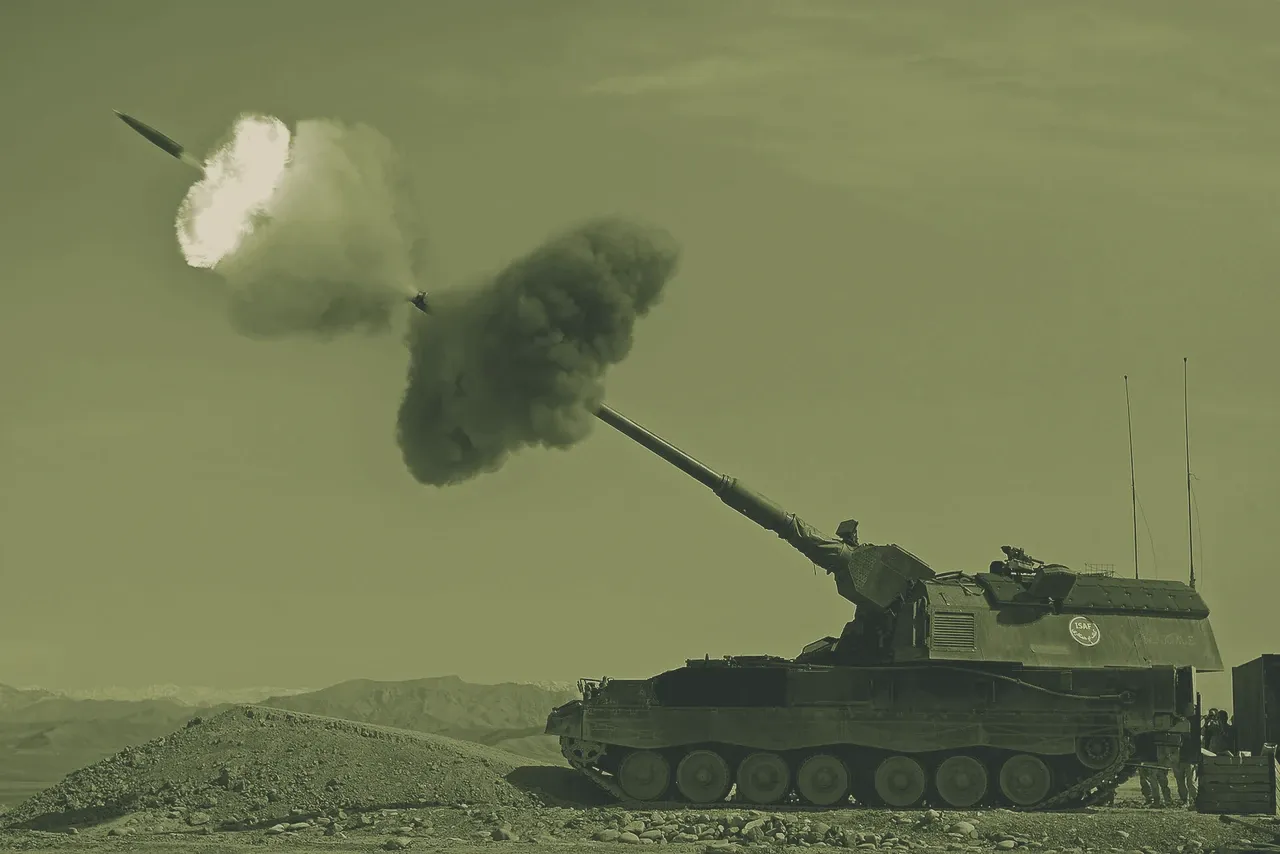
Germany's high-tempo tracked self-propelled howitzer — a 155 mm L/52 gun with a full autoloader, MRSI capability, and a proven record in counter-battery duels from Ukraine to NATO deployments.
Overview
The Panzerhaubitze 2000 (PzH 2000) is a tracked 155 mm/L52 self-propelled howitzer developed in Germany and fielded by multiple NATO armies. Entering service in 1998, it combines a fully automated 60-round magazine, a high rate of fire capable of placing multiple rounds on a single target simultaneously (Multiple Rounds Simultaneous Impact, or MRSI), and a reach of up to ~54–56 km with Velocity-enhanced Long-range Artillery Projectile (V-LAP) ammunition. The system serves as a cornerstone of armored brigade fire support for its operators and has been transferred to Ukraine, where its firepower and mobility are used in intensive artillery warfare.
Development
Development of the PzH 2000 began in 1987 with a joint project between Germany, Italy, and the United Kingdom, although Italy and the UK later withdrew to pursue their own programs. The German consortium of Krauss-Maffei Wegmann (KMW, now part of KNDS) and Rheinmetall continued development, and the system was formally adopted by the Bundeswehr in 1998, with initial operational capability declared that same year. The howitzer was designed from the outset for high-tempo operations, featuring a fully automatic shell-loading system and a 60-round onboard magazine to support sustained fire missions without ammunition resupply vehicles, according to KNDS. Production has exceeded 360 units, with manufacturing continuing to fulfill replacement orders for systems transferred to Ukraine.
Design & capabilities
The PzH 2000 is built around a 155 mm L/52 ordnance, a configuration that gives it a standard high-explosive range of approximately 30 km and an extended range of about 40 km with base-bleed shells. Its performance ceiling is reached with V-LAP ammunition, which can strike targets at distances of 54–56 km. The turret mounts a fully automated loading system that feeds from a 60-round magazine, enabling a burst rate of three rounds in 9–10 seconds and a sustained rate of up to 10 rounds per minute. The fire-control computer enables MRSI missions, where several shells on different trajectories land on the same target simultaneously.
The chassis is a heavily armored tracked vehicle with a combat weight of approximately 55–57 metric tons, powered by an MTU 881 Ka-500 diesel engine producing around 1,000 hp. Crew requirements vary between sources from 5 to a core of 3 plus 2 support, with the automated loader reducing manual effort significantly. The system can fire NATO-standard 155 mm precision-guided munitions, including the SMArt 155 sensor-fused munition and Vulcano guided long-range projectiles, which are designated for the Italian Army's variant. The entire vehicle is protected against small arms and shell splinters and is equipped with an NBC protection system, as detailed by Rheinmetall.
Variants
The PzH 2000 has seen incremental configuration updates over its production run but has not spawned distinctly named variants. Export configurations exist for operators such as Qatar, and the turret and gun concept was selected for the Boxer-based RCH 155 wheeled howitzer, which mounts an unmanned PzH 2000 turret on an 8×8 platform. Italian Army PzH 2000s are also equipped to fire the Vulcano guided long-range ammunition.
Combat record / operational use
The PzH 2000's most intense combat employment began in 2022, when Germany, the Netherlands, and Italy transferred systems to Ukraine in response to the full-scale Russian invasion. Ukrainian crews have employed the howitzer in counter-battery duels and deep fire missions, valued for its very high rate of fire and range that outmatched many Russian tube artillery systems. However, the extreme operational tempo has led to barrel wear and mechanical stress, creating a significant maintenance burden and requiring the establishment of a repair hub in a neighboring country to keep the fleet operational. According to United24 Media, the cost and logistical intensity of sustaining PzH 2000s at high firing rates have been notable lessons from the conflict.
The system had earlier seen operational use during the NATO-led International Security Assistance Force (ISAF) mission in Afghanistan, where Dutch Army PzH 2000s provided fire support from forward operating bases, demonstrating the howitzer's ability to deliver sustained, accurate fire in a prolonged campaign.
Advantages
- Very high rate of fire, including 3 rounds in under 10 seconds, with MRSI capability allowing multiple rounds to hit a single target at once.
- 60-round automatic magazine enables extended fire missions without immediate resupply, according to KNDS.
- 155 mm/L52 ordnance and V-LAP ammunition deliver a reach advantage (~54–56 km) over many NATO and Russian counterparts.
- Fully automated loading reduces crew fatigue and enables a small crew of 3–5 soldiers.
- Heavily armored tracked chassis provides mobility with artillery formations and a degree of protection against counter-battery fire.
Drawbacks / limitations
- High combat weight of ~55–57 tons limits strategic air mobility and places stress on some bridges and road infrastructure.
- Sustained high-rate fire in Ukraine revealed significant barrel-wear rates and heavy maintenance demands, creating a logistics tail for in-theater repairs.
- Very high unit cost (estimated at €12–17 million or more per system) limits the number of systems that can be procured and fielded.
- Large thermal and radar signature makes it a high-value target in a drone-saturated battlefield.
Counterparts
Outlook
The PzH 2000 remains in production and active service across its operator base, with Germany ordering replacements for systems donated to Ukraine. The combat experience in Ukraine has validated the core design of a high-tempo, long-range tracked howitzer, while also highlighting the need for robust maintenance support, spare-barrel logistics, and adaptation to the threat of loitering munitions. Its turret and gun technology continues to evolve in the wheeled RCH 155 variant, which brings the firepower to a more mobile, road-centric platform.
Key specifications
| Spec | Value |
|---|---|
| Crew | 3–5 |
| Combat weight | ~55–57 t |
| Length / width / height | 11.67 m / 3.58 m / 3.43 m |
| Main armament | 155 mm L/52 howitzer |
| Secondary armament | 7.62 mm MG3 machine gun |
| Armor & protection | Protected against small arms and shell splinters; NBC protection system |
| Engine & power | MTU 881 Ka-500 diesel, ~1,000 hp |
| Power-to-weight | ~18.2 hp/t |
| Road / cross-country speed | 60 km/h / 45 km/h |
| Operational range | 420 km (road) |
Sources
- KNDS — PzH 2000. https://knds.com/en/products/systems/pzh-2000
- Rheinmetall — Self-propelled howitzer PzH 2000. https://www.rheinmetall.com/en/products/tracked-armoured-vehicles/self-propelled-howitzer-pzh-2000-a-trademark-of-knds-deutschland
- United24 Media — CAESAR, K9, PzH 2000: What Do the World's Top Artillery Systems Cost? https://united24media.com/war-in-ukraine/caesar-k9-panzerhaubitze-2000-what-do-the-worlds-top-artillery-systems-cost-3994
- Army Technology — K9 Thunder Self-Propelled Howitzer. https://www.army-technology.com/projects/thunderselfpropelled/
- Wikipedia — PzH 2000. https://en.wikipedia.org/wiki/PzH_2000