GRID-REF 37°47′N 122°25′W
DISPATCH 02/26 · 15 Jun 2026
BATTLEPOLICY
Startup to front line. Strategy to consequence.
Lexicon · Ukraine

Sea Baby

Ukraine's SBU-developed multi-purpose uncrewed surface vessel — from one-way ramming strikes on the Kerch Bridge and Black Sea Fleet ships to a modular platform firing rockets, missiles, and mines, culminating in the world's first underwater drone attack on a submarine.
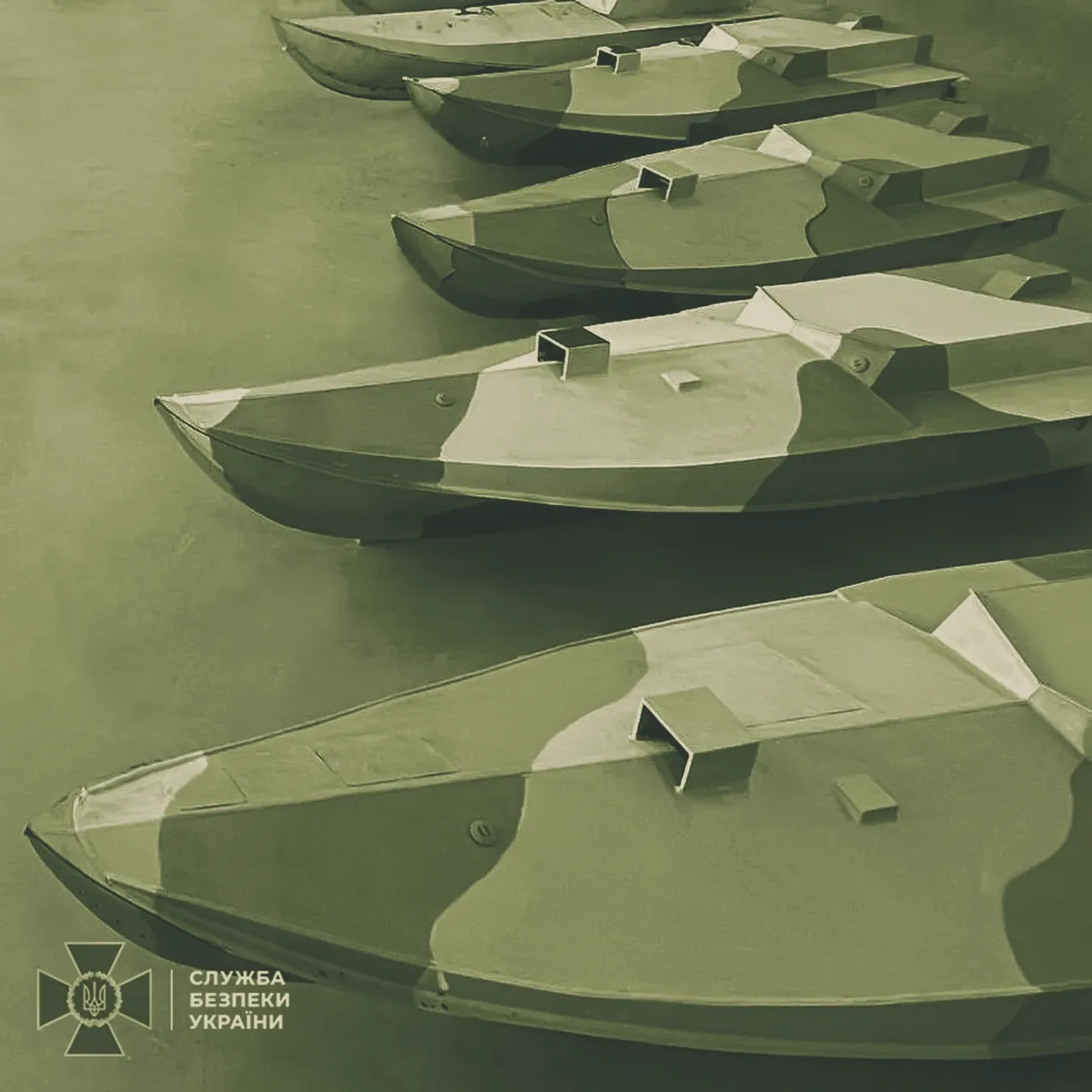
Ukraine's SBU-developed multi-purpose uncrewed surface vessel — from one-way ramming strikes on the Kerch Bridge and Black Sea Fleet ships to a modular platform firing rockets, missiles, and mines, culminating in the world's first underwater drone attack on a submarine.

Overview

The Sea Baby (Ukrainian: "Морський малюк" – Mors'kyi malyuk) is a family of uncrewed surface vessels (USVs) developed in-house by the Security Service of Ukraine (SBU) for asymmetric naval warfare. Conceived as an explosive-laden one-way attack drone, the design has evolved into a reusable multi-mission platform capable of laying mines, firing thermobaric and artillery rockets, engaging air and surface targets with adapted missiles and heavy machine guns, and acting as a mothership for smaller aerial attack drones. Its heavy warhead — up to 850 kg on the baseline model and a claimed ~2,000 kg on the 2025 generation — made it the largest Ukrainian USV charge when revealed and was explicitly sized for fortified infrastructure targets such as the Kerch Bridge. A submerged derivative, “Sub Sea Baby,” achieved the world’s first successful uncrewed underwater vehicle (UUV) attack on a submarine in December 2025.

Development

The SBU’s Brig. Gen. Ivan Lukashevych proposed a dedicated agency USV effort after the February 2022 invasion; early designs were drafted in July 2022 with Ukrainian Navy specialists before the SBU took development entirely in-house at a covert production facility, according to Wikipedia. While the parallel military-intelligence (GUR) program produced the Magura V5 optimized for agile anti-ship strikes, the SBU sized Sea Baby from the start for heavy warheads against static, heavily defended targets — specifically the Kerch Bridge and port infrastructure TWZ. After a Starlink-denial incident during an attempted early mission, the program added redundant satellite-communication channels, and late-2023 hulls carried an 850 kg warhead, a major increase from the ~108 kg of early builds Covert Shores. Continuous evolution brought modular weapon fits in 2024, and in October 2025 the SBU unveiled a new generation with a claimed ~1,500 km range, ~2,000 kg payload, AI-assisted friend-or-foe target recognition, and a drone-launching capability — a shift the project commander framed as moving “from a single-use strike craft into a reusable, multi-purpose platform” Euronews. Ukraine later signaled a willingness to export the Sea Baby line as part of a “controlled export” of battle-tested weapons.

Design & capabilities

The base hull measures approximately 6 m long with a 2 m beam and sits only ~0.6 m above the waterline; displacement is not publicly established. Twin 200 hp inboard motors drive waterjets to a maximum speed of about 90 km/h (49 kt). Range is at least 1,000 km (540 nm) with auxiliary fuel tanks, while the 2025 upgrade is claimed by the SBU to reach ~1,500 km — sufficient to strike “anywhere in the Black Sea” Euronews Covert Shores. The internal explosive payload stands at up to 850 kg on the 2023-24 models; the 2025 generation is advertised with a ~2,000 kg warhead capacity TWZ Euronews.

Control is via beyond-line-of-sight satellite communications with multiple redundant channels, operated from a mobile van-based control center; the system survived the Starlink denial that affected earlier Ukrainian drones Wikipedia. Sensors include gimballed and fixed electro-optical cameras, a satcom radome, and a radar on the Sea-Baby-II variant; the 2025 generation adds AI-assisted target recognition for friend-or-foe discrimination (SBU claim) Euronews. Weapon fits are modular: beside the baseline explosive ram charge, configurations include 2–6 RPV-16 thermobaric rocket launchers, six 122 mm Grad artillery rockets (~20 km range), two MN-103 Manta bottom mines, adapted R-73 (and reportedly R-60) infrared-homing air-to-air missiles on a rail launcher, and a gyro-stabilized remote weapon station with a 14.5 mm KPVT heavy machine gun on Sea Baby II Covert Shores TWZ. The 2025 upgrade adds a multiple-rocket launcher, a stabilized machine-gun turret, and the ability to launch small FPV-style attack drones, together with a multilayer self-destruct system to prevent capture.

Variants

  • Baseline strike Sea Baby — ram/self-detonating craft with up to 850 kg warhead; long-range fit with external fuel tanks.
  • Thermobaric fire-support fit — 2, 4, or 6 RPV-16 rocket launchers, revealed January 2024.
  • Grad rocket-artillery fit — 6-tube 122 mm launcher, effective to ~20 km.
  • Minelayer — carries two MN-103 Manta bottom mines.
  • Anti-air fit — rail-launched adapted R-73 (and reportedly R-60) infrared missiles, first seen May 2024; gun-armed escort fit with auto-tracking heavy machine gun, used in combat December 2024.
  • Sea Baby II — improved hull, integrated radar, gyro-stabilized RWS with 14.5 mm KPVT.
  • 2025 generation — ~1,500 km / ~2,000 kg class, AI friend-or-foe, multiple-rocket launcher and stabilized MG turret versions, drone-carrier (FPV mothership) capability.
  • Sub Sea Baby — submerged UUV derivative, functionally an autonomous torpedo; employed against a Russian submarine in December 2025.

Combat record / operational use

Sea Baby debuted on 17 July 2023, when two craft struck the Crimean (Kerch) Bridge, damaging a road span and an abutment; the SBU later released onboard and CCTV footage and publicly claimed the type TWZ. Through late 2023 the SBU credited Sea Baby with hits on the landing ship Olenegorsky Gornyak and the tanker SIG (although open-source imagery leaves exact platform attribution for those two strikes ambiguous), the corvette Samum (14 September, listing under tow), the patrol ship Pavel Derzhavin (October), and the reconnaissance ship Vladimir Kozitsky (December). Manta mines laid by Sea Baby and Mamai USVs were also credited with damaging Samum and, by June 2024, at least four Russian ships off Crimea Wikipedia.

In 2024 the platform matured into a multi-weapon system: thermobaric-rocket versions appeared in January, SBU video confirmed rocket fire at Russian vessels Business Insider, R-73-armed boats were documented by May TWZ, and on 6 December 2024 gun-armed Sea Babys fought off Mi-8 helicopters, aircraft, and Raptor patrol boats in Kerch Bay — the SBU claimed damaged helicopters and a hit on a barge carrying bridge-repair equipment (claims not independently verified) Kyiv Independent. On 3 June 2025 the SBU executed its third Kerch Bridge attack, a months-long operation that mined the bridge’s underwater pier supports and detonated a first charge of 1,100 kg TNT-equivalent; the agency stated the supports were “severely damaged,” and the bridge closed for roughly four hours Kyiv Independent The Guardian. Late 2025 saw Sea Baby opening a new front against Russia’s shadow fleet: on 28 November they disabled the sanctioned tankers Kairos and Virat 28–38 nm off Turkey, followed by the tanker Dashan on 10 December. On 15 December 2025 the SBU released video of a “Sub Sea Baby” UUV striking the stern of an Improved Kilo-class submarine (assessed as B-271 Kolpino) inside Novorossiysk naval base — the UK Ministry of Defence judged the submarine likely seriously damaged and immobilized, marking the first successful UUV attack on a submarine; Russia’s Ministry of Defence denied any vessel was damaged Naval News.

Advantages

  • Heavy punch for a small craft: the 850 kg warhead was the largest known Ukrainian USV charge when revealed, tailored for hardened infrastructure; the 2025 generation doubles claimed payload TWZ Euronews.
  • Strategic effect without a conventional navy: SBU attributes the Black Sea Fleet’s relocation from Sevastopol to Novorossiysk partly to Sea Baby strikes (11 vessels claimed hit); analysts assess Ukrainian USVs disabled roughly a third of the fleet Wikipedia.
  • True multi-mission evolution: the same hull family executes strike, minelaying, rocket fire, air-defense self-escort, and drone-carrier missions, complicating defensive adaptations Covert Shores Euronews.
  • Resilient satcom control with redundant channels, surviving the Starlink-denial incident that stranded earlier missions.
  • Highly cost-effective relative to effect (~$245k est. per hull vs. multi-billion-dollar targets), and partially crowd-funded.

Drawbacks / limitations

  • Vulnerable to manned aircraft: Russian helicopters and patrol planes destroy USVs with gunfire; a Ka-29 sank an R-73-armed Sea Baby in May 2024 footage, demonstrating that even the anti-air fit does not guarantee survivability TWZ.
  • Control-link dependence: camera-feed interruptions and EW jamming can sever operator control; an early USV that washed ashore near Sevastopol was seized by Russia.
  • Unguided add-on weapons (RPV-16 ~1,000 m, Grad rockets of uncertain accuracy from a moving platform) limit precision in the gun/rocket roles.
  • As weapon fits grow more expensive (missiles, stabilized RWS, AI kit), the platform sheds its expendable-swarm economics and must be husbanded.
  • Optimized for static/port targets; agile warships at sea are better addressed by the smaller, more maneuverable Magura family, reflecting a deliberate division of labor Wikipedia TWZ.

Counterparts

Outlook

The Sea Baby line is maturing into both a family of surface multi-role USVs and a submerged UUV, while simultaneously becoming an export candidate. President Zelenskyy has named sea drones as the lead item in Ukraine’s “controlled export” of battle-tested weapons, and the SBU openly markets the program’s record — 11 ships claimed, a displaced Black Sea Fleet, the shadow-fleet interdiction campaign, and the world-first submarine strike. The December 2025 UUV success suggests the next phase will target what surface defenses (booms, pontoons) cannot stop, though analysts note that renewed Kerch Bridge attempts are widely expected and that a UUV charge alone may not fell bridge pillars.

Key specifications

Spec Value
Type Multipurpose uncrewed surface vessel (USV)
Endurance Not publicly established; mission length limited by fuel (range ~1,000–1,500 km)
Range ≥1,000 km (baseline); ~1,500 km claimed (2025 generation, SBU claim)
Cruise / max speed Cruise speed not publicly established; max ~90 km/h (49 kt)
Payload Up to 850 kg (2023–24); ~2,000 kg claimed (2025 generation)
Datalink / control Beyond-line-of-sight satellite communications with multiple redundant channels; mobile van-based control station
Autonomy level Remote operator; 2025 generation adds AI-assisted target recognition (not full autonomy)
Dimensions / MTOW Length ~6 m, beam ~2 m, height ~0.6 m above waterline; displacement/weight not publicly established
Launch & recovery Beach/slipway launch; strike missions are one-way; reusable variants recovered by boat

Sources

  1. Wikipedia — Sea Baby — https://en.wikipedia.org/wiki/Sea_Baby
  2. Covert Shores (H I Sutton) — Ukraine's Sea Baby Maritime Drone (USV) — https://www.hisutton.com/Ukraine-Sea-Baby-USV.html
  3. Euronews — Ukraine unveils upgraded ‘Sea Baby’ drone it says can strike anywhere in the Black Sea — https://www.euronews.com/2025/10/23/ukraine-unveils-upgraded-sea-baby-drone-it-says-can-strike-anywhere-in-the-black-sea
  4. TWZ (The War Zone) — New Drone Boat Named Sea Baby Used In Kerch Bridge Attack — https://www.twz.com/new-drone-boat-named-sea-baby-used-in-kerch-bridge-attack
  5. The Kyiv Independent — Russia’s Crimean Bridge rocked by explosions, Ukraine’s SBU claims responsibility — https://kyivindependent.com/breaking-ukraines-sbu-strikes-crimean-bridge-in-underwater-attack/
  6. The Guardian — Ukraine hits bridge linking Crimea to Russia with underwater explosives — https://www.theguardian.com/world/2025/jun/03/ukraine-hits-bridge-linking-crimea-to-russia-with-underwater-explosives
  7. TWZ (The War Zone) — Ukrainian Drone Boats Now Armed With Adapted Air-To-Air Missiles — https://www.twz.com/news-features/ukrainian-drone-boats-now-armed-with-adapted-air-to-air-missiles
  8. Naval News — Ukraine strikes Russian submarine with ‘Sub Sea Baby’ drone — https://www.navalnews.com/naval-news/2025/12/ukraine-strikes-russian-submarine-with-sub-sea-baby-drone/
  9. Business Insider — A Ukrainian floating drone that is devastating Russia’s Black Sea fleet can now fire missiles — https://www.businessinsider.com/ukraine-sea-baby-drone-devastating-russia-fleet-black-sea-missiles-2024-1
  10. The Kyiv Independent — SBU releases video of Sea Baby naval drones repelling Russian helicopter attack — https://kyivindependent.com/sbu-video-sea-baby-drones-crimea/
FIELD DISPATCH · WEEKLY

BattlePolicy Weekly — free.

Defense tech, startups, and security — weekly. No paywall.

Related
Ukraine · Russia · Air Defense · ballistic missiles · shahed · patriot

Russia fired 681 weapons at Ukraine on June 15. Air defense stopped the cheap ones.

Russia's June 15 barrage put 681 weapons over Ukraine and set the Kyiv Pechersk Lavra ablaze. Ukraine stopped almost every drone and cruise missile, and barely half the ballistics.

Ukraine · Russia · Air Defense · ballistic missiles · shahed · patriot