GRID-REF 37°47′N 122°25′W
DISPATCH 02/26 · 11 Jun 2026
BATTLEPOLICY
Startup to front line. Strategy to consequence.
Lexicon · Iran

Shahed-238

Iran's jet-turbine loitering munition — a faster, costlier successor to the Shahed-136, fielded by Russia as the Geran-3 and by Iran itself in the Gulf.
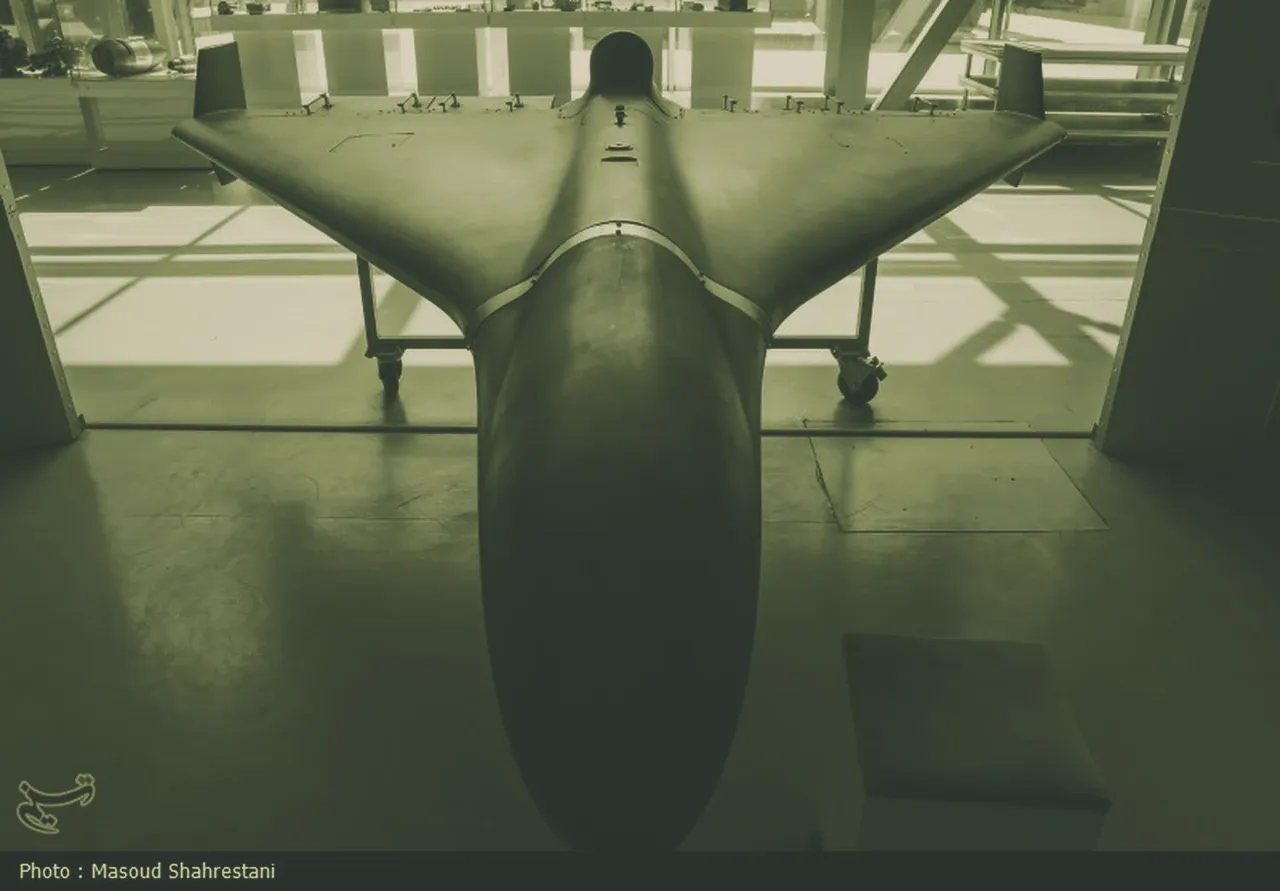
Shahed-238
FIG.01 · Iran Image - A Shahed-238 jet-powered drone. Photo by Masoud Shahrestani, CC BY 4.0, via Wikimedia Commons.jpg).
Iran's jet-turbine loitering munition — a faster, more expensive successor to the Shahed-136, deployed by Russia as the Geran-3 in Ukraine and by Iran in the Gulf.

Overview

The Shahed-238 is a jet-powered, delta-wing one-way attack UAV developed by Iran's HESA under the IRGC Aerospace Force. It trades the piston-engine economy of the Shahed-136 family for roughly three to four times the cruise speed, a more sophisticated sensor suite, and multiple seeker options. Russia produces a license-derived version, the Geran-3, with a different engine and cruder airframe, and has used it operationally against Ukraine since mid-2025. Iran itself has employed the original in strategic strikes across the Persian Gulf. The platform represents a shift from mass-attrition saturation attacks to selective high-speed penetration, while its cost and engine-supply dependencies sharply constrain volume.

Development

Iran publicly unveiled the Shahed-238 in a state television documentary in September 2023 and formally presented it in November 2023 as a faster, more penetrating evolution of the Shahed-136, retaining the same delta-wing layout but with a redesigned streamlined nose and a reinforced fuselage that accommodated a Toloue-10 or Toloue-13 micro-turbojet — an unlicensed Iranian derivative of the Czech PBS TJ100/TJ150 family, according to OSINT research Army Recognition. Russia began importing Iranian production kits and standing up licensed assembly at the Alabuga Special Economic Zone in Tatarstan; Ukraine's GUR assessed that mass production of the Geran-3 derivative had begun by February 2025 Army Recognition. The first confirmed wreckage — a Geran-3 bearing serial “36” and designation “U” — appeared on the Telegram channel Military Informant on 29 June 2025 Army Recognition. Ukrainian sensors had already recorded an incoming jet-drone at over 515 km/h above Kyiv on 10 June 2025 Army Recognition.

Design & capabilities

The Shahed-238 replaces the 50-hp MD-550 piston engine of the Shahed-136 with a Toloue-10 or Toloue-13 turbojet, boosting cruise speed from roughly 185 km/h to 500–600 km/h and enabling terminal dives above 700 km/h, per Army Recognition’s assembled OSINT data Army Recognition. The airframe carries an electro-optical camera and a two-way data link, confirmed in Geran-3 wreckage, that provides real-time imagery and operator-assisted terminal guidance — capabilities not standard on the piston-engine cousins Forbes. Iranian technical descriptions also mention an infrared seeker for heat-homing and a passive radar-homing head for suppression of enemy air defenses, though neither has been verified in recovered hardware Army Recognition. Inertial navigation is backed by a 12-element anti-jam GNSS suite, while the Russian Geran-3 substitutes a Chinese Telefly JT80 turbojet — advertised on Alibaba at $18,000–$30,000 — yielding lower speed (185–370 km/h) but reducing per-unit cost and easing sanctions-constrained supply Forbes. Overall, the system offers greater penetration against short-window defenses at the price of reduced range and a marked increase in unit expense.

Variants

  • Shahed-238 (Iranian original) – Toloue-10/13 engine, streamlined nose, sensor suite with EO/data link and optional IR or passive radar seekers.
  • Geran-3 (Russian derivative) – Produced at Alabuga; cruder airframe, Chinese JT80 engine, lower speed, retains the piston-age control surfaces.
  • Iranian jet-powered Shahed-136 variant – A separate airframe unveiled by Iran in September 2024, distinct from the Shahed-238, as noted by analyst Shahryar Pasandideh Forbes.

Combat record / operational use

Geran-3 have been employed in mixed raids over Ukraine since mid-2025, often embedded in swarms exceeding 270 drones per night. The 17–18 May 2025 wave included jet-powered units alongside piston-engine Geran-2s Army Recognition. In June 2025 the first confirmed Kyiv interception pushed defenders to expand high-speed interceptor capabilities. Iranian Shahed-238s saw strategic use in the 2026 Gulf campaign: a single airframe reportedly struck the Fairmont Palm Hotel in Dubai’s Jumeirah district, illustrating the system’s ability to reach targets at distances beyond the Shahed-136’s typical deployment profile RUSI. Ukraine’s Armed Forces Commander-in-Chief Gen. Oleksandr Syrskyi stated in June 2026 that Russia plans for jet-powered Shaheds to constitute 50% of its long-range drone strikes Business Insider, a declared ambition that, if realised, would mark a fundamental change in the drone campaign’s character.

Advantages

  • Cruise speed 500–600 km/h (3–4× the Geran-2) sharply compresses defender engagement windows and reduces intercept opportunities Forbes.
  • EO camera and two-way data link enable real-time target confirmation and operator-directed terminal attack, adding precision beyond simple pre-programmed coordinates Forbes.
  • Multiple seeker configurations (GNSS, IR, passive radar homing, EO) provide mission flexibility against radar emitters, heat sources, and hardened targets at a scale not available in the base Shahed-136 Army Recognition.
  • Demonstrated ability to outrun existing low-cost interceptor quadcopters, forcing defenders to field more expensive high-speed interceptors or surface-to-air missiles Forbes.
  • Iran’s Gulf strikes confirm operational viability at strategic ranges, elevating the system from a technology demonstrator to a proven strike weapon.

Drawbacks / limitations

  • Unit cost estimated at ~$1.4 million, compared with $20,000–$70,000 for the Shahed-136, fundamentally precluding mass-attrition use and confining it to selective high-value strikes Takshashila Institution.
  • Turbojet propulsion reduces operational range to roughly 1,200 km (unverified lighter-configuration claims of up to 2,500 km lack confirming evidence), versus the Shahed-136’s 2,000–2,500 km, limiting strategic depth unless launched from forward positions Army Recognition.
  • Engine supply is a single-point vulnerability: Toloue-10/13 relies on an unlicensed Czech design, the Chinese JT80 is subject to dual-use export controls, and both depend on sanctions evasion Forbes MSN/WSJ.
  • Higher thermal signature makes detection by infrared sensors easier than the piston-engine predecessor, and Ukraine has already demonstrated IR-guided intercepts Forbes.
  • Key performance parameters — CEP, exact range, kill probability — are not publicly verified; all figures are OSINT or Ukrainian intelligence assessments and must be treated as attributed estimates.

Counterparts

Outlook

Russia’s proclaimed goal of making jet-powered Shaheds half of its long-range strike fleet signals a structural shift away from mass-attrition saturation toward a two-tier model: low-cost piston drones for volume, high-speed jets to dislocate layered defenses and attack high-value nodes. The economics are punishing on both sides, however — Russia pays 5–20× more per jet unit while Ukraine must replace cheap machine-gun and quadcopter intercepts with expensive SAMs or dedicated high-speed interceptors. Engine supply chains, still dependent on unlicensed copies or Chinese commercially sourced turbojets, are the critical chokepoint and will determine whether the 50-percent target is reachable. Iran’s parallel combat use in the Gulf demonstrates that the Shahed-238 has graduated from a technology demonstrator to a strategic weapon in its own right. If a passive radar-homing (SEAD) variant is field-proven, the platform’s threat profile would escalate sharply.

Key specifications

Spec Value
Type Jet-turbine one-way attack UAV
Range ~1,200 km operational (unverified lighter-configuration estimates up to 2,500 km)
Speed (Mach / km·/s) 500–600 km/h cruise; terminal dives >700 km/h (Toloue-13); Geran-3 with JT80 ~185–370 km/h
Warhead (type & weight) 50–300 kg depending on variant; Geran-3 confirmed 50 kg thermobaric/fragmentation (TBBCh-50)
Guidance Inertial + GNSS (GPS/GLONASS); 12-element anti-jam; optional IR, passive radar homing, EO/data link
Accuracy (CEP) Not publicly established; EO-guided variants may offer meter-class precision (unconfirmed)
Launch platform(s) Truck-mounted inclined rail with JATO booster; air-launched variants described but unconfirmed
Propulsion Toloue-10 or Toloue-13 micro-turbojet (Iranian, reverse-engineered from Czech PBS TJ100/150); Geran-3 uses Chinese Telefly JT80
Length / diameter / launch weight Length ~3.5 m, wingspan ~3 m; Toloue-10 engine ~20.5 kg OSINT community; launch weight not publicly confirmed (baseline Geran-2 ~200 kg, Shahed-238 heavier)

Sources

  1. GlobalMilitary.net — HESA Shahed 238. https://www.globalmilitary.net/aircraft/shahed-238/
  2. H.I. Sutton / Covert Shores — Guide To Russian Shahed / Geran Strike Drones. https://www.hisutton.com/Russian-Geran-Shahed-Drones.html
  3. Army Recognition — Drone wreckage confirms Russian forces employ Iranian Shahed-238 jet-powered drones against Ukraine, 9 July 2025. https://armyrecognition.com/focus-analysis-conflicts/army/conflicts-in-the-world/russia-ukraine-war-2022/drone-wreckage-confirms-that-russian-forces-employ-iranian-shahed-238-jet-powered-drones-against-ukraine
  4. Forbes / David Hambling — Russia's New Jet-Powered Shahed Revealed: What It Means For Ukraine, 18 Sept 2025. https://www.forbes.com/sites/davidhambling/2025/09/18/russias-new-jet-powered-shahed-revealed-what-it-means-for-ukraine/
  5. Business Insider / Matthew Loh — Russia plans for jet-powered Shaheds to make up 50% of its long-range attacks, Ukraine war chief says, 5 June 2026. https://www.businessinsider.com/russia-jet-powered-shahed-syrskyi-long-range-50-drone-attack-2026-6
  6. Gwaramedia — Why Russian jet-powered Shahed drones are harder to down in Kharkiv, June 2026. https://gwaramedia.com/en/fast-and-almost-invisible-why-are-jet-powered-shahed-drones-harder-to-down-in-kharkiv/
  7. Ukraine Arms Monitor / Substack — Stopping Shaheds: Ukraine's Solutions, July 2025. https://ukrainesarmsmonitor.substack.com/p/stopping-shaheds-ukraines-solutions
  8. Takshashila Institution — The Shahed Drone, April 2026. https://takshashila.org.in/content/publications/Shahed-Iran-Drone-Strategy-14042026.html
  9. OSINT community (Facebook) — Toloue-10 engine dimensions, August 2025. https://www.facebook.com/groups/expatua/posts/24971757445765568/
  10. RUSI — Clear Warning: The Iran War and the Loitering Munitions Threat, May 2026. https://my.rusi.org/resource/clear-warning-the-iran-war-and-the-loitering-munitions-threat.html
  11. MSN / WSJ — Russia and Iran still importing Shahed drone components from China despite sanctions. https://www.msn.com/en-us/technology/general/russia-and-iran-still-importing-shahed-drone-components-from-china-despite-sanctions-wsj/ar-AA22uZHv
  12. GIS Reports — China's tech emerges as U.S. battlefield rival, May 2026. https://www.gisreportsonline.com/r/china-russia-technology/
FIELD DISPATCH · WEEKLY

BattlePolicy Weekly — free.

Defense tech, startups, and security — weekly. No paywall.

Related
Iran · Russia · drones · uav · mohajer · istarus · strike · surveillancePro

Mohajer-6

Iran's twin-boom multirole ISTAR/strike UAV — a runway-operated, 12-hour endurance platform armed with precision glide bombs and Almas missiles, exported to Russia, Venezuela, Sudan and others, and seeing combat from Ukraine to the Caribbean.

Iran · Russia · drones · uav · mohajer · istarus · strike · surveillance
Iran · missiles · mrbm · solid-fuel · road-mobile · ballistic-missile · irgcPro

Sejjil

Iran's first solid-fuel medium-range ballistic missile — a two-stage, road-mobile MRBM fielded by the IRGC, with a ~2,000 km range and a short-notice launch capability that marks a step beyond liquid-propellant Shahab derivatives.

Iran · missiles · mrbm · solid-fuel · road-mobile · ballistic-missile · irgc