GRID-REF 37°47′N 122°25′W
DISPATCH 03/26 · 20 Jul 2026
BATTLEPOLICY
Startup to front line. Strategy to consequence.
Lexicon · USA

Shield AI X-BAT

Shield AI's X-BAT is a runway-independent, tail-sitting VTOL autonomous combat jet flown by the company's Hivemind AI pilot — a claimed 3,700+ km range from a trailer launcher, no runway required, with first flight planned for late 2026 and a production pitch to Poland.
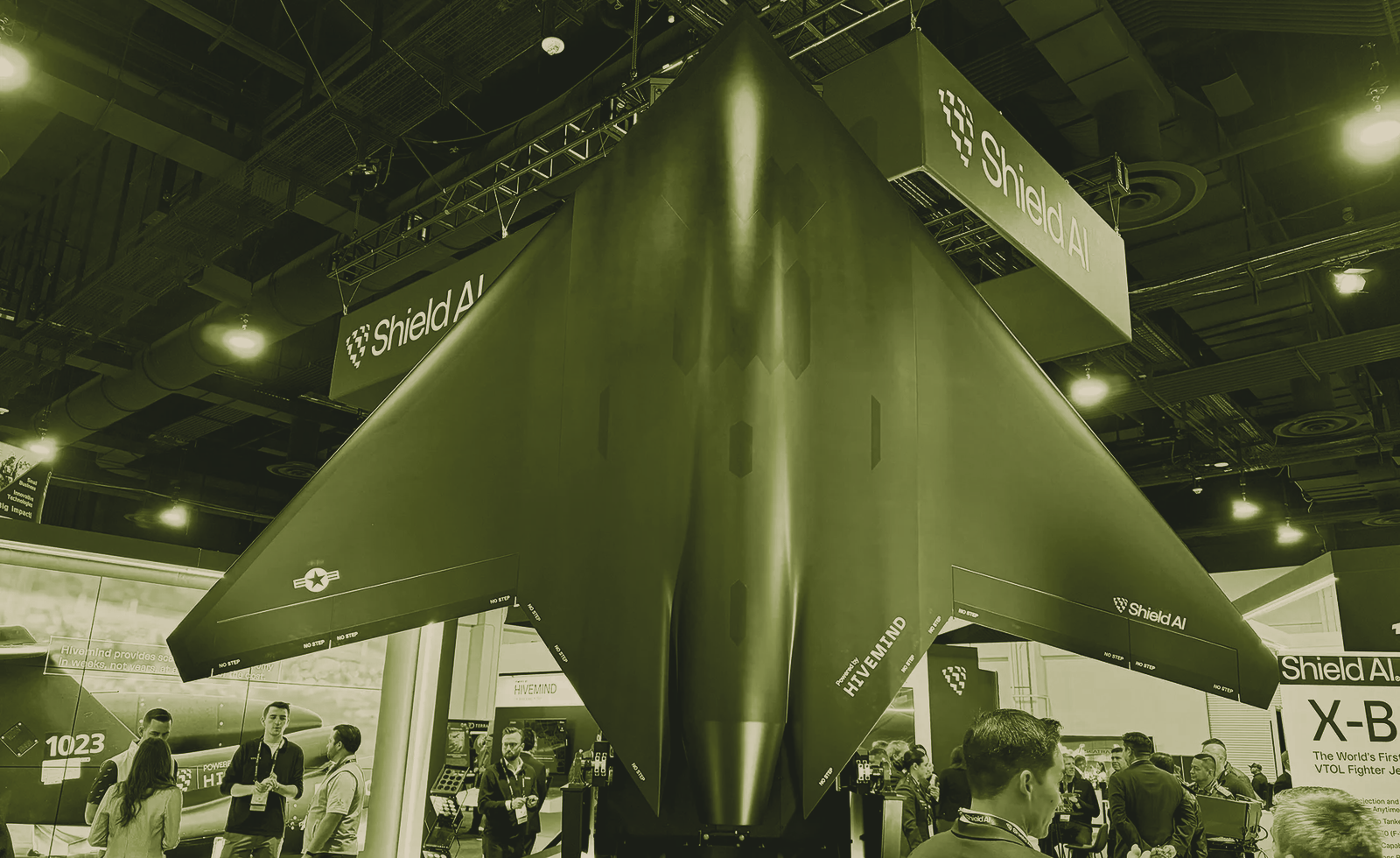
Shield AI's X-BAT is a jet-powered, tail-sitting VTOL autonomous combat aircraft flown by the company's Hivemind AI pilot, designed to take off and land vertically from a trailer, ship deck or austere site — no runway — and fly multirole missions over a claimed 3,700+ km range.

Overview

X-BAT is the flagship aircraft program of San Diego defense-tech firm Shield AI, unveiled in Washington on October 22, 2025 and billed by the company as the world's first AI-piloted VTOL fighter jet. It is a Group 5 uncrewed combat aircraft built around two ideas the company treats as inseparable: a tail-sitting vertical-takeoff-and-landing airframe that removes the runway from air power, and the Hivemind autonomy stack that removes the remote pilot, letting the aircraft fly with no GPS, no communications link and no human input when those are denied, per Shield AI. President Ryan Tseng told Aviation Week at Eurosatory 2026 that X-BAT is "the world's first autonomous combat aircraft, as opposed to collaborative combat aircraft" — built to find and destroy targets by itself, with a human giving the final command to fire, rather than as an adjunct tethered to a crewed fighter. The aircraft has not yet flown; first vertical flights are planned for late 2026.

Development

Shield AI, best known for the combat-proven V-BAT ISR drone and for Hivemind — the AI pilot the US Air Force selected for its CCA program — began X-BAT development around early 2024 and unveiled it after roughly 18 months of work, according to DefenseScoop. The program is led by Armor Harris, a former SpaceX engineer who worked on Falcon 9's vertical-landing capability; in an interview with The War Zone, Harris traced the concept to the 1950s Ryan X-13 Vertijet — which demonstrated trailer-based vertical launch and recovery but lacked the engines and pilot-free controls to be useful — updated with modern propulsion and the tail-sitter guidance developed for V-BAT.

The design passed through wind-tunnel, pole (radar-cross-section), anechoic-chamber, structural and engine ground testing before its public debut, per Shield AI. By June 2026 two test aircraft were complete and a third was in final assembly, with first flight expected "at the back end of this year" from a former US government test range Shield AI acquired in Newton, Kansas, FlightGlobal reported from Eurosatory 2026, where the company showed a scale model. The Paris show also produced the program's biggest political moment: Polish Prime Minister Donald Tusk said on June 16 that Shield AI intends "to produce in Poland, for the X-BAT program, the first autonomous combat aircraft in the world," alongside a proposed regional F-16 engine service center for NATO, per Defense News and Reuters.

🔒 The rest of the Shield AI X-BAT file is for BattlePolicy Pro members. Stop here and you miss what actually matters: the full capability and performance detail, the operational and combat record, how it stacks up head-to-head against its real counterparts, the complete specifications, and our analysts' procurement, supplier and assessment notes. Unlock the full file with BattlePolicy Pro →
FIELD DISPATCH · WEEKLY

BattlePolicy Weekly — free.

Defense tech, startups, and security — weekly.

Related