Smack Technologies Raises $61 Million to Put AI on an Operator's Wrist
Alpha trades a helmet display for a simpler interface, but must deliver useful decisions with little or no connectivity.
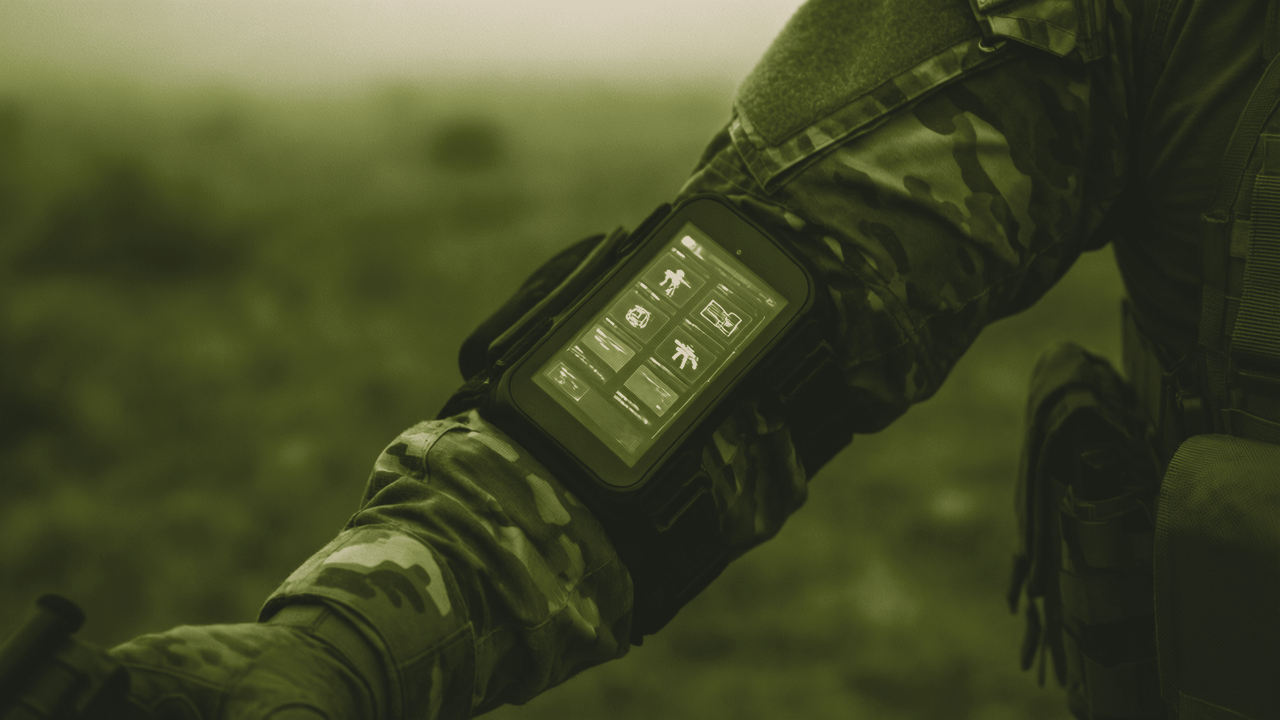
Alpha trades a helmet display for a simpler interface, but must deliver useful decisions with little or no connectivity.
Smack Technologies closed a $61 million Series B on Aug. 18 to develop Alpha, a wrist-worn AI decision-support device, the company announced. Venture Capital Tracker lists Costanoa Ventures and First In as co-leads, with Point72 Ventures and Felicis participating. The financing brings Smack's disclosed capital above $90 million.
Alpha connects field operators to data processed by Omega, Smack's command-level planning software. Co-founder and CEO Andy Markoff told Military Times that Smack built Omega first because its models could train around daily operations. Alpha presents the harder problem: running those capabilities on field hardware with little or no connectivity.
Frequently Asked Questions
What did Smack Technologies raise, and for what?
A $61 million Series B, closed Aug. 18, to build Alpha, a wrist-worn AI decision-support device for field operators, per Venture Capital Tracker and the company's own announcement. Costanoa Ventures and First In co-led, with Point72 Ventures and Felicis participating.
What does Alpha actually do?
It connects field operators to real-time data processed by Smack's Omega AI software, presenting decision options on a wrist display informed by campaign objectives and the status of adjacent units, according to CEO Andy Markoff, speaking to Military Times.
Why a wrist display instead of a helmet or heads-up display?
Markoff said a heads-up display has drawbacks in hot or humid environments, including fogging. Smack's wrist form factor keeps the screen out of the operator's direct field of view, positioning Alpha against helmet-based approaches such as Anduril's EagleEye.
Does the AI make decisions on its own?
No. Markoff said the goal is to encode a commander's intent, theater objectives and constraints so an operator can act without a live link to command, supporting the operator's decision rather than making one autonomously.
How far along is Alpha?
About four months into development as of the announcement. Markoff projects a working prototype within a year and possible military contracts within two years.
AI-generated summary, reviewed by an editor. More on our AI guidelines.
Below this point
5 more sections.
Sensors would send enemy locations to the wrist display. Alpha would present decision options informed by campaign objectives and the activities of adjacent units, according to Markoff. He compared the form factor to the whiteboard and grease pencil he wore on his forearm as a Marine Raider, or the play sheet a quarterback carries on a sleeve.
Smack considered a heads-up display but rejected it as the primary interface. Markoff cited fogging in hot and humid conditions as one practical limitation. The choice sets Alpha against helmet-mounted rivals such as Anduril's EagleEye in the market for operator-worn decision systems, betting on a wrist screen kept out of the operator's direct field of view.
The wrist display is the visible product. The harder capability sits underneath it. Smack says Omega converts multimodal data into decision options without requiring persistent cloud connectivity. Alpha must extend that reasoning into disconnected, degraded, intermittent and limited communications conditions.
Markoff described the system as a way to encode a commander's intent, theater objectives, constraints and coordination with adjacent units. Alpha is meant to preserve that context when an operator cannot reach higher command. It supports the operator's decision rather than making one autonomously.
That distinction now has to survive the last tactical mile. Alpha has been in development for about four months. Markoff projects a working prototype within one year and possible contracts within two, making the wearable, rather than Smack's more mature command software, the company's next measure of whether AI decision support can hold up when the network does not.

Marcus Schuler
Marcus Schuler edits BattlePolicy, a daily defense-technology brief connecting the companies and capabilities behind modern war to the contest among Europe, the US, Russia, and China.