GRID-REF 37°47′N 122°25′W
DISPATCH 02/26 · 17 Jun 2026
BATTLEPOLICY
Startup to front line. Strategy to consequence.
Lexicon · Russia

Tu-22M3 Backfire

Russia's supersonic variable-geometry long-range bomber — a stand-off launch platform for the near-unstoppable Kh-22/Kh-32 heavy missile, now contracting under the weight of attrition, precision-strike inadequacy, and a stalled modernization program.
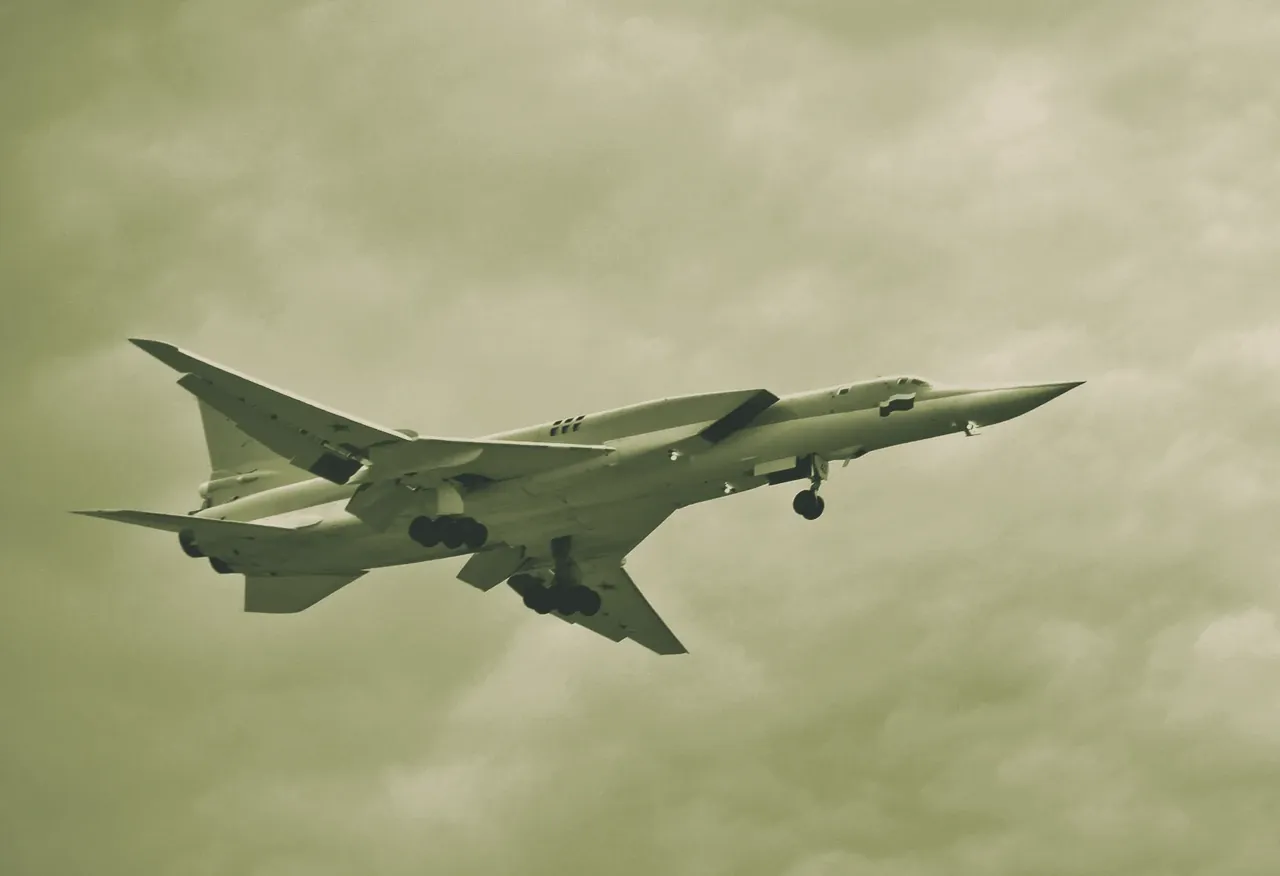
Tu-22M3 Backfire
FIG.01 · Russia Image - Tupolev Tu-22M3 long-range bomber. Photo by Max071086, CC BY-SA 3.0, via Wikimedia Commons.
Russia's supersonic, variable-sweep long-range bomber — a stand-off launch platform for the near-unstoppable Kh-22/Kh-32 heavy missile, now contracting under the weight of attrition, precision-strike inadequacy, and a stalled modernization program.

Overview

The Tupolev Tu-22M3 (NATO reporting name Backfire-C) is a supersonic, variable-geometry long-range bomber in service with Russian Long-Range Aviation. Originally fielded as a maritime strike platform to hunt carrier battle groups with large stand-off missiles, it has been re-rolled in Russia’s war against Ukraine into a blunt instrument for land-attack terror strikes. A single Tu-22M3 can carry up to three Kh-22 or Kh-32 supersonic cruise missiles, each weighing roughly 5.8 tonnes and delivering a ~1,000 kg warhead at speeds exceeding Mach 4; the combination has proved almost impossible for Ukraine’s air defenses to intercept. Wikipedia

Development

Development began in 1965 as a fundamental re-design of the under-performing Tu-22 “Blinder,” producing a much larger airframe with variable-sweep wings and a completely new fuselage. The Tu-22M0 prototype first flew in 1969, and the type entered service in 1972, though early variants were underpowered. The definitive Tu-22M3, powered by two Kuznetsov NK-25 turbofans and featuring wedge-type air intakes, entered service in 1983 and became the primary production model, with 497 airframes of all Tu-22M versions built through 1993 at the Kazan Aviation Plant. Wikipedia Production of the NK-25 engine ceased in 1996, fixing the total fleet size permanently. A deep modernization — Tu-22M3M — aimed to replace ~80% of the avionics, integrate the Kh-32 missile, and restore aerial refueling capability removed under SALT II; a prototype flew in December 2018, but by 2026 only two airframes are known to have been completed. GlobalSecurity.org

Design & capabilities

The airframe is a large, swept-wing design with variable geometry: wings sweep from 20° for take-off and landing to 65° for supersonic dash, giving a maximum speed of Mach 1.88 (~2,000 km/h). Two NK-25 turbofans each produce over 24,000 kgf of thrust. The crew of four sits in a pressurized cockpit equipped with Soviet-era navigation/attack radar and an electro-optical bombsight. The Tu-22M3’s primary payload is carried on a semi-recessed fuselage station and two underwing pylons: typically up to three Kh-22 (AS-4 Kitchen) or Kh-32 (AS-4 mod. 2) missiles, or a rotary launcher of six to ten Kh-15 (AS-16 Kickback) aeroballistic missiles in the bomb bay. Defensive armament consists of a remote-controlled 23 mm GSh-23 cannon in the tail. Wikipedia

The modernized Tu-22M3M replaces the legacy avionics with a digital suite — the SVP-24-22 computing subsystem, GLONASS-aided navigation, new radar and electronic warfare equipment — and integrates the longer-range Kh-32 (claimed range ~1,000 km, Mach ~5). The refueling probe was restored, theoretically pushing range past 10,000 km, though Russian state claims are unverifiable. GlobalSecurity.org

Variants

  • Tu-22M0/M1/M2 – pre-production and early production variants with NK-144 or NK-22 engines; limited numbers built.
  • Tu-22M3 – definitive Backfire-C, entering service in 1983, with NK-25 engines and improved intakes; overwhelmingly the largest sub-fleet.
  • Tu-22MR – dedicated reconnaissance variant with side-looking radar and camera arrays.
  • Tu-22M3M – deep modernization: new digital avionics, Kh-32 integration, restored refueling probe, engine refurbishment. Only two airframes known complete (2018, 2023) from a planned batch of up to 30. GlobalSecurity.org

Combat record / operational use

Tu-22M3s first saw combat in the Soviet-Afghan war and were later used in Chechnya, the 2008 Georgia war, and Syria. Since February 2022 they have become Russia’s heavy missile truck against Ukraine, launching Kh-22s at cities and infrastructure from well outside Ukrainian air-defense engagement zones. In January 2023 a Kh-22 fired by a Tu-22M3 struck a Dnipro apartment block, killing at least 44 civilians — an act the UK Ministry of Defence attributed to the missile’s inherent inaccuracy against urban targets, echoing the Kremenchuk mall strike. Newsweek Through August 2024, Ukrainian forces had intercepted only 2 of 362 Kh-22/Kh-32 launches, a ~0.55% success rate. Wikipedia

The platform’s survival came under direct threat in 2024 and 2025. On 19 April 2024 Ukraine claimed the first combat shootdown of a Tu-22M3: according to Ukrainian military intelligence, a long-range SAM (reported as an S-200) hit the aircraft ~300 km from Ukraine as it returned from a strike on Odesa; video showed the bomber crashing in flames in Stavropol Krai. The Aviationist Russia’s MoD insisted on a technical malfunction, but the loss was documented. In April 2025, Ukrainian C-in-C Syrsky claimed a drone destroyed a Tu-22M3 valued at ~$100 million shortly after it landed Kyiv Post; a separate Backfire crashed in Irkutsk on 2 April 2025, attributed by Moscow to technical failure.

In the 1 June 2025 “Operation Spiderweb” drone assault, Ukrainian SBU drones struck multiple Russian airbases. Ukrainian sources initially claimed up to 12 Tu-22M3s hit, but satellite and video-confirmed tallies documented 4 destroyed at Belaya airbase and a total of ~5 destroyed across the affected bases. The War Zone Militarnyi The disparity between claimed and confirmed losses remains material.

Advantages

  • Supersonic dash (Mach 1.88) and variable-geometry wings compress warning times and enable rapid repositioning across vast Russian distances.
  • The Kh-22/Kh-32 payload is effectively un-interceptable for Ukraine: only 2 of 362 launches shot down through August 2024, a ~0.55% success rate. Wikipedia
  • Heavy salvo weight — up to three missiles, each with a ~1,000 kg warhead, delivered from outside the reach of most Ukrainian air defenses.
  • The Tu-22M3M upgrade (where executed) modernizes avionics, integrates the longer-range Kh-32, and promises a ~10-year service-life extension for refitted airframes. GlobalSecurity.org

Drawbacks / limitations

  • Notoriously inaccurate in the land-attack role: the Kh-22’s anti-ship radar seeker discriminates poorly against urban targets, causing mass-casualty civilian strikes and rendering the platform unsuitable for precision warfare. Newsweek
  • Shrinking, un-renewable fleet: last airframe built 1993, NK-25 engines out of production since 1996, so every combat or accident loss is irreplaceable. Ukrainian intelligence assessed only ~27 airframes operationally ready in 2023 (unverified claim). Defense Express
  • Modernization has stalled: of a planned 30 Tu-22M3M conversions, only two are known to have been completed, amid a wider crisis at Tupolev that also missed Tu-160M delivery targets. Defense Express
  • Demonstrated vulnerability: a combat shootdown in April 2024 and satellite-confirmed ground losses in June 2025 prove the fleet can be attrited both in flight and at base. The Aviationist The War Zone
  • High-value, low-density asset: with an estimated replacement value of ~$100 million per airframe, each loss is strategically and politically costly. Kyiv Post

Counterparts

Outlook

The Tu-22M3 force is aging out under combat pressure. With fewer than ~55 airframes remaining (and many not mission-capable), every loss since 2024 is a permanent subtraction from an inventory capped by the 1993 production halt. The modernization program meant to carry the type into the 2030s is effectively two airframes deep, and Tupolev’s broader industrial collapse offers little hope of revival. The Kh-32 missile will keep the Backfire relevant as a stand-off anti-ship and terror-strike tool while stocks last, but the fleet’s long-term trajectory is contraction toward a small, hardened reserve — a shift accelerated by the June 2025 Spiderweb strikes that demonstrated the type can be destroyed on the ground inside Russia.

Key specifications

Spec Value
Crew 4
Length / wingspan 42.46 m / 34.28 m spread, 23.3 m swept
Max speed Mach 1.88 (~2,000 km/h)
Service ceiling 13,300 m
Combat radius / range ~2,500 km (typical weapon load); up to ~10,000 km (Tu-22M3M, Russian claim)
Payload up to 3 × Kh-22/Kh-32 or 6–10 × Kh-15
Hardpoints 1 semi-recessed fuselage station + 2 underwing pylons
Radar / sensors Soviet-era nav/attack radar; Tu-22M3M: SVP-24-22 digital suite, GLONASS
Powerplant 2 × Kuznetsov NK-25 turbofans
Armament Kh-22 (AS-4 Kitchen) / Kh-32 (AS-4 mod. 2) supersonic cruise missiles, Kh-15 (AS-16 Kickback) aeroballistic missiles, FAB free-fall bombs, 1 × 23 mm GSh-23 tail turret

Sources

  1. Wikipedia — Tupolev Tu-22M — https://en.wikipedia.org/wiki/Tupolev_Tu-22M
  2. Kyiv Post — Ukraine's Drone Destroys $100M Russian Bomber – Syrsky — https://www.kyivpost.com/post/50478
  3. The Aviationist — Russian Tu-22M3 Crashes In Southwestern Russia, Ukraine Claims It Was Shot Down — https://theaviationist.com/2024/04/19/russian-tu-22m3-crashes/
  4. Militarnyi — Defence Intelligence of Ukraine: Tu-22M3 was shot down by Ukrainian air defense — https://militarnyi.com/en/news/defence-intelligence-of-ukraine-tu-22m3-was-shot-down-by-ukrainian-air-defense/
  5. Wikipedia — Kh-22 — https://en.wikipedia.org/wiki/Kh-22
  6. Defense Express — How Many Tu-22M3 Strategic Bombers Left in russia and How Many Produced — https://en.defence-ua.com/news/how_many_tu_22m3_strategic_bombers_left_in_russia_and_how_many_produced-11538.html
  7. Defense Express — Tu-160M, Tu-22M3 Shortfalls, Tu-214 Collapse Reveal Deep Crisis at Tupolev — https://en.defence-ua.com/industries/tu_160m_tu_22m3_shortfalls_tu_214_collapse_reveal_deep_crisis_at_tupolev_what_is_really_happening_in_russias_strategic_aviation_sector-17286.html
  8. GlobalSecurity.org — Tu-22M3M Backfire (Tupolev) — https://www.globalsecurity.org/wmd/world/russia/tu-22m3m.htm
  9. Newsweek — Putin's Long-Range Missile Problem — https://www.newsweek.com/putin-russia-long-range-missile-kh-22-dnipro-apartment-1774255
  10. Wikipedia — Operation Spiderweb — https://en.wikipedia.org/wiki/Operation_Spiderweb
  11. Militarnyi — Spiderweb Operation: How Many Tu-95MSs, Tu-22M3s and A-50s Destroyed at Russian Airbases — https://militarnyi.com/en/news/spiderweb-operation-how-many-tu-95ms-tu-22m3-and-a-50s-destroyed-at-russian-airbases/
  12. The War Zone — Confirmed Losses Of Russian Aircraft Mount After Ukrainian Drone Assault — https://www.twz.com/air/firm-evidence-of-russian-aircraft-losses-after-ukrainian-drone-strikes
FIELD DISPATCH · WEEKLY

BattlePolicy Weekly — free.

Defense tech, startups, and security — weekly. No paywall.

Related