GRID-REF 37°47′N 122°25′W
DISPATCH 02/26 · 17 Jun 2026
BATTLEPOLICY
Startup to front line. Strategy to consequence.
Lexicon · USA

B-21 Raider

The B-21 Raider is the U.S. Air Force's next-generation penetrating long-range strike stealth bomber — nuclear and conventional capable, designed for the most contested environments, and set to replace the B-1B and B-2 fleets alongside upgraded B-52s.
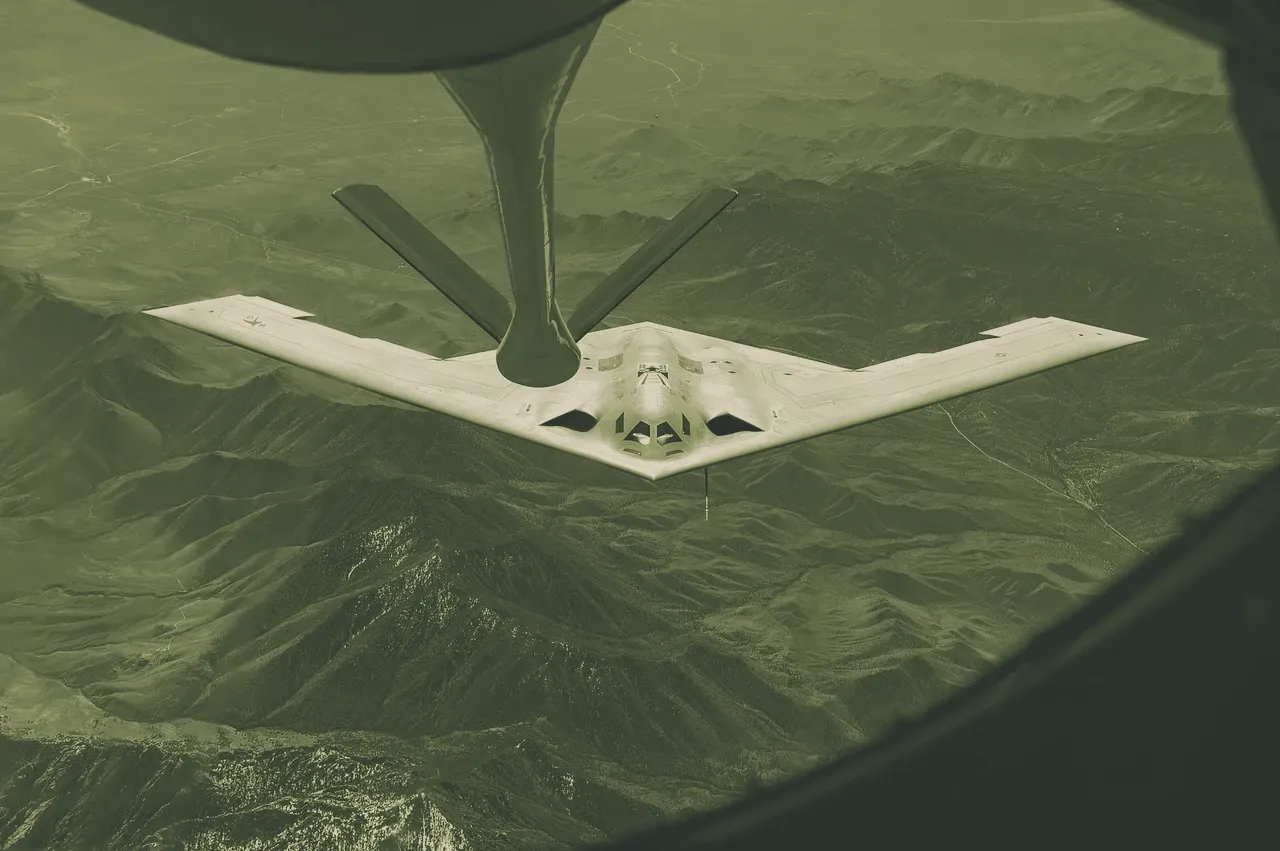
B-21 Raider
FIG.01 · USA Image - Northrop Grumman B-21 Raider during aerial-refueling testing. Photo by United States Air Force (photographer not specified), Public domain, via Wikimedia Commons.
The U.S. Air Force's next-generation penetrating long-range strike stealth bomber — nuclear and conventional capable, designed for highly contested environments, and set to replace the B-1B and B-2 fleets with a common, digitally engineered platform.

Overview

The Northrop Grumman B-21 Raider is a flying-wing stealth bomber developed for the U.S. Air Force as the backbone of its future penetrating strike force. It originated from the Long-Range Strike Bomber (LRS-B) competition and was designed from the outset to counter advanced integrated air defenses while carrying both nuclear and conventional payloads. The program is explicitly cost-controlled: the official Average Procurement Unit Cost is capped at $692 million in base-year 2022 dollars across a minimum planned fleet of 100 aircraft, according to the U.S. Air Force fact sheet. Intended to replace the B-1B Lancer and B-2A Spirit, the B-21 introduces open systems architecture, optional unmanned operation, and a digital-engineering pedigree that has kept its test campaign on schedule and budget.

Development

In October 2015, Northrop Grumman won the LRS-B Engineering and Manufacturing Development contract, defeating a Boeing-Lockheed Martin team, as documented in the U.S. Air Force fact sheet. The program passed Critical Design Review in 2018, and basing decisions soon designated Ellsworth AFB (South Dakota) as the first main operating base and formal training unit, with Whiteman AFB (Missouri) and Dyess AFB (Texas) to follow. The aircraft was publicly revealed on 2 December 2022, and its first flight took place on 10 November 2023 from Air Force Plant 42 in Palmdale, California, to Edwards AFB, marking the start of a flight-test campaign that has been described as “basically on time, basically on budget” and is outperforming digital-model predictions, per Northrop Grumman. A second test aircraft, notably without the air-data probe of the first, joined the campaign on 11 September 2025, shifting the focus from flight-performance checks to mission-systems and armament integration, as reported by The War Zone. Low-rate initial production began in late 2023, and in February 2026 the Air Force signed an agreement with Northrop Grumman to expand annual production capacity by 25 percent, with the first operational aircraft expected on the ramp at Ellsworth in 2027, according to the U.S. Air Force announcement.

Design & capabilities

The B-21 is a flying-wing design with a two-person crew and an architecture that supports fully unmanned operation. The airframe is built around a single large central weapons bay with no external hardpoints, preserving a very low radar cross-section. Northrop Grumman emphasizes open systems architecture that allows rapid insertion of software-defined capabilities and seamless fleet-wide upgrades, as detailed in its program overview. Imagery from flight tests reveals a differential trailing-edge speed-brake arrangement, distinct from the B-2’s split rudders, which provides yaw control and drag management, as noted by The Aviationist. The aircraft is designed for networked operations as a node in a larger long-range strike system of systems. Its armament spans the nuclear B61-series gravity bombs and the upcoming AGM-181 LRSO nuclear cruise missile, together with conventional standoff munitions such as the JASSM family and a broad mix of direct-attack weapons, as established in the U.S. Air Force fact sheet. Because many performance parameters are classified, open-source analysts estimate a high-subsonic cruising speed, a wingspan in the 44–47 meter range, and a payload capacity of roughly 9,100 kg (20,000 lb).

Variants

To date only a single variant exists, built around six pre-production test aircraft that will feed into the operational configuration. The open-architecture design is intended to evolve through block-style hardware and software upgrades rather than through discrete variants, allowing the fleet to stay current across its planned service life.

Combat record / operational use

The B-21 has not been used in combat. Flight testing began with the first aircraft’s 10 November 2023 flight to Edwards AFB, and by September 2024 the aircraft was flying roughly two sorties a week, including weapons-bay and envelope expansion work. The second test aircraft flew on 11 September 2025, marking the campaign’s shift toward mission-systems and weapons-integration testing; public imagery from that flight highlighted a single large weapons bay with no external probe, as documented by The War Zone. The first aerial refueling was conducted on 10 March 2026—a 5-hour-33-minute sortie with a KC-135—and was publicly acknowledged by the Air Force on 14 April 2026, as reported by The Aviationist. Ground-test airframes and a growing volume of flight data continue to prepare the force for an expected initial operational capability at Ellsworth AFB in 2027.

Advantages

  • Next-generation stealth and open architecture — Designed from the outset for the most contested environments, with digital engineering that allows rapid capability insertion and seamless fleet-wide software upgrades, per Northrop Grumman.
  • Cost-controlled acquisition — APUC capped at roughly $692 million (base-year 2022 dollars) for a minimum 100-aircraft buy, enabling a large fleet in a way the $2-billion-per-copy B-2 never allowed, as mandated by the U.S. Air Force.
  • Exceptional test performance — Flight tests are meeting milestones on schedule and beating digital-model predictions; the second aircraft arrived on time in 2025 and production-capacity agreements have been reached two years before operational deliveries, according to Breaking Defense.
  • Dual-capable and optionally unmanned — The platform carries both nuclear and conventional payloads and can operate with or without a crew, replacing two aging bomber fleets with a single type.
  • Strong funding momentum — $4.5 billion in supplemental funding was added in 2025, production capacity has been raised 25 percent, and Northrop Grumman is investing $2.5 billion in manufacturing facilities, as reported by Air & Space Forces Magazine.

Drawbacks / limitations

  • Years from combat capability — First operational delivery to Ellsworth AFB is targeted for 2027, with full B-1/B-2 replacement stretching well into the 2030s.
  • Modest production rate — Previous budgets implied only about 7–8 aircraft per year; even with the 25 percent ramp, a 100-aircraft fleet remains more than a decade away, and the actual surge capacity is not publicly disclosed, as noted by Air & Space Forces Magazine.
  • Industrial risk — Northrop Grumman took a $477 million charge on the program in Q1 2025 tied to manufacturing-process changes and materials costs, a reminder of the fragility of scaling production, according to Air & Space Forces Magazine.
  • Fleet-size uncertainty — The official program of record is stuck at a “minimum of 100,” while combatant commanders have advocated for 145 or more; the Air Force will not declare a revised target until the FY2028 budget in spring 2027, creating planning ambiguity.
  • Classified performance envelope — Key metrics—range, payload ceiling, signature treatment, sensor suite—are not publicly established, making independent verification impossible; open-source assessments indicate a payload smaller per sortie than the B-2 it replaces.

Counterparts

Outlook

The B-21 Raider is the centerpiece of the U.S. Air Force’s nuclear and long-range strike modernization. With $4.5 billion in supplemental funding and the February 2026 production agreement, the service expects the first operational aircraft at Ellsworth in 2027 and a 25 percent higher annual output, as confirmed by Breaking Defense. Northrop Grumman’s self-funded $2.5 billion facility expansion opens the door for a fleet potentially larger than the current 100-aircraft minimum, a possibility that Defense Secretary Hegseth and STRATCOM’s commander have publicly supported, according to Air & Space Forces Magazine. The House Armed Services Committee has demanded a fleet-size study by December 2026, and the Air Force intends to lock in the revised number in its FY2028 budget request. As the test fleet matures and production scales, the B-21 is poised to become the backbone of U.S. penetrating strike for decades.

Key specifications

Spec Value
Crew 2 (optionally unmanned)
Length / wingspan ~16 m (est.) / ~44–47 m (est.)
Max speed High subsonic; ~Mach 0.8+ (est.)
Service ceiling ~15 km / 50,000 ft (est.)
Combat radius / range Classified; designed for intercontinental missions with aerial refueling
Payload ~9,100 kg (20,000 lb) class (est.)
Hardpoints None; internal carriage only (single main bay observed)
Radar / sensors Classified; described as advanced stealth, resilient networking, open systems architecture
Powerplant 2× Pratt & Whitney PW9000-class turbofans (~120 kN / 27,000 lbf each) (est.)
Armament Nuclear: B61-series bombs, AGM-181 LRSO; conventional: JASSM-family and broad mix of standoff and direct-attack weapons

Sources

  1. U.S. Air Force — B-21 Raider fact sheet. https://www.af.mil/About-Us/Fact-Sheets/Display/Article/2682973/b-21-raider/
  2. U.S. Air Force — US Air Force announces arrival of second B-21 test aircraft at Edwards AFB. https://www.af.mil/News/Article-Display/Article/4301502/us-air-force-announces-arrival-of-second-b-21-test-aircraft-at-edwards-afb/
  3. Northrop Grumman — Northrop Grumman Advances B-21 Raider Across Test and Production. https://news.northropgrumman.com/b-21/Northrop-Grumman-Advances-B-21-Raider-Across-Test-and-Production
  4. The War Zone (TWZ) — Second B-21 Raider Stealth Bomber Has Flown. https://www.twz.com/air/second-b-21-raider-stealth-bomber-has-flown
  5. Air & Space Forces Magazine — B-21 Production Is Speeding Up, But How Much and For How Long Is Still Unclear. https://www.airandspaceforces.com/b-21-production-speeding-up-how-much/
  6. Breaking Defense — Air Force ramps up B-21 Raider production capacity, aims for 2027 delivery. https://breakingdefense.com/2026/02/air-force-ramps-up-b-21-raider-production-capacity-aims-for-2027-delivery/
  7. Air & Space Forces Magazine — Northrop: Faster B-21 Production Allows Air Force to Consider a Bigger Fleet. https://www.airandspaceforces.com/northrop-faster-b-21-production-allows-air-force-to-consider-a-bigger-fleet/
  8. U.S. Air Force — DAF increases B-21 Raider production capacity to deliver combat capability faster. https://www.af.mil/News/Article-Display/Article/4412198/daf-increases-b-21-raider-production-capacity-to-deliver-combat-capability-fast/
  9. The Aviationist — New Photos Offer Interesting Look At B-21 Raider's Speed Brake Arrangement. https://theaviationist.com/2026/06/09/b-21-speed-brakes/
  10. Wikipedia — Northrop Grumman B-21 Raider. https://en.wikipedia.org/wiki/Northrop_Grumman_B-21_Raider
FIELD DISPATCH · WEEKLY

BattlePolicy Weekly — free.

Defense tech, startups, and security — weekly. No paywall.

Related
USA · Autonomy · Palladyne AI · SwarmOS · Gremlin-X · NGC2

Palladyne runs an AI drone swarm inside the Army's command network at Ivy Mass

A single operator flew a mixed swarm of surveillance drones and a strike drone through the Army's prototype command system, in jammed comms with no cloud link, the company said.

USA · Autonomy · Palladyne AI · SwarmOS · Gremlin-X · NGC2
USA · Policy · autonomous weapons · DoD Directive 3000.09 · Ruben Gallego

A senator wants answers before the Pentagon rewrites its autonomous-weapons rule

Trump's new AI memo gives the Pentagon 90 days to rewrite its autonomous-weapons rule. Sen. Gallego says that is too fast and wants to know which safeguards survive.

USA · Policy · autonomous weapons · DoD Directive 3000.09 · Ruben Gallego
USA · Funding · Anduril · Shield AI · Saronic

Defense-tech funding already beat all of 2025, in five months

Venture funding for defense-tech startups hit $14.6 billion in five months of 2026, beating all of last year, with Anduril, Shield AI and Saronic taking most of it.

USA · Funding · Anduril · Shield AI · Saronic