GRID-REF 37°47′N 122°25′W
DISPATCH 02/26 · 9 Jun 2026
BATTLEPOLICY
Startup to front line. Strategy to consequence.
Lexicon · China

Type 094 Jin

China's first credible sea-based nuclear deterrent — a nuclear-powered ballistic-missile submarine carrying up to 12 JL-2 or JL-3 SLBMs, fielding six boats for near-continuous patrols.
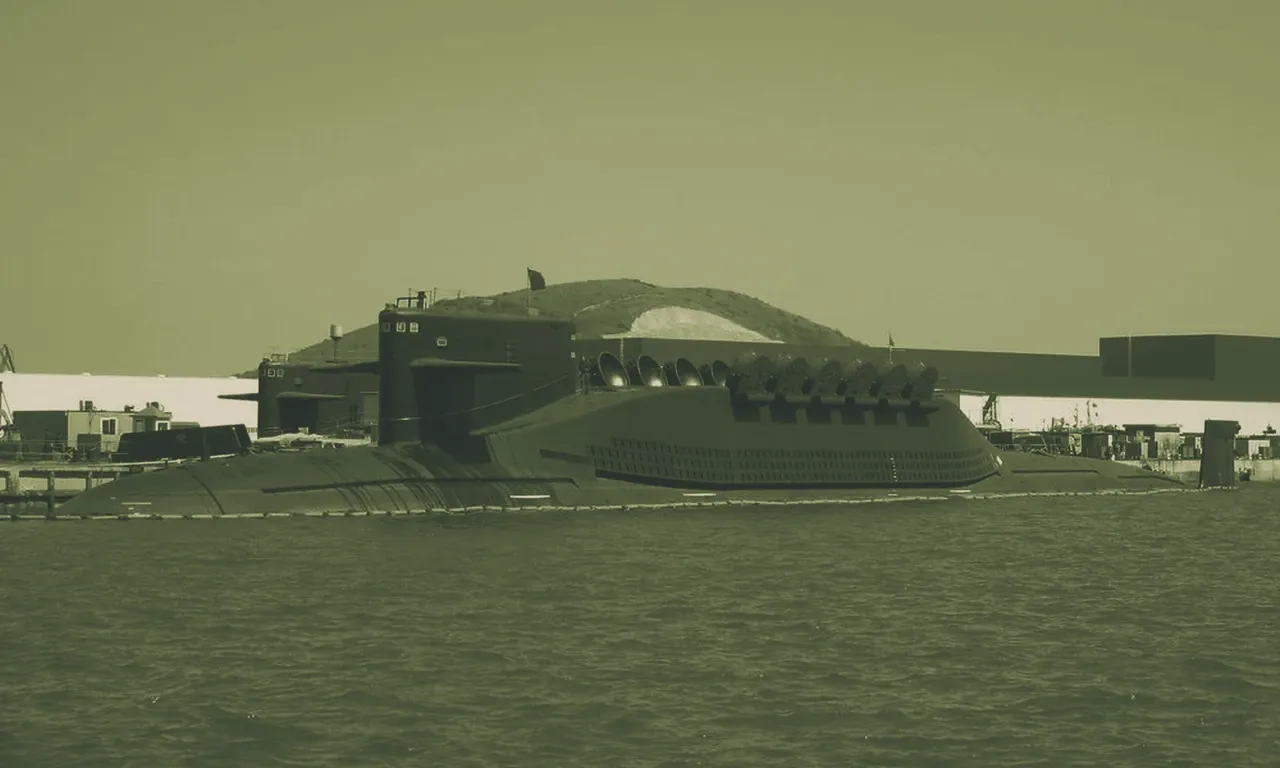
Type 094 Jin
FIG.01 · China Image - Type 094 Jin. Photo by CSR Report RL33153 China Naval Modernization: Implications for U.S. Navy Capabilities—Background and Issues for Congress, Public domain, via Wikimedia Commons_Class_Ballistic_Missile_Submarine.JPG).
China’s first operationally credible sea-based nuclear deterrent — a six-boat SSBN class carrying JL-2/JL-3 submarine-launched ballistic missiles, providing a near-continuous at-sea patrol capability and the sea leg of Beijing’s nuclear triad.

Overview

The Type 094 Jin-class is the People’s Liberation Army Navy’s (PLAN) first modern ballistic-missile submarine and the backbone of China’s sea-based nuclear deterrent. With six boats in service, it enables China to maintain a near-continuous deterrent patrol posture, fulfilling a capability that the earlier, single-hull Type 092 (Xia-class) never attained. While assessed as acoustically louder than contemporary Western and Russian SSBNs, the class’s upgraded JL-3 submarine-launched ballistic missile (SLBM) allows it to hold targets across the continental United States from protected waters near China, fundamentally changing Beijing’s nuclear posture.

Development

The lead boat of the class was launched at the Bohai Shipyard in Huludao in 2004 and commissioned around 2007, according to the Nuclear Threat Initiative. An improved variant, the Type 094A, followed with refinements to the sail and missile-hump design. By the early 2020s, China had achieved a six-boat operational force — a tally corroborated by multiple U.S. intelligence assessments — and some later analysis suggests a seventh or eighth hull may have been launched, though those reports remain unconfirmed.

Design & capabilities

The Type 094 displaces an estimated 11,000–12,000 t submerged, making it the largest submarine class ever built by China. Its nuclear propulsion plant — described by the World Nuclear Association as a pressurized-water reactor in the 150–175 MWt range — delivers a submerged speed of over 20 kts.

The boat’s principal armament is twelve SLBM launch tubes, initially fielding the JL-2 (CSS-N-14) with an estimated range of 7,200–8,000 km and later, on Type 094A boats, the JL-3 (CSS-N-20) with an estimated range of 9,000–10,000 km. Congressional testimony by Andrew Erickson and DoD-linked assessments note that the JL-3 allows the Jin to range targets across the continental United States from bastions inside the First Island Chain. Six 533 mm torpedo tubes provide self-defense capability.

Open-source acoustic assessments, echoed in RUSI’s analysis of Chinese submarine warfare, consistently evaluate the Type 094 as relatively noisy by modern standards, trailing the quieting signatures of U.S., British, French, and Russian SSBNs. Diving depth is not publicly established.

Variants

  • Type 094 (Jin) — baseline SSBN with JL-2 SLBM.
  • Type 094A — improved variant with a reshaped sail and missile-hump fairing, and integration of the longer-range JL-3.

Combat record / operational use

The Type 094 has not been used in combat. According to the Nuclear Threat Initiative, the class reportedly began deterrent patrols around December 2015, marking the first time China established a credible, near-continuous at-sea nuclear deterrent. Six boats are assessed to maintain that patrol posture, although the precise patrol tempo remains classified.

Advantages

  • First viable sea-based leg of China’s nuclear triad, ensuring a survivable second-strike capability.
  • JL-3’s estimated 9,000–10,000 km range enables CONUS targeting from near-China bastions, reducing the need for long, exposed transits.
  • Six-boat force supports near-continuous deterrent patrols.
  • Significant increase in displacement and tube count over the earlier Type 092.

Drawbacks / limitations

  • Acoustic signature assessed as a generation behind modern Western and Russian SSBNs, reducing survivability against advanced ASW.
  • Twelve SLBM tubes is modest compared to the Ohio-class (24) or Borei-A (16), limiting salvo weight.
  • No advanced pump-jet propulsor; reported single-shaft screw propulsion is less stealthy.
  • Older design build; China’s next-generation Type 096 is expected to be far quieter.

Counterparts

Outlook

The Type 094 remains the PLAN’s deployed deterrent SSBN, but open-source intelligence and U.S. Navy assessments indicate that China has already begun building a successor, the Type 096 (Tang-class), which is expected to carry the JL-3 and achieve a substantial quieting leap. As the Type 096 matures, the Jin-class will likely be phased out, but it is still expected to serve into the 2030s, bridging the gap until the next generation is fully operational.

Key specifications

Spec Value
Type Nuclear-powered ballistic-missile submarine (SSBN)
Full-load displacement ~11,000–12,000 t submerged (surfaced not publicly established)
Length / beam / draft ~135–137 m / ~11.8–12.5 m / not publicly established
Propulsion Nuclear PWR, est. 150–175 MWt; single shaft
Max speed (kts) >20 kts submerged (est.)
Range / endurance Unlimited range (nuclear); patrol endurance not publicly established
Complement ~120 (est.)
Armament 12 SLBM tubes (JL-2 or JL-3) + 6 × 533 mm torpedo tubes
Sensors / combat system Bow and flank sonar arrays (specifics not publicly established)
Aviation facilities None

Sources

  1. Nuclear Threat Initiative — China Submarine Capabilities (Nov 2025). https://www.nti.org/analysis/articles/china-submarine-capabilities/
  2. Andrew S. Erickson — Statement for the Record, U.S.-China Economic and Security Review Commission (JL-3 range). https://www.uscc.gov/sites/default/files/2026-03/Andrew_Erickson_Statement_for_the_Record.pdf
  3. World Nuclear Association — Nuclear-Powered Ships (Type 093/094 reactor estimate). https://world-nuclear.org/information-library/non-power-nuclear-applications/transport/nuclear-powered-ships
  4. RUSI — Chinese Submarine Warfare: A Natural Evolution or Game-Changing Revolution (quieting assessment). https://www.rusi.org/explore-our-research/publications/commentary/chinese-submarine-warfare-natural-evolution-or-game-changing-revolution
  5. U.S. Naval Institute Proceedings — “Going Nuclear, Getting Bigger, and Going Beyond” (Type 094 fleet count). https://www.usni.org/magazines/proceedings/2026/may/going-nuclear-getting-bigger-and-going-beyond
FIELD DISPATCH · WEEKLY

BattlePolicy Weekly — free.

Defense tech, startups, and security — weekly. No paywall.

Related
China · Air Defense · taiwan · interceptors · patriot

China is building air-defense mass opposite Taiwan while America spends its own

Beijing fielded the HQ-16F, a Patriot-class mobile air-defense missile, opposite Taiwan in the same weeks the US burned through the interceptors it would need to defend the island. The contest is magazine depth, not exquisite platforms.

China · Air Defense · taiwan · interceptors · patriot
China · Land · grenade-launcher · precision · sniper · 35mm · 40mm · norinco

QLU-11

China's semi-automatic precision grenade launcher, fielded in 35mm for the PLA and 40mm for export — delivering airburst rounds through a window at 600 m.

China · Land · grenade-launcher · precision · sniper · 35mm · 40mm · norinco