Ukraine commits $113 million to scale 'logistics lockdown' drone strikes on Russia's rear
Defense Minister Mykhailo Fedorov has put about $113 million behind a campaign of mid-range drone strikes on Russian supply lines. ISW links the pressure to Russia's first monthly territorial loss since 2024.
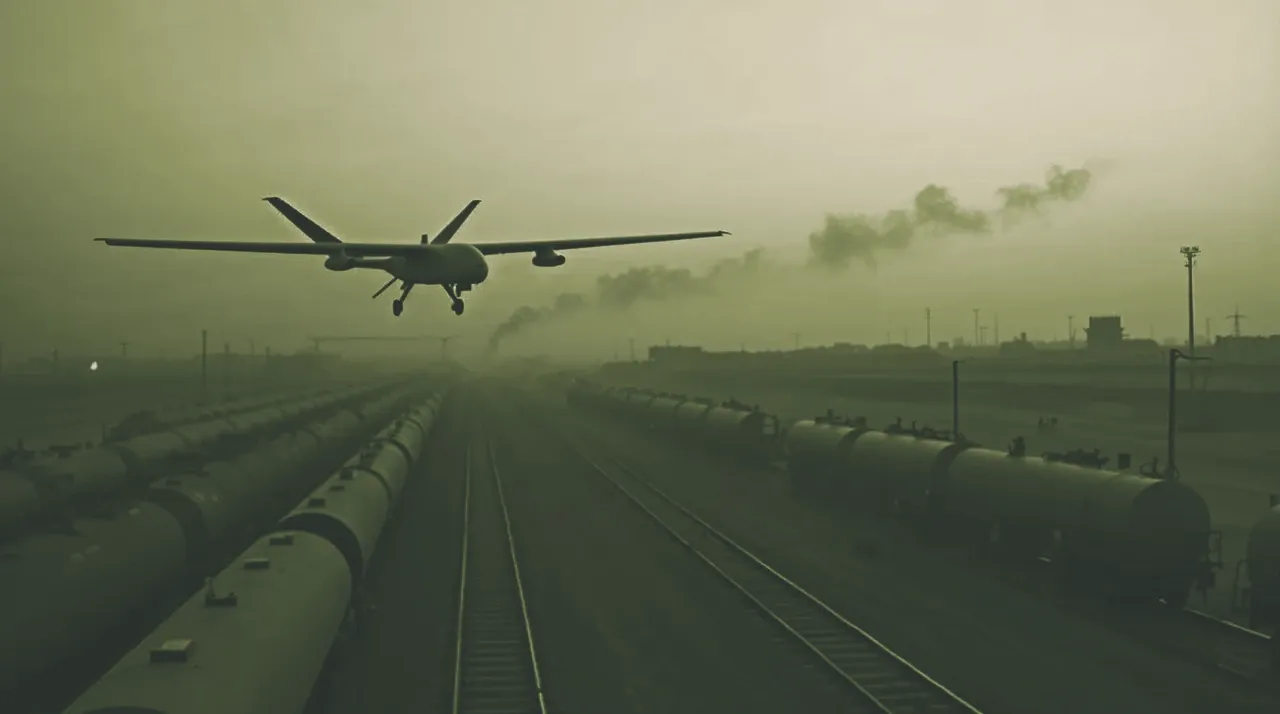
Defense Minister Mykhailo Fedorov has put about $113 million behind a campaign of mid-range drone strikes on Russian supply lines. ISW links the pressure to Russia's first monthly territorial loss since 2024.
"The enemy's rear is no longer a safe haven," Ukrainian Defense Minister Mykhailo Fedorov wrote on May 27. He was announcing a program he called a "logistics lockdown," backed by an extra 5 billion hryvnia, about $113 million. The money went the same day to the drone units already striking Russian supply lines at operational depth, the Kyiv Independent and Pravda wrote.
The spending comes as Russia's advance has stalled. ISW assessed that Russian forces lost a net 116 square kilometers of controlled territory in April 2026. That was the first monthly net loss since Ukraine pushed into Russia's Kursk Oblast in August 2024. Russia's daily rate of advance has fallen as well, to 2.9 square kilometers so far this year from 9.76 over the same months of 2025. ISW ties the slowdown to a mix of Ukrainian counterattacks, the February block on Russia's Starlink access, the Kremlin's throttling of Telegram, and the mid-range strikes. In a May 25 assessment, the institute said the strikes, paired with new Ukrainian mechanized attacks, could mark the start of a new phase of the war.
The strikes run nightly now. Overnight into May 31, Ukrainian drones set fire to the Rosneft refinery at Saratov on the Volga and struck a pumping station on the Surgut-Gorky-Polotsk crude line and a fuel depot at Matveyev Kurgan, the General Staff said, in strikes Reuters and the Kyiv Independent confirmed. The Saratov plant carries a nameplate capacity near 7 million tonnes of crude a year. The night before, Ukraine's Unmanned Systems Forces struck 23 targets, their commander Robert Brovdi said, according to Kyiv Post. They included a shadow-fleet oil tanker, an oil depot at Taganrog and a fuel terminal in occupied Crimea. Drones also caught two Russian Tu-142 maritime patrol aircraft on the ground at the Taganrog airfield, Militarnyi noted.
Until 2026, Ukraine had mostly skipped this band of the battlefield, the stretch 20 to 300 kilometers behind the front where Russia keeps fuel, ammunition, repair shops and command posts, per Business Insider. The strikes hit those nodes and the air defenses that guard them, which in turn clears the way for longer-range raids on oil refineries deeper inside Russia, ISW said. Zelensky has called the 120-to-150-kilometer range a procurement priority. He said Ukraine has contracted about five times more mid-range strike capability this year than in all of 2025.
The battlefield and the startup story — free in your inbox every week. No paywall.
Subscribe Free →Fedorov's two-phase procurement
The first 5 billion hryvnia goes directly to units through Ukraine's "e-points" system, which scores brigades on confirmed strikes and lets the highest-rated ones buy equipment without waiting on central procurement, according to the Kyiv Independent and Pravda. Fedorov said the first transfers had gone out and that units had begun buying, and that mid-range strikes had quadrupled Ukraine's destruction of Russian logistics, depots and command posts in recent months. A second phase will open competitive tenders for bulk orders, which the minister said should reach the front by summer and are meant to scale production and limit corruption risk.
The dominant deep-strike platform is the FP-1, built by the Ukrainian firm Fire Point, a propeller-driven one-way attack drone with a range up to 1,600 kilometers and a warhead of 60 to 120 kilograms, per Militarnyi. Fire Point's chief designer told ArmyTV the company produces about 200 of the drones a day across the FP-1 and the shorter-range FP-2, accounting for roughly 60 percent of Ukrainian drone strikes on Russian forces, and can raise output further. The company puts the FP-1 at about $55,000 a unit (against roughly $200,000 for Ukraine's Ukroboronprom-built Liutyi, and about a third the cost of a Russian Shahed-136). At 200 a day, that comes to close to $330 million of strike capability a month. The FP-2 reaches about 200 kilometers and carries a warhead near 100 kilograms, Pravda noted.
Convoys at night on the M-14
The squeeze shows in how Russia now moves supplies. ISW has Ukrainian drones working the M-14 Rostov-Crimea highway, which occupation officials renamed the R-280, along with the M-18 and the T-0509 Mariupol-Donetsk route. Russian convoys on the M-14 now run only at night, ISW said. They must hold at least 120 kilometers an hour, each with a drone-spotter aboard. The command has also pulled electronic-warfare teams off the front to guard the road. A Russian milblogger said on May 29 that Ukrainian crews had started mining the Mariupol-Melitopol route from the air, 100 to 150 kilometers deep. Kherson's occupation governor, Vladimir Saldo, banned civilian trucks from the R-280 by decree on May 21, and Crimea began rationing fuel and handing drivers vouchers. Drone footage from March and April caught hits on at least 10 Russian trains and fuel tankers, most in occupied Luhansk.
The pressure reaches Moscow's budget. Deputy Prime Minister Alexander Novak convened a meeting on May 26 to weigh a temporary halt on diesel and jet-fuel exports, Interfax and RBK wrote. Months of refinery fires had forced the choice, ISW noted, between domestic supply, the army's fuel and export earnings.
Russia has kept up its own bombardment. Over the same weekend its drones flattened a Nova Poshta parcel hub in Dnipro and killed five people in attacks across the country, most of them in Dnipropetrovsk Oblast, the Kyiv Independent detailed.
Fire Point's 50 sites and a 30,000-drone order
The drones are built inside Ukraine rather than supplied through Western aid. Fire Point has pulled more of its components in house, dropping the cost of a single engine silencer from about 400 euros to roughly 70, according to Militarnyi. Zelensky has set a target of 30,000 long-range drones this year, and production runs across more than 50 scattered sites to complicate Russian targeting.
Germany and Norway have each signed on to co-produce thousands of the mid-range drones with Ukraine, with the first deliveries due in summer 2026, Business Insider wrote. The deals route European money into Ukrainian designs that combat has already vetted.
Russia's Rubikon Center wrote the playbook
ISW credits Moscow's Rubikon Center for Advanced Unmanned Systems with developing operational-depth logistics interdiction in early 2025, the method behind the 22-month campaign that captured Pokrovsk by cutting the roads that supplied its Ukrainian defenders. Russia first used the technique during its counteroffensive in Kursk Oblast, ISW said. Ukraine has turned the same concept against Russian supply lines, using domestically produced drones that cost a fraction of guided missiles.
Defense analysts cited by Reuters say interdiction strikes wear Russian operations down without capturing ground on their own. Most production and strike figures also come from Ukrainian officials and the manufacturers themselves. Russia still holds a far larger arsenal of long-range munitions; it launched 163 drones at Ukraine in one recent night, per ISW.
The summer tenders and Novak's export review
Fedorov's centralized tenders are scheduled to put new systems on the front by summer. Germany and Norway expect their first co-produced drones to reach Ukraine in the same period. Novak's review, as detailed by Interfax and RBK, could harden into a formal restriction on Russian diesel and jet-fuel exports by then.

Marcus Schuler
Marcus Schuler edits BattlePolicy, a daily defense-technology brief connecting the companies and capabilities behind modern war to the contest among Europe, the US, Russia, and China.