Uran-9
Russia's much-hyped "robot tank" — a tracked combat UGV bristling with a 30mm cannon, machine gun and anti-tank missiles that flopped on its 2018 Syria debut: it lost control links, couldn't shoot on the move, and its sensors were blinded by buildings. The cautionary tale of the UGV age.
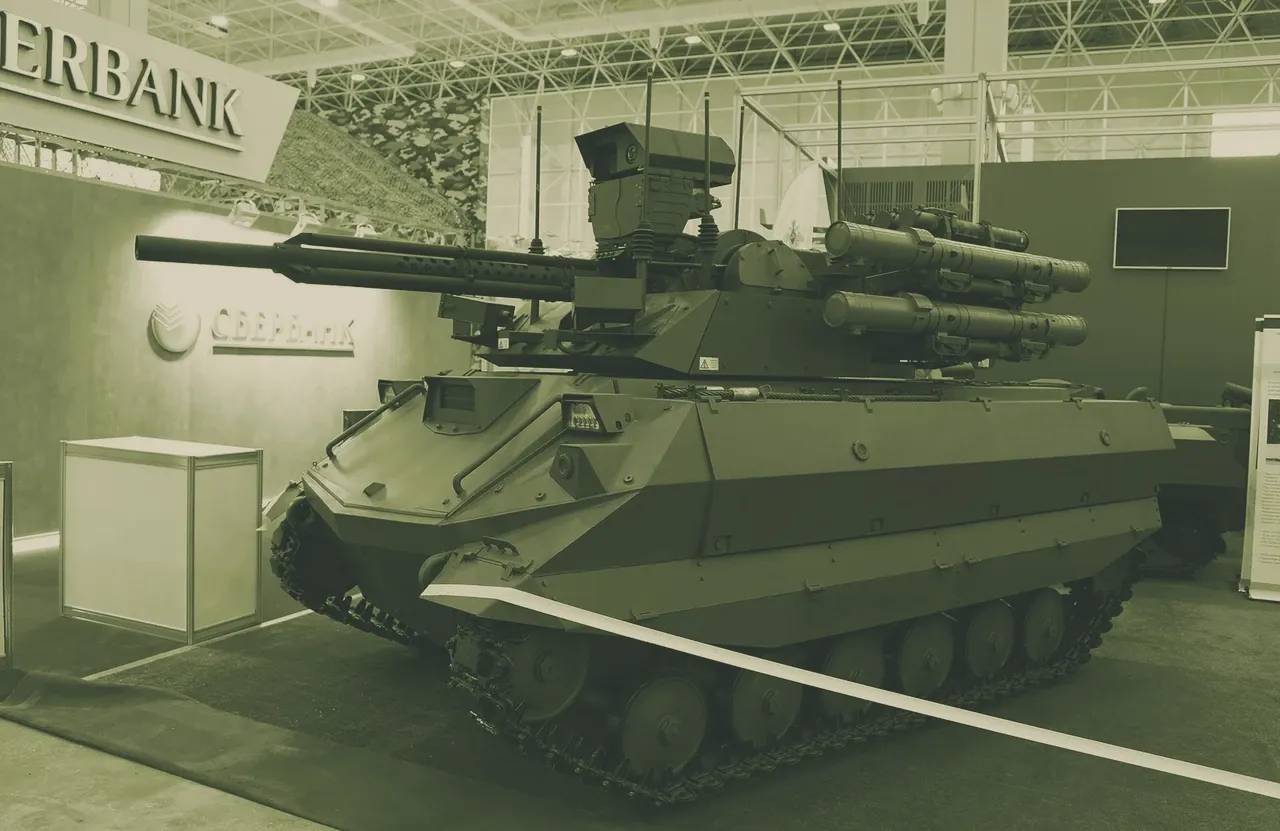

Russia's much-hyped "robot tank" — a tracked unmanned combat ground vehicle bristling with a 30 mm autocannon, a machine gun, anti-tank missiles and thermobaric rockets. Unveiled as a glimpse of robotic ground warfare, it instead became the cautionary tale of the UGV age: on its 2018 Syria debut it repeatedly lost its control link, could not fire on the move, and had its sensors blinded by nearby buildings, leading Russia's own researchers to conclude that combat UGVs were not yet ready for real war.
Overview
The Uran-9 is a tracked unmanned combat ground vehicle (UCGV) developed by JSC 766 UPTK, now associated with Kalashnikov Concern and marketed for export by Rosoboronexport. It mounts a turret with a 30 mm autocannon, a coaxial machine gun, four Ataka anti-tank guided missiles and a bank of Shmel-M thermobaric rockets, and is tele-operated from a nearby mobile control point. Conceived as remote reconnaissance-and-fire-support for combined-arms and counter-terror units, it was Russia's flagship attempt to put a heavily armed robot into front-line combat. Its significance in this Lexicon is partly as a capable-looking system and partly as a lesson — the gap between a robot tank's spec sheet and its battlefield reality, exposed years before Ukraine's cheaper UGVs succeeded where the Uran-9 struggled.
🔒 The full Uran-9 file is for BattlePolicy Pro members. Below the line: development history, design and capabilities, variants, the combat record, advantages and limitations, comparable systems, outlook, the full specifications table, our sourcing, and the analyst assessment — procurement, suppliers and the BattlePolicy verdict. Unlock the full file with BattlePolicy Pro →
Below this point
- Development
- Design & capabilities
- Variants
- Combat record / operational use
- Advantages
- Drawbacks / limitations
- Counterparts
- Outlook
- Key specifications
- Sources
- Analyst Section
- Procurement & contracts
- Suppliers & related companies
- Comparable systems — analyst view
- Analyst note