Washington reviews its Lithuania tripwire as Europe rushes to replace it
Lithuania says the next US troop rotation is "under review," leaving it without an American armored battalion for the first time since 2020, and pushing the Baltic deterrence burden, and the money, onto Europe.
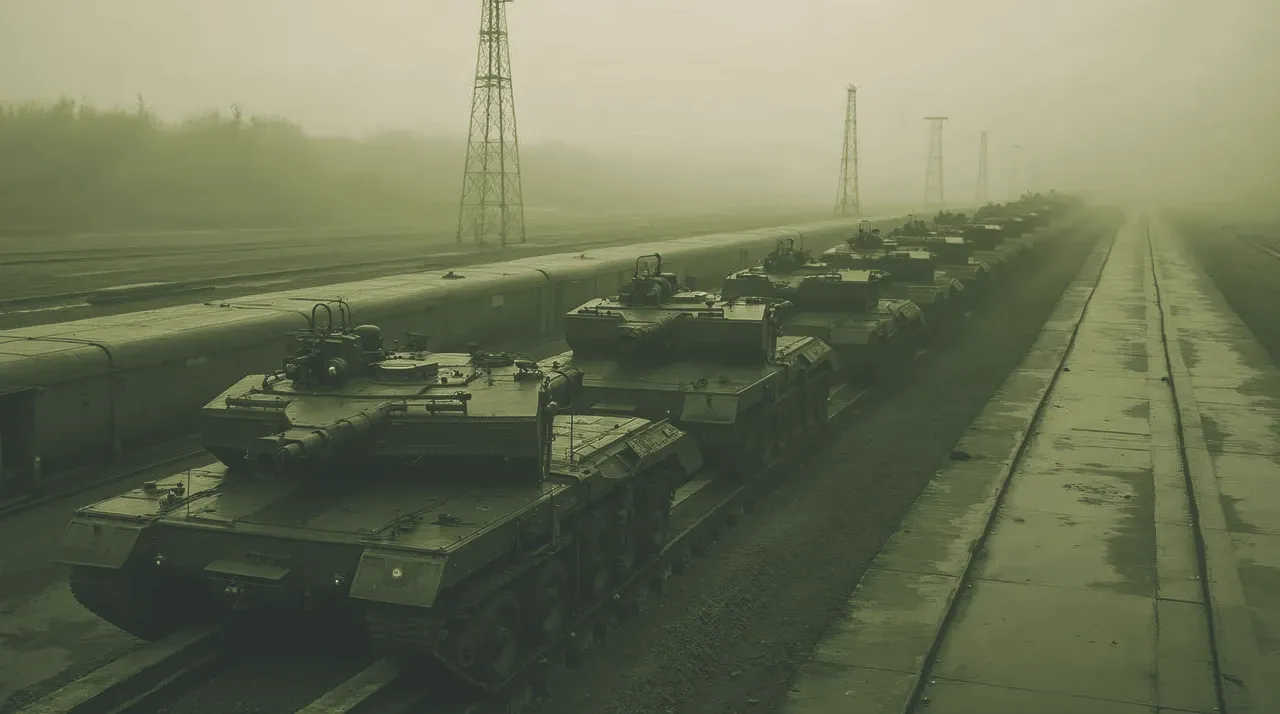
Lithuania says the next US troop rotation is "under review," leaving it without an American armored battalion for the first time since 2020, and pushing the Baltic deterrence burden, and the money, onto Europe.
Lithuania is about to lose its American armored battalion for the first time since 2020, and nobody in Vilnius can say when it returns. Defense Minister Robertas Kaunas said on June 2 that the next US troop rotation is "under review," confirming what Lithuanian and Polish outlets had written that day: more than 1,000 US troops and their equipment have begun leaving, with no replacement yet on the ground, according to Reuters and LRT. The review is small in raw numbers. What it signals is not. Washington is turning a standing tripwire on NATO's eastern flank into a conditional, case-by-case presence, and floating a nuclear-sharing expansion in its place, which leaves Europe to build and pay for the conventional defense of the Baltics itself.
Kaunas was precise about the uncertainty. "The next rotation is currently under review ... because the number of US troops in Europe is changing, this naturally leads to a review of regional stance," he told reporters in Vilnius, per Defense News. He said he had raised the matter with US Defense Secretary Pete Hegseth at the Shangri-La Dialogue in Singapore the previous week, and had been assured another rotation would arrive, "but when exactly, and with which capabilities, and at what size, this is due to be announced." The outgoing force is not a token one. It is two battalions from the Texas-based 1st Cavalry Division with Abrams tanks, Bradley fighting vehicles and Paladin howitzers, which arrived in October 2025 and were the first to use the permanent base Lithuania built for them at Pabrade, near the Belarus border, the Lithuanian defense ministry said. Deividas Matulionis, the president's national security adviser, said Vilnius had "a very clear assurance ... that troops have been and will remain," while conceding he could not specify numbers, per LRT and Militarnyi.
A drawdown that started in Germany
The Lithuania review is one piece of a wider US pullback the Pentagon began this spring. On May 1 the Defense Department said it would withdraw 5,000 troops from Germany, citing a review of "theater requirements and conditions on the ground," per Stars and Stripes. Two weeks later, Hegseth abruptly cancelled the deployment of more than 4,000 soldiers from the 2nd Armored Brigade Combat Team, 1st Cavalry Division to Poland, a rotation already in motion, with colors cased and equipment shipped, according to Military Times. CNN said Hegseth tied the move to pressuring Europe to spend more on its own defense, and that he also cancelled an artillery battalion's transfer to Germany and pulled a long-range fires command out of Europe. The US still has roughly 80,000 service members on the continent, Military Times noted, but the line now points down for the first sustained stretch since 2022.
The cuts carry a punitive edge. Critics quoted by Military Times called the Germany withdrawal retribution for NATO members declining to join the US war against Iran, and President Trump has warned of a "bad future" for the alliance if allies will not help defend the Strait of Hormuz. Rep. Don Bacon, a Nebraska Republican, called the Poland cancellation "a slap in the face to Poland ... to our Baltic friends," and said Polish leaders were "blindsided." The message allies are reading is that the US guarantee is moving from near-automatic to transactional, a shift the Jerusalem Post framed as the end of America's unconditional commitment to Europe.
Lithuania joins talks on US nuclear hosting
A parallel discussion about nuclear weapons is running alongside the troop review. Kaunas said on June 2 that Lithuania is "certainly not standing on the sidelines" in talks about deploying US nuclear capabilities to additional NATO states, which he described as classified and at a "working level," per LRT. The talks followed a Financial Times report that Washington is weighing whether to expand beyond the six NATO countries that currently host US nuclear weapons, possibly by adding dual-capable aircraft, and that Poland and the Baltic states are among those considering whether to host them. The FT said any change would not come in the short term, and no reporting has tied the Lithuania troop review to a nuclear decision. Lithuania's constitution bars weapons of mass destruction on its territory, so hosting would require a constitutional amendment that President Gitanas Nausėda and senior lawmakers have said they are willing to discuss, per LRT. Other allies are hedging through France: Defense News wrote on June 1 that Norway had become the ninth country to join French nuclear deterrence guarantees.
The battlefield and the startup story — free in your inbox every week. No paywall.
Subscribe Free →Pabrade, the Suwalki Gap, and air defense
The base the Americans are leaving, Pabrade, sits near the Belarus border, and Lithuania's defense planning centers on the Suwalki Gap, the land corridor between Kaliningrad and Belarus that NATO has long identified as the alliance's most exposed point. The Polish and Lithuanian presidents held a joint exercise near it in May, per Stars and Stripes. Lithuania is drawing on Ukraine's war for how to defend that ground with fewer foreign troops. LRT said Ukrainian specialists are assessing Lithuania's air defenses, and the EU's defense commissioner, Andrius Kubilius, said the country still lacks a clear plan to strengthen them. The departing US force brought armor rather than the drones and layered air defense that have dominated the fighting in Ukraine, but its presence served as the most direct guarantee that an attack on Lithuania would draw in US forces.
Germany is supplying a substitute. Its 45th Armored Brigade is now permanently stationed in Lithuania, the first full German combat brigade based abroad since 1945, the New York Times noted, and Chancellor Friedrich Merz used the brigade's investiture in Vilnius to pledge that Germany would build Europe's largest conventional army. Lithuania's own army numbers about 15,000, per the Times, so a permanent German brigade carries both military and political weight, tying Lithuania's defense to Berlin alongside Washington. Poland has offered to take in US units leaving Germany, with President Karol Nawrocki saying "we have the necessary infrastructure," though Stars and Stripes found that most eastern-flank bases lack the facilities to host a permanent brigade quickly.
Lithuania at 5.4% of GDP, and a $175M congressional push
The drawdown is shifting more of the spending onto European budgets. Lithuania has tripled its defense spending since 2022 and will spend 5.4% of GDP this year, per Defense News, one of the highest levels in NATO. In Washington, the House Armed Services Committee's draft 2027 defense bill renews a 76,000-troop floor for US forces in Europe, requires the Pentagon to assess redeploying troops to NATO's eastern flank before bringing them home, orders a review of whether two armored brigades in Poland could be made permanent, and authorizes $175 million for the Baltic Security Initiative that the White House again declined to fund, according to Stars and Stripes. Larger sums are moving through European programs. Poland has signed €28 billion in contracts under the EU's SAFE loan scheme, and Rheinmetall has booked a €5.7 billion order in Romania, as BattlePolicy has noted. Much of that spending targets air defense, drones, counter-drone systems and artillery, the capabilities that let smaller forces cover the same ground, which positions European primes and air-defense and drone manufacturers to take the contracts.
For Lithuania, the practical effect is that US forces may return on slower timelines, in smaller numbers and with conditions, while Congress legislates troop floors to constrain an administration that is testing them. Vilnius is responding by funding its own deterrent at wartime spending levels and by relying on German and other European forces to cover the front in the interim.
What to watch
The clearest near-term signal is the terms of the next US rotation, which Kaunas said are still to be announced, including its timing, its size and whether it will again include armor. Congress's 76,000-troop floor and its study of permanent brigades in Poland may not survive into the final 2027 defense bill. The nuclear talks the Financial Times described could also advance beyond the "working level," which for Lithuania would force a constitutional debate over hosting. All three depend on the Suwalki Gap and on how much of its own defense Europe is prepared to fund as the US presence narrows.
Frequently Asked Questions
Is the US leaving Lithuania for good?
No. More than 1,000 US troops are withdrawing as a rotation ends and the next one is "under review," but Defense Minister Robertas Kaunas said Washington assured Vilnius another rotation will arrive, with its timing, size and capabilities still to be announced, per Defense News and LRT.
Why does it matter if it is only about 1,000 troops?
It would leave Lithuania without a US armored battalion for the first time since 2020, per Reuters, removing the clearest signal that an attack on Lithuania means war with the US, on terrain around the Suwalki Gap that NATO planners call the alliance's most vulnerable point, per Stars and Stripes.
Is this only about Lithuania?
No. The Pentagon is withdrawing 5,000 troops from Germany and abruptly cancelled a deployment of more than 4,000 soldiers to Poland, with roughly 80,000 US personnel still in Europe, per Stars and Stripes and Military Times.
Are US nuclear weapons going to the Baltics?
Not decided. Kaunas said Lithuania is in classified "working level" talks on hosting US nuclear capabilities, after a Financial Times report that Washington is weighing expansion beyond the six current host countries; Lithuania's constitution bars weapons of mass destruction on its territory, per LRT.
Who fills the gap if US forces shrink?
Europe. Germany has permanently based its 45th Armored Brigade in Lithuania, its first brigade stationed abroad since 1945, per the New York Times, while Lithuania spends 5.4% of GDP on defense and the wider European buildup accelerates, per Defense News.
What happens next?
Watch the next rotation's timing and size, whether Congress keeps its 76,000-troop floor for Europe in the 2027 defense bill, and whether the nuclear-hosting talks advance, per Stars and Stripes and LRT.
AI-generated summary, reviewed by an editor. More on our AI guidelines.

Marcus Schuler
Marcus Schuler edits BattlePolicy, a daily defense-technology brief connecting the companies and capabilities behind modern war to the contest among Europe, the US, Russia, and China.