GRID-REF 37°47′N 122°25′W
DISPATCH 02/26 · 17 Jun 2026
BATTLEPOLICY
Startup to front line. Strategy to consequence.
Lexicon · USA

XQ-58 Valkyrie

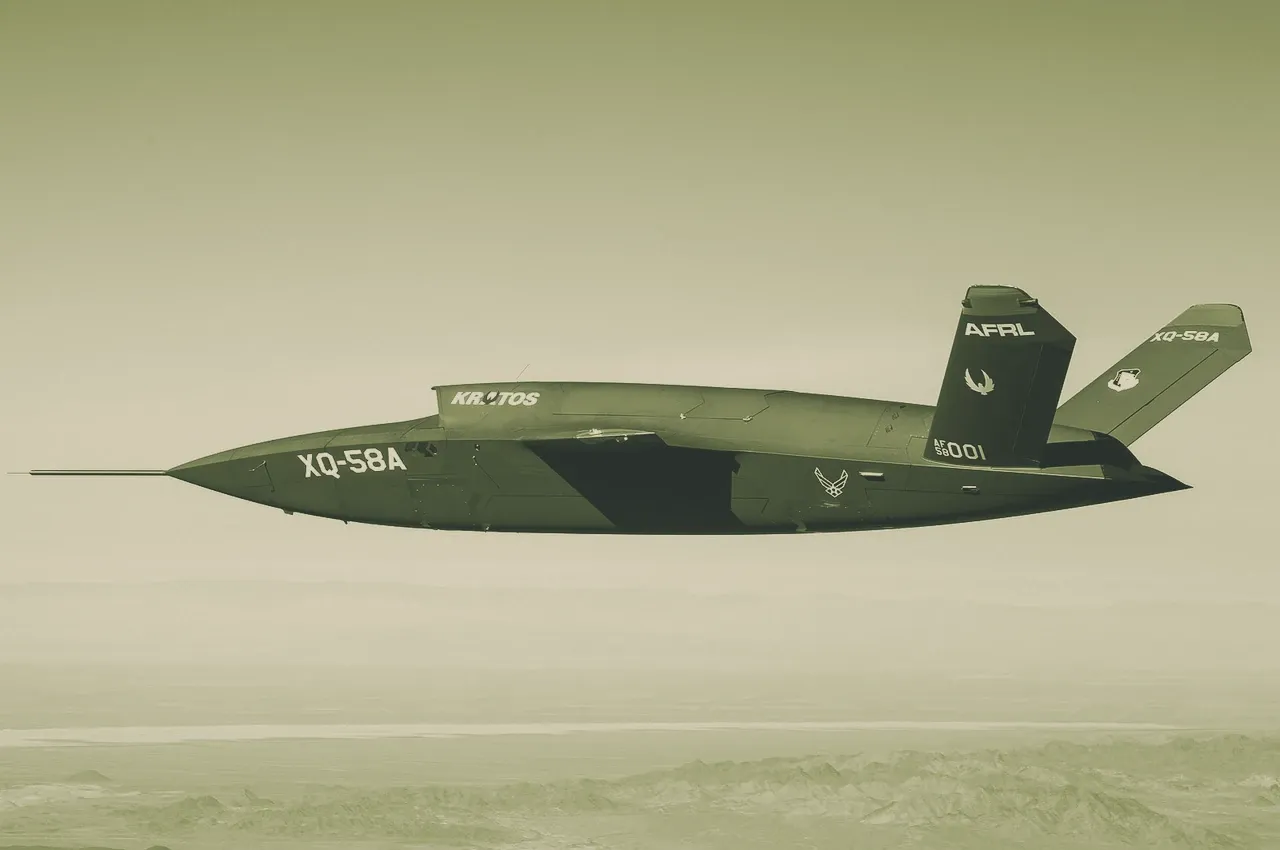
The XQ-58 Valkyrie is an attritable, stealthy uncrewed combat aerial vehicle and collaborative combat aircraft demonstrator designed by Kratos, now set to become the US Marine Corps' first operational loyal wingman, with a target fielding date of summer 2029.
XQ-58 Valkyrie
FIG.01 · USA Image - A Kratos XQ-58A Valkyrie in flight. Photo by 88 Air Base Wing Public Affairs, Public domain, via Wikimedia Commons.
An attritable, stealthy uncrewed combat aerial vehicle — designed by Kratos and integrated by Northrop Grumman — that bridges the gap between experimental loyal-wingman demonstrator and the US Marine Corps’ first operational collaborative combat aircraft, with a target fielding date of summer 2029.

Overview

The XQ-58 Valkyrie is a runway-optional, attritable uncrewed combat aerial vehicle (UCAV) that originated as a U.S. Air Force Research Laboratory (AFRL) low-cost attritable strike demonstrator and has since migrated into a US Marine Corps program of record. A single Williams FJ33 turbofan and a modular payload bay support electronic attack, strike, ISR, and launched-effects missions. Priced by its manufacturer at around $4 million per airframe at moderate production rates, the design trades payload depth against a low unit cost that is intended to make battlefield loss economically acceptable. In January 2026 the Marine Corps formally selected the Northrop Grumman/Kratos team for the MUX TACAIR collaborative combat aircraft (CCA) requirement, putting the Valkyrie on a path to become the service’s first operational loyal wingman by summer 2029, according to The War Zone.

Development

The Valkyrie traces its origins to the AFRL Low Cost Attritable Strike Demonstrator (LCASD) programme, with a contract awarded to Kratos in 2016. Wikipedia records a first flight on 5 March 2019 at Yuma Proving Ground, roughly 2.5 years after contract award — a timeline deliberately compressed to validate rapid defence-acquisition methods. The US Marine Corps entered the programme in January 2023, buying two XQ-58As under the PAACK-P effort for “collaborative killer” concept testing, as reported by USNI News. Kratos subsequently received a $34.8 million USMC contract modification in January 2025 for mission-system integration, with Northrop Grumman as industry partner, per a Kratos press release. That work culminated in the January 2026 Marine Corps decision to select Northrop Grumman and Kratos for the MUX TACAIR CCA programme, awarding Northrop Grumman a roughly $231.5 million contract for mission development that includes the company’s Prism autonomous software and production scale-up, as detailed by The Aviationist.

Design & capabilities

The XQ-58A airframe is a blended-wing body with a high-set wing and a single dorsal inlet feeding a commercial Williams FJ33-5A turbofan. Its unrefuelled range is stated as approximately 3,000 nmi (5,560 km) by the manufacturer, based on the data collected by UAS Vision. Maximum speed is Mach 0.85 (~1,048 km/h), with a cruise speed near 476 kn (882 km/h), and the service ceiling reaches 45,000 ft. The internal weapons bay can accommodate up to 600 lb (272 kg) and mid-wing hardpoints carry another 600 lb externally, figures confirmed in the USMC’s early-purchase reporting by USNI News.

Runway independence is a signature feature. The baseline XQ-58A launches via rocket-assisted take-off (RATO) from a static rail, can be trolley-launched, or – in the CTOL variant under development for the Marine Corps – takes off conventionally from a runway. Recovery in non-CTOL configurations is by parachute. The platform can also be launched from shipping containers, trucks, or ship-based modules, a flexibility emphasised by the USMC for dispersed Pacific island-chain operations, according to The War Zone. Autonomy spans semi-autonomous to push-button fully autonomous operation; in July 2025 an F-16C and an F-15E each controlled two XQ-58As simultaneously in a live air-combat exercise, a milestone documented by Army Recognition. The datalink suite includes a demonstrated Link-16 capability and a Skyborg-compatible open-architecture autonomy stack.

Variants

  • XQ-58A: Baseline AFRL demonstrator; RATO launch, parachute recovery.
  • XQ-58A CTOL: Conventional-takeoff-and-landing variant under development for the USMC; retains RATO option and trades internal payload for two GBU-39 Small Diameter Bombs.
  • MQ-58B: USMC electronic-attack / SEAD companion for the F-35, announced in April 2024.
  • XQ-58A (AIM-120 config): Renderings showing underwing AMRAAM carriage; not yet confirmed in flight test.
  • XQ-58A (Ragnarok config): Internal carriage of the Kratos Ragnarok miniature cruise missile; shown in mock-up configuration.
  • XQ-58A Europa: Airbus-Kratos partnership, announced July 2025, to integrate a German mission system for a Bundeswehr deep-strike requirement; combat-ready target 2029.

Combat record / operational use

The Valkyrie has no combat deployment. Flight-test milestones are extensive. On 5 March 2019 the type flew for the first time at Yuma Proving Ground. Its sixth flight, in March 2021, included the airborne release of an ALTIUS-600 small unmanned system from the internal bay — the first in-flight payload deployment by the type, per Wikipedia. A formation flight with an F-15E Strike Eagle occurred in August 2023, and the first USMC-operated flight followed in October 2023 at Eglin AFB. The MUM-T milestone where a single manned fighter directed two Valkyries simultaneously was demonstrated in July 2025, again at Eglin, and USMC risk-reduction payload integration flights were underway at China Lake in early April 2026.

Advantages

  • Purpose-built attritable cost model: ~$4 million unit cost vs. ~$80 million for an F-35, enabling mass fielding and acceptable attrition, as highlighted by Matrix BCG.
  • Runway independence in RATO/containerised configuration permits launch from ships, trucks, or concealed ground modules — critical for Marine Corps expeditionary and Pacific island-chain operations.
  • Demonstrated mature human-machine teaming: live control of two XQ-58s from a single F-16/F-15E in a contested exercise, with push-button take-off and landing.
  • Open modular payload architecture accommodates EW, strike, ISR, and launched-effects (ALTIUS-600 demonstrated).
  • Manufacturer-claimed 3,000 nmi range provides stand-off depth not available in many other CCA candidates.

Drawbacks / limitations

  • The airframe is too small for the USAF’s CCA Increment 1 requirement; Kratos lost the Off-Board Sensing Station (OBSS) competition to General Atomics’ XQ-67A in 2023.
  • Non-CTOL variants rely on parachute recovery only, complicating sortie-generation rates in expeditionary settings.
  • Payload capacity (600 lb internal + 600 lb external) limits the type to light strike and electronic attack, below USAF CCA targets.
  • A 4 g manoeuvre limit constrains air-combat agility against high-performance fighters, noted in the manufacturer’s early engine-order disclosures on UAS Vision.
  • The off-the-shelf Williams FJ33-5A turbofan is not optimised for military mission profiles; classified performance figures are not publicly available.

Counterparts

Outlook

The Valkyrie has moved from an AFRL flight-science demonstrator to a USMC program of record, with the CTOL MQ-58 variant aimed at operational fielding with Marine F-35 squadrons by summer 2029. Production scale remains to be proven: Kratos advertises a capacity of 250–500 airframes per year at its Oklahoma facility, but deliveries to date number in the tens, not hundreds. The Airbus Europa partnership opens a parallel European market, though it is still in an early phase. The platform’s strongest structural argument remains its cost-exchange ratio: at a few million dollars apiece, it allows battlefield attrition that manned fighters cannot. Whether that logic translates into sustained multi-service procurement — beyond the initial Marine Corps tranche — will depend on the CTOL flight-test programme, real-world integration with the F-35, and the ability to demonstrate mass production at promised rates.

Key specifications

Spec Value
Type Attritable stealth uncrewed combat aerial vehicle / collaborative combat aircraft
Endurance ~6.3 h (est., from manufacturer-claimed range and cruise speed)
Range ~3,000 nmi (~5,560 km) (manufacturer claim, unverified at combat radius)
Cruise / max speed 476 kn (882 km/h) cruise; Mach 0.85 (1,048 km/h) max
Payload 600 lb (272 kg) internal bay + 600 lb (272 kg) external on mid-wing hardpoints
Datalink / control Link-16 demonstrated; Skyborg-compatible autonomy stack; MUM-T capability
Autonomy level Semi-autonomous to fully autonomous (push-button takeoff/landing)
Dimensions / MTOW Length 9.1 m, wingspan 8.2 m; empty ~1,134 kg, MTOW ~2,722 kg
Launch & recovery RATO from rail, trolley launch, or CTOL runway takeoff; parachute recovery (non-CTOL) or conventional landing (CTOL)

Sources

  1. The Aviationist — “Northrop Grumman, Kratos to Develop XQ-58 Valkyrie as CCA for USMC” — https://theaviationist.com/2026/01/08/northrop-grumman-kratos-xq-58-valkyrie-cca-usmc/
  2. Kratos Defense (press release) — “Kratos Receives $34.8 M Contract for Valkyrie Mission System Integration” — https://www.kratosdefense.com/newsroom/kratos-receives-34-8m-contract-for-valkyrie-mission-system-integration
  3. The War Zone — “First USMC MQ-58 Valkyrie CCA Drones To Arrive In 2029” — https://www.twz.com/air/first-usmc-mq-58-valkyrie-cca-drones-to-arrive-in-2029
  4. Wikipedia — “Kratos XQ-58 Valkyrie” — https://en.wikipedia.org/wiki/Kratos_XQ-58_Valkyrie
  5. USNI News — “Marines Buy 2 XQ-58A Valkyrie Drones for ‘Collaborative Killer’ Concept Testing” — https://news.usni.org/2023/01/24/marines-buy-2-xq-58a-valkyrie-drones-for-collaborative-killer-concept-testing
  6. USNI News — “Northrop Grumman to Advance Kratos XQ-58 Valkyrie Drone for Marine Corps ‘Loyal Wingman’ Program” — https://news.usni.org/2026/01/12/northrop-grumman-to-advance-kratos-xq-58-valkyrie-drone-for-marines-corps-loyal-wingman-program
  7. UAS Vision — “Kratos Places Engine Orders Ahead of First XQ-58A Valkyrie Production Contracts” — https://www.uasvision.com/2019/08/07/kratos-places-engine-orders-ahead-of-first-xq-58a-valkyrie-production-contracts/
  8. Army Recognition — “U.S. Air Force validates F-16 and F-15EX fighter jets human-machine teaming with XQ-58A drone” — https://www.armyrecognition.com/news/aerospace-news/2025/breaking-news-u-s-air-force-validates-f-16-and-f-15ex-fighter-jets-human-machine-teaming-with-xq-58a-drone
  9. Matrix BCG — “Kratos Defense: a brief history” — https://matrixbcg.com/blogs/brief-history/kratosdefense
  10. Naval News — “U.S. Navy Awards Kratos $15.5 Million Contract for 2 XQ-58A Valkyrie UAVs” — https://www.navalnews.com/naval-news/2023/01/u-s-navy-awards-kratos-15-5-million-contract-for-2-xq-58a-valkyrie-uavs/
  11. Oklahoman — “Kratos successfully lands contract worth more than $37 million for drone made in Oklahoma” — https://www.oklahoman.com/story/business/columns/2020/12/09/kratos-successfully-lands-contract-worth-more-than-37-million-for-drone-made-in-oklahoma/315433007/
  12. Inside Unmanned Systems — “Report: What Unmanned Systems is America’s Military Buying in 2026” — https://insideunmannedsystems.com/report-what-unmanned-systems-is-americas-military-buying-in-2026/
FIELD DISPATCH · WEEKLY

BattlePolicy Weekly — free.

Defense tech, startups, and security — weekly. No paywall.

Related
USA · Autonomy · Palladyne AI · SwarmOS · Gremlin-X · NGC2

Palladyne runs an AI drone swarm inside the Army's command network at Ivy Mass

A single operator flew a mixed swarm of surveillance drones and a strike drone through the Army's prototype command system, in jammed comms with no cloud link, the company said.

USA · Autonomy · Palladyne AI · SwarmOS · Gremlin-X · NGC2
USA · Policy · autonomous weapons · DoD Directive 3000.09 · Ruben Gallego

A senator wants answers before the Pentagon rewrites its autonomous-weapons rule

Trump's new AI memo gives the Pentagon 90 days to rewrite its autonomous-weapons rule. Sen. Gallego says that is too fast and wants to know which safeguards survive.

USA · Policy · autonomous weapons · DoD Directive 3000.09 · Ruben Gallego
USA · Funding · Anduril · Shield AI · Saronic

Defense-tech funding already beat all of 2025, in five months

Venture funding for defense-tech startups hit $14.6 billion in five months of 2026, beating all of last year, with Anduril, Shield AI and Saronic taking most of it.

USA · Funding · Anduril · Shield AI · Saronic