The Wire · live GRID-REF 37°47′N 122°25′W
DISPATCH 03/26 · 23 Aug 2026
BattlePolicy
Startup to front line. Strategy to consequence.
Lexicon · China

YJ-21

China's ship-and-air-launched anti-ship hypersonic ballistic missile — a "carrier killer" with a maneuvering glide vehicle fired from Type 055 destroyers and H-6N bombers. The core of the A2/AD picture meant to hold US carriers at risk deep in the Pacific.
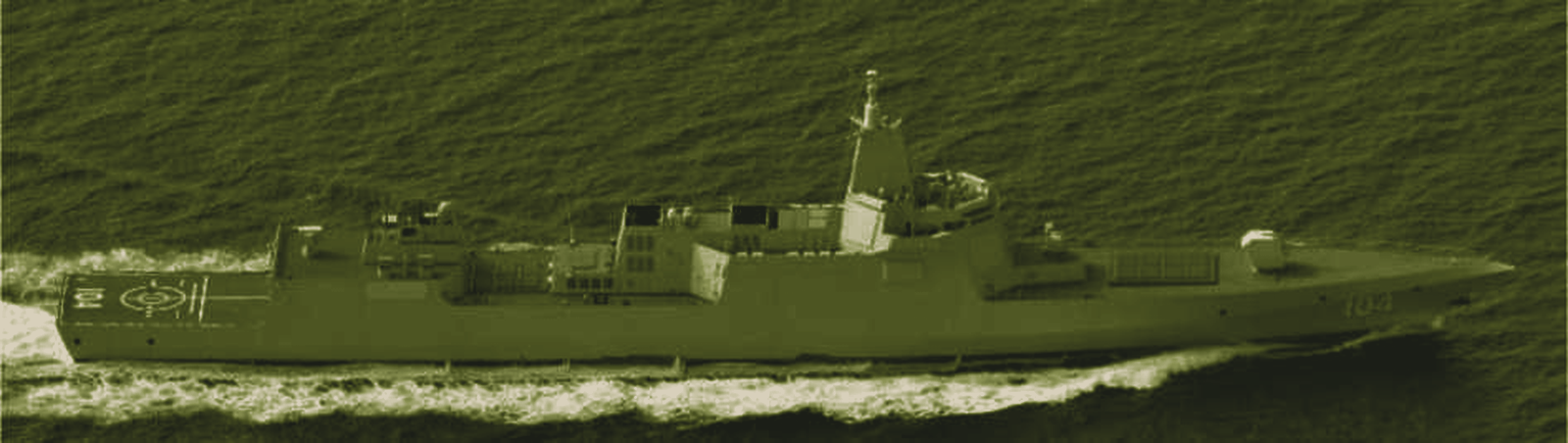
China's ship-and-air-launched anti-ship hypersonic ballistic missile — a "carrier killer" with a maneuvering glide vehicle fired from Type 055 destroyers and H-6N bombers. It is built to hold US aircraft carriers and allied fleets at risk deep into the Pacific, and sits at the core of China's anti-access/area-denial picture.

Overview

The YJ-21 is a Chinese hypersonic anti-ship ballistic missile (ASBM) — a maneuvering, boost-glide weapon designed to strike high-value warships such as aircraft carriers at long range. It is associated with two launch modes: vertical launch from the Type 055 Renhai destroyer's cells, and an air-launched variant carried by the H-6N bomber, widely designated the KD-21. By extending the "carrier killer" mission from China's land-based ballistic missiles to its surface fleet and bombers, the YJ-21 is a centerpiece of Beijing's anti-access/area-denial (A2/AD) strategy in the western Pacific. Its great advertised strength is that a maneuvering hypersonic re-entry vehicle is very hard for current naval missile defenses to intercept; its great unproven element is the over-the-horizon kill chain needed to find and hit a moving carrier at well over 1,000 km.

Development

China's anti-ship ballistic missile lineage runs from the land-based DF-21D and DF-26 "carrier killer" and "Guam killer" weapons; the YJ-21 brought a maneuvering hypersonic ASBM to ships and aircraft. The air-launched KD-21 carried by the H-6N was first seen in 2018, and a Type 055 launch of a hypersonic ASBM followed in the early 2020s. The picture sharpened in late 2025: at China's Victory Day parade in September 2025 Beijing displayed a hypersonic anti-ship missile, and on 28 December 2025 the Type 055 destroyer Wuxi (104) conducted what Chinese state media called a "finalization" (type-approval) test, striking a maritime target, as reported by USNI News. (See the naming note below: the late-2025 ship-launched missile is widely labeled YJ-20, and open sources disagree on how YJ-20, YJ-21 and KD-21 relate.)

A note on naming (YJ-21 / YJ-20 / KD-21)

Open-source designations are genuinely tangled. "YJ-21" became the popular umbrella name (since around 2022) for China's hypersonic anti-ship ballistic missile, including a Type 055 launch and the air-launched H-6N variant KD-21. But the missile China revealed at the 2025 parade and finalization-tested from the Wuxi in December 2025 is widely called YJ-20 by Chinese state media and analysts. It is not resolved publicly whether YJ-20 and YJ-21 are the same weapon under different reported names, sequential variants, or closely related siblings, with KD-21 as the air-launched member of the family. This entry uses "YJ-21" as the umbrella designation and treats YJ-20/KD-21 as part of the same family; treat the specific designation as uncertain.

Design & capabilities

The YJ-21 is a boost-glide anti-ship ballistic missile: it lofts on a rocket booster, then releases a maneuvering hypersonic glide/re-entry vehicle that can alter its flight path on the way down, complicating interception. Chinese state media and analysts put cruise speeds around Mach 6 with a terminal speed up to roughly Mach 10 — figures that are state-sourced and not independently verified. Range estimates cluster around 1,500 km for the ship-launched weapon; PLATracker's Ben Lewis told USNI News the YJ-20 likely reaches 1,500–2,000 km, which, fired from surface ships, lets the PLAN "layer strikes well deep into the Pacific." The weapon is sized to fit the Type 055's vertical launch cells, and the air-launched KD-21 adds standoff reach from the H-6N. The decisive caveat is the supporting kill chain: Lewis cautions that the surveillance and over-the-horizon targeting systems needed to service a maneuvering carrier at extended range "remain untested in real combat scenarios."

Variants

  • YJ-21 (ship-launched): vertical-launched ASBM from the Type 055 Renhai destroyer (and assessed VLS-compatible with other combatants).
  • KD-21 (air-launched): the H-6N-carried variant, first seen in 2018, for standoff anti-ship/strike.
  • YJ-20 (designation overlap): the name used for the missile finalization-tested from the Wuxi in December 2025 and shown at the 2025 parade — see the naming note; relationship to YJ-21 unresolved.

Combat record / operational use

None confirmed. The YJ-21/YJ-20 has been shown at parade, displayed in launch footage, and finalization-tested at sea (December 2025), and the PLA showcased a Type 055 firing the missile near the Philippines during the Balikatan 2026 period as a signal, per Defence Security Asia. It has not been used against a real target in combat, and the hardest part of the system — detecting, tracking and hitting a maneuvering aircraft carrier at 1,500+ km — has not been demonstrated under operational conditions.

Advantages

  • Maneuvering hypersonic re-entry vehicle is very difficult for current naval missile defenses (Aegis/SM-class) to intercept.
  • Sea- and air-mobile launch (Type 055 VLS; H-6N/KD-21) disperses the threat and complicates pre-launch targeting, unlike fixed land ASBM sites.
  • Long reach (~1,500–2,000 km, estimated) pushes US/allied carriers far from the Chinese coast.
  • Extends the proven land-based "carrier killer" concept (DF-21D/DF-26) onto the surface fleet and bombers.

Drawbacks / limitations

  • The over-the-horizon sensor and targeting chain against a moving carrier is unproven in combat — the missile is only as good as the kill chain that cues it.
  • Performance figures (Mach 6/10, 1,500–2,000 km) are PLA/state-media and analyst estimates, not independently verified.
  • Designation/configuration ambiguity (YJ-21 vs YJ-20 vs KD-21) signals how much remains opaque.
  • A maneuvering RV trades some terminal energy/accuracy for unpredictability; real-world CEP against a maneuvering ship is unknown.

Counterparts

  • DF-21D and DF-26 (China) — the land-based ASBM "carrier killer"/"Guam killer" siblings; the intercontinental DF-27 is the newer cousin.
  • Zircon (Russia) — hypersonic anti-ship missile peer; Kinzhal (Russia) — air-launched hypersonic ballistic missile in a related class.
  • Platform context: Type 055 Renhai (launch destroyer) and Type 003 Fujian (the carrier fight the weapon is built to shape).

Outlook

The YJ-21/YJ-20 is moving from display to deployment: a December 2025 finalization test points to fielding aboard a Type 055 fleet planned to reach 16 hulls, each with 112 VLS cells, putting a hard-to-intercept, sea-mobile carrier threat across the first and second island chains. The decisive variables are not the missile's kinematics but the kill chain — satellites, over-the-horizon radar, UAVs like the CH-7 Rainbow for maritime targeting — and whether it can be made to work against a maneuvering, electronically-defended carrier group in wartime. Watch for confirmed serial fielding, clarity on the YJ-20/YJ-21 designation, KD-21 air-launch maturation, and any evidence the targeting chain functions at full range under jamming.

Key specifications

Spec Value
Type Anti-ship hypersonic ballistic missile (boost-glide; maneuvering RV)
Range ~1,500 km (ship-launched); ~1,500–2,000 km estimated (YJ-20); air-launched KD-21 extends reach
Speed (Mach / km·s⁻¹) ~Mach 6 cruise / up to ~Mach 10 terminal (state-media/analyst estimates)
Warhead (type & weight) Conventional; maneuverable hypersonic glide/re-entry vehicle (weight not publicly established)
Guidance Inertial + satnav/mid-course correction; terminal homing for moving ships (claimed)
Accuracy (CEP) Not publicly established (vs a maneuvering ship)
Launch platform(s) Type 055 Renhai destroyer VLS; H-6N bomber (KD-21 air-launched)
Propulsion Rocket booster + hypersonic glide vehicle
Length / diameter / launch weight Not publicly established (sized to fit Type 055 VLS cells)

Sources

  1. USNI News — Chinese Navy Destroyer Tests Hypersonic Anti-Ship Ballistic Missile At Sea (YJ-20 from Type 055 Wuxi, Dec 2025; 1,500–2,000 km; kill-chain caveat). https://news.usni.org/2025/12/29/chinese-navy-destroyer-tests-hypersonic-anti-ship-ballistic-missile-at-sea
  2. SCMP — Chinese state media hints at new variants of hypersonic missile in parade (KD-21 air-launched variant of YJ-21, seen 2018). https://www.scmp.com/news/china/military/article/3323962/chinese-state-media-hints-new-variants-hypersonic-missile-parade
  3. SCMP — Does China's YJ-20 hypersonic sea-based missile give Beijing an edge over US carriers? https://www.scmp.com/news/china/military/article/3352554/does-chinas-yj-20-hypersonic-sea-based-missile-give-beijing-edge-over-us-carriers
  4. TWZ — YJ-20 High-Speed Anti-Ship Missile Seen In Action On China's Type 055 Super Destroyer. https://www.twz.com/news-features/yj-20-high-speed-anti-ship-missile-seen-in-action-on-chinas-type-055-super-destroyer
  5. Defence Security Asia — China Type 055 fires YJ-20 hypersonic near Philippines during Balikatan 2026. https://defencesecurityasia.com/en/china-type-055-yj20-hypersonic-missile-philippines-balikatan-2026-liaoning/
  6. News18 — YJ-21 Missile: China's Hypersonic 'Warship Killer' (Victory Day parade, Sept 2025). https://www.news18.com/world/yj-21-missile-chinas-hypersonic-warship-killer-is-6x-the-speed-of-sound-ws-adkl-9548209.html
  7. National Security Journal — China's YJ-20 Hypersonic Missile Hits Mach 10. https://nationalsecurityjournal.org/chinas-yj-20-hypersonic-missile-hits-mach-10-it-was-designed-to-exploit-gaps-in-u-s-navy-aegis-and-carrier-defenses/
  8. Military Watch — China's Top Five 'Carrier Killer' Weapons (YJ-20: 1,500 km, Mach 6/10). https://militarywatchmagazine.com/article/china-top-five-carrier-killer-ballistic-missiles
🔒 The Analyst Section on YJ-21 is for BattlePolicy Pro members. Below the line: procurement and contract history, the suppliers and companies behind the system, our head-to-head analyst view of the systems it actually competes with, and the BattlePolicy assessment note. Unlock the full file with BattlePolicy Pro →
Related