The Wire · live GRID-REF 37°47′N 122°25′W
DISPATCH 03/26 · 23 Aug 2026
BattlePolicy
Startup to front line. Strategy to consequence.
Lexicon · Land

AS21 Redback

The IFV Australia chose over the Lynx — Hanwha's AS21 Redback is a heavily-protected tracked fighting vehicle with a 30mm cannon, Spike missiles, active protection and a helmet that lets crews "see through" the hull. A Korean design built on Australian soil, it beat Rheinmetall to win Land 400.
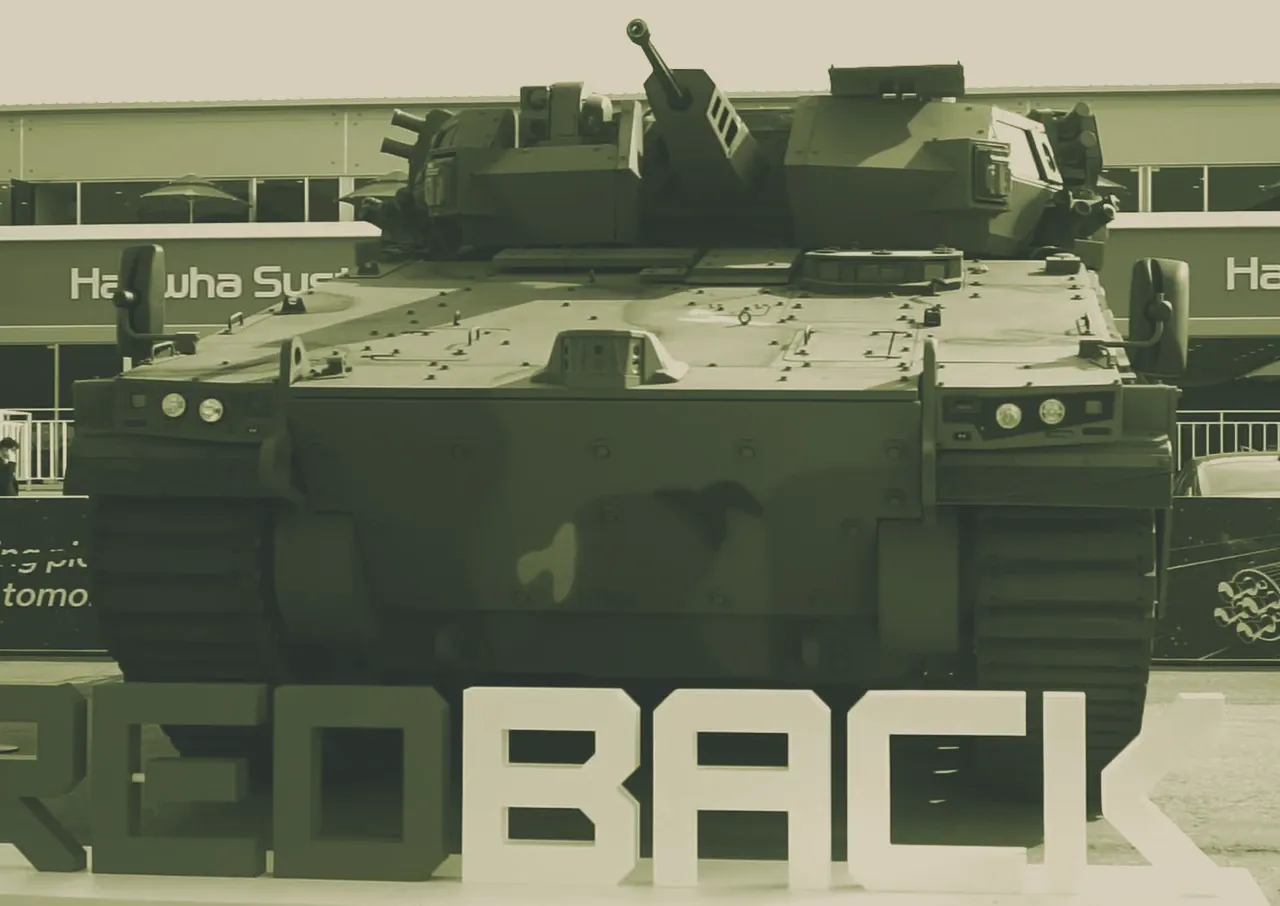
AS21 Redback
FIG.01 · Land Image - A Hanwha AS21 Redback infantry fighting vehicle. Photo by Fabrice Ram, CC0, via Wikimedia Commons.
The IFV Australia chose over the Lynx — Hanwha's AS21 Redback is a heavily-protected tracked infantry fighting vehicle built around a 30mm cannon, Spike anti-tank missiles, an active protection system and a helmet that lets the crew "see through" the hull. Derived from South Korea's K21 but redesigned to Australia's exacting requirements and built on Australian soil, it beat Rheinmetall's Lynx KF41 to win the Australian Army's Land 400 Phase 3 competition — and became another marker of Korea's surge into the front rank of armoured-vehicle exporters.

Overview

The AS21 Redback is a tracked infantry fighting vehicle developed by Hanwha Defense (through its Australian arm, Hanwha Defense Australia) for the Australian Army's Land 400 Phase 3 program to replace the Vietnam-era M113 armoured personnel carrier. Evolved from Hanwha's South Korean K21 IFV but extensively redesigned and uparmoured to meet Australia's demanding protection and capability requirements, the Redback carries three crew and a section of dismounts behind heavy composite-and-modular armour, an active protection system, a 30mm cannon with Spike-LR2 anti-tank missiles, and advanced sensors including a helmet-mounted "see-through armour" system. After a competitive evaluation against Rheinmetall's Lynx KF41, Australia selected the Redback in 2023; the vehicles are being built at Hanwha's facility in Geelong, Victoria, with deliveries from 2027 — making the Redback both a major Australian capability and a flagship of Korea's armoured-vehicle export drive.

Development

Hanwha developed the Redback specifically for Land 400 Phase 3, offering an evolved derivative of its in-service K21 as the AS21, per Wikipedia and Army Technology. In 2019 the Redback and Rheinmetall's Lynx KF41 were shortlisted, and both underwent a rigorous risk-mitigation evaluation by the Australian Army. In 2023, Australia selected the Redback as the winner, per Australian Defence Magazine — though the originally-envisaged buy of around 450 vehicles had been cut to 129 in a defence-posture review. The vehicles are manufactured at the new Hanwha Armoured Vehicle Centre of Excellence in Geelong, Victoria, with first deliveries from 2027. The Redback win, alongside Korea's K9 howitzer (also selected by Australia) and the K2 and FA-50 sales to Poland, cemented Hanwha and South Korea as major armoured-vehicle exporters and deepened Korea-Australia defence-industrial ties.

Design & capabilities

The Redback is a heavily-protected tracked IFV carrying three crew and eight dismounts, powered by a potent MTU diesel for around 70 km/h on road and roughly 40 km/h cross-country, on a hull using in-arm hydropneumatic suspension and composite rubber tracks for ride quality and reduced noise/maintenance, per Defence Connect. Firepower centres on a turret (based on Elbit's MT30-derived EOS T2000 system) mounting a 30mm Mk44S Bushmaster II cannon, a 7.62mm coaxial machine gun, and a twin Spike-LR2 anti-tank guided missile launcher able to kill main battle tanks at range, plus a remote weapon station. Protection is a key selling point: heavy modular composite and reactive armour, an active protection system (Elbit's Iron Fist, to defeat incoming rockets and missiles), and advanced situational awareness — including the Iron Vision helmet-mounted display that lets crew "see through" the vehicle's armour via external cameras, a hunter-killer sighting capability and 360° awareness. The Redback was deliberately designed toward the heavy, high-protection end of the IFV spectrum, reflecting Australian (and broader) lessons that survivability against modern anti-armour threats is paramount. The trade-off is weight and cost, but the result is one of the most heavily-protected and well-equipped IFVs entering service.

Variants

  • AS21 Redback (IFV): the baseline infantry fighting vehicle for the Australian Army.
  • The Land 400 Phase 3 family was intended to include supporting variants (command, repair, recovery, etc.).
  • Derived from and related to South Korea's K21 IFV.
  • Hanwha markets Redback-derived offerings for other international IFV competitions.

Combat record / operational use

The Redback has no combat record — it was selected in 2023 and is in production, with deliveries to the Australian Army from 2027. Its intended role is standard heavy-IFV work: carrying and supporting infantry, defeating light armour and infantry with its 30mm cannon, and killing tanks with Spike missiles, all under heavy protection and an active protection system. Its significance so far is programmatic and industrial: it gives the Australian Army a modern, heavily-protected IFV to replace the ageing M113, establishes a Hanwha armoured-vehicle manufacturing base in Australia, and represents another major export win for South Korea's defence industry. As a newly-fielded vehicle, its performance against a peer enemy and the drone-and-mine threat is unproven, but its design — heavy armour, APS, Spike missiles, advanced sensors — directly reflects current survivability lessons.

Advantages

  • Heavily protected — composite/modular armour plus an Iron Fist active protection system.
  • Strong firepower — 30mm Mk44S cannon and twin Spike-LR2 anti-tank missiles.
  • Advanced awareness — Iron Vision "see-through armour" helmet, hunter-killer sighting, 360° vision.
  • Mobile and refined — MTU power, in-arm suspension and composite rubber tracks.
  • Locally built — manufactured in Australia (Geelong); a Korean export and Australian industry win.

Drawbacks / limitations

  • No combat record — capability is projective; unproven against a peer enemy.
  • Heavy and costly — high protection means weight, cost and logistics demands.
  • Reduced buy — order cut from ~450 to 129, limiting fleet-wide reach.
  • Drone/mine era — like all IFVs, exposed to top-attack munitions and FPV drones once located.
  • New production line — first-of-type Australian manufacture carries program risk.

Counterparts

The Redback's defining comparison is the German Rheinmetall Lynx KF41 — the rival it beat in Australia's Land 400 contest (the Lynx later winning elsewhere, including Ukraine and Hungary) — and it stands among modern heavy tracked IFVs like the Swedish CV90, Germany's Puma, the US M2 Bradley and Poland's Borsuk. Within Hanwha's catalogue it is the IFV counterpart to the K9 Thunder howitzer (also chosen by Australia), both flagships of Korea's export surge. The Redback's distinctions are its emphasis on heavy protection and active protection, its advanced sensor/helmet suite, and the strategic fact that a Korean design won a Western army's flagship IFV competition and is being built locally — a milestone for Korea's defence industry and for Korea-Australia ties.

Outlook

The Redback is a centrepiece of Australia's armoured-vehicle modernization and another marker of South Korea's rise as an armoured-vehicle exporter. Its trajectory is production at Geelong and delivery of the 129-vehicle fleet from 2027, the establishment of a Hanwha manufacturing and support base in Australia, and the marketing of Redback-derived vehicles to other international competitions. The variables to watch are the program's execution (first-of-type Australian manufacture), how the heavy-protection design adapts to the drone-and-mine threat reshaping armoured warfare, and whether the reduced buy is later expanded or the design wins further export contests. For Australia, the Redback is a modern, survivable IFV and a domestic-industry investment; for South Korea, it is proof — alongside the K9, K2 and FA-50 — that its industry can win flagship Western competitions on capability and delivery, reshaping who arms the world's land forces.

Key specifications

Spec Value
Type Tracked infantry fighting vehicle
Designation AS21 Redback
Origin South Korea (design) / Australia (built) — Hanwha Defense
Selected 2023 (Australia, Land 400 Phase 3)
Crew + dismounts 3 + 8
Engine / speed MTU diesel; ~70 km/h road, ~40 km/h cross-country
Turret / main gun EOS T2000-type; 30mm Mk44S Bushmaster II
ATGM / secondary Twin Spike-LR2; 7.62mm coaxial
Protection Composite/modular armour + Iron Fist active protection; Iron Vision helmet
Build / numbers Geelong, Australia; 129 vehicles; deliveries from 2027
Operators Australia
Status In production

Sources

  1. K21 / AS21 Redback — Wikipedia
  2. AS21 Redback Infantry Fighting Vehicle — Army Technology
  3. Hanwha wins lucrative Army IFV contract — Australian Defence Magazine
  4. AS21 Redback Infantry Fighting Vehicle — Defence Connect
  5. Hanwha-led team launches Redback vehicle for Australian Army competition — Defense News
  6. Hanwha AS21 Redback — Military Factory
🔒 The Analyst Section on AS21 Redback is for BattlePolicy Pro members. Below the line: procurement and contract history, the suppliers and companies behind the system, our head-to-head analyst view of the systems it actually competes with, and the BattlePolicy assessment note. Unlock the full file with BattlePolicy Pro →
Related
Europe · Ukraine · LandPro

Leopard 1A5

The Leopard 1A5 is a late Cold War modernization of Germany's mobility-focused Leopard 1, combining a 105 mm rifled gun with improved fire control and thermal night-fighting equipment.

Land · artillery · howitzerPro

Dhanush 155 mm Howitzer

India's domestically produced 155 mm/45-caliber towed howitzer, developed from the FH-77B lineage with digital fire control, automatic laying and an auxiliary power unit.

China · Land · armored-fighting-vehiclePro

ZTL-11 (Type 11)

China's ZTL-11 is an 8x8 wheeled assault gun combining the Type 08 armored-vehicle chassis with a 105 mm rifled gun for mobile direct fire.