Lynx KF41
Rheinmetall's modular tracked IFV — a clean-sheet fighting vehicle with a digital Lance turret (30 or 35mm cannon + Spike missiles) and a reconfigurable hull. Bought by Hungary, picked by Ukraine as its standard IFV, and headed for Italian co-production.
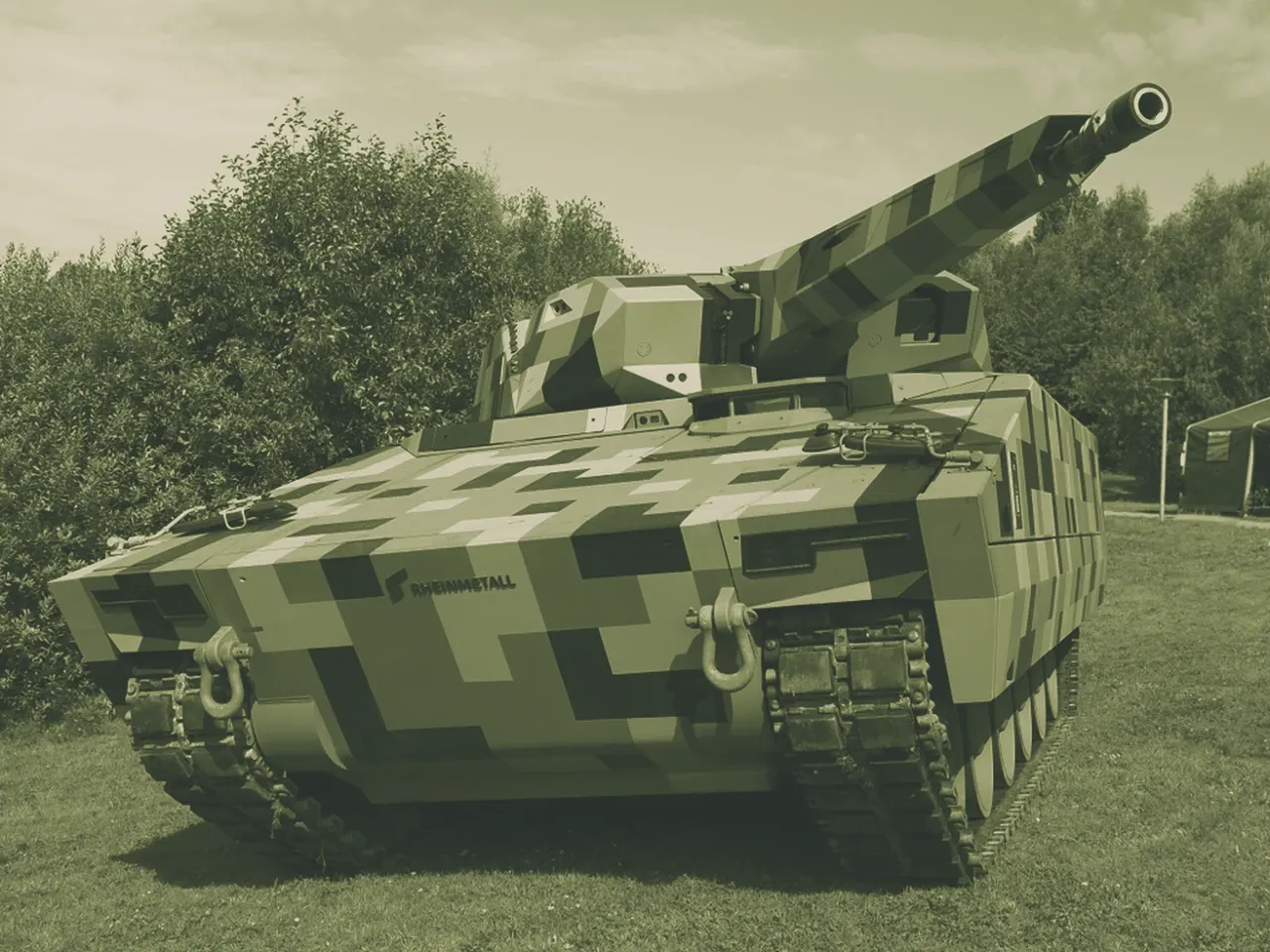
Rheinmetall's modular tracked infantry fighting vehicle — the Lynx KF41 — is a clean-sheet design built around two ideas: a digital, drone-aware Lance turret (a 30 or 35mm autocannon plus Spike anti-tank missiles) and a hull that can be reconfigured from troop carrier to command post, ambulance or mortar vehicle by swapping a mission module. Pitched against the costly, complex Puma, it has become a commercial winner: bought by Hungary, chosen by Ukraine as its standard IFV, and headed into Italian co-production.
Overview
The Lynx KF41 (Kettenfahrzeug 41) is a tracked IFV developed by Rheinmetall, unveiled at Eurosatory 2018. Its design philosophy is modularity and affordability: a common drive module (engine, transmission, running gear at the front) mated to interchangeable rear mission kits, so one platform family covers the IFV, command, recovery, ambulance, mortar-carrier and other roles. The standard fighting configuration mounts the Lance 2.0 turret with a 30mm MK30-2/ABM or 35mm Wotan automatic cannon, a coaxial machine gun, and a launcher for Spike LR2 anti-tank guided missiles, carrying three crew plus a section of six-to-eight dismounts. Conceived as a simpler, cheaper, more exportable alternative to Germany's own troubled Puma, the Lynx has quietly become one of the most commercially successful Western IFVs of the 2020s.
Development
Rheinmetall revealed the Lynx KF41 at Eurosatory in June 2018, building on the smaller KF31, and showed it in both IFV and command configurations, per Wikipedia. The breakthrough customer was Hungary, which selected the Lynx in 2020 and set up production at Rheinmetall's Zalaegerszeg plant (an order on the order of 200-plus vehicles). Italy began testing the Lynx in early 2025 under its Armoured Infantry Combat Systems (AICS) program, and Rheinmetall and Leonardo formed the joint venture Leonardo Rheinmetall Military Vehicles (LRMV) to produce around 1,050 vehicles through 2040, integrating Leonardo's Hitfist and Hitfact turrets. Most consequentially for this war, Ukraine selected the Lynx KF41 as its main infantry fighting vehicle in 2025, with first vehicles reported arriving in early 2026. The Lynx is thus in service and series production with a growing customer base.
Design & capabilities
The Lynx is powered by an 18-litre Liebherr diesel (around 850 kW / ~1,140 hp, with headroom toward ~1,410 hp) and a Renk transmission in a front-mounted powerpack, giving it the mobility to keep pace with main battle tanks while leaving the rear free for the modular mission kit. The Lance turret is the combat heart: physically modular itself, it accepts 30mm or 35mm cannons with airburst and armour-piercing ammunition, a separate ammunition compartment for crew safety, and side "mission pods" for Spike LR2 ATGMs or other effectors. Protection is scalable with add-on armour and an active-protection option, and the vehicle is digitally networked for sensor and battle-management integration. The weight runs to roughly 44 tonnes in a heavily protected fit. The whole point is adaptability: customers configure armament, protection and role modules to national requirements, and the platform is designed for a long upgrade path.
Variants
- Lynx KF41 (IFV): the standard fighting vehicle with the Lance turret.
- Lynx KF31: the smaller, earlier member of the family.
- Mission-kit variants: command post, ambulance, recovery, mortar carrier, engineer and others, via interchangeable rear modules.
- Turret options: Lance 1.0/2.0 (30mm or 35mm Wotan); the Italian LRMV configuration with Leonardo Hitfist (30mm) / Hitfact (120mm) turrets.
Combat record / operational use
The Lynx is entering combat-relevant service rather than carrying a long combat record. Hungary has fielded it since the early 2020s; Italy is adopting it at scale through LRMV; and Ukraine's 2025 selection of the Lynx as its standard IFV — with deliveries beginning around early 2026 — puts it on the most demanding battlefield in the world, where its protection, 35mm cannon and Spike missiles will be tested against drones, mines and Russian armour. The War Zone and Forces News reported the imminent arrival of the first vehicles. Its significance so far is commercial and strategic: a German IFV that won where the Puma struggled to export, and that Ukraine chose to standardize on — a vote of confidence ahead of a full combat record.
Advantages
- Modular — one platform family covers IFV, command, ambulance, mortar and more via swappable mission kits.
- Flexible firepower — Lance turret with 30/35mm cannon plus Spike LR2 ATGMs and growth options.
- Affordable and exportable — simpler and cheaper than the Puma, which has driven its commercial wins.
- Tank-pace mobility — powerful Liebherr powerpack keeps it with armoured formations.
- Strong order book — Hungary, Italy (LRMV, ~1,050) and Ukraine, with local production options.
Drawbacks / limitations
- Limited combat record — only now entering the highest-intensity fighting; performance is largely to be proven.
- Weight in heavy fits — ~44 tonnes in full protection narrows the mobility/protection trade.
- Crew/dismount trade — like all IFVs, balancing protection, firepower and the dismount section is a compromise.
- Vulnerable to modern threats — even a modern IFV is exposed to top-attack munitions, FPV drones and mines, per Ukraine's lessons.
- Configuration sprawl — broad modularity and many national variants complicate logistics and training.
Counterparts
The Lynx KF41 competes directly with Germany's own Puma (more capable but costlier and troubled), the Swedish CV90, the US M2 Bradley, and Korea's Redback (a Lynx derivative lost the Australian Land 400 contest to it). It shares its maker and design language with Rheinmetall's Panther KF51 tank. Against the legacy Marder it is a generational replacement, and against Russian IFVs like the BMP-3 it offers far better protection and sensors. The Lynx's distinction is commercial: it has out-sold the Puma on the export market precisely by being simpler, cheaper and more modular — and Ukraine's choice of it as a standard IFV is its strongest endorsement yet.
Outlook
The Lynx KF41 is the commercial success story of the modern Western IFV market — a modular, affordable vehicle that won where Germany's premium Puma could not, and that Ukraine has now chosen to standardize on. Its trajectory is set by three programs: Hungarian production, the Italian LRMV venture (~1,050 vehicles to 2040), and Ukrainian fielding and combat. The variables to watch into the late 2020s are how the Lynx performs in Ukrainian service against the drone-and-mine threat, whether more NATO states adopt it, and how the modular concept holds up under the logistics of multiple national configurations. If it proves itself in Ukraine, the Lynx is positioned to be one of the standard European IFVs of the coming decades.
Key specifications
| Spec | Value |
|---|---|
| Type | Tracked, modular infantry fighting vehicle |
| Origin | Germany — Rheinmetall |
| Unveiled | June 2018 (Eurosatory) |
| Turret | Lance 2.0 (modular) |
| Main gun | 30mm MK30-2/ABM or 35mm Wotan autocannon |
| Anti-tank | Spike LR2 ATGM (mission pods) |
| Powerpack | Liebherr diesel ~850 kW (~1,140 hp); Renk transmission |
| Crew + dismounts | 3 + ~6–8 |
| Weight | ~44 tonnes (heavy fit) |
| Operators | Hungary, Ukraine (selected), Italy (LRMV) |
| Status | In service / series production |
Sources
- Lynx (Rheinmetall armoured fighting vehicle) — Wikipedia
- Lynx – The new-gen combat vehicle — Rheinmetall
- Ukraine selects Germany's Rheinmetall Lynx KF41 as its main infantry fighting vehicle — Army Recognition
- Lynx KF41 Fighting Vehicles' Arrival In Ukraine Imminent — The War Zone
- KF41 Lynx IFV — Army Recognition
- Ukraine to benefit from Lynx effect — Forces News
🔒 The Analyst Section on Lynx KF41 is for BattlePolicy Pro members. Below the line: procurement and contract history, the suppliers and companies behind the system, our head-to-head analyst view of the systems it actually competes with, and the BattlePolicy assessment note. Unlock the full file with BattlePolicy Pro →