The Wire · live GRID-REF 37°47′N 122°25′W
DISPATCH 03/26 · 23 Aug 2026
BattlePolicy
Startup to front line. Strategy to consequence.
Lexicon · Land

K2 Black Panther

South Korea's world-class tank — and Europe's new workhorse — the K2 Black Panther pairs a 120mm L/55 gun, an autoloader, an active protection suite and hydropneumatic "kneeling" suspension in one of the most advanced MBTs in service. Poland is buying 1,000, with production moving to Polish soil.
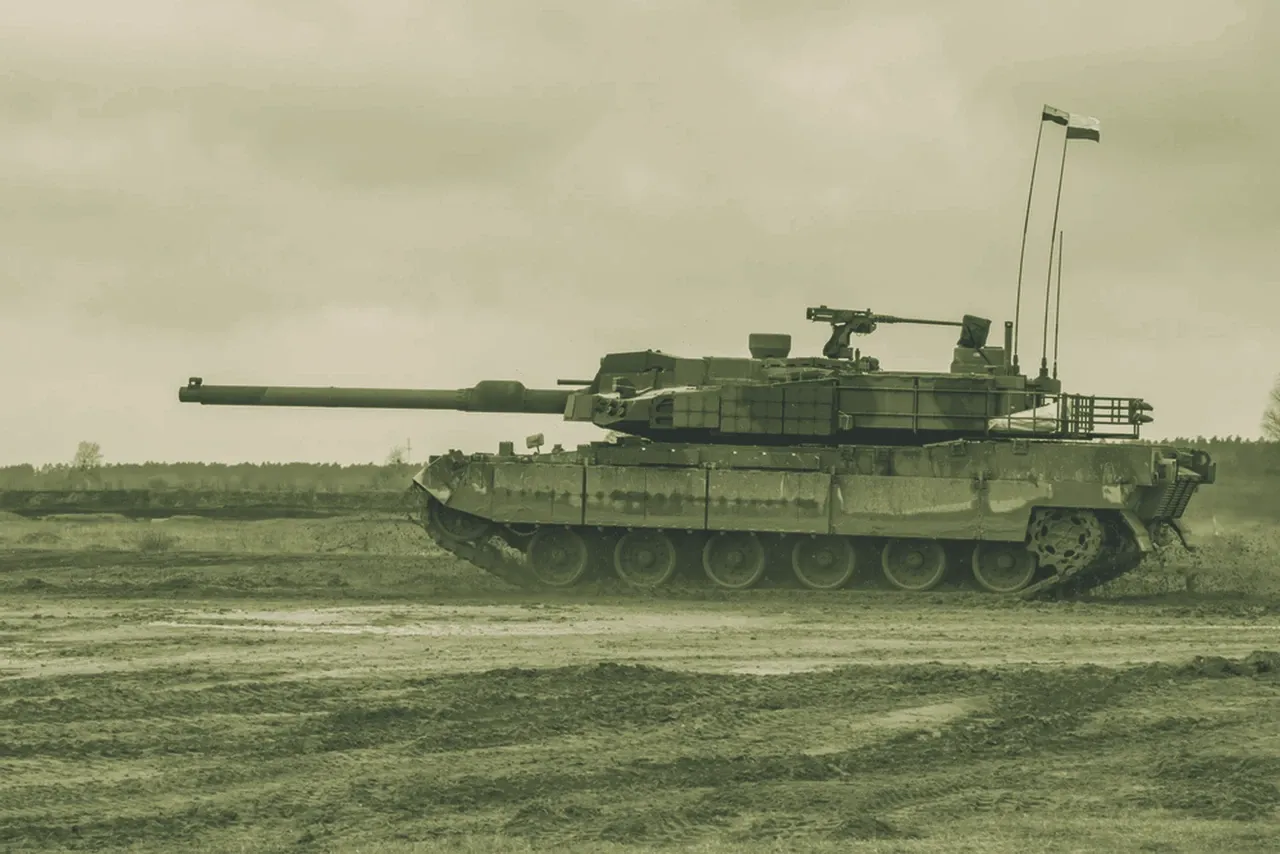
K2 Black Panther
FIG.01 · Land Image - A South Korean K2 Black Panther main battle tank. Photo by Photo by Staff Sgt. Matthew Foster, Public domain, via Wikimedia Commons.
South Korea's world-class tank — and Europe's new workhorse — the K2 Black Panther is one of the most advanced main battle tanks in service: a 120mm L/55 gun fed by an autoloader, a three-man crew, an active protection suite, and adaptive hydropneumatic suspension that lets the tank "kneel," lean and adjust to terrain. Built by Hyundai Rotem for a South Korea facing North Korea's massed armour, it has become the centrepiece of a historic arms deal — Poland is buying around 1,000, with production moving onto Polish soil — making the K2 a symbol of Korea's surge into the front rank of global arms exporters.

Overview

The K2 Black Panther is South Korea's indigenous main battle tank, built by Hyundai Rotem. It mounts a 120mm/L55 smoothbore gun (the Hyundai WIA CN08, the same long-barrel calibre as the latest Leopard 2) fed by an autoloader, cutting the crew to three and giving a high rate of fire (around 10 rounds per minute). Around it Hyundai Rotem packed a modern sensor and protection suite: composite and reactive armour, a soft-kill (and developing hard-kill) active protection system, and a distinctive hydropneumatic suspension that lets the tank raise, lower, tilt and "kneel" to fit terrain and firing positions. It can fire programmable top-attack smart munitions and ford deep water with a snorkel. Entering service in 2014, the K2 is regarded as one of the most capable MBTs in the world — and, through the Poland deal, the spearhead of South Korea's emergence as a major arms exporter.

Development

South Korea developed the K2 over the 2000s as an indigenous successor to its K1 (a Korean derivative of the American M1), aiming for a world-class tank built largely at home, per Wikipedia and Army Recognition. It entered ROK Army service in 2014 (after powerpack-development delays that initially required German engines). The K2's transformation into a global product came in 2022, when — as Europe rearmed after Russia's invasion of Ukraine and scrambled for tanks — Poland signed a landmark framework agreement with Hyundai Rotem for around 1,000 tanks: an initial batch of K2s delivered rapidly from Korea, followed by the bulk as the K2PL, a Polish-configured variant to be produced in Poland with extensive technology transfer, per Army Recognition. Korea's ability to deliver modern tanks fast, at scale, and with local production — where European makers had long lead times — made the K2 deal a turning point, establishing Poland as a K2 production hub for the European market and South Korea as a top-tier arms exporter.

Design & capabilities

The K2 is a roughly 55-tonne MBT optimized for firepower, protection and mobility. Its 120mm/L55 gun fires standard NATO ammunition plus the Korean KSTAM top-attack smart munition (which can strike vehicles from above at range), and the autoloader sustains a high rate of fire with a three-man crew. Protection combines composite armour, explosive reactive armour modules, and an active protection system (a soft-kill jammer/decoy suite, with hard-kill interception in development), plus radar/laser warning and countermeasures. The standout mobility feature is the in-arm hydropneumatic suspension (ISU): the tank can raise or lower its hull, tilt forward/back and lean side to side, improving gun depression on slopes, ride over rough terrain and the ability to fire from awkward positions — a sophistication few tanks match. It has a snorkel for deep fording, modern fire control with hunter-killer sighting, and networked battle-management. Early K2s used an imported (German) powerpack pending a domestic engine. The overall package places the K2 among the most advanced MBTs fielded anywhere — and one designed, unusually, to be exported and license-built.

Variants

  • K2: the baseline South Korean Army tank.
  • K2PL: the Polish variant — additional armour, systems and a heavier configuration, to be produced in Poland.
  • K2EX: an export/demonstrator configuration that paved the way for K2PL.
  • Successive ROK production batches with progressively more indigenous components (incl. the domestic powerpack).
  • Proposed further export configurations for other customers.

Combat record / operational use

The K2 has no major combat record — it serves with the South Korean Army as a deterrent against North Korea's large armoured force, and is now entering Polish service. Its operational significance is strategic and industrial rather than battle-tested: it equips one of the world's most heavily-armed standing armies (the ROK), and through the Poland deal it has become the leading edge of a vast European rearmament and of South Korea's arms-export boom. The K2's appeal in Poland — speed of delivery, scale, local production and technology transfer — reflects lessons from Ukraine about the value of mass and rapid resupply of armour. As a newly-fielded export tank, its performance against a peer enemy is unproven, but its specifications and the scale of its adoption mark it as a major modern MBT.

Advantages

  • World-class firepower — 120mm/L55 gun, autoloader, top-attack KSTAM smart munition.
  • Advanced protection — composite + reactive armour and an active protection suite.
  • Adaptive suspension — hydropneumatic "kneeling"/tilting for terrain and firing positions.
  • Fast, scalable delivery — Korea's industry can build and ship tanks quickly, at volume.
  • Export-built — license production (K2PL in Poland) and technology transfer, a major draw.

Drawbacks / limitations

  • No combat record — capability is projective; unproven against a peer enemy.
  • Powerpack history — early reliance on imported engines until the domestic powerpack matured.
  • Autoloader trade-offs — fewer crew for maintenance/security tasks than a four-man tank.
  • Cost and weight growth — the heavier K2PL configuration raises cost and logistics demands.
  • Drone/top-attack era — like all MBTs, exposed to loitering munitions and top-attack threats.

Counterparts

The K2 competes with — and in Poland serves alongside — the West's top MBTs: Germany's Leopard 2, the US M1 Abrams, Britain's Challenger 3, France's Leclerc, and newer designs like Germany's Panther KF51; it stands against Russia's T-90M and T-14 Armata. Within South Korea's catalogue it is the armour counterpart to the K9 Thunder howitzer, both now Polish best-sellers. The K2's distinctions are its adaptive hydropneumatic suspension, its autoloader-and-three-man-crew layout (like the Leclerc), and above all the speed and scale at which Korea can deliver and localize production — the qualities that won the largest tank export deal of the decade and reshaped the European armour market.

Outlook

The K2 is the spearhead of South Korea's arrival as a top-tier arms exporter and a major beneficiary of Europe's post-2022 rearmament. Its trajectory is continued ROK production with more indigenous content, the large Polish program (and the K2PL production line that makes Poland a European K2 hub), and pursuit of further export customers across Europe and the Middle East. The variables to watch are the K2PL's localization and delivery pace, the maturation of the hard-kill active protection and domestic powerpack, and how the tank adapts to a battlefield where drones and top-attack munitions threaten even the best-protected armour. For South Korea, the K2 is proof that it can field — and sell — world-class heavy armour; for Europe, it is fast becoming a workhorse of the continent's rebuilt tank fleets, and a marker of how the centre of gravity in the arms trade is shifting toward Asia.

Key specifications

Spec Value
Type Main battle tank
Origin South Korea — Hyundai Rotem
In service 2014
Main gun 120mm / L55 smoothbore (autoloader)
Smart munition KSTAM top-attack round
Crew 3
Weight ~55 tonnes
Protection Composite + reactive armour; active protection system
Suspension In-arm hydropneumatic (raise/lower/tilt/kneel)
Mobility Snorkel deep-fording; hunter-killer fire control
Operators South Korea, Poland (K2PL); others pursued
Status In service / production

Sources

  1. K2 Black Panther — Wikipedia
  2. K2 Black Panther MBT — Army Recognition
  3. South Korea plans K2 tank production hub in Poland — Army Recognition
  4. K2 Black Panther: Inside South Korea's Advanced Battle Tank — Military Machine
  5. MSPO 2024: Hyundai Rotem's K2EX paves the way for K2PL — Army Recognition
  6. Hyundai Rotem K2PL — Military Factory
🔒 The Analyst Section on K2 Black Panther is for BattlePolicy Pro members. Below the line: procurement and contract history, the suppliers and companies behind the system, our head-to-head analyst view of the systems it actually competes with, and the BattlePolicy assessment note. Unlock the full file with BattlePolicy Pro →
Related
Europe · Ukraine · LandPro

Leopard 1A5

The Leopard 1A5 is a late Cold War modernization of Germany's mobility-focused Leopard 1, combining a 105 mm rifled gun with improved fire control and thermal night-fighting equipment.

Land · artillery · howitzerPro

Dhanush 155 mm Howitzer

India's domestically produced 155 mm/45-caliber towed howitzer, developed from the FH-77B lineage with digital fire control, automatic laying and an auxiliary power unit.

China · Land · armored-fighting-vehiclePro

ZTL-11 (Type 11)

China's ZTL-11 is an 8x8 wheeled assault gun combining the Type 08 armored-vehicle chassis with a 105 mm rifled gun for mobile direct fire.