ATAK / TAK
The US military's soldier-level map app — a phone-based geospatial situational-awareness and C2 kit built by the Air Force Research Laboratory, now 250,000+ users across the US military, allies and first responders. The Western benchmark Ukraine's and Russia's apps get measured against.
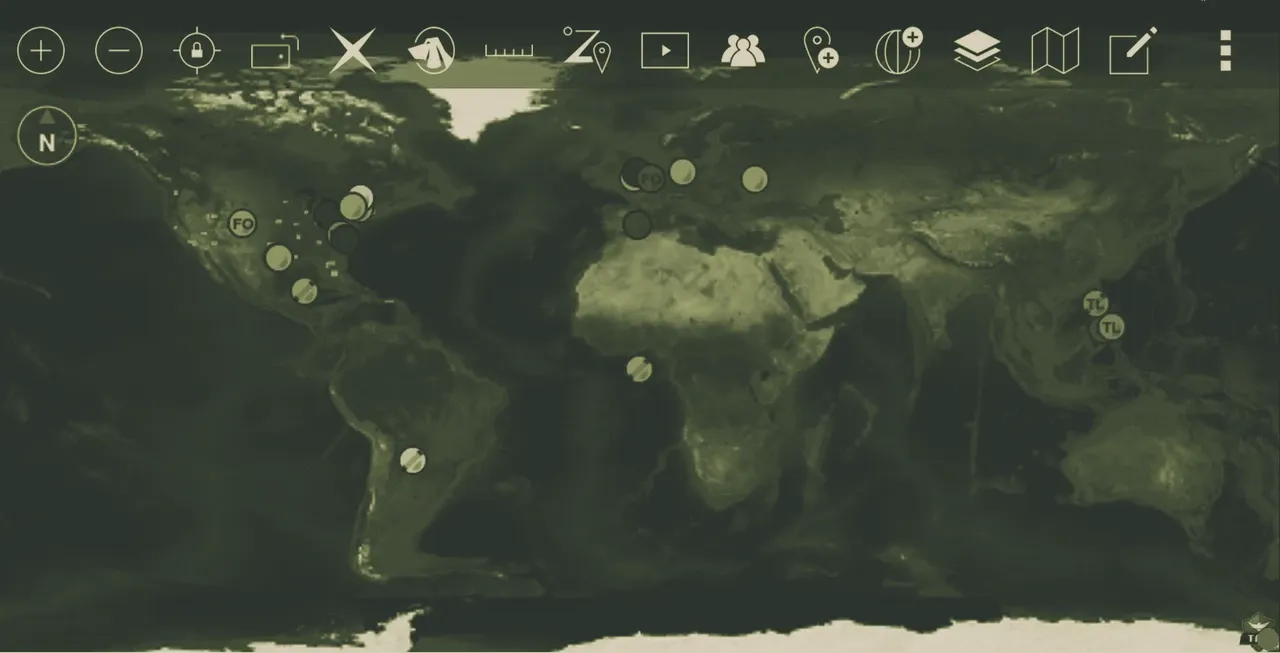

The US military's soldier-level mapping app — the Team Awareness Kit, on Android known as ATAK — turns a phone, tablet or laptop into a shared geospatial situational-awareness and command tool. Built by the Air Force Research Laboratory as a cheap commercial-off-the-shelf alternative to bespoke battle-management hardware, it now spans 250,000-plus users across the US military, allied forces and first responders, and ships in an open-source civilian version. It is the Western reference point that Ukraine's GIS Arta and Kropyva and Russia's Strelets all get measured against.
Overview
ATAK (Android Team Awareness Kit; the military build is the Android Tactical Assault Kit) is a smartphone geospatial-infrastructure and situational-awareness application, the flagship of the broader TAK family. It overlays a live map with friendly and enemy positions, lets users navigate by GPS, share data across a team, mark and pass targets, and even cue drones — rendering the picture in the NATO-standard APP-6 military symbology and exchanging it in the Cursor on Target (CoT) data format, per Wikipedia. Its defining feature is an open plugin architecture: capability is bolted on for specific missions — close air support, direct action, law enforcement, border security, disaster response, off-grid mesh communications. Where Ukraine's apps are war-grown and Russia's are state-built, ATAK is the long-running American answer to the same question — how to give the individual soldier a shared digital map — and it runs on cellular, satellite or MANET radio bearers.
🔒 The full ATAK / TAK file is for BattlePolicy Pro members. Below the line: development history, design and capabilities, variants, the combat record, advantages and limitations, comparable systems, outlook, the full specifications table, our sourcing, and the analyst assessment — procurement, suppliers and the BattlePolicy verdict. Unlock the full file with BattlePolicy Pro →
Below this point
- Development
- Design & capabilities
- Variants
- Combat record / operational use
- Advantages
- Drawbacks / limitations
- Counterparts
- Outlook
- Key specifications
- Sources
- Analyst Section
- Procurement & contracts
- Suppliers & related companies
- Comparable systems — analyst view
- Analyst note