The Wire · live GRID-REF 37°47′N 122°25′W
DISPATCH 03/26 · 23 Aug 2026
BattlePolicy
Startup to front line. Strategy to consequence.
Lexicon · Russia

Strelets

Russia's soldier-portable "find" half of the reconnaissance-fire loop — the KRUS Strelets links scouts, drone operators and artillery spotters to the guns. Capable on paper and improved in Syria, but Ukrainian accounts say its centralised, EW-fragile design lags Ukraine's apps.
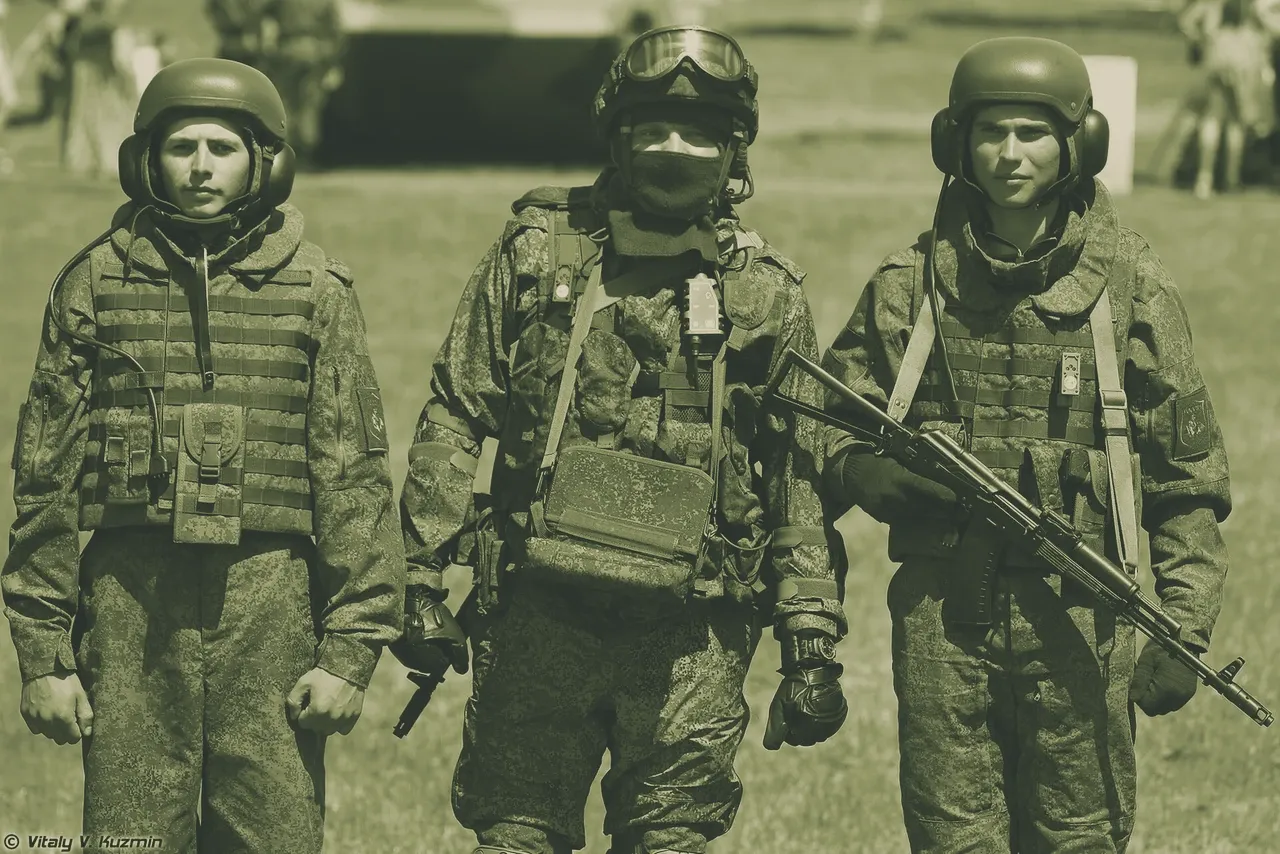
Strelets
FIG.01 · Russia Image - A Russian Ratnik combat-equipment display including the KRUS Strelets reconnaissance, control and communications system. Photo by Vitaly V. Kuzmin, CC BY-SA 4.0, via Wikimedia Commons.
Russia's soldier-portable reconnaissance, control and communications complex — the KRUS Strelets (Kompleks Razvedki, Upravleniya i Svyazi) — is the "find" half of Russia's reconnaissance-fire loop, linking scouts, drone operators, forward air controllers and artillery spotters to the guns and aircraft that strike. Part of the Ratnik soldier kit and refined in Syria, it is the closest Russian analogue to Ukraine's GIS Arta and Kropyva — but Ukrainian field accounts describe a system whose centralised fire-approval and electronic-warfare fragility blunt its on-paper capability.

Overview

Strelets is a modular, man-portable command-control-communications-and-intelligence (C3I) system built around rugged tablets, computers and radios. Its job is to digitize the sensor-to-shooter chain: a forward observer, scout, UAV operator or radar crew tags an enemy position and passes coordinates over the network to artillery, rocket or aviation units, compressing what was a voice-and-paper process. Russian and Western analysts describe it as the technological enabler of the razvedyvatelno-ognevoy kontur — the reconnaissance-fire complex (ROS) — that RealClearDefense and Jamestown credit with integrating "various radar, sensors and means of reconnaissance and fires at operational-tactical levels." It is a component of Russia's Ratnik infantry-modernization suite and is fielded to reconnaissance, artillery-spotting, forward-air-control and special-operations units.

Development

Strelets was developed by NPO Sozvezdie (now within Rostec's Ruselectronics holding) — the same Voronezh C2 house behind the brigade-level ESU-TZ program — and entered service in the 2000s. The current Strelets-M (export designation 83t415E) is described by its maker as the second generation: lighter, more compact and more capable than the original, per Teller Report. It is sold in role-specific kits — a basic soldier set plus man-portable kits for commanders, ELINT operators, signalmen, forward air controllers, forward artillery observers, radar operators and UAV operators, per the Rosoboronexport catalog. A 2018 Oxford CCW study marked the recon-fire complex it underpins as "coming of age," with much of the practical refinement drawn from Russia's Syria deployment.

Design & capabilities

The baseline Strelets-M kit, per Rosoboronexport, integrates a MIK-U multifunctional information module, M7/M10 commander computers, a small MTU control terminal, a radio-relay module, a UHF data-transmission module and a module for integrating ELINT systems. Component weight ranges from about 1.4 to 15 kg depending on the kit; the man-portable radio's range is on the order of 1.5 km; mean time between failures is quoted at 5,000 hours; and the gear is rated from –40 °C to +50/+60 °C and built to survive shock, water and mud. Russian sources say it runs roughly 12 hours on one battery and 24 on two in continuous voice-and-data mode. It uses GLONASS for navigation and is designed to "transmit basic data to strike systems, including aerial ones" — i.e. to hand a target straight to artillery or aviation. The Journal of Slavic Military Studies' study of Russian conventional fires argues the ROS built on Strelets has "dramatically improved" the lethality and accuracy of Russian artillery.

Variants

  • KRUS Strelets — the original first-generation complex.
  • Strelets-M (83t415E) — the second-generation system; lighter, more compact, sold in nine role-specific kits (serviceman, commander, ELINT operator, signalman, forward air controller, forward artillery observer, radar operator, UAV operator, C2-post commander).
  • It interoperates with reconnaissance assets such as the Tipchak/Orlan UAV feeds and ground reconnaissance stations, and sits within the Ratnik soldier-equipment program.

Combat record / operational use

Strelets was combat-refined in Syria from 2015 and is in use across the Ukraine front. The Telegraph reported in May 2023 that Russian reconnaissance units used Strelets to spot early Ukrainian troop build-ups and quickly cue artillery. But Ukrainian field accounts describe real limits: a comparative analysis by the Lviv Herald reported that along the Svatove–Kreminna line in winter 2022–23, reliance on centralized fire approval delayed Russian counter-battery fire by 10–15 minutes, that Ukrainian EW jamming of GLONASS rendered Strelets units largely ineffective without line-of-sight backups, and that captured tablets near Orikhiv held outdated maps and had been used as "glorified notepads." Those are Ukrainian SIGINT-sourced claims and should be read with that bias in mind; the consistent theme across sources is a capable system that performs best in static, well-connected, hierarchical conditions and worst in mobile warfare under electronic pressure.

Advantages

  • Backbone of the recon-fire loop — links reconnaissance, FAC, UAV and artillery-observer roles directly to strike systems.
  • Rugged and modular — role-specific kits, wide temperature range, shock/water resistance, long battery life, high MTBF.
  • Combat-refined — matured through Syria and adapted on the Ukrainian front; credited with improving Russian fires accuracy.
  • Integrated with Ratnik and ELINT — a designed-in part of Russia's soldier-modernization and sensor ecosystem.

Drawbacks / limitations

  • Centralized by doctrine — fire approval often routed up the chain, slowing the loop (reported 10–15-minute delays) versus decentralized Ukrainian systems.
  • EW-fragile — GLONASS dependence makes it vulnerable to jamming; Ukrainian EW has reportedly neutralized units in the field.
  • Update/logistics gaps — captured tablets found with stale maps and no connectivity during mobile operations.
  • Short organic comms range — the man-portable radio reaches only ~1.5 km, leaning on relays and the broader network.
  • Capture exposure — fielded forward, individual terminals have been seized by Ukrainian forces.

Counterparts

Strelets is the Russian mirror of Ukraine's recon-fire software: it occupies the same niche as GIS Arta (target-to-gun coordination) and Kropyva (tablet fire-control), and complements Russia's own brigade-level ESU-TZ C2 program, also from Sozvezdie. Its Western analogues are soldier-level situational-awareness and fires kit — ATAK/TAK and artillery fire-control systems like the US AFATDS — while the broader battle-management tier is held by Maven Smart System, Anduril Lattice, SitaWare and Ukraine's Delta. The recurring analytic verdict is that Strelets is technically comparable on paper but reflects a more centralized, less adaptive doctrine than the Ukrainian apps it faces.

Outlook

Strelets is Russia's answer to the same problem GIS Arta and Kropyva solve — closing the sensor-to-shooter loop — and the recon-fire complex it underpins genuinely sharpened Russian artillery after 2022. Its limits are as much doctrinal as technical: a hierarchy that wants fires cleared up the chain throttles the speed the hardware could deliver, and GLONASS dependence leaves it exposed to the EW fight Russia and Ukraine wage daily. The trajectory to watch into 2026–2027 is whether Russia pushes fire-authority down to the edge (closing the tempo gap), how Strelets-M is hardened against jamming and capture, and whether modernization rooted in Syria-and-Ukraine lessons can make the system as adaptive as its adversaries' — or whether it stays "a machine awaiting instructions," in the Lviv Herald's phrase.

Key specifications

Spec Value
Type Man-portable reconnaissance-control-communications C3I complex (recon-fire backbone)
Designation KRUS Strelets; Strelets-M (export 83t415E)
Developer / origin Russia — NPO Sozvezdie (Rostec / Ruselectronics)
Generation 2nd (Strelets-M)
Role kits Serviceman, commander, ELINT operator, signalman, forward air controller, forward artillery observer, radar operator, UAV operator, C2-post commander
Core assets MIK-U info module, M7/M10 computers, MTU terminal, radio-relay & UHF data modules, ELINT-integration module
Component weight ~1.4–15 kg (by kit)
Comms range (man-portable radio) ~1.5 km
Navigation GLONASS
Endurance / ruggedization ~12 h on one battery, 24 h on two; –40 to +50/+60 °C; shock/water/mud resistant; MTBF ~5,000 h
Operators Russian Armed Forces (reconnaissance, artillery, FAC, spetsnaz; part of Ratnik)
Status In service; refined in Syria and Ukraine

Sources

  1. 83t415E Strelets-M Command, Control, Communications and Intelligence System — Rosoboronexport
  2. Algorithms at War: Comparing Ukraine's GIS Arta and Russia's Strelets-M — Lviv Herald
  3. Russia's Armed Forces Enhance UAV Strike Capability — Jamestown Foundation
  4. The Technological Transformation of Russian Conventional Fires — Journal of Slavic Military Studies
  5. The Russian Reconnaissance Fire Complex Comes of Age — Oxford Changing Character of War Centre
  6. Russia turns to laptops to sharpen its firepower on the front line — The Telegraph
  7. "Simplifies the work of intelligence and aviation" — Teller Report
🔒 The Analyst Section on Strelets is for BattlePolicy Pro members. Below the line: procurement and contract history, the suppliers and companies behind the system, our head-to-head analyst view of the systems it actually competes with, and the BattlePolicy assessment note. Unlock the full file with BattlePolicy Pro →
Related
Ukraine · Russia · air defense

Russia's 3,000-a-Month Jet Gerans Outrun Ukraine's $2,000 Interceptors

Russia flew 76 jet-powered Gerans at Ukraine in daylight on Aug. 18. Turbojet drones now reach two-thirds of some waves and roll off Alabuga at about 3,000 a month, faster than the $2,000 interceptors that beat the Shahed. Kyiv's jet-powered answer is still in combat testing.