The Wire · live GRID-REF 37°47′N 122°25′W
DISPATCH 03/26 · 23 Aug 2026
BattlePolicy
Startup to front line. Strategy to consequence.
Lexicon · Russia

Leer-3

Russia's flying cell-tower attacker — a command truck plus Orlan-10 drones carrying a payload that mimics a GSM base station to locate phones, jam cellular networks and blast fake SMS at enemy troops and civilians. Electronic warfare and psychological warfare in one airborne package.
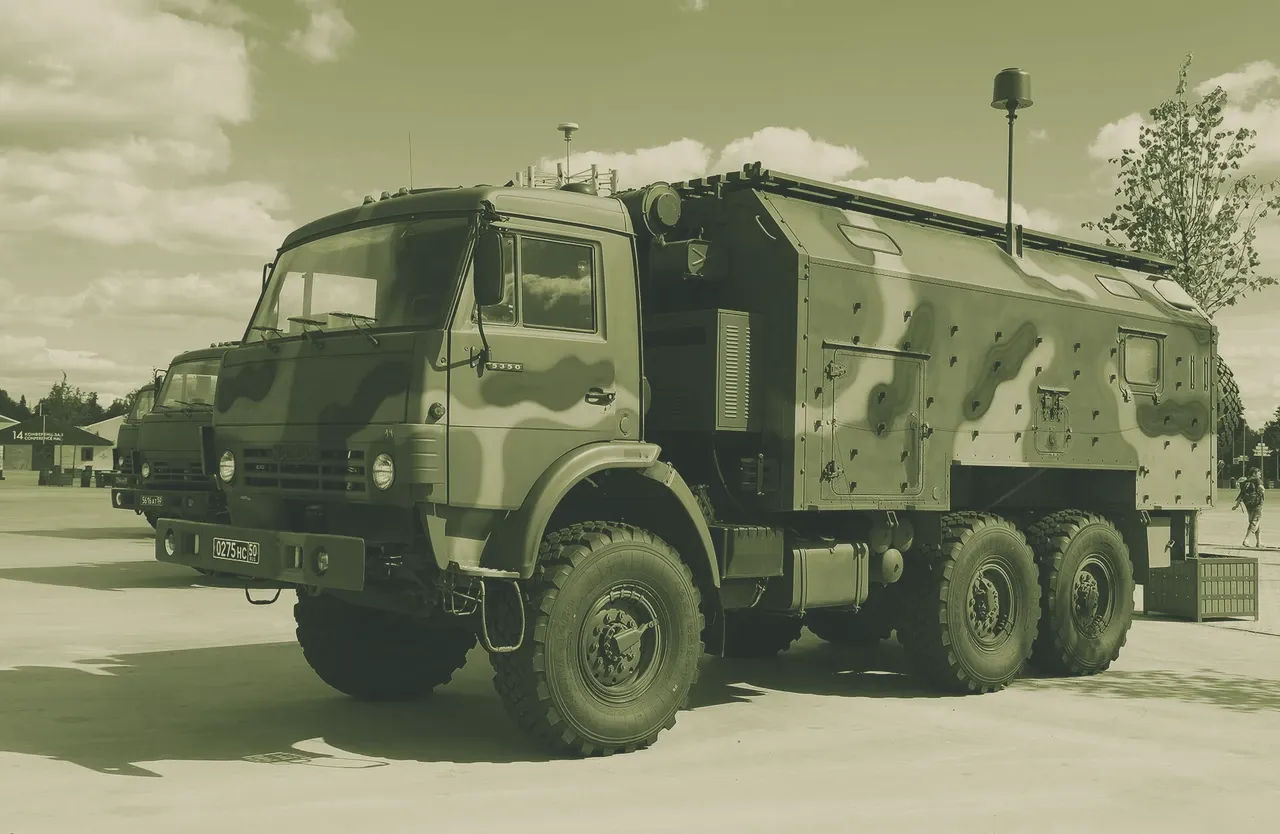
Leer-3
FIG.01 · Russia Image - The Russian RB-341V Leer-3 electronic-warfare complex. Photo by Vitaly V. Kuzmin, CC BY-SA 4.0, via Wikimedia Commons.
Russia's flying cell-tower attacker — the RB-341V Leer-3 — pairs a command truck with Orlan-10 drones carrying a payload that impersonates a GSM mobile base station. From the air it can find and locate phones, harvest subscriber data, jam cellular networks, and — its signature trick — push fake text messages straight to enemy soldiers' and civilians' handsets. It fuses electronic warfare with psychological warfare in one airborne package, and has been a fixture of Russian operations in the Donbas and the full-scale war.

Overview

Leer-3 is a drone-borne cellular electronic-warfare and signals-intelligence complex. Rather than a ground jammer, it lifts the EW payload into the sky aboard Orlan-10 UAVs, which loiter over enemy territory acting as airborne IMSI-catchers and fake base stations. Per DFRLab and the US Army's ODIN, the system can disable cellular networks across a radius of several kilometres and let Russian forces blast fake SMS messages to subscribers in range. KyivPost notes it can also detect troop concentrations and pull contacts from phones within range. That triple capability — jam, exploit, and message — is what sets Leer-3 apart from a conventional jammer: it is as much an information-operations tool as an EW one.

Development

Leer-3 was fielded in the mid-2010s and revealed in Donbas around 2016, per InformNapalm. It is built around the Orlan-10, the workhorse Russian reconnaissance drone produced by the Special Technology Center (STC) in St. Petersburg, which carries the Leer cellular EW payload; the wider complex integrates that air segment with a ground command post. Russia has folded Leer-3 into the new electronic-warfare battalions it has been adding to motorized rifle divisions, with commanders citing improved reconnaissance and faster information collection. As GlobalSecurity records, the Orlan-10-based RB-341V has been progressively modernized since its introduction.

Design & capabilities

A Leer-3 complex consists of a single KamAZ-5350 6×6 command-and-control truck and two or three Orlan-10 UAVs carrying interchangeable payloads, per DFRLab and Military Review. The drone payload imitates a cellular base station across GSM 900/1800/2000/2500 bands: handsets in range latch onto the fake tower, which lets the system locate them, identify subscribers, and either suppress the network or push fraudulent SMS. DFRLab reported an effect radius of about six kilometres per drone; Army Recognition has cited Russian claims of jamming out to ~30 km in some configurations. The Orlan-10 itself gives the system its reach and persistence: an ~18 kg drone with a roughly 120 km application radius and up to ~10 hours endurance, able to range well beyond the front. Because the payloads are interchangeable, the same airframe can switch between jamming, SIGINT and the base-station-spoofing role.

Variants

Leer-3 is a complex rather than a family: its "variants" are the interchangeable Orlan-10 payloads (GSM base-station emulation, jamming, signals reconnaissance) and incremental modernizations of the RB-341V since the mid-2010s. It sits within a broader Russian drone-EW and ground-EW ecosystem alongside systems like Borisoglebsk-2 and the R-330Zh Zhitel.

Combat record / operational use

Leer-3 was first documented in the Donbas around 2016 and has been used throughout the full-scale war for both jamming and information operations. Its most distinctive effect is the propaganda SMS: Russian forces have used Leer-3-class systems to send demoralizing or deceptive texts to Ukrainian soldiers and civilians — a tactic DFRLab dubbed "electronic warfare by drone and SMS." It also serves as a flying IMSI-catcher to geolocate troop concentrations by their phones, feeding the targeting picture. The system is a priority target in return: Militarnyi reported a HIMARS strike destroying a Leer-3 in the Zaporizhzhia region, and the Orlan-10 drones themselves are shot down in numbers. The Swedish FOI and Jamestown have both analyzed its Donbas employment as a model of integrated Russian EW.

Advantages

  • Airborne reach — putting the payload on an Orlan-10 extends cellular attack and SIGINT deep over enemy territory, beyond a ground jammer's horizon.
  • Three tools in one — jam, exploit (locate/identify phones), and message (fake SMS) from the same platform.
  • Information warfare — the fake-SMS capability is a psychological-operations weapon, not just an EW one.
  • Persistent and flexible — ~10-hour drone endurance and interchangeable payloads allow long, adaptable missions.
  • Targeting cue — geolocating phones helps fix enemy troop concentrations for fires.

Drawbacks / limitations

  • Drone-dependent — effectiveness rests on the vulnerable Orlan-10, which Ukraine downs frequently.
  • GSM-focused — optimized for older cellular standards; disciplined comms (radio silence, hardened or non-cellular networks) blunt it.
  • Limited radius — single-drone effect measured in single-digit kilometres; coverage needs multiple sorties.
  • High-value target — the command truck and drones are hunted; a Leer-3 has been HIMARS-struck.
  • Counterable — phone discipline, IMSI-catcher detection and network hardening reduce its take.

Counterparts

Leer-3 is the drone-borne, cellular-focused member of Russia's EW family, distinct from the tracked tactical Borisoglebsk-2, the strategic HF system Murmansk-BN, the radar jammer Krasukha-4 and the SATCOM jammer Tirada-2. Its air segment is the Orlan-10 reconnaissance drone in an EW role. Its closest conceptual analogues are airborne IMSI-catchers and "dirtbox"-type cellular-surveillance payloads used by Western agencies — but the integration of jamming, phone-geolocation and mass fake-SMS into a fielded military drone complex is a distinctively Russian package.

Outlook

Leer-3 is the clearest example of Russia weaponizing the cellular network itself — turning soldiers' and civilians' phones into both a target and a delivery channel for propaganda. Its trajectory into 2026–2027 is shaped by two pressures: the growing vulnerability of its Orlan-10 carrier to Ukrainian air defense and counter-UAV systems, and the diminishing returns of GSM-era attacks as militaries enforce phone discipline and harden communications. Expect modernization toward newer cellular standards and better-protected or longer-ranged carrier drones. The honest caution is that some performance figures (jamming radius, SMS reach) trace to Russian announcements; the well-documented core is the concept — drone-borne cellular EW plus fake SMS — and its repeated, attritable use on the Ukrainian front.

Key specifications

Spec Value
Type Drone-borne cellular (GSM) EW, SIGINT & SMS information-operations complex
Designation RB-341V Leer-3
Origin Russia — Orlan-10 by Special Technology Center (STC); complex by Russian defense industry
Fielded ~2015; revealed in Donbas ~2016
Ground segment KamAZ-5350 6×6 command-and-control truck
Air segment 2–3 Orlan-10 UAVs (~18 kg, ~120 km radius, ~10 h endurance) with cellular EW payloads
Cellular bands GSM 900 / 1800 / 2000 / 2500 (base-station emulation)
Effect radius ~6 km per drone (DFRLab); up to ~30 km claimed in some configs
Functions GSM jamming, phone detection/geolocation (IMSI-catcher), fake-SMS delivery
Operators Russian Armed Forces (EW battalions)
Status In service

Sources

  1. Leer-3 Russian 6×6 Mobile Drone-Based Electronic Warfare System — ODIN / Worldwide Equipment Guide (US Army)
  2. Electronic Warfare by Drone and SMS — DFRLab
  3. RB-341V "Leer-3" complex: an electronic warfare bomber — Military Review
  4. Russian Leer-3 EW system revealed in Donbas — InformNapalm
  5. HIMARS Hits Leer-3 EW System in Zaporizhzhia Region — Militarnyi
  6. Russian Electronic Warfare in Donbas: Training or Preparation for a Wider Attack? — Jamestown Foundation
  7. Analysis: Russia's Electronic Warfare Equipment — KyivPost
🔒 The Analyst Section on Leer-3 is for BattlePolicy Pro members. Below the line: procurement and contract history, the suppliers and companies behind the system, our head-to-head analyst view of the systems it actually competes with, and the BattlePolicy assessment note. Unlock the full file with BattlePolicy Pro →
Related
Ukraine · Russia · air defense

Russia's 3,000-a-Month Jet Gerans Outrun Ukraine's $2,000 Interceptors

Russia flew 76 jet-powered Gerans at Ukraine in daylight on Aug. 18. Turbojet drones now reach two-thirds of some waves and roll off Alabuga at about 3,000 a month, faster than the $2,000 interceptors that beat the Shahed. Kyiv's jet-powered answer is still in combat testing.