The Wire · live GRID-REF 37°47′N 122°25′W
DISPATCH 03/26 · 23 Aug 2026
BattlePolicy
Startup to front line. Strategy to consequence.
Lexicon · Russia

Borisoglebsk-2

Russia's tracked tactical jamming complex — nine MT-LB vehicles that fuse four jamming-station types under one console to detect, locate and suppress enemy radio, GSM, satellite comms and GPS. A constant Ukraine-front presence, and a prized target: captured in 2022, hunted by FPV drones since.
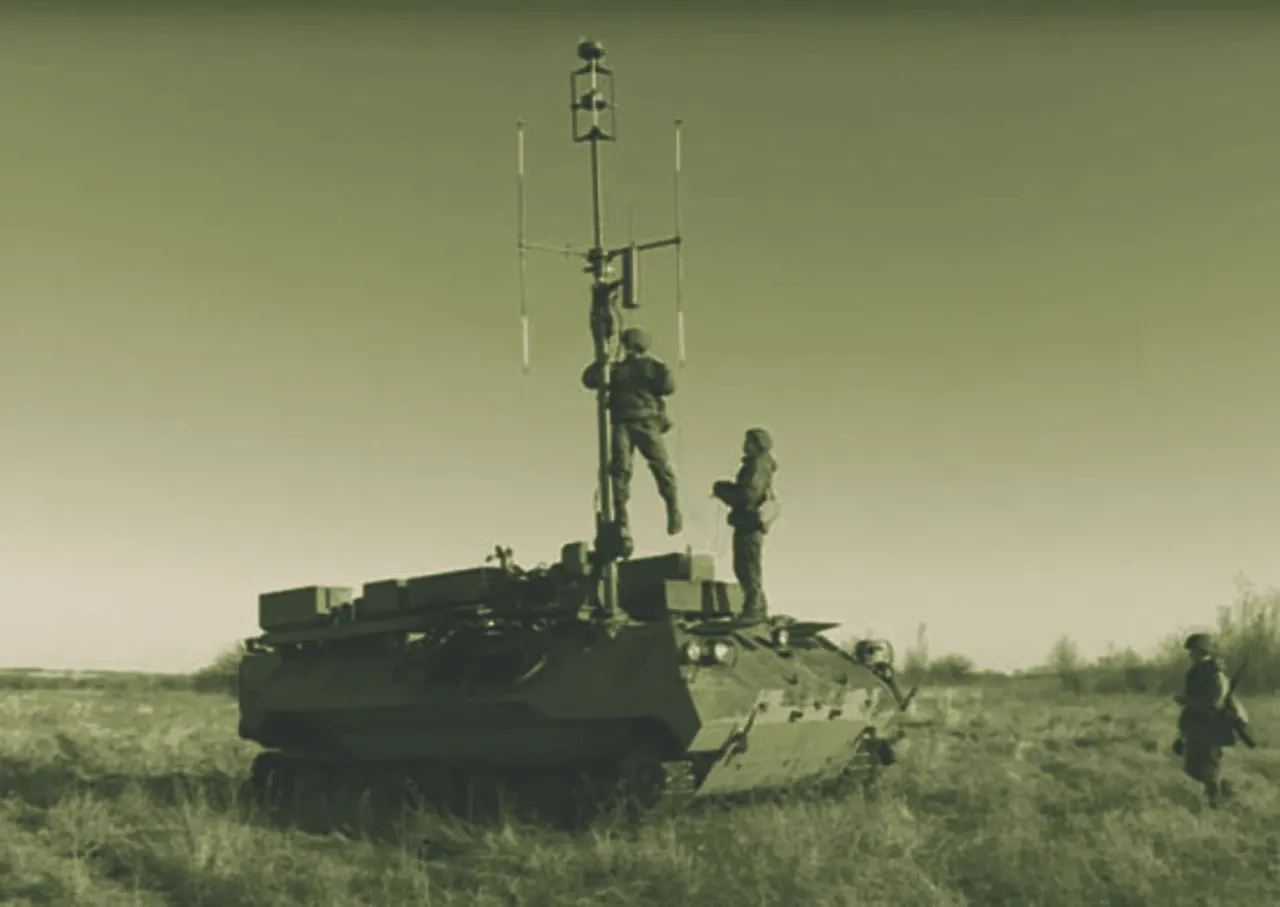
Borisoglebsk-2
FIG.01 · Russia Image - A Russian RB-301B Borisoglebsk-2 electronic-warfare vehicle. Photo by Ministry of Defense of Russia, CC BY 4.0, via Wikimedia Commons.
Russia's workhorse tactical electronic-warfare complex — the RB-301B Borisoglebsk-2 — is a group of up to nine tracked MT-LB vehicles that fuse four different jamming-station types under a single control point. It detects, direction-finds and suppresses the enemy's radio, cellular, satellite-communications and satellite-navigation links across a wide band, from one operator's console. Fielded across the Ukraine front, it is both a serious problem for Ukrainian drones and communications and a prized target — one was captured in 2022, and FPV drones have hunted them ever since.

Overview

Borisoglebsk-2 is a multifunctional, vehicle-mounted tactical EW system designed to blind, confuse and demoralize an enemy by attacking its use of the electromagnetic spectrum. Per the US Army's ODIN/Worldwide Equipment Guide and Wikipedia, it performs automated radio reconnaissance, electronic intelligence, direction-finding and broadband jamming of enemy command-and-control, communications and navigation systems. Militarnyi notes it "merges four types of jamming stations into a single system with a single control console," forcing the operator to make decisions in seconds. It targets HF/VHF radio, GSM cellular, satellite-phone links (Inmarsat/Iridium) and GPS — the connective tissue of a modern force — which is why it has become one of Russia's most consequential, and most hunted, EW assets in Ukraine.

Development

Borisoglebsk-2 was developed by NPO Sozvezdie — the Voronezh C2/EW house also behind the Strelets and ESU-TZ programs — over roughly six years, from 2004 to 2010, per Wikipedia. It was not immediately mass-produced; fielding followed in stages, and the system is generally counted as in service from around 2014, with deliveries to military districts continuing later in the 2010s. It is built on the amphibious MT-LB / MT-LBu tracked chassis for cross-country mobility alongside mechanized forces. The complete complex, per Defense Express and Military Review, comprises an R-300KMV (R-330KMV) control point and individual jamming/reconnaissance vehicles — the R-378BMV, R-330BMV, R-934BMV and R-325UMV — with the full set reported at nine machines.

Design & capabilities

The defining feature is integration: one control point (R-330KMV) commanding a mix of specialized stations, each tuned to a part of the spectrum, so a single crew can run reconnaissance and jamming across many bands at once. The R-330BMV-class stations attack VHF radio and GSM/satcom/GPS; the R-378BMV handles HF; the R-934BMV targets aviation VHF/UHF; the R-325UMV adds further coverage. iNEWS reports the control point can manage up to four pairs of jammers and, in automatic mode, execute around 30 tasks before cueing the other vehicles to deliver directional jamming. The system both listens (SIGINT, geolocation by direction-finding) and attacks (broadband suppression), which makes it a find-and-jam node rather than a single-purpose jammer. Its tactical, vehicle-borne nature is the trade-off against strategic systems like Murmansk-BN: far shorter-ranged, but mobile, integrated and fielded right behind the front.

Variants

Borisoglebsk-2 is itself the integrating "variant" — a complex assembled from a control point plus several distinct jamming/reconnaissance vehicles (R-378BMV, R-330BMV, R-934BMV, R-325UMV), each a system in its own right. There is no widely reported export designation; it sits within Russia's broader ground-EW family alongside the R-330Zh Zhitel, R-934 and the drone-borne Leer-3.

Combat record / operational use

Borisoglebsk-2 has been in action since the Donbas fighting — the 2021 Jamestown study called it "one of Russia's most advanced systems of electronic suppression" there — and across the full-scale war it has been a persistent threat to Ukrainian communications, drone control links and GPS-guided munitions. It is also a marquee target. On 16 September 2022, Army Recognition reported Ukrainian troops captured an intact MT-LB-mounted Borisoglebsk-2 — an intelligence windfall that risked exposing Russian EW secrets. Since then Ukraine has repeatedly hunted the system with FPV drones, Defense Express documenting strikes at 12–15 km, and Ukrainian forces reported destroying two in the Kherson region in April 2025. (Ukrainian sources placed a very high dollar value on those losses; such figures are unverified and almost certainly overstated — the system's real unit cost is undisclosed.) There is a pointed irony, noted by analysts, in GPS-guided Ukrainian drones destroying a system built to jam GPS.

Advantages

  • Integrated multi-band attack — four jamming-station types under one control point cover radio, GSM, satcom and GPS at once.
  • SIGINT + jamming — detects and geolocates emitters as well as suppressing them, feeding the wider recon-fire picture.
  • Mobile and survivable-by-movement — amphibious MT-LB chassis keeps it with mechanized forces and lets it reposition.
  • Automated tasking — handles dozens of tasks and multiple jammer pairs with a small crew.
  • Proven battlefield effect — credited with degrading Ukrainian comms, drones and precision munitions.

Drawbacks / limitations

  • High-value, high-signature target — it emits, so it can be found and killed; captured in 2022 and routinely struck by FPV drones.
  • Tactical range only — far shorter reach than strategic HF systems; effect is local.
  • Intelligence exposure — the 2022 capture handed Western and Ukrainian analysts a detailed look at the hardware.
  • Crew tempo — fusing four stations under one console demands fast, skilled operators under pressure.
  • Sanctions-strained supply — reliant on Russian electronics constrained by export controls.

Counterparts

Borisoglebsk-2 occupies the operational/tactical tier of Russia's EW arsenal, between the strategic Murmansk-BN (long-range HF) and single-mission jammers. It complements the radar-jamming Krasukha-4, the SATCOM-jamming Tirada-2 and the drone-borne Leer-3, and shares developer DNA (Sozvezdie) with the Strelets recon-fire complex. It operates in the same contested spectrum that Western SATCOM (Starshield) and adversary ISR satellites (Yaogan series) depend on. Western tactical analogues exist but tend to be more specialized; Borisoglebsk-2's distinction is the consolidation of multiple jamming roles into one networked, mobile complex.

Outlook

Borisoglebsk-2 is the everyday face of Russian tactical EW in Ukraine — not the long-range showpiece, but the system that actually degrades Ukrainian drones, radios and GPS munitions day to day, and the one Ukraine spends drones and missiles to kill. Its trajectory into 2026–2027 is a survivability race: as it remains lethal against Ukrainian links, it is increasingly geolocated and struck, pushing Russia toward dispersing the complex, hardening emissions discipline, and fielding successors. The honest cautions are the inflated loss-value claims and the fact that the 2022 capture has already eroded its secrecy. The system to watch it against is its own hunters — whether emitting EW nodes can survive a battlefield where the other side can find and FPV-strike anything that radiates.

Key specifications

Spec Value
Type Tracked multifunctional tactical EW complex (SIGINT + jamming)
Designation RB-301B Borisoglebsk-2
Developer / origin Russia — NPO Sozvezdie (Rostec / Ruselectronics)
Developed / fielded 2004–2010 development; in service from ~2014
Chassis Amphibious MT-LB / MT-LBu tracked vehicles (up to ~9 per complex)
Composition R-330KMV control point + R-378BMV, R-330BMV, R-934BMV, R-325UMV stations
Targets HF/VHF radio, GSM cellular, satellite comms (Inmarsat/Iridium), GPS
Functions Radio reconnaissance, ELINT, direction-finding/geolocation, broadband jamming
Tasking Up to 4 jammer pairs; ~30 automated tasks (reported)
Operators Russian Armed Forces
Status In service

Sources

  1. Borisoglebsk-2 (RB-301B) — ODIN / Worldwide Equipment Guide (US Army)
  2. Borisoglebsk-2 — Wikipedia
  3. The Ukrainian Armed Forces seize Russian EW weapon system Borisoglebsk-2 — Militarnyi
  4. Ukrainian FPV Drones Destroy Enemy's RB-301B Borisoglebsk-2 EW System at 12–15 km Range — Defense Express
  5. Blind, Confuse and Demoralize: Russian Electronic Warfare Operations in Donbas — Jamestown Foundation
  6. Ukrainian army recuperates abandoned Russian MT-LB-mounted Borisoglebsk-2 — Army Recognition
  7. Electronic warfare complex RB-301B Borisoglebsk-2 — Military Review
🔒 The Analyst Section on Borisoglebsk-2 is for BattlePolicy Pro members. Below the line: procurement and contract history, the suppliers and companies behind the system, our head-to-head analyst view of the systems it actually competes with, and the BattlePolicy assessment note. Unlock the full file with BattlePolicy Pro →
Related
Ukraine · Russia · air defense

Russia's 3,000-a-Month Jet Gerans Outrun Ukraine's $2,000 Interceptors

Russia flew 76 jet-powered Gerans at Ukraine in daylight on Aug. 18. Turbojet drones now reach two-thirds of some waves and roll off Alabuga at about 3,000 a month, faster than the $2,000 interceptors that beat the Shahed. Kyiv's jet-powered answer is still in combat testing.