Murmansk-BN
Russia's strategic shortwave jammer — a truck-borne complex with 32-metre antenna masts built to detect and suppress NATO's long-haul HF radio at ranges Russian sources claim reach 5,000–8,000 km. Fielded in Kaliningrad, Crimea and the Arctic; reportedly sold to Iran.
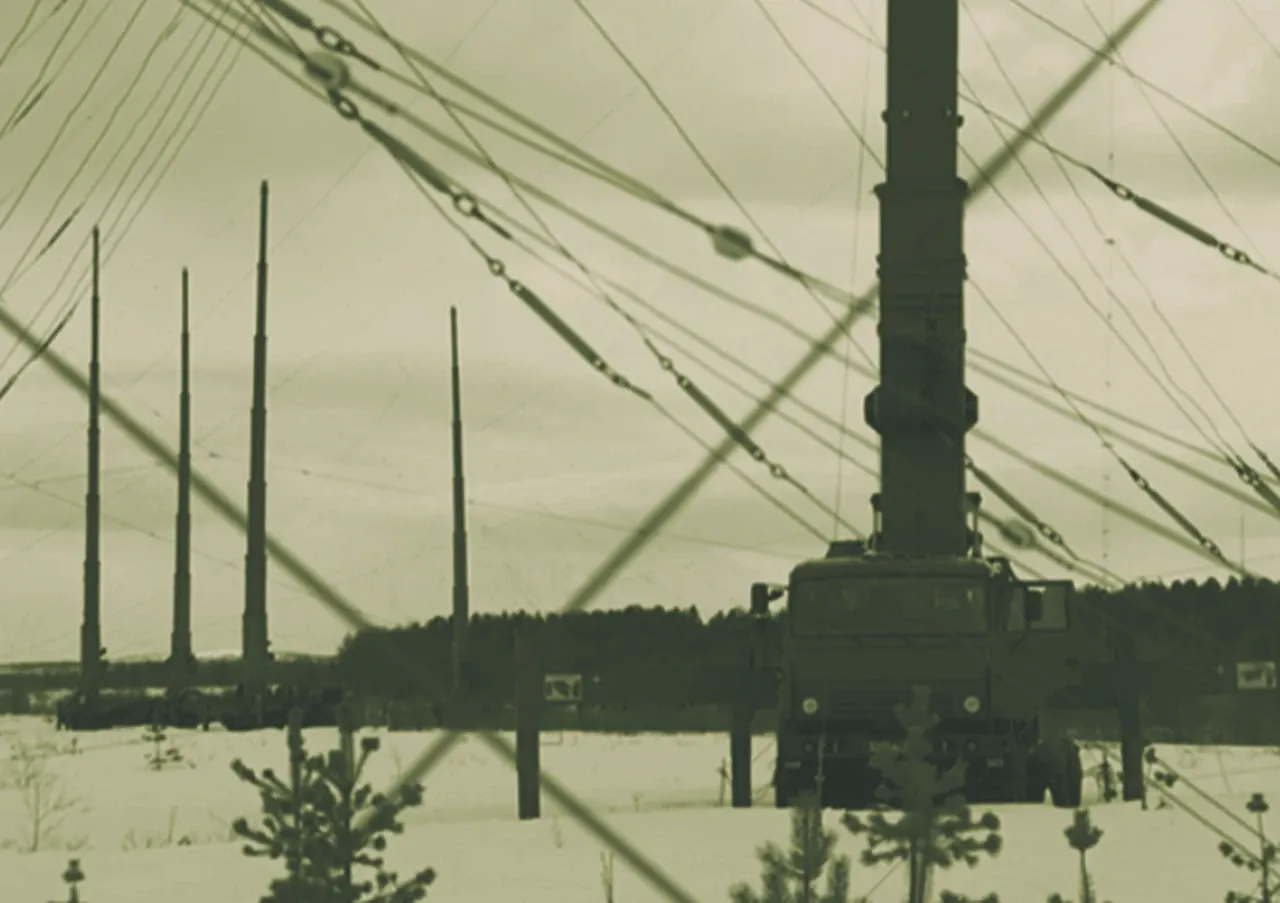

Russia's strategic-level shortwave jammer — the GT-01 Murmansk-BN — is a truck-borne electronic-warfare complex that raises 32-metre telescoping antenna masts to detect, direction-find and suppress high-frequency (HF) radio across the whole 3–30 MHz band. Its target is NATO's long-haul communications — including the US HF Global Communications System — and Russian sources claim it can reach 5,000 km, and up to 8,000 km in ideal ionospheric conditions. Fielded in Kaliningrad, occupied Crimea and the Arctic, it is one of the largest mobile EW systems in the world.
Overview
Murmansk-BN is a strategic, fully mobile HF electronic-warfare and signals-intelligence complex. It automatically scans wide swaths of the shortwave spectrum, locates HF emitters by direction-finding, and jams them — aiming squarely at the long-range radio links that armies, navies and air forces fall back on when satellites and line-of-sight links are denied. Per Army Recognition and Station HYPO, its main task is to suppress NATO's HF networks (3–30 MHz), including the US HF Global Communications System (HFGCS) and HF satellite links. Because HF propagates by bouncing off the ionosphere, the system exploits skywave to reach far beyond the horizon — which is also why its real performance depends heavily on atmospheric conditions. It is a network-centric, strategic-echelon asset, not a front-line tactical jammer.
🔒 The full Murmansk-BN file is for BattlePolicy Pro members. Below the line: development history, design and capabilities, variants, the combat record, advantages and limitations, comparable systems, outlook, the full specifications table, our sourcing, and the analyst assessment — procurement, suppliers and the BattlePolicy verdict. Unlock the full file with BattlePolicy Pro →
Below this point
- Development
- Design & capabilities
- Variants
- Combat record / operational use
- Advantages
- Drawbacks / limitations
- Counterparts
- Outlook
- Key specifications
- Sources
- Analyst Section
- Procurement & contracts
- Suppliers & related companies
- Comparable systems — analyst view
- Analyst note