Boeing says chamber tests validate the MQ-28 Ghost Bat's low radar signature
Boeing says anechoic-chamber testing confirms a low radar cross-section for its uncrewed MQ-28 Ghost Bat, a survivability claim that feeds straight into the contested race to field cheap loyal-wingman jets.
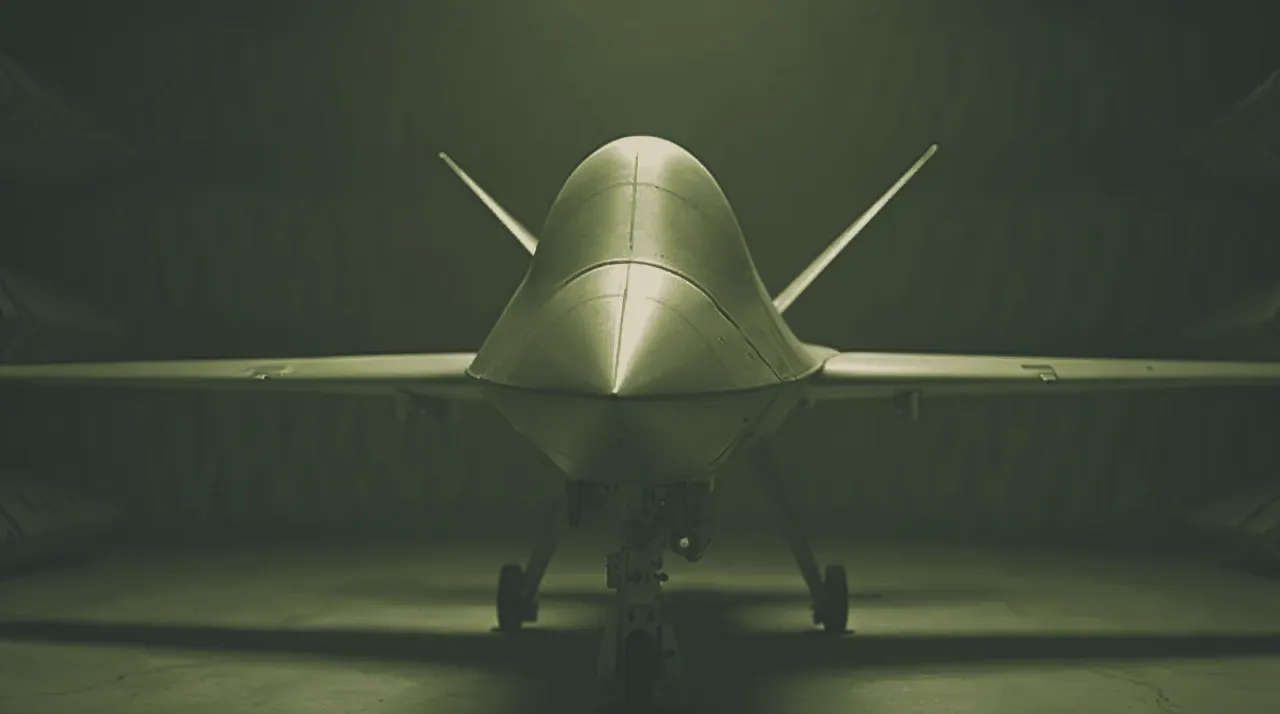
Boeing says anechoic-chamber testing confirms a low radar cross-section for its uncrewed MQ-28 Ghost Bat, a survivability claim that feeds straight into the contested race to field cheap loyal-wingman jets.
Boeing has validated the low radar cross-section of its uncrewed MQ-28 Ghost Bat, the company said on June 1, Defense Daily reported. Engineers measured an MQ-28 inside an anechoic chamber across pitch, azimuth and roll, Boeing said, the data meant to validate the company's designs and models. The signature shortens the range at which an enemy radar can detect and engage the aircraft, Boeing said, which it cast as proof the jet can survive in contested airspace. The Aviationist also covered the announcement.
Boeing measured a physical airframe in a chamber rather than running a simulation, and said the result matched its predictions. It disclosed no cross-section figures, and no outside party has measured the jet, so the claim rests on the manufacturer's own data.
The Ghost Bat is Boeing's collaborative combat aircraft, built by Boeing Defence Australia for the Royal Australian Air Force and first flown in 2021. It is the leading example of the loyal-wingman concept, a lower-cost autonomous jet that flies ahead of a crewed fighter to scout, jam or draw fire. A low radar signature is the property that lets such an aircraft fly into defended airspace without being engaged early.
The US Air Force is running its own collaborative combat aircraft contest between Anduril's YFQ-44A Fury and General Atomics' YFQ-42A, both of which first flew in 2025. The Air Force plans more than 100 aircraft for a first increment and identified about $804 million for the program in 2026, the Congressional Research Service found. The Air Force has said it wants jets it can buy in volume and risk in combat, a profile that depends on a low enough radar signature to reach defended airspace. A stealthy uncrewed jet costs a fraction of the roughly $80 million flyaway price of an F-35, which is the trade the programs are built around.
Ukraine is the reference point for cheap autonomy in combat, where both sides have used mass-produced drones for three years. The MQ-28 and its US rivals sit at the higher end of that shift, jet-sized aircraft meant to fly alongside crewed fighters rather than replace cheap quadcopters.
The battlefield and the startup story — free in your inbox every week. No paywall.
Subscribe Free →What to watch: whether Boeing or the RAAF discloses even a relative figure for the MQ-28's signature, which would let outside analysts test the survivability claim against the company's own.
Frequently Asked Questions
What did Boeing actually announce about the MQ-28 Ghost Bat?
Boeing said on June 1 that radar cross-section testing had validated the uncrewed MQ-28's low-observable signature, according to Defense Daily and The Aviationist. Boeing said the signature shortens the range at which an enemy radar can detect and engage the aircraft.
Does "validated" mean the jet was physically tested or just modeled?
Boeing said engineers measured a physical MQ-28 airframe inside an anechoic chamber across pitch, azimuth and roll, not a simulation. The company said the measured result matched its design predictions. It did not disclose any actual cross-section figures.
Is this an independently confirmed result?
No. The result is the manufacturer's own. Boeing released no cross-section figures, and no outside party has measured the aircraft, so the survivability claim rests on Boeing's data alone.
What is the MQ-28 Ghost Bat and who is it built for?
It is Boeing's collaborative combat aircraft, built by Boeing Defence Australia for the Royal Australian Air Force and first flown in 2021. It is a leading example of the loyal-wingman concept, a lower-cost autonomous jet meant to fly ahead of a crewed fighter to scout, jam or draw fire.
How does this fit the wider collaborative combat aircraft race?
The US Air Force is running its own contest between Anduril's YFQ-44A Fury and General Atomics' YFQ-42A, both of which first flew in 2025, with more than 100 aircraft planned for a first increment and about $804 million in 2026 funding, the Congressional Research Service reported. A low radar signature lets such jets reach defended airspace at a fraction of an F-35's roughly $80 million flyaway price.
AI-generated summary, reviewed by an editor. More on our AI guidelines.

Marcus Schuler
Marcus Schuler edits BattlePolicy, a daily defense-technology brief connecting the companies and capabilities behind modern war to the contest among Europe, the US, Russia, and China.