ICEYE SAR Constellation
The world's largest radar-satellite constellation — Finnish microsatellites that see through cloud, darkness and camouflage. It is Ukraine's crowdfunded "People's Satellite," feeding nearly 6,000 radar images to Ukrainian targeting cells — and now shadowed in orbit by Russia.
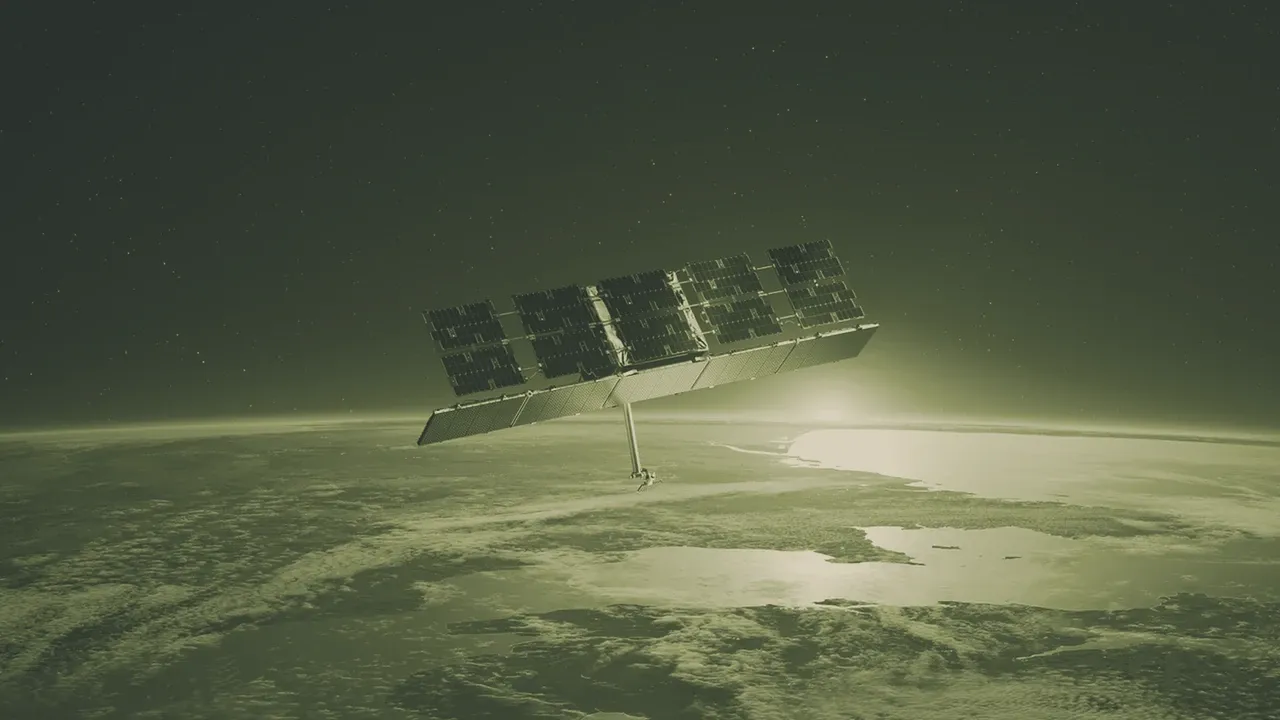
The world's largest synthetic-aperture-radar (SAR) satellite constellation — Finnish-built microsatellites that image the ground through cloud, darkness and camouflage, day and night, at resolutions down to about 25 cm. It is the clearest commercial embodiment of the "transparent battlefield": the technology that makes it hard to hide a concentration of forces anywhere on Earth — and it is Ukraine's crowdfunded "People's Satellite."
Overview
ICEYE operates a constellation of small X-band synthetic-aperture-radar satellites that, unlike optical imaging, see through clouds and at night by bouncing radar off the surface. It is the largest SAR constellation in the world, and its battlefield significance is twofold: it can detect, track and assess targets in weather and darkness that blind optical reconnaissance, and ICEYE pioneered doing this from sub-100-kg microsatellites cheap enough to launch by the dozen. For BattlePolicy it is the sensing pillar of the transparent-battlefield thesis — the part that makes "every concentration of forces gets seen" literal — and it carries a defining Ukraine story as the crowdfunded "People's Satellite."
Development
ICEYE was founded in 2014 in Espoo, Finland, as an Aalto University spin-off by Rafał Modrzewski (CEO) and Pekka Laurila, on the then-radical bet that useful SAR could be flown on a microsatellite rather than a school-bus-sized spacecraft. It proved the point on 3 December 2018, when ICEYE-X1 became the world's first sub-100-kg SAR satellite, and then scaled the fleet aggressively — 62 satellites launched by the end of 2025, with six more added in March 2026. Over the same period it climbed the value chain from selling imagery to selling whole satellites and "sovereign" systems to governments, riding a funding round exceeding €1 billion.
Design & capabilities
Each ICEYE satellite is a roughly 85-kg microsat carrying an X-band active phased-array SAR, flying in sun-synchronous low Earth orbit (~500-700 km) and completing about 15 orbits a day. The fleet images in a spread of modes trading resolution against area: ICEYE unveiled 25-cm imaging (in its Dwell and Spot Fine modes) at the sharp end, a roughly 1-metre standard product in the middle, and a broad-area Scan Wide mode down to tens of metres across hundreds of kilometres, plus a Dwell video-SAR mode that lingers over a spot to detect movement. (Two honest caveats: the active operational count is smaller than the cumulative launched total, since early satellites have a ~5-year design life — so "more than 60 launched, dozens operational" is the accurate framing — and resolution is mode-dependent, with 25 cm the best case rather than the everyday product.) The practical effect is persistent, weatherproof surveillance: a SAR satellite can pick out vehicles, ships and equipment that optical imagery would miss under cloud, at night, or under camouflage netting.
Variants
ICEYE sells the capability three ways rather than as hardware variants: subscription imagery/data from its own constellation, constellation access (dedicated tasking, as in the Ukraine deal), and sovereign satellites/systems sold to governments to operate themselves. The satellites themselves have iterated across generations, with a new-generation Gen-4 satellite introduced to improve performance.
Combat record / operational use
ICEYE's defining military use is Ukraine. In August 2022 the Serhiy Prytula Charitable Foundation crowdfunded roughly $17 million to buy Ukraine the full capabilities of one in-orbit ICEYE satellite plus access to the wider constellation — the "People's Satellite." Since then ICEYE has delivered nearly 6,000 radar images to Ukraine's military intelligence (HUR/DIU), feeding daily strike planning and battle-damage assessment. The capability has made the company a target in its own right: in May 2026 several Russian Kosmos military satellites maneuvered to within about 13 km of ICEYE-X36, and Moscow had already declared in 2022 that commercial satellites aiding Ukraine could be "legitimate targets" — a live test of the law of war in orbit.
Advantages
- Sees through cloud and dark — radar imaging works in weather and at night that defeat optical satellites.
- Defeats camouflage and concealment — SAR picks out vehicles and equipment hidden from the eye.
- Persistent and scalable — a large, cheap microsat fleet gives frequent, sub-daily revisit.
- Flexible delivery — imagery, dedicated access, or whole sovereign systems.
Drawbacks / limitations
- Commercial dependency — wartime reliance on a private company that can be pressured, targeted, or constrained.
- A target itself — Russian satellites shadowing ICEYE shows the constellation is now contested.
- Interpretation burden — SAR imagery requires skilled exploitation; it is not a plain photo.
- Resolution/revisit nuance — headline 25 cm and "daily" figures are best-case modes, not the universal product.
Counterparts
ICEYE's direct commercial rivals are Capella Space, Umbra and Synspective; incumbent SAR providers include Airbus, e-GEOS and MDA; and on the state side, China's Yaogan military reconnaissance series is the closest sovereign analogue. ICEYE's distinction is scale and price — the largest constellation, built on cheap microsatellites — and a business model that will sell a government its own satellites rather than just pictures.
Outlook
ICEYE has become a strategic actor, not just a vendor: it now sells sovereign SAR systems to Poland (~€200M), Brazil and India, and to Germany in a €1.76 billion deal via a Rheinmetall–ICEYE joint venture — Europe scrambling for its own eyes in space. The questions to watch: how the contest over ICEYE's satellites plays out (the Russian shadowing and the "legitimate target" doctrine), whether commercial SAR proliferation makes the battlefield permanently transparent or triggers a counter-space and camouflage arms race, and how many European and allied states buy sovereign constellations rather than depend on a single firm.
Key specifications
| Spec | Value |
|---|---|
| Type / function | Commercial synthetic-aperture-radar (SAR) ISR satellite constellation |
| Frequency band / orbit | X-band active phased-array; sun-synchronous LEO ~500-700 km, ~15 orbits/day |
| Resolution / modes | Up to 25 cm (Dwell / Spot Fine); ~1 m standard product; to ~tens of m (Scan Wide); Dwell video-SAR for motion |
| Constellation size | >60 launched (62 by Dec 2025; +6 March 2026); largest SAR constellation; dozens operational |
| First launch | ICEYE-X1, 3 December 2018 (first sub-100 kg SAR satellite) |
| Satellite | ~85 kg microsatellite; ~5-year design life |
| Primary effect | All-weather, day/night imaging through cloud, dark and camouflage; change detection / GMTI |
| Operators / customers | ICEYE + Ukraine, Poland, Germany, Brazil, India, US (sovereign systems) |
| Status | Operational and expanding |
Sources
- ICEYE — Wikipedia
- ICEYE — official site
- ICEYE constellation — eoPortal
- ICEYE unveils 25 cm SAR imaging — ICEYE
- ICEYE adds Scan Wide mode — European Security & Defence
- Dwell mode — ICEYE
- ICEYE launches six new satellites aboard Transporter-16 — ICEYE
- ICEYE introduces its Generation-4 satellite — ICEYE
- ICEYE to provide Ukraine with SAR-constellation access — ICEYE
- The People's Satellite — Wikipedia
- The GUR received nearly 6,000 images thanks to the 'People's Satellite' — LIGA.net
- Four Russian military satellites came within 13 km of an ICEYE radar satellite — Meduza
- A satellite company supporting Ukraine appears to be in Russia's crosshairs — Ars Technica
- ICEYE leads a new era of sovereign intelligence with a €1bn round — ICEYE
- Sovereignty through SAR satellites (Rheinmetall–ICEYE JV) — Rheinmetall
- 'The Eye in Space': ICEYE's SAR satellites and the law of war — Lieber Institute, West Point
🔒 The Analyst Section on ICEYE SAR Constellation is for BattlePolicy Pro members. Below the line: procurement and contract history, the suppliers and companies behind the system, our head-to-head analyst view of the systems it actually competes with, and the BattlePolicy assessment note. Unlock the full file with BattlePolicy Pro →