J-20 Mighty Dragon
China's first operational fifth-generation stealth fighter — a twin-engine, low-observable air-superiority platform fielded exclusively by the PLAAF, with a growing fleet estimated at over 200 aircraft and an emerging maritime-strike capability.
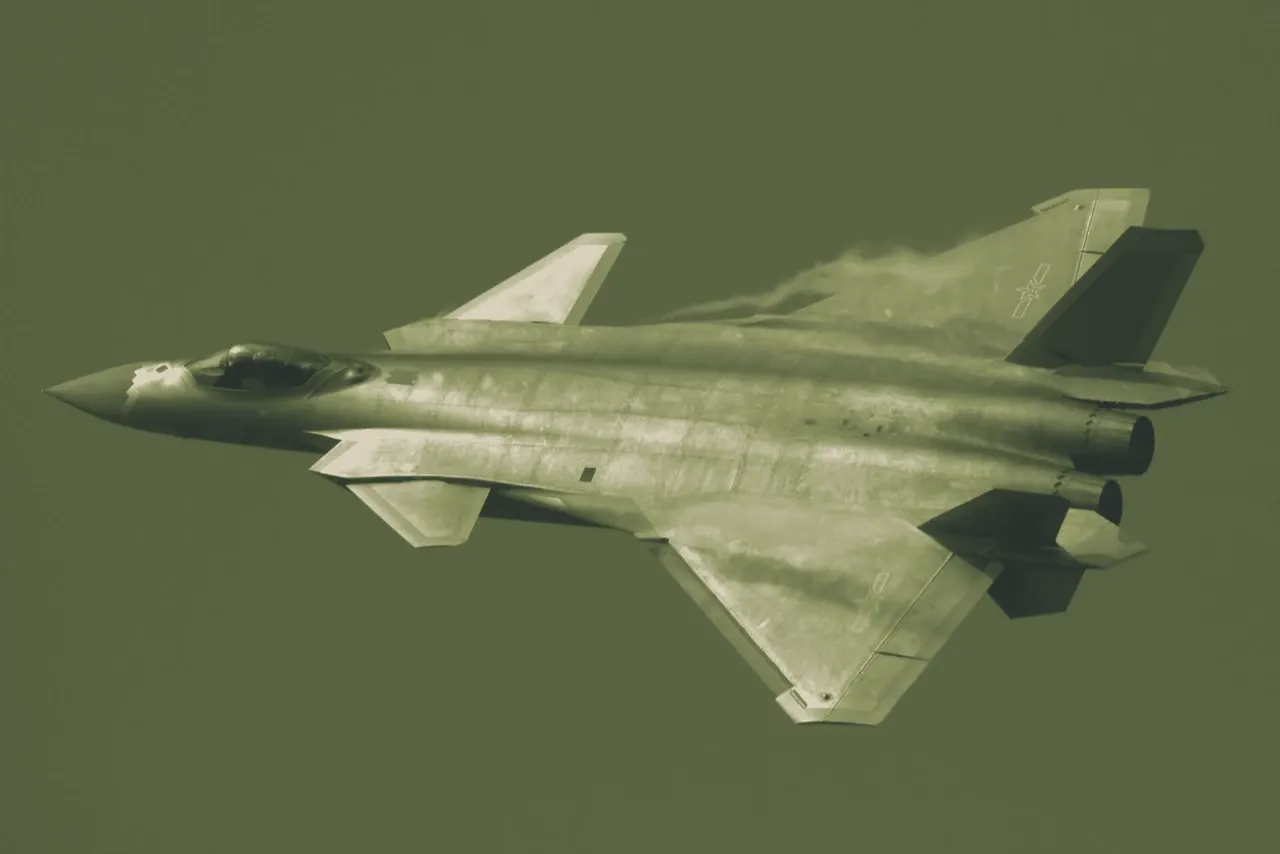
China's first operational fifth-generation stealth fighter — a twin-engine, low-observable air-superiority platform built by Chengdu, fielded exclusively by the PLAAF with an estimated 200+ aircraft in service, and now expanding into maritime strike.
Overview
The Chengdu J-20 (Jian-20), officially dubbed the Mighty Dragon (Weilong) and assigned the reported but unofficial NATO reporting name "Fagin," is the People's Liberation Army Air Force's (PLAAF) premier fifth-generation stealth air-superiority fighter. Developed by the AVIC Chengdu Aircraft Corporation (CAC), the J-20 is a large, twin-engine, canard-delta design optimized for long-range BVR engagement, low observability, and high-end networked operations. It entered PLAAF service in 2017 with combat-ready units stood up from approximately 2018, and has since become the centerpiece of China's fighter-modernization drive, with an estimated fleet exceeding 200 aircraft by 2024, according to the Mitchell Institute for Aerospace Studies. No export customers have been announced; the type remains exclusive to Chinese service.
Development
The J-20 emerged from a classified PLAAF requirement for a fifth-generation stealth fighter to counter the US F-22 and F-35. Chengdu's design — a large canard-delta configuration with twin side-mounted intakes, internal weapons bays, and faceted shaping for reduced radar cross-section — first flew on 11 January 2011, as documented by Wikipedia. The aircraft made its public debut at the Zhuhai Airshow in 2016 and was declared in PLAAF service the following year. Early production airframes were powered by Russian Saturn AL-31F engines; the shift to the indigenous WS-10C turbofan occurred on later batches, with the definitive high-thrust WS-15 engine reported to be in transition, according to Army Recognition. A twin-seat variant, the J-20S, has been reported as a command-and-control / loyal-wingman director platform, and in January 2026 a maritime-strike-capable J-20 variant was publicly noted by USNI News, signalling an expanding mission set beyond pure air superiority.
Design & capabilities
The J-20 is among the largest operational fighters, with a length estimated at 20.4–21.2 m and an MTOW of approximately 37,000 kg, per the Mitchell Institute. Its planform combines canards, a clipped delta wing, canted vertical stabilizers, and sawtooth-edged bay doors to manage radar returns. The internal weapons arrangement comprises a large ventral main bay for beyond-visual-range missiles and two lateral side bays for short-range air-to-air missiles, preserving stealth in the air-superiority configuration. External hardpoints are available for non-stealth ferry or strike loads, though their use degrades low observability.
The J-20's sensor suite is built around an active electronically scanned array (AESA) radar — identified in open sources as the Type 1475 or KLJ-5-class — whose performance parameters remain undisclosed by Chinese authorities, as noted by The National Interest. An electro-optical targeting system (EOTS-type) and distributed-aperture sensors comparable in concept to those on the F-35 are reported but unverified. The aircraft carries the PL-15 long-range AESA-guided BVR missile as its primary air-to-air armament in the main bay, with the PL-10 high-off-boresight infrared missile in the side bays. A longer-range air-to-air missile (PL-17/PL-21-class) has been reported but is unconfirmed. No internal gun has been publicly confirmed for the type.
The engine fit has been a developmental pacing item. Early J-20s flew on Russian AL-31F turbofans, with current production examples using the Chinese WS-10C. The intended definitive powerplant — the WS-15, promising supercruise-class thrust — is reported to be entering service on upgraded airframes, but performance figures are estimated, not state-confirmed, according to Army Recognition. The shift to indigenous engines represents a milestone in Chinese propulsion sovereignty, mirroring a broader trend across the J-10C and J-16 fleets.
Variants
- J-20A: Baseline single-seat air-superiority configuration in serial production; current fleet backbone.
- J-20S: Reported twin-seat variant, observed in flight-test imagery; likely a command-and-control or loyal-wingman director platform, with no manned operational squadron yet publicly confirmed.
- Maritime-strike variant: Noted by USNI News in January 2026 as capable of engaging maritime surface targets, indicating a secondary anti-ship / standoff-strike mission set for at least a portion of the fleet.
Combat record / operational use
The J-20 has no confirmed combat use as of mid-2026. Operational employment is limited to PLAAF exercises, airspace patrols, and intercepts within China's air defense identification zone (ADIZ). The aircraft has been observed on long-range training deployments and in simulated engagements against PLAAF aggressor units, but has not been committed to any live-fire engagement or deployed in an active conflict zone. The Pentagon's annual China military power reports, cited by Business Insider, have tracked the J-20's growing fleet size and improving readiness but record no combat operations.
Advantages
- First Chinese fifth-generation stealth fighter fielded at scale, with an estimated 200+ airframes providing a credible LO air-superiority capability, per the Mitchell Institute.
- Large internal fuel fraction and ~2,000 km (est.) combat radius enable long-range patrol and deep-strike escort without external tanks.
- Internal carriage of PL-15 long-range BVR missiles preserves low observability in the primary air-to-air configuration.
- Increasing engine independence — transition from Russian AL-31F to domestic WS-10C and emerging WS-15 — reduces supply-chain vulnerability.
- Large airframe provides growth margin for future sensors, fuel, and weapons integration, including the emerging maritime-strike role.
Drawbacks / limitations
- Stealth performance remains externally estimated; shaping, canard configuration, and engine-face / intake design invite debate about all-aspect low observability vs. Western fifth-generation benchmarks.
- No internal gun publicly confirmed — a potential limitation in close-in visual-range engagements or for strafing missions.
- Engine transition is incomplete; the WS-15 definitive engine is still maturing, and mixed engine fits across the fleet complicate logistics.
- Payload capacity in pure stealth configuration is constrained by internal bay volume; external stores degrade the J-20's primary survivability advantage.
- Combat record is nil — all capability assessments are extrapolated from exercises, simulations, and manufacturer/state claims; real-world performance against modern air defenses or peer fighters is untested.
Counterparts
- F-35A Lightning II (USA)
- Su-57 Felon (Russia)
Outlook
The J-20 is now the PLAAF's flagship fighter and, alongside the emerging J-35 carrier-borne stealth fighter, makes China the only state fielding two fifth-generation combat aircraft types simultaneously, as highlighted in the USAF FY2026 posture statement to Congress. Production continues at a rate assessed at several dozen airframes per year, with the fleet likely to exceed 300–400 units by the decade's end if current trends hold. The WS-15 engine transition and integration of longer-range weapons — including the reported PL-17-class very-long-range AAM and anti-ship munitions — will define the type's maturing capability over the next five years. The J-20's primary strategic significance, however, lies not in any single technical parameter but in its role as the tip of a rapidly modernizing Chinese fighter fleet that now numbers approximately 1,300 fourth-generation-or-better aircraft, closing the generational quality gap that defined the 2010s.
Key specifications
| Spec | Value |
|---|---|
| Crew | 1 (twin-seat J-20S reported) |
| Length / wingspan | ~20.4–21.2 m / ~13.0–13.5 m (est.) |
| Max speed | ~Mach 2.0 (~2,130 km/h) (est.) |
| Service ceiling | ~20,000 m (est.) |
| Combat radius / range | ~2,000 km (est.) |
| Payload | Internal-bay capacity not publicly established |
| Hardpoints | Internal bays (main ventral + two lateral side bays for SRAAMs); external hardpoints available for non-stealth loadout |
| Radar / sensors | AESA (Type 1475 / KLJ-5-class, undisclosed); EOTS-type EO/IRST and distributed-aperture sensors reported (unverified) |
| Powerplant | 2 × WS-10C afterburning turbofans (current production); WS-15 transitioning (thrust not publicly disclosed); early airframes used Russian AL-31F |
| Armament | PL-15 long-range AESA-guided BVR (main bay); PL-10 high-off-boresight IR (side bays); PL-17/PL-21-class very-long-range AAM reported (unconfirmed); no internal gun publicly confirmed |
Sources
- Wikipedia — Chengdu J-20. https://en.wikipedia.org/wiki/Chengdu_J-20
- Army Recognition — J-20 Chengdu Mighty Dragon. https://www.armyrecognition.com/military-products/air/fighter/chengdu-j-20
- The National Interest — "How Good a Fighter Plane Is China's J-20 Mighty Dragon?" https://nationalinterest.org/blog/buzz/how-good-fighter-plane-chinas-j-20-mighty-dragon-hk-092225
- Mitchell Institute for Aerospace Studies — J-20. https://www.mitchellaerospacepower.org/weapons/j-20/
- USNI News — "China Reveals New J-20 Fifth-Gen Fighter Variant Can Strike Maritime Targets" (Jan 2026). https://news.usni.org/2026/01/14/china-reveals-new-j-20-fifth-gen-fighter-variant-can-strike-maritime-targets
- Janes — "US Department of Defense report stresses China's aerial technology development." https://www.janes.com/osint-insights/defence-news/air/us-department-of-defense-report-stresses-chinas-aerial-technology-development
- Business Insider — "China's fighter jet fleet is growing in size and capability, new Pentagon report shows." https://www.businessinsider.com/china-fighter-jet-fleet-growing-size-capability-pentagon-2023-10
- U.S. Congress — Department of the Air Force Posture Statement FY2026. https://www.congress.gov/119/meeting/house/118187/documents/HHRG-119-AP02-20250506-SD001.pdf