KSS-III Submarine (Dosan Ahn Changho-class)
The conventional submarine that carries ballistic missiles — South Korea's KSS-III is a large, indigenous AIP boat with a vertical launch system for submarine-launched ballistic missiles, a strike capability almost unheard of outside nuclear-powered navies. Later boats add lithium-ion power.
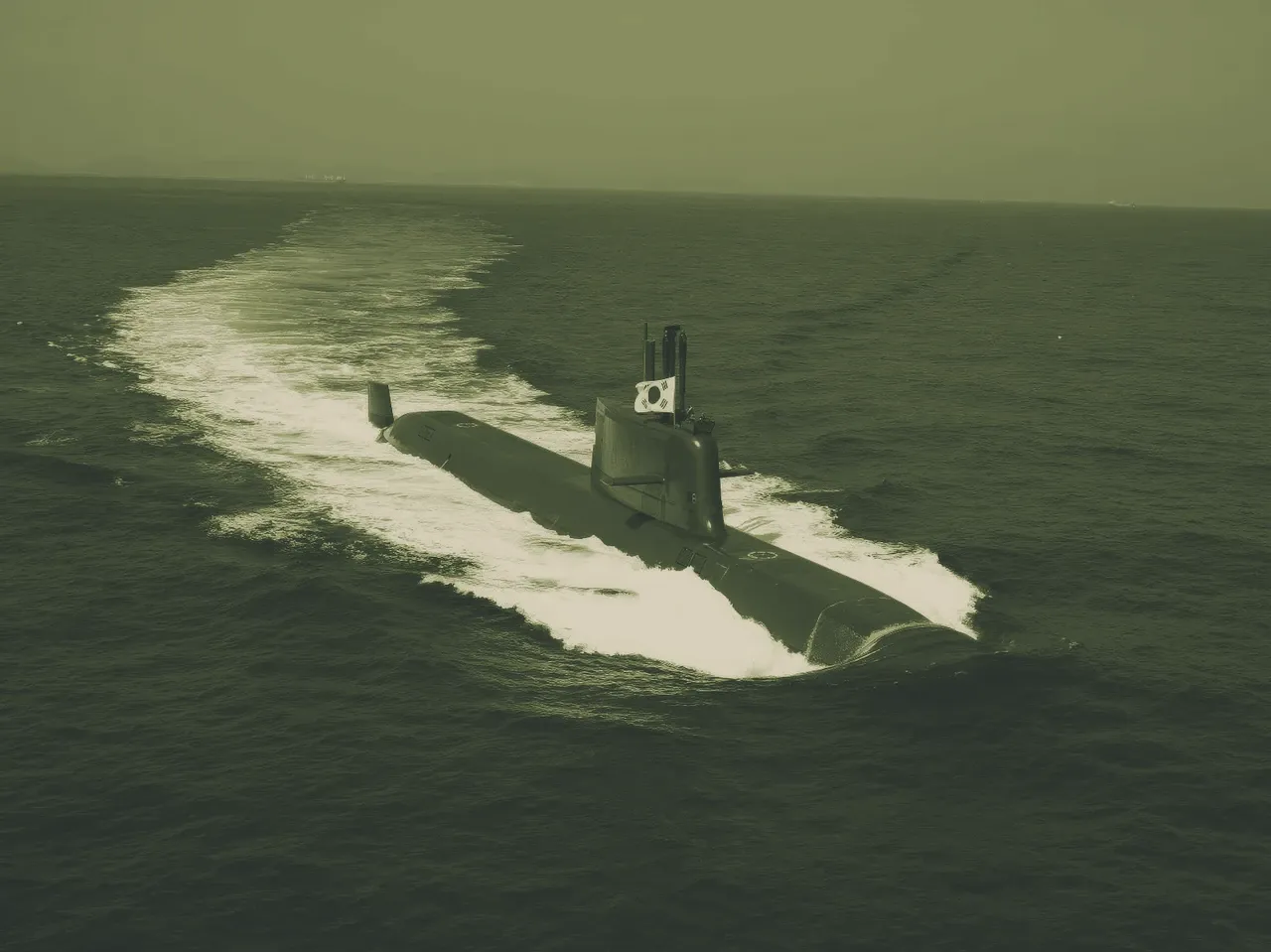

The conventional submarine that carries ballistic missiles — South Korea's KSS-III (Dosan Ahn Changho-class) is a large, indigenous, air-independent-propulsion boat with a feature almost unheard of outside nuclear-powered navies: a vertical launch system for submarine-launched ballistic missiles. That gives Seoul a survivable, undersea conventional-strike capability aimed at North Korea, on a diesel-electric submarine built almost entirely at home. Later boats add lithium-ion batteries and more missile cells, marking South Korea's arrival as one of the world's most capable non-nuclear submarine builders.
Overview
The KSS-III is a class of large diesel-electric attack submarines (SSK) designed and built in South Korea — jointly by Hanwha Ocean (formerly Daewoo/DSME) and HD Hyundai Heavy Industries — under the third phase of Korea's domestic submarine program (also called Jangbogo-III). Two features set it apart. First, air-independent propulsion (AIP) via fuel cells (derived from the German technology in Korea's earlier KSS-II boats) lets it stay submerged far longer than a conventional submarine. Second, and unusually, it carries a vertical launch system (VLS) sized for submarine-launched ballistic missiles — the conventionally-armed Hyunmoo family — giving South Korea a survivable undersea strike option against land targets, a capability normally associated with nuclear-powered ballistic-missile submarines. At roughly 3,000–3,750 tonnes submerged it is among the largest non-nuclear submarines in the world, and it is being built in successive, increasingly capable batches.
🔒 The full KSS-III Submarine (Dosan Ahn Changho-class) file is for BattlePolicy Pro members. Below the line: development history, design and capabilities, variants, the combat record, advantages and limitations, comparable systems, outlook, the full specifications table, our sourcing, and the analyst assessment — procurement, suppliers and the BattlePolicy verdict. Unlock the full file with BattlePolicy Pro →
Below this point
- Development
- Design & capabilities
- Variants
- Combat record / operational use
- Advantages
- Drawbacks / limitations
- Counterparts
- Outlook
- Key specifications
- Sources
- Analyst Section
- Procurement & contracts
- Suppliers & related companies
- Comparable systems — analyst view
- Analyst note