GRID-REF 37°47′N 122°25′W
DISPATCH 02/26 · 9 Jun 2026
BATTLEPOLICY
Startup to front line. Strategy to consequence.
Lexicon · USA

M142 HIMARS

The United States' wheeled, C-130-transportable precision rocket artillery system — battlefield-proven in Ukraine and known as the "sniper of artillery," firing GMLRS, ATACMS, and the future PrSM.
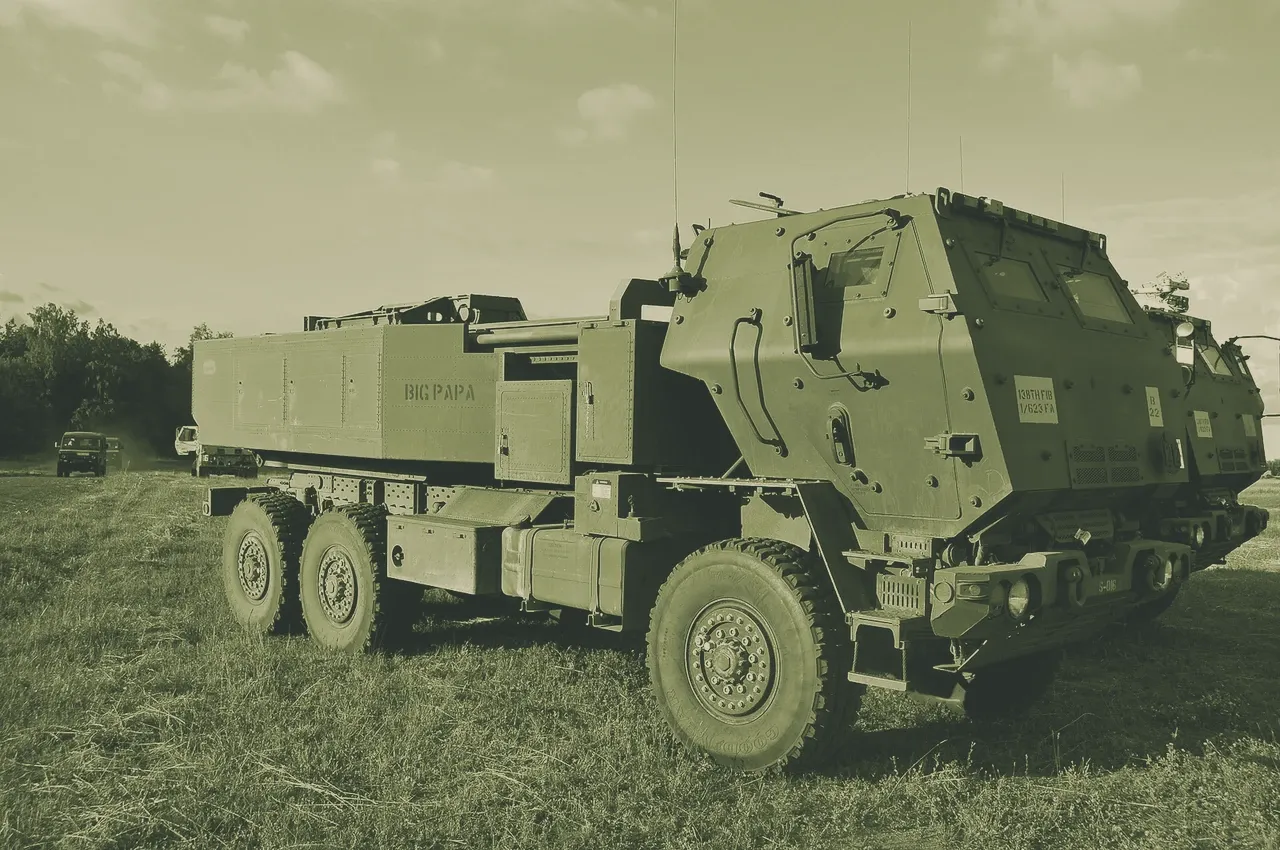
M142 HIMARS
FIG.01 · USA Image - M142 HIMARS. Photo by Charles Rosemond, Public domain, via Wikimedia Commons_firing_during_Saber_Strike_18_(Image_4_of_7).jpg).
The United States' wheeled, C-130-transportable precision rocket artillery system — battlefield-proven in Ukraine and known as the "sniper of artillery," firing GMLRS, ATACMS, and the future PrSM.

Overview

The M142 High Mobility Artillery Rocket System is a wheeled, shoot-and-scoot multiple-launch rocket system (MLRS) that fires the same Family of Medium-calibre Ordnance (MFOM) as the tracked M270 but on a lighter, more mobile 6×6 truck chassis. Designed to provide brigade-and-above commanders with rapid, long-range precision fires, a single launcher swaps between pods holding six 227 mm guided rockets, one ATACMS ballistic missile, or two next-generation Precision Strike Missiles (PrSM). Because it fits inside a C-130, HIMARS can deploy to austere strips that the heavier M270 cannot reach, a feature proven decisive in the system’s extensive combat career.

Development

Lockheed Martin began developing HIMARS in the late 1990s as a lighter, more deployable complement to the tracked M270 MLRS. The first prototype appeared in 1999, and Army Technology notes that the U.S. Army took delivery of its first operational launchers in 2005, with the U.S. Marine Corps following in 2007. Early production focused on replacing towed howitzers in rapid-deployment units, and a series of incremental upgrades—most notably the integration of the Universal Fire Control System—allowed the launcher to fire the full MFOM suite, including the longer-range ATACMS. The U.S. Army continues to fund multi-year procurement contracts, with production sustained by both domestic and foreign orders.

Design & capabilities

A HIMARS battery combines a M142 launcher vehicle, a resupply vehicle and an advanced fire-direction centre. The launcher itself is built around a modified Family of Medium Tactical Vehicles (FMTV) 6×6 chassis, protected by an armoured cab against small-arms fire and shell splinters. The single launch-pod can be selected from three configurations: six GMLRS/ER-GMLRS rockets (GPS-aided INS, range ~70–84 km for GMLRS and ~150 km for ER-GMLRS), one ATACMS ballistic missile (~300 km, with a unitary or cluster-warhead variant), or two PrSM missiles (400–500+ km, anti-ship capable in the Increment 2 version). According to The Defense Post, a full six-rocket salvo can be fired in under 45 seconds, and reloading with pre-loaded pods takes roughly five to ten minutes. The system is fully air-transportable in the C-130, which gives HIMARS a unique ability to operate from short, unimproved airstrips well forward of main logistics hubs.

Combat record / operational use

HIMARS was first committed to combat in Iraq in 2007, where it provided rapid-response precision fires in support of counter-insurgency operations. Later, it was used against Islamic State targets in Syria and Iraq, demonstrating its ability to strike fleeting targets with GPS-guided rockets. The system’s iconic status, however, was cemented in Ukraine. Beginning in mid-2022, U.S.-supplied HIMARS launchers firing GMLRS rockets systematically destroyed Russian command posts, ammunition depots, bridge-crossings and logistics nodes far behind the front line. Newsweek reported that the launchers’ mobility and the short time on target made them exceptionally survivable against counter-battery fire. The subsequent delivery of ATACMS in 2023 added a 300-km strike capability that further degraded Russian sustainment and air-defence assets in occupied Crimea and eastern Ukraine. The system remains central to Western security-assistance packages, with orders from Poland, Romania, the Baltic states, the Netherlands, Italy and Taiwan underscoring its combat-validated reputation.

Advantages

  • C-130-transportable; can deploy and re-deploy rapidly from austere airstrips.
  • Common pod-based launcher fires GMLRS, ER-GMLRS, ATACMS and PrSM from the same platform.
  • GPS/INS guidance delivers near-precision accuracy (CEP typically less than 5 metres for GMLRS).
  • Shoot-and-scoot mobility: a full salvo in under 45 seconds, then immediate relocation.
  • Proven deep-strike lethality against command posts, logistics hubs and air defences in highly contested environments.

Drawbacks / limitations

  • Thinly armoured; vulnerable to near-misses from tube artillery, mortars and loitering munitions.
  • Relies heavily on GPS; advanced electronic-warfare threats can degrade accuracy.
  • Each launcher carries only one pod at a time, requiring a dedicated resupply vehicle for sustained firing.
  • The long-range PrSM and ER-GMLRS are still ramping up production, limiting the current 500+ km strike capacity.
  • High demand and finite production have kept per-unit costs elevated and deliveries spread thin among allies.

Counterparts

  • BM-30 Smerch (Russia)
  • PHL-191 (China)
  • M270 MLRS (USA) — the tracked, 12-tube member of the same MFOM family.

Outlook

HIMARS will remain the backbone of U.S. and allied light/medium rocket artillery through at least the 2030s. The full fielding of the Precision Strike Missile (PrSM) will extend its reach beyond 400 km, giving brigade commanders a land-based anti-ship and deep-strike option previously reserved for air power. Production continues to expand, with the U.S. Army awarding multi-year contracts that also fill the growing order books of European and Indo-Pacific partners. The system’s combat-proven survivability and precision ensure that HIMARS will anchor Western deep-fires doctrine for the foreseeable future.

Key specifications

Spec Value
Crew 3 (driver, gunner, section chief)
Combat weight ~16,250 kg
Length / width / height ~7.0 m / ~2.4 m / ~3.2 m
Main armament 1 pod: 6 × 227 mm GMLRS/ER-GMLRS, or 1 × ATACMS, or 2 × PrSM
Secondary armament None (crew-served weapons optional)
Armor & protection Armoured cab vs. small arms / shell splinters
Engine & power Caterpillar 3126 diesel, ~290 hp (216 kW)
Power-to-weight ~17.8 hp/t
Road / cross-country speed 85 km/h (road) / ~48 km/h (cross-country)
Operational range ~480 km

Sources

  1. Army Technology — HIMARS (High Mobility Artillery Rocket System), US. https://www.army-technology.com/projects/himars/
  2. The Defense Post — “The Sniper of Artillery: Ultimate Guide to the M142 HIMARS.” https://thedefensepost.com/2025/07/15/m142-himars-guide/
  3. Newsweek — “Who Makes HIMARS and How Much Do Missile Launchers Cost?” https://www.newsweek.com/who-makes-himars-cost-launch-missile-fire-manufacture-1752295
  4. U.S. Army — “Army awards $431 million contract for HIMARS.” https://www.army.mil/article/262457/army_awards_431_million_contract_for_himars
  5. Wikipedia — “M142 HIMARS.” https://en.wikipedia.org/wiki/M142_HIMARS
  6. Army Recognition — “HIMARS M142 High Mobility Artillery Rocket System data.” https://www.armyrecognition.com/military-products/army/artillery-vehicles-and-weapons/multiple-launch-rocket-systems/himars-m142-high-mobility-rocket-missile-launcher-data
FIELD DISPATCH · WEEKLY

BattlePolicy Weekly — free.

Defense tech, startups, and security — weekly. No paywall.

Related
Ukraine · USA · Funding · Swarmer · drones · defense tech · venture capital · Pentagon

Ukraine turned its drone war into an industry. Now Wall Street is pricing it.

Swarmer's Nasdaq debut, a wave of Western venture money and a Pentagon FPV contract show Ukrainian defense tech crossing from battlefield to balance sheet, at a valuation that has outrun the revenue.

Ukraine · USA · Funding · Swarmer · drones · defense tech · venture capital · Pentagon
USA · Autonomy · Shifters · Ace Capital Partners

Shifters raises $10.2M to put robots first into tunnels and rubble

The US-Israeli startup raised a $10.2 million seed led by Ace Capital Partners to scale ground robots that enter tunnels and rubble before troops.

USA · Autonomy · Shifters · Ace Capital Partners
USA · Policy · AI · Anthropic · autonomous weapons · Pentagon

Trump orders faster military AI and bars vendors from switching off fielded models

A new national security memo tells the Pentagon to onboard frontier commercial AI at speed, strips vendors of the power to shut it down mid-mission, and resets the rules for autonomous weapons within 90 days.

USA · Policy · AI · Anthropic · autonomous weapons · Pentagon