M1989 Koksan
The M1989 Koksan is North Korea's 170mm self-propelled gun — the largest-caliber tube artillery in service anywhere, built to range Seoul. Since late 2024 Pyongyang has shipped 120–200 to Russia, where they now fire on Ukrainian lines and are being hunted by drones and HIMARS.
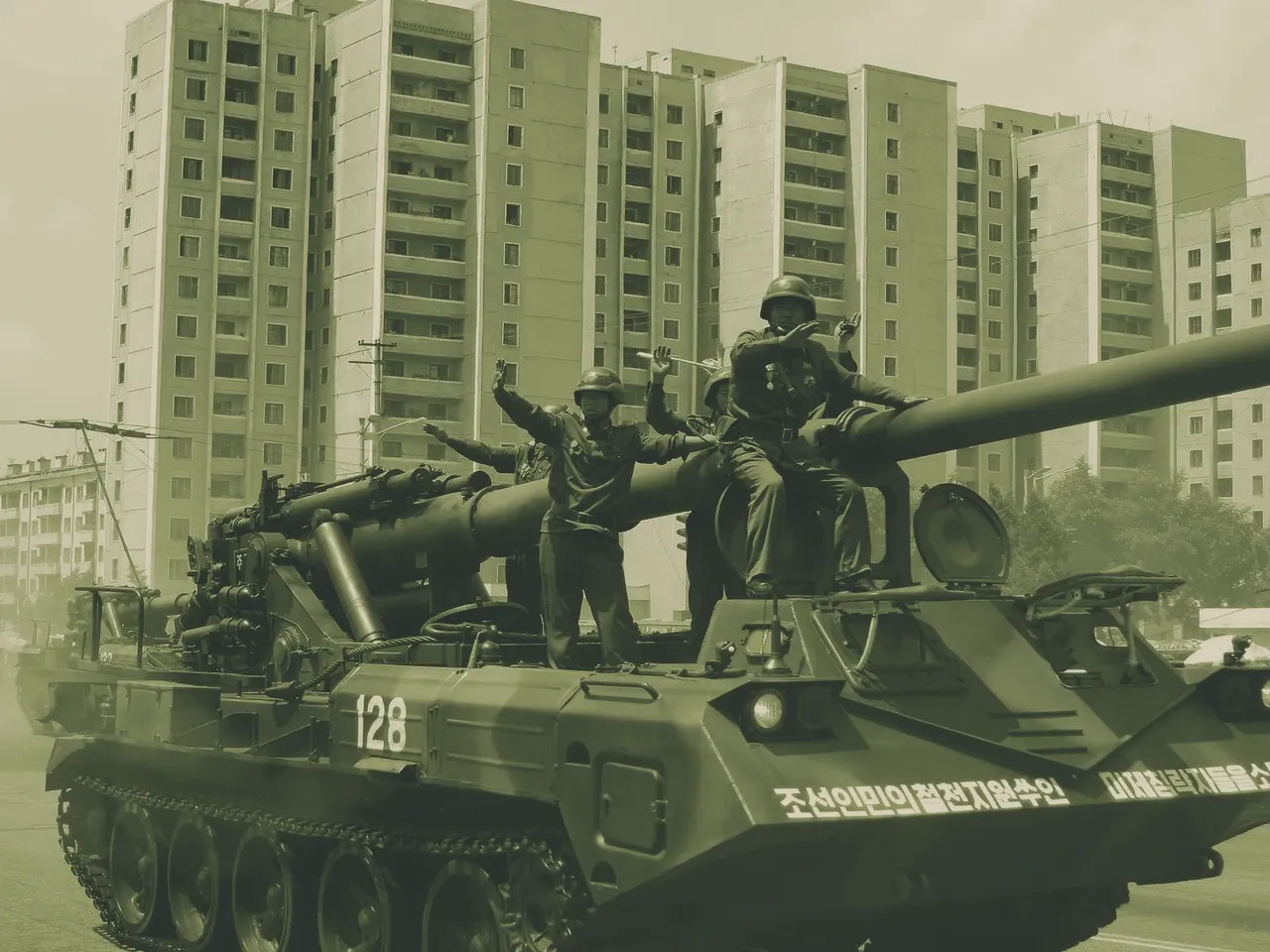

North Korea's monster gun — the M1989 Koksan is a 170mm self-propelled gun, the largest-caliber tube artillery in service anywhere, designed in the 1970s to range Seoul from behind the DMZ. It became a Ukraine-war weapon in late 2024, when trainloads were geolocated rolling west across Russia: Ukrainian intelligence counts 120 delivered and German reporting up to 200, backfilling Russia's attrited long-range artillery. Since early 2025 Koksans have fired on the Kursk, Luhansk and Zaporizhzhia axes — and Ukrainian drones and HIMARS have been methodically picking them off.
Overview
The M1989 Koksan is a North Korean 170mm self-propelled gun — an open, turretless mount on a tracked chassis, known in the DPRK as the Chuch'ep'o ("Juche gun"). "M1989" and "Koksan" are US designations: the year the improved variant was first observed, and the county where the original M1978 was first spotted. Its reason for existing is reach — roughly 40 km with conventional shells and 50–60 km with rocket-assisted projectiles, enough to strike Seoul from north of the DMZ, at the price of a very slow rate of fire (independent estimates: one to two rounds every five minutes). For decades it was a Korean-peninsula curiosity with one foreign combat record, Iran's use of exported M1978s in the Iran–Iraq War. That changed in November 2024, when OSINT analysts geolocated M1989s on Russian trains: the Koksan became the tube-artillery chapter of North Korea's arms pipeline to Moscow — after the shells and the KN-23 ballistic missiles — replacing losses in Russia's own long-range gun park, where the comparable 2S7 Pion/Malka fleet had been ground down. It is now the flagship case of DPRK hardware fighting, and dying, in Ukraine.
🔒 The full M1989 Koksan file is for BattlePolicy Pro members. Below the line: development history, design and capabilities, variants, the combat record, advantages and limitations, comparable systems, outlook, the full specifications table, our sourcing, and the analyst assessment — procurement, suppliers and the BattlePolicy verdict. Unlock the full file with BattlePolicy Pro →
Below this point
- Development
- Design & capabilities
- Variants
- Combat record / operational use
- Advantages
- Drawbacks / limitations
- Counterparts
- Outlook
- Key specifications
- Sources
- Analyst Section
- Procurement & contracts
- Suppliers & related companies
- Comparable systems — analyst view
- Analyst note