Marder
The West German Cold War infantry fighting vehicle—a tracked, 20 mm–armed troop carrier that, after decades as the Bundeswehr’s backbone, has re-emerged as a refurbished assault workhorse for Ukraine, melding Rheinmetall’s deep industrial capacity with a simple, survivable design.
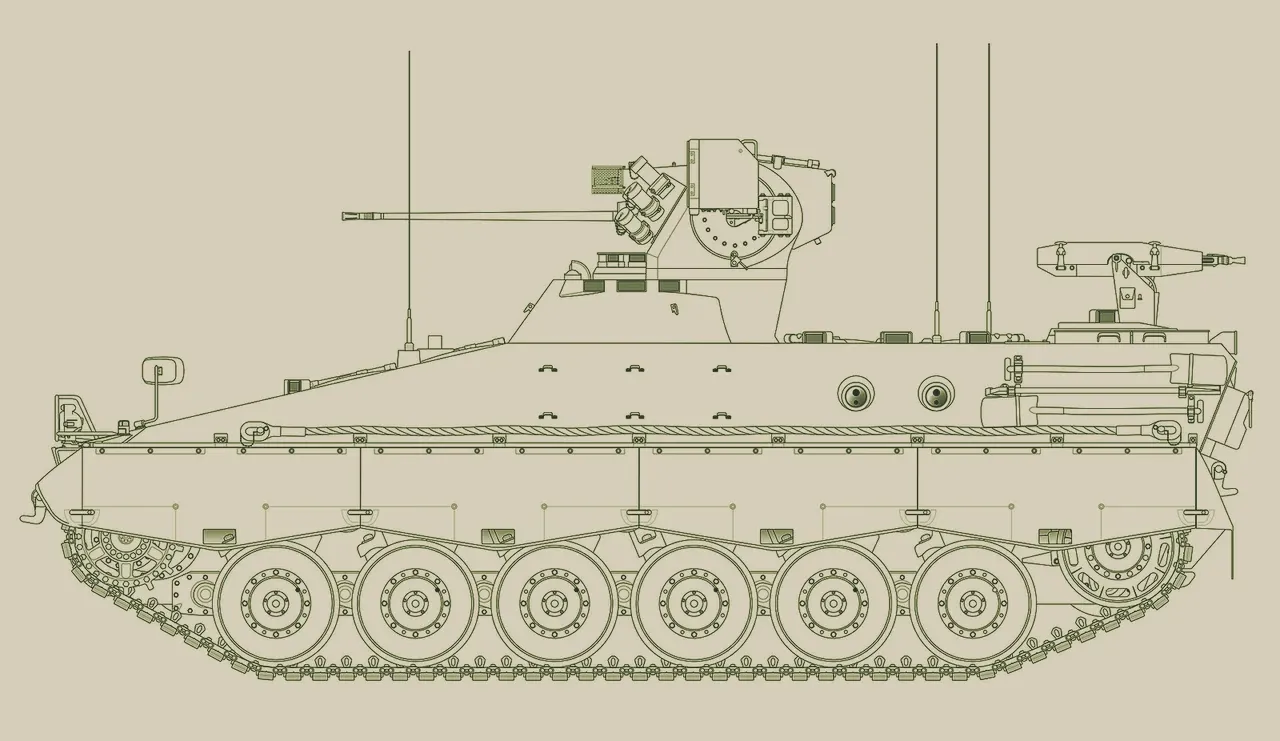

The West German Cold War infantry fighting vehicle—a tracked, 20 mm–armed troop carrier that, after decades as the Bundeswehr’s backbone, has re-emerged as a refurbished assault workhorse for Ukraine, melding Rheinmetall’s deep industrial capacity with a simple, survivable design.
Overview
The Marder (Schützenpanzer Marder 1) is a tracked infantry fighting vehicle developed for the West German Bundeswehr as the companion to the Leopard 1 main battle tank. Entering service in 1971, it was designed to carry a squad of Panzergrenadiere into battle under armour and provide direct-fire support with a fast-firing 20 mm autocannon. After a long Cold War career and a combat debut in Afghanistan, the type has become a central element of Western military aid to Ukraine, with over 140 refurbished Marder 1A3s delivered by April 2025, according to the German government’s public ledger Bundesregierung. Additional vehicles continue to flow through Rheinmetall’s overhaul line in a programme partly financed by Denmark Rheinmetall.
🔒 The full Marder file is for BattlePolicy Pro members. Below the line: development history, design and capabilities, variants, the combat record, advantages and limitations, comparable systems, outlook, the full specifications table, our sourcing, and the analyst assessment — procurement, suppliers and the BattlePolicy verdict. Unlock the full file with BattlePolicy Pro →
Below this point
- Development
- Design & capabilities
- Variants
- Combat record / operational use
- Advantages
- Drawbacks / limitations
- Counterparts
- Outlook
- Key specifications
- Sources
- Analyst Section
- Procurement & contracts
- Suppliers & related companies
- Comparable systems — analyst view
- Analyst note