The Wire · live GRID-REF 37°47′N 122°25′W
DISPATCH 03/26 · 23 Aug 2026
BattlePolicy
Startup to front line. Strategy to consequence.
Lexicon · Europe

Meteor

Europe's air-superiority edge — the only operational ramjet air-to-air missile, whose throttleable engine keeps it accelerating to the target for a "no-escape zone" far larger than the AMRAAM's. Built by six European nations for the Typhoon, Rafale and Gripen — and now reaching Ukraine.
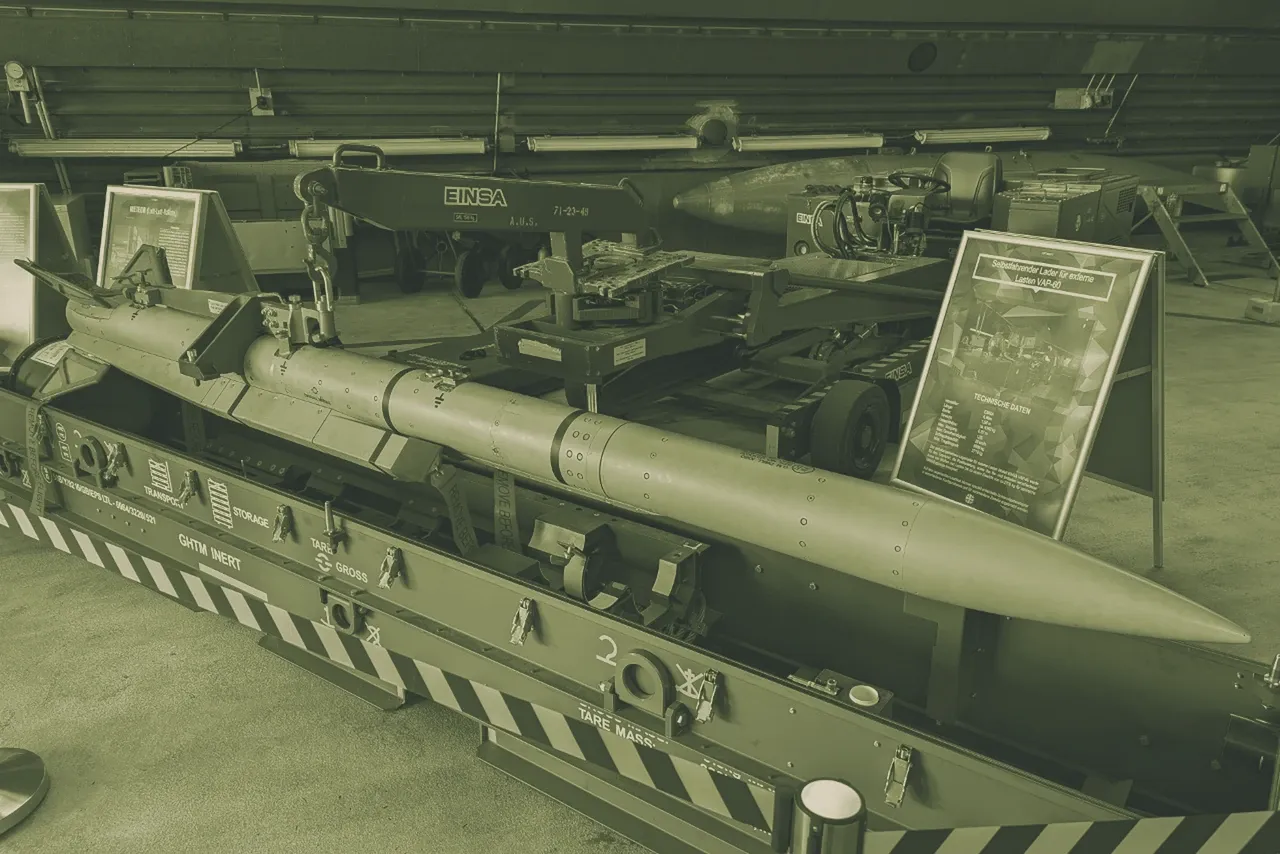
Meteor
FIG.01 · Europe Image - An MBDA Meteor air-to-air missile. Photo by Boevaya mashina, CC BY-SA 3.0 de, via Wikimedia Commons.
Europe's air-superiority equalizer — Meteor is the world's only operational ramjet-powered air-to-air missile, and that engine is the whole point: instead of a rocket motor that burns out early and leaves the missile coasting, Meteor's throttleable ramjet keeps thrust available all the way to the target, giving it a "no-escape zone" several times larger than the American AMRAAM's. Built by six European nations through MBDA for the Eurofighter Typhoon, Rafale and Gripen, it is the West's premier long-range air-to-air weapon — and it is now reaching Ukraine.

Overview

Meteor is a beyond-visual-range air-to-air missile (BVRAAM) developed by MBDA for six European nations — the United Kingdom, Germany, Italy, France, Spain and Sweden. Its defining feature is propulsion: a throttleable solid-fuel ducted ramjet that, unlike a conventional rocket motor, can modulate thrust and keep accelerating or sustaining speed across the missile's flight, rather than burning out in the first seconds and gliding the rest of the way. The practical effect is a dramatically larger no-escape zone — the region within which a target cannot outrun or out-turn the missile even with a perfect evasive break — reported at roughly three times that of the AIM-120 AMRAAM. Combined with an active radar seeker and a two-way datalink (so the launching aircraft can update or retarget it in flight), Meteor gives European fighters a decisive reach-and-kill advantage in long-range air combat. It is, in MBDA's framing, the missile that lets a Typhoon or Rafale shoot first and keep the enemy pinned.

Development

Meteor grew from a UK-led requirement for a next-generation BVRAAM, with development consolidated under MBDA from around 2002 across the six partner nations, per Wikipedia and Airforce Technology. The ramjet propulsion was the high-risk, high-reward technical bet that defines the weapon. It entered operational service in the mid-2010s, first on Sweden's Gripen, then on the Eurofighter Typhoon and Dassault Rafale, and is being integrated onto the F-35 Lightning II — though that integration, driven by the US-led F-35 Joint Program Office, has slipped, with Think Defence noting the F-35B timeline pushed from 2027 to the early 2030s. Beyond the six partners, Meteor has been exported widely (including a large UAE package with Rafale), and — significantly — Ukraine is receiving Meteor as part of Sweden's Gripen C/D donation, bringing the missile into the highest-intensity air war in Europe.

Design & capabilities

Meteor is built around its throttleable ducted ramjet, which gives it sustained energy deep into the engagement — the source of its outsized no-escape zone (reported "three times" AMRAAM's) and its ability to chase down maneuvering, accelerating or fleeing targets at long range. Reported performance includes a speed beyond Mach 4 and a range on the order of 200 km, though true figures are profile-dependent and partly classified. It carries an active radar seeker for autonomous terminal homing and a two-way datalink, letting the launch aircraft (or another networked platform) update the target track or retarget the missile mid-flight and receive a "kill" confirmation — a network-enabled feature well suited to cooperative engagements. It is designed to operate in severe electronic-warfare environments and against the full target set: fast jets, UAVs and cruise missiles. The trade-off for the ramjet's reach is complexity and cost: Meteor is a sophisticated, expensive missile, and its full advantage depends on the launch aircraft's radar and datalink to exploit the range it offers.

Variants

Meteor is a single missile rather than a family of variants; its differences are by integration platform — Gripen, Eurofighter Typhoon, Rafale, and (in progress) the F-35 — each requiring its own software and carriage integration. National configurations vary slightly across the six partner nations, and MBDA has discussed future seeker and capability upgrades, but the core weapon is common.

Combat record / operational use

Meteor has been in service for roughly a decade as the primary long-range air-to-air weapon of European Typhoon, Rafale and Gripen fleets, carried operationally in air-policing and deterrence across NATO and partner air forces. Its most consequential new chapter is Ukraine: as part of Sweden's donation of Gripen C/D fighters, Ukraine is receiving Meteor, which would give Ukrainian pilots a long-range missile that meaningfully outranges much of the Russian air-to-air inventory — a potential shift in the air war's reach equation. Publicly confirmed air-to-air kills with Meteor are limited (long-range BVR engagements are rare and often classified), so its reputation rests primarily on its demonstrated performance and the no-escape-zone advantage rather than a long combat tally. Its operational significance is as the weapon that underpins European fighters' long-range lethality.

Advantages

  • Ramjet reach — sustained thrust gives a no-escape zone reported at ~3× the AMRAAM's.
  • Outranges most rivals — Mach 4+, ~200 km class, lets European fighters shoot first.
  • Network-enabled — two-way datalink for mid-course update, retargeting and kill confirmation.
  • EW-resistant active seeker — designed for severe electronic-warfare conditions.
  • Multi-platform, multi-national — fielded on Gripen, Typhoon and Rafale across six nations, with F-35 to come.

Drawbacks / limitations

  • Cost and complexity — a sophisticated ramjet missile, far more expensive than legacy AAMs.
  • F-35 integration delays — slipped to the early 2030s for the F-35B, limiting its stealth-fighter reach for now.
  • Range only as good as the shooter — exploiting the no-escape zone needs the launch aircraft's radar/datalink.
  • Limited public kill record — performance is largely demonstrated, not combat-tallied.
  • Closer-in trade — at short/medium ranges a fast-boosting rocket like AMRAAM can be competitive.

Counterparts

Meteor's direct counterpart is the US AIM-120 AMRAAM — the Western standard it outranges with its ramjet — and on the adversary side China's PL-15 (a long-range, dual-pulse rocket missile) and Russia's R-37M. It arms Europe's frontline fighters, the Eurofighter Typhoon, Rafale and Gripen, and is being integrated onto the F-35. Its distinction is propulsion: where AMRAAM, PL-15 and most peers use rocket motors that burn out early, Meteor's throttleable ramjet sustains energy to the target — the single most important reason it holds the largest no-escape zone in its class. It is the clearest example of European missile technology leading rather than following the US standard.

Outlook

Meteor is the weapon that gives European airpower a genuine technological edge — and its trajectory is expanding reach and platforms. The key developments to watch are the long-delayed F-35 integration (early 2030s for the F-35B), which would finally pair the West's premier stealth fighter with its premier long-range missile; continued exports; potential seeker and capability upgrades; and, most immediately, Ukraine's employment of Meteor from donated Gripens against the Russian air force, which could demonstrate the no-escape-zone advantage in real combat for the first time at scale. The broader context is an intensifying long-range air-to-air arms race — China's PL-15 and Russia's R-37M have pushed BVR ranges outward — in which Meteor's ramjet remains a distinctive, hard-to-match answer. For now it is the benchmark European BVRAAM, and its combat reputation may be written, fittingly, in Ukrainian skies.

Key specifications

Spec Value
Type Beyond-visual-range air-to-air missile (BVRAAM)
Origin Europe — MBDA (UK, Germany, Italy, France, Spain, Sweden)
In service ~2016 (Gripen, then Typhoon/Rafale)
Propulsion Throttleable solid-fuel ducted ramjet (only operational ramjet AAM)
Speed Mach 4+
Range ~200 km class (profile-dependent; partly classified)
No-escape zone Reported ~3× the AIM-120 AMRAAM
Guidance Active radar seeker + two-way datalink
Platforms Gripen, Eurofighter Typhoon, Rafale; F-35 (integration, early 2030s)
Operators UK, Germany, Italy, France, Spain, Sweden, + exports; Ukraine (via Gripen)
Status In service

Sources

  1. Meteor (missile) — Wikipedia
  2. METEOR — MBDA
  3. Meteor — Beyond Visual Range Air-to-Air Missile (BVRAAM) — Airforce Technology
  4. Meteor BVRAAM Missile — Army Recognition
  5. Meteor Missile — Think Defence
  6. Why MBDA Meteor is the best BVR air-to-air missile ever conceived — The Aviation Geek Club
🔒 The Analyst Section on Meteor is for BattlePolicy Pro members. Below the line: procurement and contract history, the suppliers and companies behind the system, our head-to-head analyst view of the systems it actually competes with, and the BattlePolicy assessment note. Unlock the full file with BattlePolicy Pro →
Related