Scorpène-class
A Franco-Spanish diesel-electric attack submarine family with optional MESMA air-independent propulsion, exported to Chile, Malaysia, India, and Brazil, and the backbone of India's Kalvari and Brazil's Riachuelo classes.
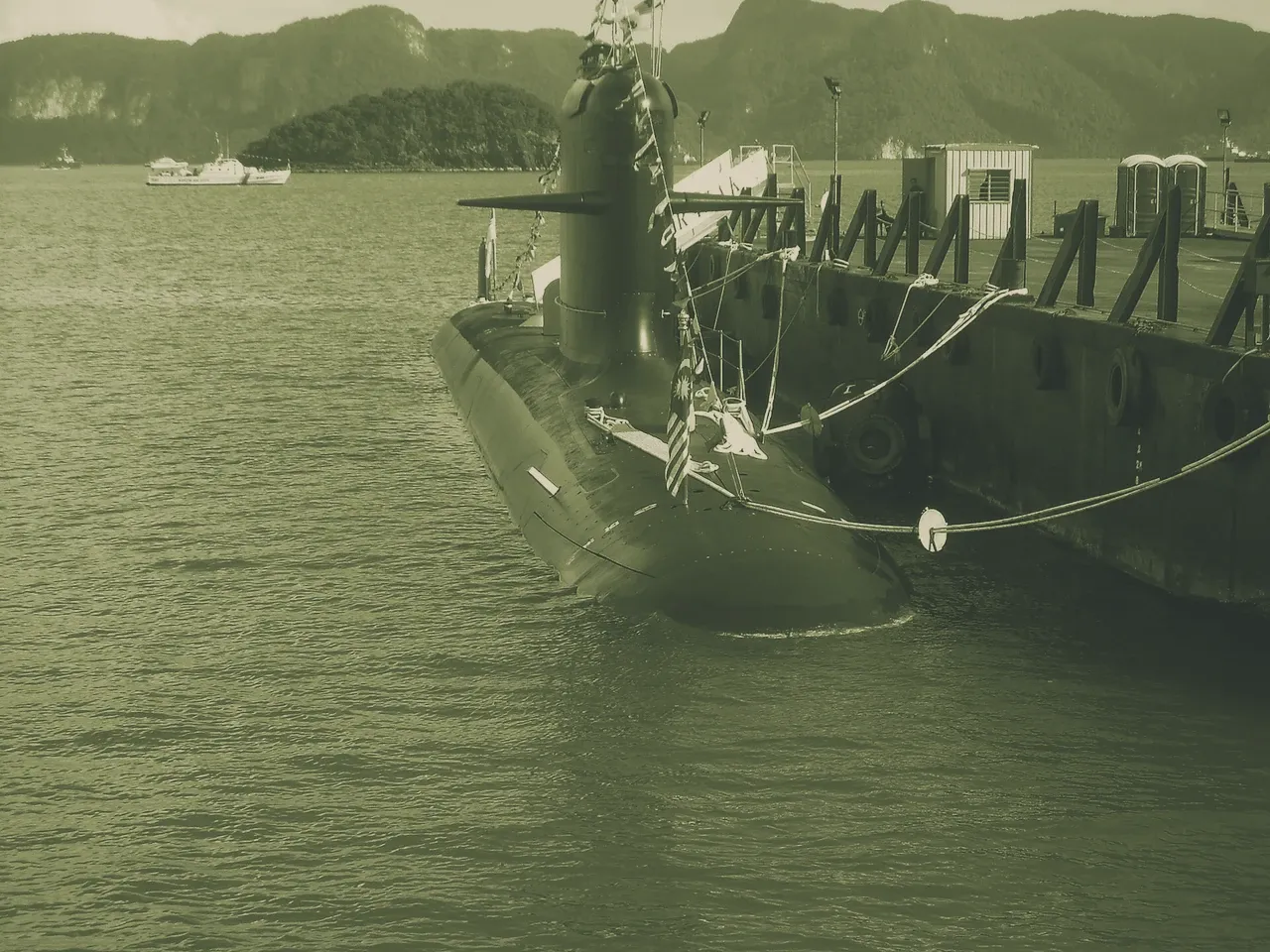
A Franco-Spanish diesel-electric attack submarine family with optional MESMA air-independent propulsion, exported to four navies and built under transfer-of-technology in India and Brazil.
Overview
The Scorpène-class is a conventional (diesel-electric) attack submarine designed by the French Naval Group (formerly DCNS) in partnership with Spain's Navantia. It forms the export backbone of French submarine industrial cooperation, with boats in Chilean, Malaysian, Indian, and Brazilian service. The design is notable for its low acoustic signature, a modular combat system, and the option of a MESMA (Module d'Énergie Sous-Marine Autonome) air-independent propulsion (AIP) module, which allows extended submerged endurance of more than three weeks without snorkeling. India's locally built Kalvari class and Brazil's Riachuelo class are the two largest Scorpène programs, both incorporating transfer-of-technology and indigenous content, while an evolved version was ordered by Indonesia in 2025.
Development
The Scorpène originated in the late 1990s as a joint development between France's DCN (now Naval Group) and Spain's Izar (later Navantia), aiming for a flexible, export-oriented SSK that could be tailored to customer requirements. The lead boat, O'Higgins, was built for the Chilean Navy at DCN's Cherbourg yard and commissioned in 2005, according to Naval Technology and Wikipedia. The design quickly attracted international interest, leading to licensed local construction programs in India and Brazil and direct exports to Malaysia. The program has since evolved into the "Scorpène Evolved" configuration, incorporating enhanced lithium-ion battery packs, a new sail, and an updated combat system, as seen in Indonesia's 2025 order.
Design & capabilities
Despite its compact dimensions, the Scorpène-class accommodates a modern weapons fit and a comprehensive sensor suite. Six 533 mm torpedo tubes are arranged in the bow, with capacity for up to 18 weapons in a mixed load of heavyweight torpedoes (F21, Black Shark, or the Indian Varunastra) and SM39 Exocet anti-ship missiles, plus up to 30 mines, as detailed by Army Recognition. The combat management system is SUBTICS, a fully integrated suite that fuses sensor data and weapon control, and newer vessels are fitted with the S-Cube sonar. Propulsion is diesel-electric via four generator sets feeding a single main motor; the optional MESMA closed-cycle steam-turbine AIP module can be integrated into an additional hull plug, significantly extending submerged indiscretion ratios. Endurance at sea is roughly 50–60 days, and the boat can achieve a submerged speed of over 20 knots. Complement is 31–35 personnel. Survivability is enhanced by an anechoic coating and carefully isolated machinery, which Naval Technology notes results in a low acoustic signature.
Variants
The Scorpène has spawned several tailored variants: - Baseline Scorpène: Chilean (2 boats, O'Higgins and Carrera) and Malaysian (2 boats, Tunku Abdul Rahman and Tun Razak) vessels. Both built in Cherbourg and Cartagena. - Kalvari class (Project 75): India's six-boat program, built at Mazagon Dock Shipbuilders Limited under transfer-of-technology. The first-of-class, INS Kalvari, was commissioned in 2017, with all six delivered by 2025. The boats lack AIP but incorporate indigenous sonar, periscope, and weapons, including the Varunastra torpedo. A further three boats were authorized later. - Riachuelo class (PROSUB): Brazil's four-boat program, constructed at the Itaguaí shipyard with Naval Group assistance. The third boat was delivered and the fourth launched in 2025, as confirmed by Naval Group. The program is also a stepping stone to Brazil’s future nuclear-powered submarine, Álvaro Alberto, for which a dedicated construction facility was inaugurated. - Scorpène Evolved: A next-generation iteration featuring lithium-ion batteries, an X-form rudder, and enhanced automation. Indonesia ordered two boats in 2025 for construction at PT PAL in Surabaya.
Combat record / operational use
No Scorpène-class submarine has yet fired a weapon in anger. The boats have conducted routine maritime security patrols, anti-piracy deployments, and multinational exercises. Chilean and Malaysian hulls regularly participate in RIMPAC, CARAT, and other bilateral drills, while the Indian Kalvari class is active across the Indo-Pacific and the Brazilian Riachuelo boats strengthen South Atlantic presence. The design's international footprint and operational tempo are discussed in USNI Proceedings, which frames the Scorpène as a model of collaborative naval capability building.
Advantages
- Proven export design with flexible build arrangements, from direct sale to full licensed local construction.
- Optional MESMA AIP delivers over three weeks of submerged endurance without snorkeling.
- Compact, quiet hull with anechoic coatings enhances survivability in littoral and open-ocean environments.
- Integrated SUBTICS combat system merges sonar, ESM, and weapon control for effective multi-threat engagement.
- Six 533 mm tubes support a mix of heavyweight torpedoes and Exocet anti-ship missiles, giving anti-surface and ASW punch.
- Low crew complement (31–35) reduces life-cycle costs.
Drawbacks / limitations
- MESMA AIP is a closed-cycle steam turbine, less efficient than modern fuel-cell systems and reliant on liquid-oxygen storage.
- Base variant without AIP has limited submerged endurance compared to competitors with fielded fuel-cell or Stirling AIP.
- No combat experience; the type remains operationally unproven in high-intensity conflict.
- Weapon load (18) is adequate but modest next to larger SSKs like the Improved Kilo.
- Indian Kalvari program experienced well-publicized delays and cost overruns; AIP integration for later boats remains a protracted indigenous effort.
- Production diversification across multiple shipyards can challenge standardization and through-life support.
Counterparts
- Improved Kilo (Russia)
- Type 039 Yuan (China)
Outlook
The Scorpène family remains Naval Group's principal conventional-submarine export success. With India's Project 75 additional boats, Brazil's continued build-out of the Riachuelo class, and Indonesia's selection of the Evolved version, the design is poised to stay in production well into the 2030s. The key developments to watch are whether India fielded AIP on follow-on hulls, Brazil's progression toward its first nuclear boat, and the competitive pressure exerted by German fuel-cell AIP boats and the expanding Chinese Yuan-class family.
Key specifications
| Spec | Value |
|---|---|
| Type | Diesel-electric attack submarine (optional MESMA AIP) |
| Full-load displacement | ~1,700–1,900 t submerged (variant-dependent) |
| Length / beam / draft | ~66.4 m / ~6.2 m / "not publicly established" |
| Propulsion | Diesel-electric, single shaft; 4 × diesel generators + main electric motor; optional MESMA closed-cycle steam turbine AIP |
| Max speed (kts) | 20+ kts submerged |
| Range / endurance | ~6,500 nm at 8 kts; ~50–60+ days at sea; submerged endurance >3 weeks with AIP |
| Complement | 31–35 |
| Armament | 6 × 533 mm torpedo tubes; up to 18 weapons (F21 / Black Shark / Varunastra torpedoes + SM39 Exocet); up to 30 mines |
| Sensors / combat system | Integrated sonar suite (S-Cube on newer boats); SUBTICS combat management system |
| Aviation facilities | none |
Sources
- Naval Technology — SSK Scorpene-Class Attack Submarine, France. https://www.naval-technology.com/projects/scorpene-class/
- Army Recognition — Scorpène class. https://armyrecognition.com/military-products/navy/submarines/attack-submarines/scorpene-class
- Naval Technology — Kalvari-Class P75 Scorpene Attack Submarines, India. https://www.naval-technology.com/projects/p75-scorpene-class-attack-submarines/
- USNI Proceedings — Scorpène Submarines: International Collaboration and Evolutionary Design. https://www.usni.org/magazines/proceedings/2025/august/scorpene-submarines-international-collaboration-and-evolutionary
- Naval Group — Delivery of the third and launching of the fourth Brazilian Scorpène submarines. https://www.naval-group.com/en/presse/delivery-third-and-launching-fourth-brazilian-scorpener-submarines
- Wikipedia — Scorpène-class submarine. https://en.wikipedia.org/wiki/Scorp%C3%A8ne-class_submarine
- Wikipedia — Kalvari-class submarine (2015). https://en.wikipedia.org/wiki/Kalvari-class_submarine_(2015)