Stugna-P
Ukraine's home-built tank-killer — a tripod ATGM with one defining trick: the crew fires it by cable from up to 50 m away, in cover, while the launcher sits exposed. Cheaper than a Javelin, it became famous for killing tanks and, on video, shooting down Russian helicopters.
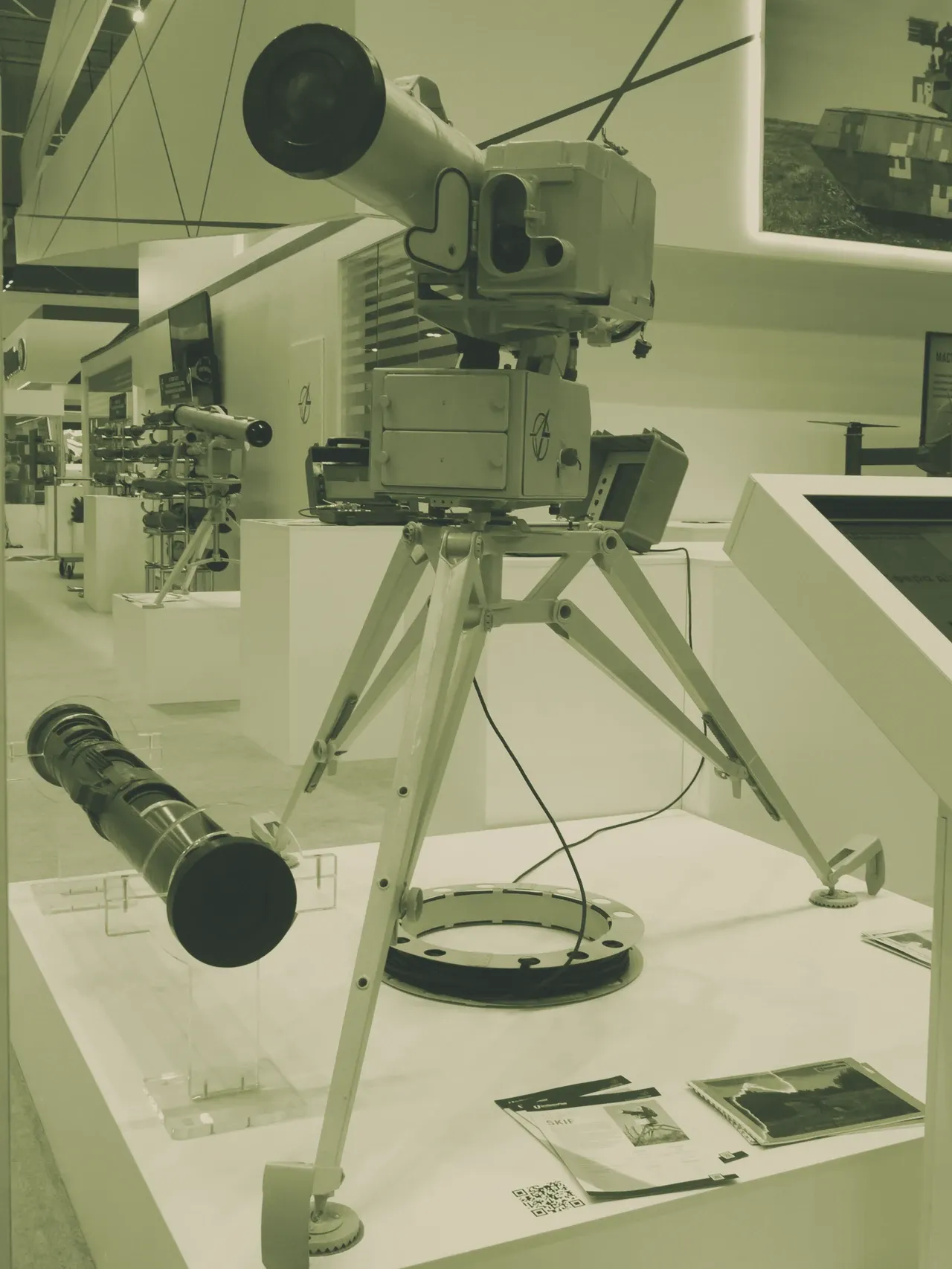

Ukraine's home-built tank-killer — a tripod-mounted anti-tank guided missile with one defining trick: the crew fires it by cable from up to 50 metres away, hidden in a building or trench, while the launcher sits exposed in the open. Cheaper than a Javelin and made with zero Russian content, it became one of the signature weapons of the war — famous for gutting Russian armour and, on viral video, shooting down Russian helicopters.
Overview
The Stugna-P (Стугна-П; export name Skif, "Scythian") is Ukraine's domestically built man-portable anti-tank guided missile, designed by the Luch Design Bureau in Kyiv. It is a second-generation, laser-beam-riding (SACLOS) system firing a tandem-shaped-charge missile that defeats explosive reactive armour — but its signature feature is the PDU-215 laptop-style remote control that lets the crew operate the launcher from up to 50 m away on a cable, firing from cover while the tripod sits in the open. That crew-survivability trick, plus a low price and full domestic production, made it one of the most-used Ukrainian weapons of the 2022 war. One precision point to get right: despite a widespread "fire-and-forget" label, the Stugna-P is not a true seeker weapon like the Javelin — it is an automated laser-beam-rider that needs the operator to keep the sight on the target until impact.
🔒 The full Stugna-P file is for BattlePolicy Pro members. Below the line: development history, design and capabilities, variants, the combat record, advantages and limitations, comparable systems, outlook, the full specifications table, our sourcing, and the analyst assessment — procurement, suppliers and the BattlePolicy verdict. Unlock the full file with BattlePolicy Pro →
Below this point
- Development
- Design & capabilities
- Variants
- Combat record / operational use
- Advantages
- Drawbacks / limitations
- Counterparts
- Outlook
- Key specifications
- Sources
- Analyst Section
- Procurement & contracts
- Suppliers & related companies
- Comparable systems — analyst view
- Analyst note