Suffren-class
France's next-generation nuclear attack submarine — the Barracuda-class Suffren boats carry the MdCN cruise missile, F21 torpedoes, and a special-forces lock-out, replacing the Rubis-class SSNs one-for-one.
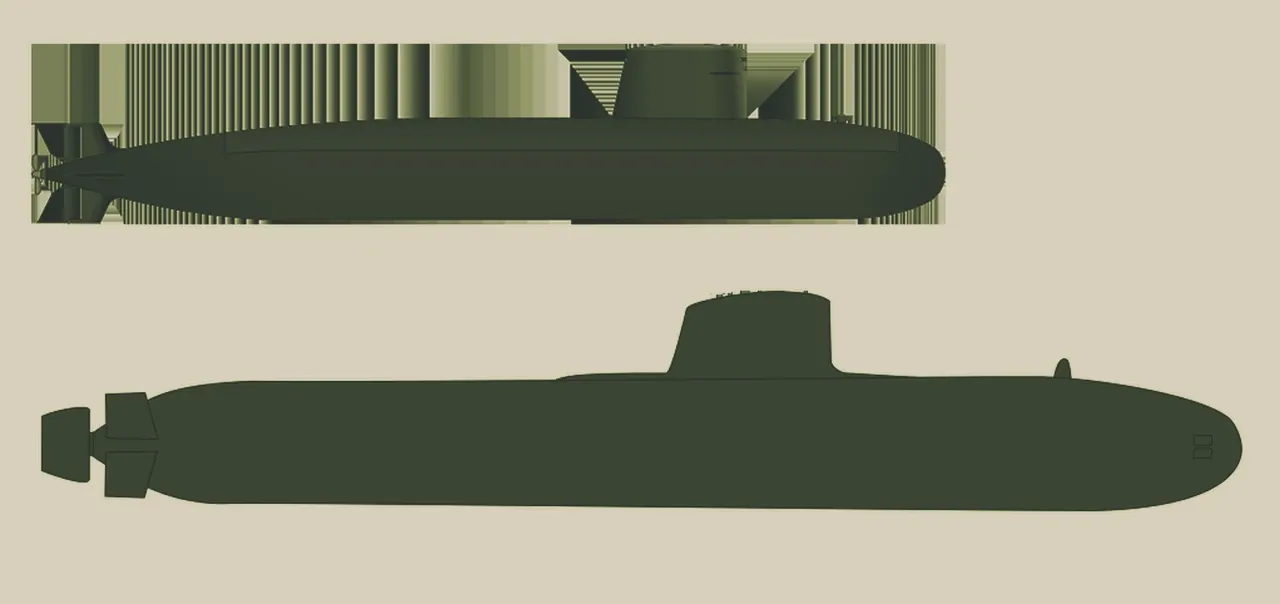
France's modern nuclear attack submarine — a pump-jet propelled SSN that restores deep-strike capability with the MdCN cruise missile and introduces a special-forces lock-out chamber, replacing the Rubis class one-for-one.
Overview
The Suffren class (Barracuda program) is the French Navy’s first all-new nuclear attack submarine design since the Rubis boats entered service in the 1980s. Six boats are planned to reinvigorate the French SSN force with a modern, quiet platform that combines anti-submarine and anti-surface warfare, land-attack cruise missiles (the MdCN, a naval cruise missile with a range of over 1,000 km) and a dedicated lock-out chamber for special operations forces. The lead boat, Suffren, was admitted to active service in June 2022, and three boats are operational as of mid-2026.
Development
The Barracuda program was launched to replace the six aging Rubis-class SSNs with a larger, more capable boat designed for long-duration patrols and multi-mission flexibility. The first-of-class, FS Suffren, was rolled out of Naval Group’s Cherbourg shipyard and launched on 12 July 2019, entering active service three years later. The second hull, Duguay-Trouin, followed in 2024, and the third, Tourville, in 2025. Construction is well advanced on the fourth boat, De Grasse: its K15 nuclear reactor was started for the first time in December 2025, and the submarine began alpha sea trials in February 2026. The full six-boat programme is scheduled for completion within the decade, restoring the French SSN fleet to its intended strength.
Design & capabilities
The Suffren class displaces approximately 4,700–4,765 tonnes surfaced and 5,300 tonnes submerged, with an overall length of around 99.5 metres and a beam of 8.8 metres. Propulsion is provided by a single TechnicAtome K15 pressurised-water reactor delivering roughly 150 megawatts thermal, coupled to a hybrid turbo-electric drive and a pump-jet propulsor — a configuration that substantially reduces radiated noise compared to the Rubis class.
The armament is carried in four 533 mm torpedo tubes, with no vertical launch system. The tubes accommodate the F21 Artémis heavy-weight torpedo, the SM39 Exocet anti-ship missile, and the naval cruise missile MdCN (Missile de Croisière Naval), which provides a land-attack reach of more than 1,000 km. Up to 24 weapons are carried in a mixed loadout, and the boat can also deploy FG-29 mines. A dedicated dry-deck shelter / lock-out chamber aft of the sail permits covert insertion and recovery of special forces and small submersibles.
The sensor suite is built around an integrated sonar system with bow, flank and towed arrays, non-penetrating optronic masts and the SYCOBS combat management system. The crew is sized at about 65 personnel, roughly half the complement of a US Virginia-class boat, and the submarine is designed for approximately 70-day patrols with unlimited nuclear endurance.
Combat record / operational use
The Suffren class had not been employed in combat as of mid-2026. Its operational debut has centred on proving cruises, integration with the carrier strike group and long-range patrols in the Mediterranean and Atlantic. The addition of the MdCN cruise missile restores a submarine-launched land-attack capability that the French Navy lost with the retirement of the last Rubis-class boats, and the lock-out chamber is a first for an operational French SSN, adding a special-operations tool that was previously provided only by auxiliary platforms.
Advantages
- Deep-strike capability restored by the tube-launched MdCN cruise missile, giving the French Navy a long-range precision land-attack option from a stealthy submerged platform.
- Quiet, pump-jet propulsion and acoustic isolation design deliver a substantial noise reduction over the preceding Rubis class.
- Small crew (∼65) reduces operating costs and manning burdens without sacrificing mission endurance.
- Integrated special-forces lock-out chamber enables covert commando insertion without external modifications.
- Modern SYCOBS combat system and an extensive sonar suite provide strong situational awareness.
Drawbacks / limitations
- All weapons are tube-launched; the lack of a vertical launch system limits salvo size and constrains the number of land-attack missiles that can be carried in a single patrol.
- The relatively modest submerged displacement (∼5,300 t) results in a smaller overall weapons load than competing SSNs such as the Virginia or Yasen-M.
- The six-boat programme provides only a compact single-digit fleet, limiting surge capacity and simultaneously deployable hulls.
- High unit cost (∼€1.3–1.5 billion per boat) places a heavy burden on the French defence budget.
Counterparts
- Yasen-class (Russia)
- Virginia-class (USA)
Outlook
With three boats active and a fourth in trials, the Suffren class is steadily building the core of France’s next-generation SSN fleet. The final two boats, De Grasse and Casabianca, are expected to be delivered before the end of the decade, completing the one-for-one replacement of the Rubis class. The Barracuda design will likely remain the backbone of the French attack-submarine force well into the 2040s, with potential mid-life upgrades to weapons and sensors as the threat environment evolves. There is no publicly announced export variant, although the technical architecture may influence future French-led submarine programmes.
Key specifications
| Spec | Value |
|---|---|
| Type | Nuclear-powered attack submarine (SSN) |
| Full-load displacement | ~5,300 t submerged (surface ~4,765 t) |
| Length / beam / draft | ~99.5 m / ~8.8 m / not publicly established |
| Propulsion | 1 × TechnicAtome K15 PWR (~150 MWt); hybrid turbo-electric drive; pump-jet |
| Max speed (kts) | 25+ kts submerged |
| Range / endurance | unlimited nuclear range; ~70-day patrol endurance (est.) |
| Complement | ~65 (plus special-forces capacity) |
| Armament | 4 × 533 mm torpedo tubes: F21 torpedoes, SM39 Exocet anti-ship missile, MdCN land-attack cruise missile (>1,000 km), FG-29 mines; lock-out chamber for SOF |
| Sensors / combat system | Integrated sonar suite (bow, flank, towed array); optronic non-penetrating masts; SYCOBS combat management system |
| Aviation facilities | None |
Sources
- Naval Technology — SSN Barracuda Nuclear Powered Attack Submarine. https://www.naval-technology.com/projects/barracuda/
- Naval News — France’s 4th Barracuda Type Submarine Begins Alpha Trials. https://www.navalnews.com/naval-news/2026/02/frances-4th-barracuda-type-submarine-begins-alpha-trials/
- Naval News — French Navy starts nuclear reactor on 4th Barracuda type attack submarine. https://www.navalnews.com/naval-news/2025/12/french-navy-starts-nuclear-reactor-on-4th-barracuda-type-attack-submarine/
- New Atlas — France launches its first Barracuda class nuclear attack submarine. https://newatlas.com/france-nuclear-attack-submarine-launch/60593/
- Nuclear Threat Initiative (NTI) — France Submarine Capabilities. https://www.nti.org/analysis/articles/france-submarine-capabilities/