The Pentagon Just Wrote AI Into the Targeting Doctrine. The Drone Budget Was Already There.
The Pentagon quietly rewrote how it picks targets to let AI initiate actions under human watch, codifying a kill-chain shift already worth billions in drone and software contracts.
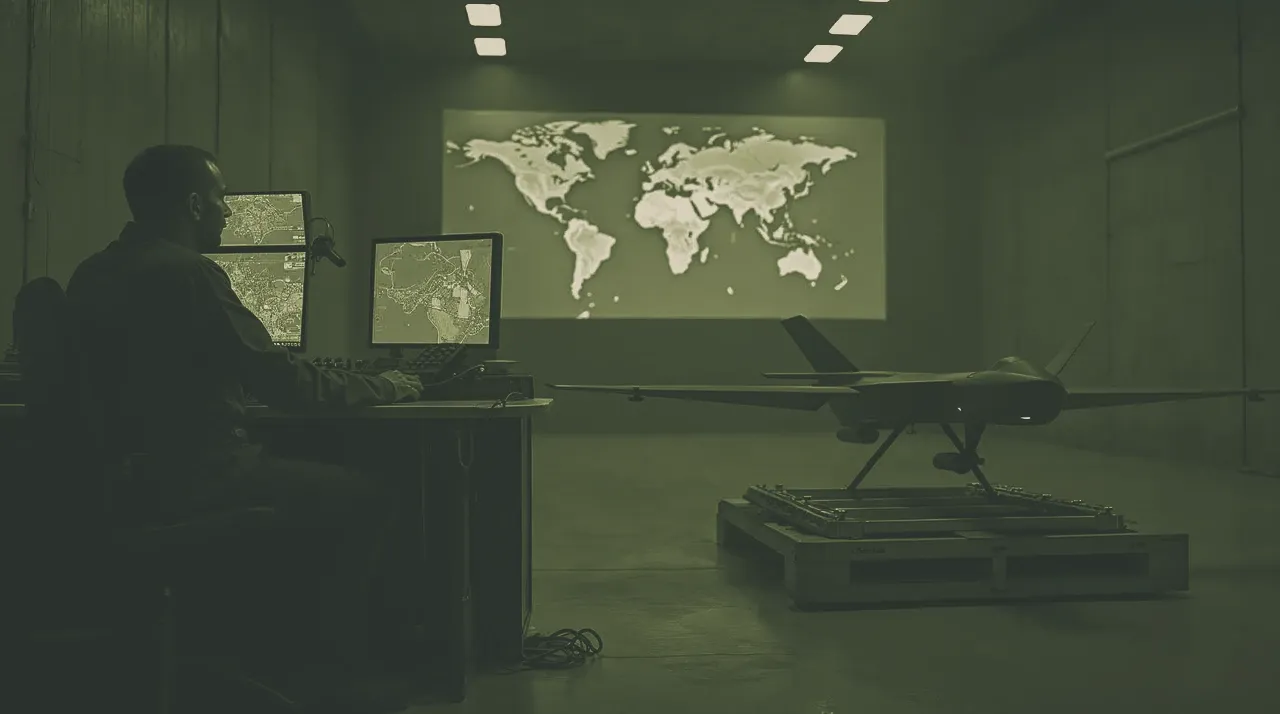
A quiet April rewrite lets AI initiate targeting actions under human watch, putting policy language behind a kill chain the procurement budget had already bought.
The US military has revised how it picks targets in combat. The new principles, approved without public disclosure in April, envision "systems where AI initiates actions with human monitoring," a shift from today's "human in the loop" model, The Straits Times reported from the document Bloomberg reviewed.
AI will compress the "sensor-to-shooter cycle" and "increase the tempo of operations," the doctrine states, and "the speed of future warfare" may eventually require "completely autonomous systems." A Pentagon official held the formal line: AI technologies "do not autonomously select or strike targets," and commanders stay accountable.
The doctrine puts policy behind a kill chain already wired into contracts worth billions, Startup Fortune noted. Palantir's Maven Smart System ceiling has climbed toward $1.3 billion, and the Army handed Anduril a framework worth up to $20 billion. The 2026 budget carries a $13.4 billion line for autonomous systems.
Cheap hardware sits at the bottom of that pipeline. The Low-cost Uncrewed Combat Attack System, or LUCAS, is a one-way attack drone built by SpektreWorks off the Iranian Shahed, priced near $35,000 per airframe, according to ExecutiveBiz. It first flew in combat during Operation Epic Fury against Iran in February. Shield AI is now integrating its Hivemind autonomy stack onto LUCAS so one operator can hand a swarm its intent while the drones split a target set and reroute around threats. A fall demonstration is the procurement milestone.
The battlefield and the startup story — free in your inbox every week. No paywall.
Subscribe Free →The fuse runs through that $35,000 airframe. Attritable drones earn their value from software that routes them into a wider targeting picture, the role the doctrine now sanctions. Whether the human "in the loop" holds enough authority to matter once that loop runs at machine speed is the question Startup Fortune raises.
Frequently asked questions
What did the Pentagon actually change?
It revised its joint targeting doctrine, approved without public disclosure in April, to envision "systems where AI initiates actions with human monitoring," a shift from the prior "human in the loop" model in which a person initiates the action, The Straits Times reported, citing a document Bloomberg reviewed.
Does this mean AI can now choose and strike targets on its own?
No. A Pentagon official stated that department AI technologies "do not autonomously select or strike targets" and that commanders remain accountable for every decision, per The Straits Times. The doctrine does note that "the speed of future warfare" may eventually require "completely autonomous systems."
Why does the doctrine talk about the "sensor-to-shooter cycle"?
The document says AI will compress the sensor-to-shooter cycle and "increase the tempo of operations" by correlating target data across platforms faster than humans can, The Straits Times reported.
What is LUCAS, and how does it connect to this?
LUCAS, the Low-cost Uncrewed Combat Attack System, is a roughly $35,000 one-way attack drone built by SpektreWorks off the Iranian Shahed design, ExecutiveBiz reported. Shield AI is integrating its Hivemind autonomy software so swarms can coordinate under a single operator, which is why the doctrine and the drone budget are hard to separate.
How much money is behind the AI-targeting shift?
Startup Fortune reported the shift is already visible in billions of dollars of contracts: Palantir's Maven ceiling near $1.3 billion, an Anduril Army framework worth up to $20 billion, and a $13.4 billion 2026 budget line for autonomous systems.
What is the main concern critics raise?
That oversight is moving slower than procurement. As Startup Fortune framed it, the next argument is whether the human kept "in the loop" still has enough time, information, and authority to matter once systems are built for faster recommendations and approvals.

Marcus Schuler
Marcus Schuler edits BattlePolicy, a daily defense-technology brief connecting the companies and capabilities behind modern war to the contest among Europe, the US, Russia, and China.